Nov 04, 2026
Last Updated: November 4, 2026
Quick Summary
Bulk cider delivery cuts your cost per pint by ordering full kegs or bag-in-box on a scheduled trade run instead of buying ad hoc, keeping your best-selling lines stocked through busy weekends and improving margins on every pint poured. It also means fewer deliveries, less disruption at the bar and less cash tied up in emergency top-up buys.
Cider is having a strong run in the on-trade. The UK on-trade cider market grew 3.1% to reach £2.04bn, according to The Drinks Business report on cider trends, and premium draught taps rose 10.8% as operators upgraded their ranges. For an independent pub, that shift matters: cider is no longer a quiet corner of the bar, it is a profit line worth planning properly. At Swallow Drinks, we have supplied the trade for over 40 years.
Bulk cider delivery is the practice of ordering cider in larger quantities, usually full kegs or bag-in-box, delivered on a scheduled trade run rather than bought ad hoc. It cuts the cost per pint, keeps your lines stocked through busy weekends, and removes the panic run to a cash and carry.
The benefits stack up quickly:
For the wider case, our guide to bulk alcohol supply for hospitality sets out how buying patterns affect pub profitability.
Good cider stock planning starts with your own sales data, not a supplier's minimum order. Pull your till reports for the last eight weeks. Note which cider sells on which nights, and how weather changes it. Cider demand swings hard with temperature: NielsenIQ's 2026 analysis recorded year-on-year cider sales rises of 5.2% and 6.9% across two early-August weeks as drinkers sought cold refreshment.
Then build a simple order rhythm:
A common mistake is ordering to the minimum spend rather than to demand. That ties up cash and storage. Our guide on how to forecast drink demand accurately walks through the method in more detail.
A wholesale cider supplier for pubs should offer four things: a clear trade price list, dependable delivery days, a cider range that covers both mainstream and premium, and a person who answers the phone. Price alone is a poor test. A cheap keg that arrives late on a Friday costs you far more in lost sales than you saved.
Check these before you commit:
Ask how quickly they can source a new or niche cider. Ask what happens if a line fails on a Saturday night. The answers tell you more than any brochure.
Draught cider wholesale comes in two main formats. Kegs suit high-volume pubs with a steady pour; bag-in-box suits lower-volume venues or a rotating guest cider. Getting the format right protects quality and cuts waste, but the format is only half the job, the dispense setup around it decides whether every pint pours as it should.
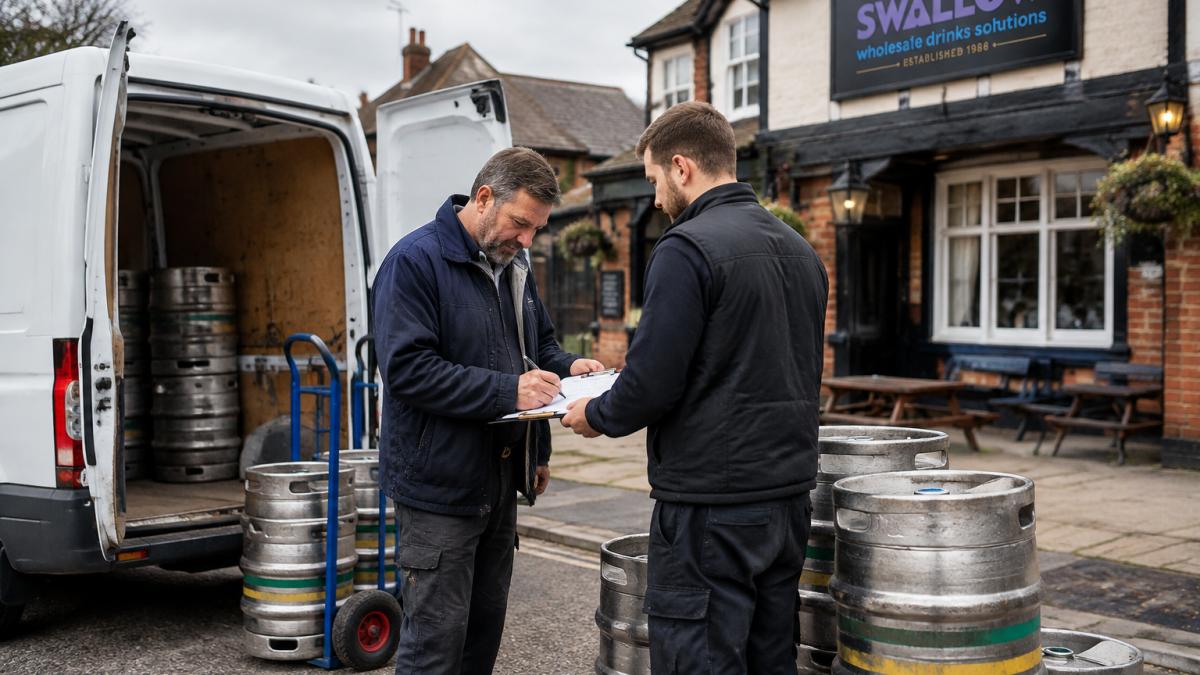
Our keg cider range covers the styles most pubs pour:
| Cider | Size | ABV | Trade Price |
|---|---|---|---|
| Thatchers Gold | 50 litres | 4.8% | £138.98 |
| Aspall Cyder | 50 litres | 4.5% | £135.80 |
| Inch's Cider | 50 litres | 4.5% | £102.31 |
| Thatchers Somerset Haze | 50 litres | 4.5% | £125.70 |
You can browse the full cider range to compare styles and sizes.
A 50-litre keg holds roughly 88 pints. If a line turns less than a keg a fortnight, kegs tie up cash and the cider sits longer than it should. Bag-in-box in 10- and 20-litre formats lets you rotate a guest cider without committing to a full keg, and it suits venues with limited cellar space. A common approach is kegs for the core lines and bag-in-box for seasonals and niche styles.
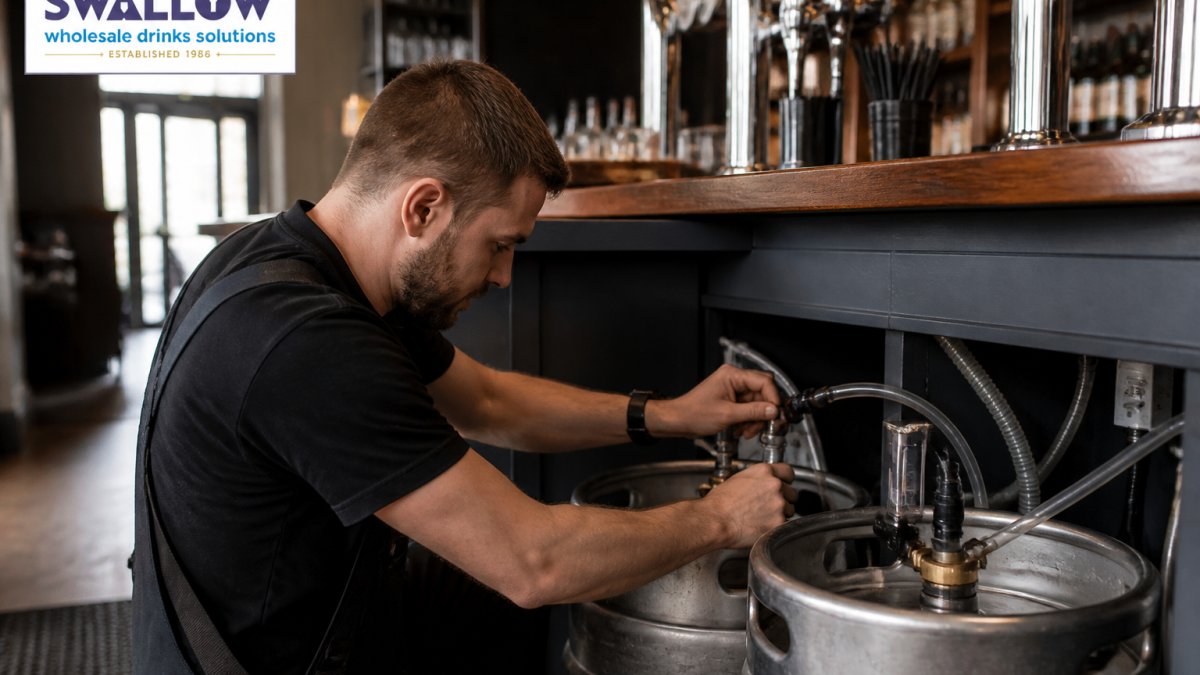
Cider is dispensed differently from beer, and the details matter:
A draught line that fails on a Friday night is a lost weekend of sales, not a lost pint. Ask any supplier before you sign how they handle dispense faults and equipment. Swallow has supplied the trade for over 40 years and offers keg and bag-in-box options across the range. If you are setting up a new cellar or adding a cider tap, register at the Swallow Trade portal to see trade pricing and arrange equipment support alongside your first order.
Watch out: settle your gas blend and line setup before a keg is delivered, not after.
Online drinks ordering for pubs removes the phone call and the paper pad. You log in, see live trade prices, and reorder your usual lines in minutes. Orders land accurately, which matters when a mis-keyed keg means an empty line on a Saturday.
Stock rotation is the quiet benefit. Scheduled delivery means new stock arrives before old stock runs out, so you pour in date order and waste less. A good ordering system also stores your history, so you can see what you bought this month last year.
Watch out: ordering late in the week pushes your delivery into the busiest trading days. Set your order day two working days before your delivery day and stick to it.
Trade pricing should be transparent from the first conversation. You want a price list you can read, not a quote that changes with the weather. Our guide on wholesale drinks pricing transparency explains where hidden costs usually hide.
Price per keg is only one line in the maths. A cheap keg that arrives late on a Friday costs you far more in lost sales than you saved. A simple way to test a supplier is to work out the cost of a missed delivery: take your average cider pints sold on a Saturday, multiply by your selling price, and compare that figure against the saving on a cheaper keg. Most operators find the lost-sales figure dwarfs the price difference within a single weekend. That is why fixed delivery days and a named contact matter more than a headline rate.
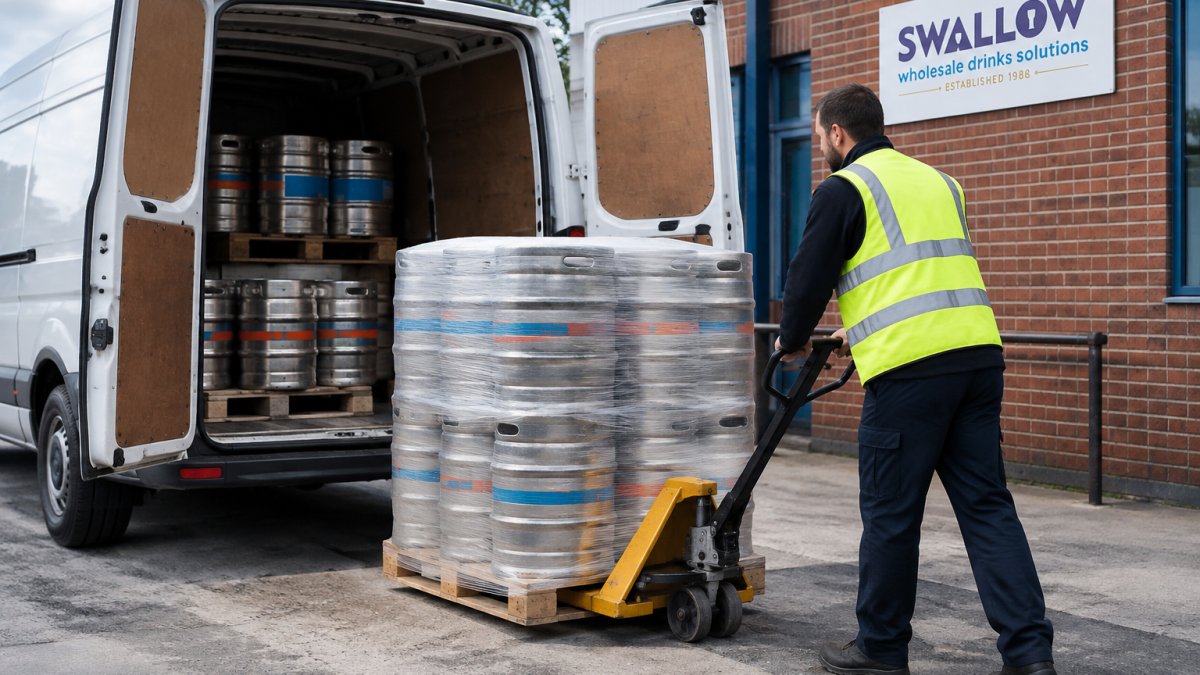
Deliveries into dense urban trade, narrow streets, loading restrictions, timed pedestrian zones, and cellars accessed from the pavement, need a supplier who plans routes around them rather than treating every drop as a kerbside stop. A scheduled trade run that knows your delivery window, your access constraints and your cellar layout removes the disruption that ad hoc drops cause at the bar. Ask prospective suppliers how they handle restricted-access sites and whether they can commit to a fixed window rather than a day. Swallow supplies pubs, bars and venues across Birmingham and the surrounding areas, and has done so for over 40 years.
One invoice across your cider, beer and soft drinks lines saves admin time and makes margin tracking simpler. A consolidated statement lets you see cost per line at a glance, spot a creeping price, and reconcile against your till data. Pair that with a live trade portal and you can reorder usual lines in minutes, see your order history, and plan par levels around your delivery schedule rather than guessing.
Delivery reliability is the test that matters most. A supplier who promises six days and delivers four will cost you sales. Ask prospective suppliers for fixed delivery days and a named contact. For a deeper look at what dependable service looks like, read our guide on consistent delivery for hospitality venues.
Watch out: leaving your order until late in the week pushes delivery into your busiest trading days, set your order day two working days before your delivery day and keep to it. To see trade pricing and set up a delivery schedule, register at the Swallow Trade portal and browse the cider range before your first order.
Ready to buy smarter? Register for Swallow Trade and you get live trade pricing, your order history, and a delivery schedule you can plan around. We are a family-run independent wholesaler with over 40 years in the trade, and we supply pubs, bars and venues across the region.
Here is how to start:
If you want to know why local supply works, our article on why independent pubs need local wholesalers makes the case.
Bulk cider delivery reduces the number of separate orders you place, which saves admin time and helps you secure trade pricing on larger volumes. It also means fewer deliveries to manage and a steadier stock position across busy weekends. The UK on-trade cider market grew 3.1% to £2.04bn in 2026, and premium draught taps increased 10.8% as operators upgraded their ranges. Ordering in bulk lets you hold enough stock to meet that demand without running out mid-service.
Start with two weeks of sales data and note which days and weather conditions drive cider volume. Cider demand often rises in hot weather, so build in a buffer for warm spells. Set a par level for each line, review it weekly, and use online drinks ordering for pubs to top up before weekends rather than after a shortage.
Look for a supplier that can confirm delivery days in writing, offers transparent trade pricing with no hidden surcharges, and stocks a range of draught cider wholesale options including kegs and bag-in-box. Ask how quickly they can source a new line and whether they provide equipment support if a line fails on a Friday night. A supplier with 40 years in the trade can give you a dependable point of contact.
Yes. A single delivery can combine different cider styles, such as a 50-litre keg of Thatchers Gold at £138.98 alongside a 50-litre keg of Inch's Cider at £102.31, so you can offer a sweet, dry and premium option without placing three orders. Mixing styles in one drop also simplifies stock rotation and reduces the number of delivery windows you need to manage during the week.
Cider margins are too important to leave to guesswork. Swallow Drinks gives you transparent trade pricing, a full keg and bag-in-box range, and delivery you can plan your week around. Get started with Swallow Drinks and put your cider supply on a firmer footing.
Members of:


AWRS Registration Number: XJAW00000100730