Sep 12, 2026
Last Updated: September 12, 2026
Ensuring consistent delivery for hospitality venues is the difference between a full Saturday service and an empty till. At Swallow Drinks, we've supplied the on-trade for over 40 years, and the pattern is always the same: venues that get their drinks in on time, every time, keep their regulars. Those that don't spend their evenings apologising.
Hospitality logistics is unforgiving. A pub with no lager on a Friday night loses more than one night's trade; it loses the trust that took years to build. Customer retention in the on-trade rests on reliability, not on the size of your menu (PubMed).
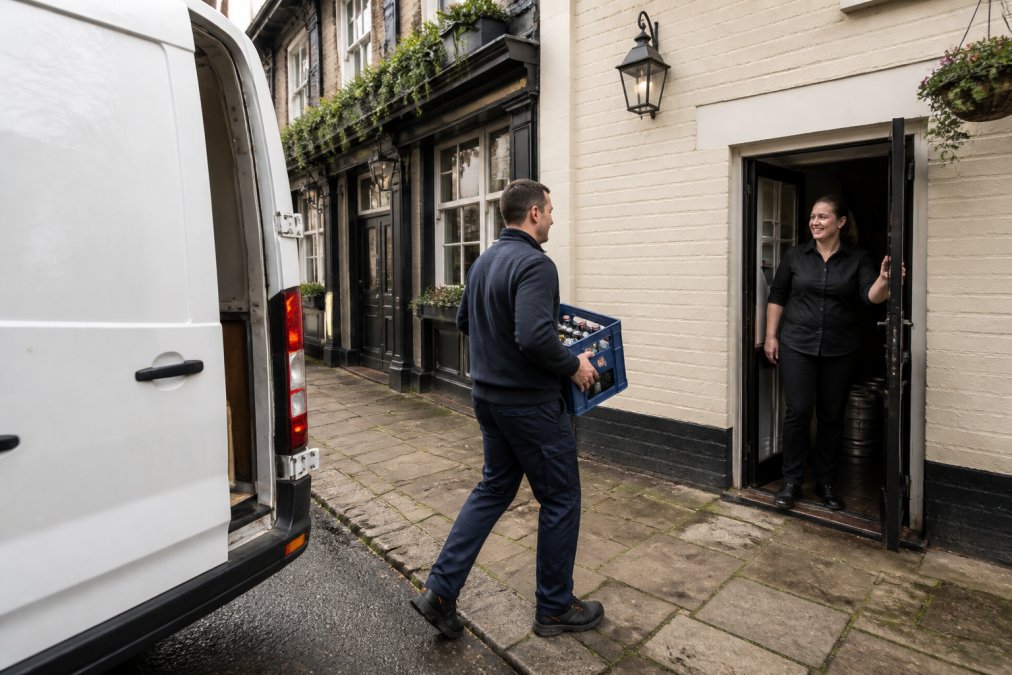
A reliable drinks ordering process for bars and restaurants follows a fixed weekly rhythm rather than a scramble when stock runs low. Here is the sequence that works:
Trade customers can order online through Swallow's trade portal and see live availability before confirming.
Bulk wine and spirits delivery only works when the volume matches real demand. Over-order and you tie up cash and shelf space; under-order and you run dry mid-service.
A common mistake is ordering to a fixed figure every week regardless of what's happening. Bank holidays, match days and private functions all shift demand sharply. Track your sales by day of the week for a month, and the pattern will tell you what to hold.
For keg lines, a 50-litre keg of Madri Lager at £164.50 or Cruzcampo at £165.00 gives you a clear cost-per-pint baseline (gov.uk). Guinness Stout at £184.01 per 50 litres and Thatcher's Gold at £138.98 suit venues with a strong stout or cider following.
Wholesale drinks supply chain management is the practice of coordinating suppliers, stock levels and delivery schedules so that drinks arrive before they're needed, without tying up cash in excessive stock. For independents, it comes down to supply chain resilience: having a primary supplier you trust, a clear set of performance measures, and a plan for when something goes wrong.
A unified approach beats juggling five accounts. One supplier handling wine, beer, spirits and soft drinks means one delivery, one invoice and one point of contact. It also reduces operational overhead and makes procurement strategy far simpler. Consolidating to a single trade account can simplify admin time spent on ordering, as there is only one delivery window to brief staff on and one set of paperwork to check.
Consistency is measurable. Track these four figures weekly and you will spot drift before it reaches the bar:
A common pattern is that venues track sales closely but never track these four, so they only discover a supply problem when a customer orders something that isn't there.
Resilience is not about hoarding. It is about knowing which lines are critical and having a fallback for each:
Trade customers can order online through Swallow's trade portal and see live availability before confirming, which removes much of the guesswork from the ordering rhythm. With over 40 years supplying the on-trade, Swallow Drinks handles wine, beer, spirits and soft drinks on a single account, so independents get one delivery, one invoice and one point of contact.
| Task | Frequency | Who Owns It |
|---|---|---|
| Stock count | Weekly | Bar manager |
| Order placement | Weekly | Owner or GM |
| Delivery check | Per delivery | Duty manager |
| Fill rate and punctuality review | Weekly | Owner or GM |
| Supplier review | Quarterly | Owner |
Service delivery standards drift when every shift invents its own way of working. Written standard operating procedures fix that. They cover how drinks are stored, how lines are cleaned, how stock is rotated and how shortfalls are reported.
Front-of-house standards and back-of-house operations need to match. A bartender who knows the pour is right because the line was cleaned on schedule delivers a better drink than one guessing. Quality assurance is a routine, not a one-off inspection.
Most venues write procedures and then never check whether they are being followed. The gap competitors miss is measurement. Four practical measures turn standards from a document into a habit:
A common pattern is that venues measure sales but not consistency, so drift only shows up as customer complaints. Measuring the four figures above catches it earlier.
Written procedures only work if every shift is trained on them and held to them:
Preventative maintenance is scheduled servicing of cellar equipment, coolers and dispense lines before they fail. Equipment uptime is what keeps the pumps running when the bar is busiest.
The Friday night test is simple: could you serve every drink on your menu at 9pm on a Friday with no substitutions? If the answer is no, you have a maintenance or stock problem to fix before the weekend, not during it.
Crisis management in drinks supply starts with a written contingency plan. No supplier gets it right every single time, so the question is what you do in the two hours after a missed drop.
A supplier that answers the phone and fixes the problem the same day is worth more than one that's slightly cheaper. That is where service recovery earns its keep.
A missed delivery is not just an inconvenience. It means a bar cannot serve a customer's favourite drink, staff improvise substitutions, and the venue's reputation takes a hit. Consistent delivery protects customer retention, keeps front-of-house standards steady, and removes the panic buying that eats into margins. Venues that treat supply as a system, rather than a weekly gamble, are the ones that keep service reliability high even on the busiest weekends.
Start by building a simple par-level list for every line you stock, then order against it rather than from memory. Consolidate your bulk wine and spirits delivery into fewer, larger drops so you are not relying on three suppliers arriving on the same Friday. Agree a fixed delivery window with your wholesaler, keep a buffer of your top ten sellers, and review what actually sold each week. Small independent venues often get better consistency than chains simply because they can react faster.
The usual culprits are late orders placed after cut-off, stock shortages on high-demand lines, driver shortages during peak periods, and poor communication between a venue and its supplier. Weather and road disruption play a part but are rarely the main cause. Most delays trace back to a process gap: no agreed order day, no named contact, or no visibility of what is actually in the warehouse. Fixing those three things removes most of the risk.
Stock management is the foundation of consistent delivery. If you know exactly what you have, what sells fastest, and what your reorder point is, you can order with confidence instead of guessing. That means fewer emergency runs, less cash tied up in slow-moving lines, and a menu that stays accurate. A wholesaler who can see your order history can also flag when you are drifting from your usual pattern, which is often the first sign of a problem.
Running a venue means you can't afford to guess whether the drinks will turn up. Swallow Drinks has supplied Birmingham's on-trade for over 40 years as a family-run independent wholesaler, with a vast portfolio of premium wine, beer, spirits and soft drinks, six-day-a-week delivery and a trade team that understands your menu. Register for a trade account at Swallow's trade portal and get the consistency your venue depends on.
Members of:


AWRS Registration Number: XJAW00000100730