Nov 14, 2026
Last Updated: November 13, 2026
Quick Summary
Optimise warehouse storage for online drink orders by mapping how stock moves, then placing fast-moving lines near dispatch at waist height. Zone stock by how quickly it sells, and apply first in, first out rotation so drinks stay in good condition.
Warehouse storage for online drink orders works best when you know how stock moves before you change anything. At Swallow Drinks, we have supplied the on-trade for 40 years. Start by mapping what you have now.
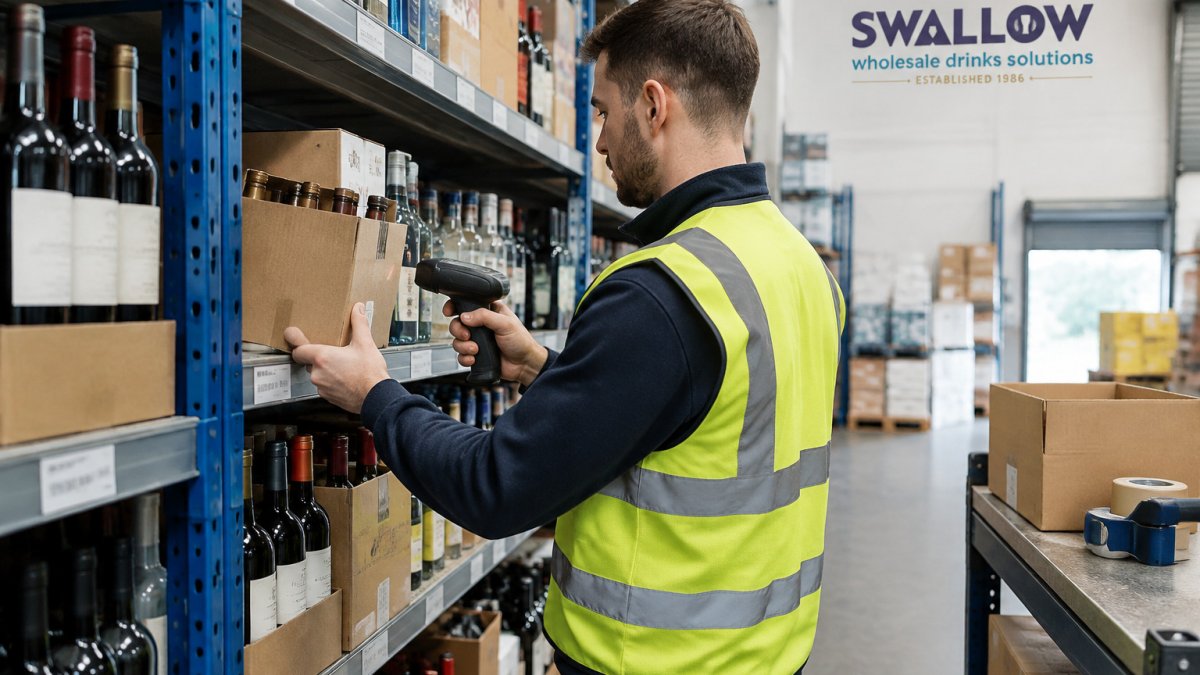
Start by walking the route a case takes from delivery to dispatch. Note where pallets wait, where cases get moved twice, and where pickers wait for stock. Those gaps cost time on every single order.
Keep the map simple. Sketch the floor, mark each storage bay, and write down how many lines each bay holds. Then track one busy week of online orders and count how often each bay gets visited.
Once the map is clear, the fixes usually stand out. You will see which products sit far from the packing bench, and which bays are wasting space.
Your layout should follow your order volumes, not your delivery schedule. The lines that sell most online belong closest to the dispatch point. Put slow-moving lines further back.
Start with a simple count. List your drink lines by how many units they shipped in the last month. The top 20% of lines often account for most of your picks.
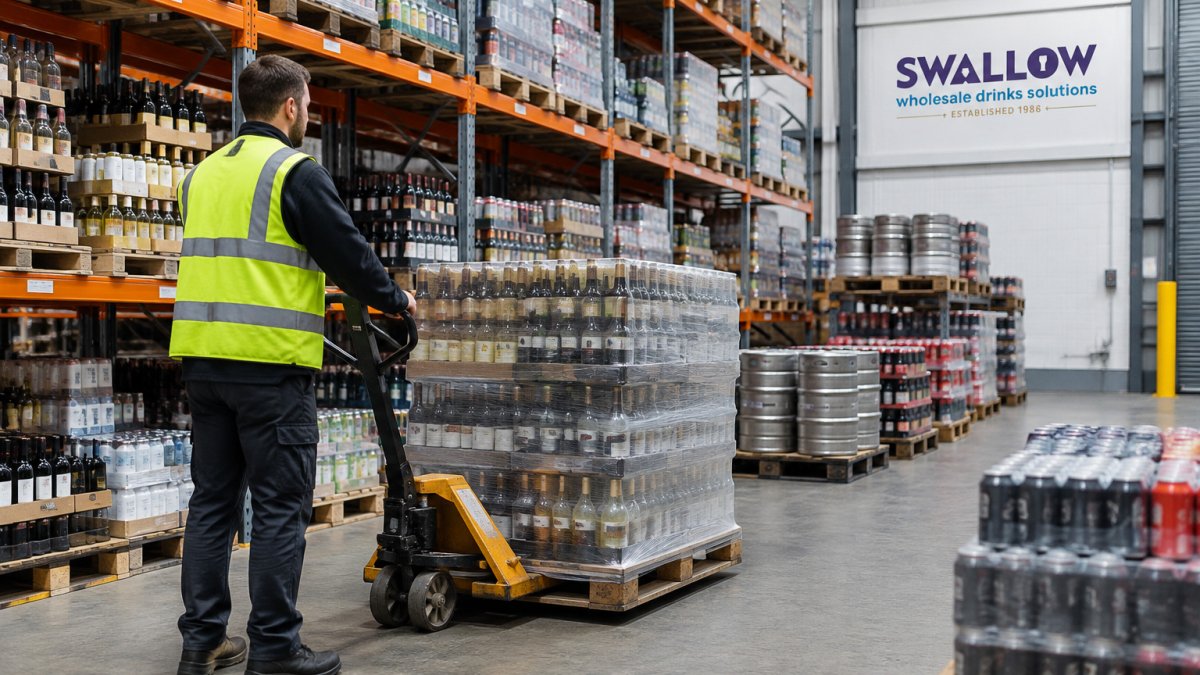
Then place those fast lines at waist height in the front bays. Heavy bag-in-box and case stock goes low, so people do not lift it above the shoulder.
Here is a basic order for planning bays:
Leave clear aisles wide enough for a pallet truck to pass a picker. Cramped aisles slow every order down.
Zoning means grouping stock by how fast it moves. A fast zone near the door cuts walking distance for your busiest lines. A slow zone further back holds stock you only pick now and then.
Good zones make the day easier. Pickers learn where things sit, and restocking follows a clear path. Mixing fast and slow lines in one bay creates a mess that slows everyone down.
Review your zones every quarter. A line that trended up for a summer promotion may need to move forward, and a seasonal line may need to go back once the season ends.
Slotting means giving each product a fixed home in the warehouse. Once a product has a home, pickers find it faster, and you can spot when a bay runs low before it causes a problem.
Begin with a basic record for each line. Write down the product name, pack size, weekly sales and storage location. A simple spreadsheet works well for this.
If you are just starting out, track stock by hand. Count each bay at the same time every week and compare it with your sales. This shows you where stock disappears and where you are overstocked.
For a full list of the bag-in-box soft drinks you could slot together, see our BIB COLA (SWALLOW) 10LTR range. Bag-in-box stock stores compactly and suits a dedicated bay. Pair it with your how to track drinks stock manually process so the counts stay accurate.
A few slotting rules help most warehouses:
Stock rotation means using the oldest stock first. For drinks, it protects quality and cuts waste, but the rules differ by drink type.
Use first in, first out (FIFO) as your baseline. Place new deliveries behind existing stock, mark the delivery date on each case or pallet, and pick from the front. For date-coded lines, add a second check: anything within a set window of its best-before date moves to a quick-dispatch bay so it leaves first.
Then set rotation and storage rules by drink type:
Keep stock in a cool, dry, stable space where possible, and keep loading-bay doors closed when they are not in use.
Review rotation every week. Walk the bays, look for old dates at the back, and move them forward before they expire. Record anything you pull for date or damage so you can see patterns by supplier and by line.
For the wider guide to keeping bar stock in good condition, read how to optimise bar stock. It covers rotation alongside par levels and reorder points, and pairs well with the slotting rules in Step 2.
Online drink orders rarely look alike. One cart may be a single case of bag-in-box cola, the next a mixed cart of glass bottles, canned ready-to-drink lines and a soft drinks multipack. Picking and packing have to handle all three order profiles without slowing the fast lines down.
Start by classifying your order profiles. Most drink warehouses see three patterns:
Each profile suits a different picking method. Discrete picking, one picker, one order, start to finish, works for mixed carts with fragile glass because one person controls the whole route. Batch picking suits multi-case orders: pick ten orders by line in one pass, then sort at the bench.
Slot fast-moving drinks to cut picker travel. The lines that appear in the most online orders belong in the first bay past the packing bench, at waist height, with the label facing the aisle. A common pattern is that a small share of drink lines drives most picks, so review your pick frequency monthly and move the top lines forward.
Packing is where drink orders break. Keep packing materials, dividers, tape and labels at the bench so pickers do not walk back and forth.
Watch out: mixing glass and heavy cases loose in one box is the most common cause of breakage on mixed-cart orders, pack glass in its own inner carton or divider set before it goes in the outer box.
A simple picking route helps too. Pickers should work through the warehouse in one direction, fast zone first, then medium, then slow, and finish at the packing bench. Zig-zagging between bays adds walking time to every order. Finished orders go to one clearly marked dispatch area, checked against the pick list before sealing.
If you want to add ready-to-drink lines that suit mixed carts, browse our ready to drink cocktails categories. Our ABSOLUT vodka and Sprite cans 12 x 250ml pack is another example of a fast line worth placing near the packing bench, and our BIB COLA (SWALLOW) 10LTR range suits a dedicated bag-in-box bay.
Measure picking before and after any change. Track lines picked per hour, order error rate and breakage rate per hundred orders. A small improvement in picker travel usually shows up as a clear gain in lines per hour within a few weeks.
The table below sums up the three picking methods the article describes and the order profile each one suits.
| Picking method | Best for | Key difference |
|---|---|---|
| Discrete picking | Mixed carts with fragile glass | One picker controls the whole order |
| Batch picking | Multi-case orders | Several orders picked in one pass |
| Zone picking | Large warehouses | Each picker stays in one zone |
Drink storage must follow UK health and safety law. Under the Health and Safety at Work etc. Act 1974, employers must protect staff from risks in the workplace (Redirect to Managing risks and risk assessment at work). This covers how heavy cases are lifted, how aisles are kept clear, and how pallets are stacked.
The Manual Handling Operations Regulations 1992 cover lifting and carrying. Store heavier drinks on lower shelves, and use trolleys or pallet trucks for bulk moves. For full guidance, check the Health and Safety Executive website at HSE guidance on manual handling.
Keep aisles and exits free of stock. Stack pallets only to a safe height, and secure them so they cannot topple. Good lighting and clear labels also reduce accidents.
Alcohol storage carries its own duties. If you hold or sell alcohol, review licensing rules with your local council and check current requirements on UK Government guidance on alcohol licensing.
Keep a written risk assessment for your storage area and review it each year.
Once your layout and stock records are in place, restocking should be simple. Swallow Drinks supplies the on-trade with wine, beer, spirits and soft drinks, and has been in business for 40 years.
To start ordering, register for a trade account at trade ordering. Once you are set up, you can order the lines your warehouse plan needs. Our non-alcoholic drinks range is also available for venues that want low and no options.
Set up your trade account today and start restocking with the lines that fit your new layout.
Organise the warehouse so that fast-moving lines sit nearest the packing area, with bulky cases on lower shelves and single bottles and cans within easy reach. Group stock by drink type, such as beer, wine, spirits and soft drinks, so pickers do not cross the floor for each order. Keep a clear route from receiving to dispatch, and review the layout every few months as order patterns change.
Use a scanner to confirm each item against the order, and keep similar-looking products such as different lager variants in separate, clearly labelled locations. Regular cycle counts catch mismatches between system stock and shelf stock before they affect customers. Train pickers to check case quantities against the order line rather than estimating. Clear labelling and consistent slotting cut most errors before they happen.
Store wine on its side in a cool, dry area away from direct sunlight and heat sources, and keep beer and soft drinks in a stable temperature environment. Spirits are less sensitive to temperature but should still be kept dry and out of direct light. Separate categories into their own bays to prevent cross-contamination of labels and packaging. Always check the storage guidance printed on each product or supplier data sheet before deciding on a location.
Check fast-moving lines daily or at least weekly, and slower lines on a monthly cycle count. Compare physical counts against your system records and investigate any gaps promptly. Frequent checks on high-value spirits and promotional lines help prevent stock-outs during busy periods. Adjust the frequency as your order volumes grow or seasonal demand changes.
Members of:


AWRS Registration Number: XJAW00000100730