Nov 09, 2026
Last Updated: November 7, 2026
Quick Summary
Most licensed trade premises in the UK can receive wholesale liquor delivery, provided the drinks ordered fall within the range their premises licence authorises. The supplier checks trade credentials and licence details, and an authorised adult at the venue must sign for the goods. Deliveries that fail these checks can be refused on the spot.
Wholesale liquor delivery is the process of moving drinks from a licensed supplier to a trade customer, such as a pub, bar, restaurant or hotel. In the UK, a business can usually receive alcohol deliveries if it holds the right licence for the drinks it sells. Swallow Drinks is a family-run independent wholesaler supplying the on-trade across Birmingham and the surrounding areas.
The short answer is that most licensed trade premises can receive wholesale deliveries. The harder question is whether the supplier, the driver and the venue all meet the rules for that particular order.
A typical order moves through a few clear steps:
Watch out: a delivery to a site without a valid licence for the drinks ordered can be refused on the spot, so check your licence covers what you are buying before you order.
GOV.UK guidance on alcohol licences for premises
UK alcohol delivery rules for businesses sit mainly in the Licensing Act 2003, the premises licence and the conditions attached to it. For wholesale deliveries, the practical question is not simply whether a venue holds a licence, but whether that licence authorises the sale of the drinks being delivered, within the hours and conditions recorded on it.
A premises licence typically records the licensable activities permitted, the hours for those activities, the designated premises supervisor, and any conditions imposed by the licensing authority. When stock arrives, the receiving venue should be able to show that the drinks fall within its authorised range and that storage and delivery arrangements meet any conditions on the licence. A common pattern is for wholesale accounts to be checked at registration and again when order patterns change, rather than only at the point of delivery.
Key points to check before you order:
Wholesale deliveries differ from consumer direct shipping in one important way: the recipient is a licensed business, not an individual. That means the supplier is checking trade credentials and licence details rather than relying on an adult signature alone. Trade ordering is available through the trade portal at https://webtrade.swallow.uk.com/, where registered customers can place orders.
Watch out: a licence that covers the sale of alcohol on the premises does not automatically authorise every product category, so confirm the drinks you order fall within your authorised range before the van arrives.
Licensing Act 2003 on legislation.gov.uk
Different drinks carry different delivery considerations. Beer, wine and spirits are all alcohol, so the core licensing rules apply to each. The practical differences come from how the stock is packed, how it is stored and how it is sold on.
Each drink type brings its own practical considerations once it reaches your premises.
| Drink | Key consideration | Storage note |
|---|---|---|
| Beer | Multipacks and bottles | Keep draught and bottled stock stored correctly |
| Wine | Delivered in cases | Store away from heat and direct light |
| Spirits | Higher alcohol by volume | Needs secure storage in busy venues |
| Low and non-alcoholic | Not licensed as alcohol in the same way | Useful for a lower-strength range |
Age verification is a core part of any alcohol delivery. The driver and the venue both have a role in making sure alcohol reaches a legal adult. Venues should check who is signing for the goods and keep the delivery note on file.
Who can sign is usually a member of staff who is authorised by the premises licence holder. Deliveries should not be left unattended or handed to someone who appears underage.
Challenge 25 guidance from the Portman Group
Receiving stock well saves time and avoids disputes later. A well-run receiving process starts before the van arrives. Clear the space, check the delivery note and have a member of staff ready to count and sign.
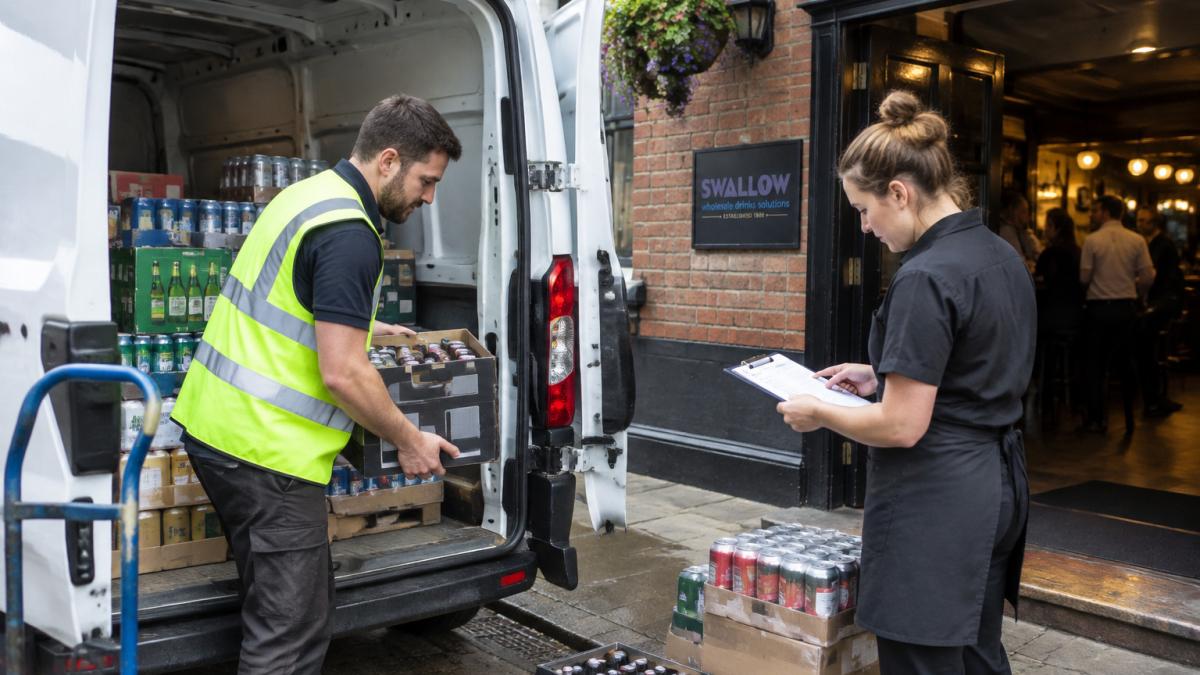
!A delivery driver in a white van unloading cases of drinks at the rear entrance of a busy pub, a member of bar staff checking the delivery note
When the delivery arrives:
Many venues find that a set receiving routine makes busy weeks much easier to manage.
Exception handling is where wholesale deliveries most often go wrong, and it is the area most guides skip. A refused or delayed delivery is not simply an inconvenience; it creates a stock gap, a paperwork trail and, in some cases, a licensing question about what happened to the goods. A clear procedure from the moment of refusal to the re-delivery protects both the venue and the supplier.
The most common reasons a wholesale delivery cannot go ahead are:
A practical exception workflow looks like this:
For damaged or short deliveries, the venue should note the problem before signing and keep the affected cases separate until the supplier confirms whether they will be collected or credited. For refused deliveries, the goods usually return with the driver rather than being left on site, which keeps the licensing position clean.
Watch out: a delivery signed for without noting a shortage or damage is difficult to correct later, so count and check before the driver leaves.
Registering a trade account at https://webtrade.swallow.uk.com/ gives venues a single place to manage orders, check account details and plan deliveries.
Swallow Drinks supplies a broad range of premium wine, beer, spirits and soft drinks to licensed businesses across the West Midlands. If you run a pub, bar, restaurant or hotel, the trade portal at https://webtrade.swallow.uk.com/ is the simplest way to order and manage your stock.
Registration gives you a trade account for placing orders through the portal. For a broader range of low and non-alcoholic drinks, visit https://www.swallow.uk.com/products.php?prd=low-and-non-alcoholic.
Register for a trade account today to start ordering from Swallow Drinks.
Wholesale alcohol deliveries in the UK must go to premises that hold the right licence to receive and sell alcohol, and the supplier must comply with licensing and age-verification requirements. Deliveries are normally made to a named business address during agreed hours, and drivers may ask for proof of identity or authority to accept the goods. Restrictions can differ depending on the type of premises and the products ordered, so confirm the rules that apply to your venue before placing an order with Swallow Drinks.
No. A drinks wholesaler should only deliver to a business address that is licensed or otherwise lawfully entitled to receive and sell alcohol. Deliveries to unlicensed addresses, or to a home address for a commercial order, can be refused. Swallow Drinks supplies on-trade customers, so check your premises licence and trade account details when you register at https://webtrade.swallow.uk.com/.
When a delivery arrives, check the delivery note against the order, confirm the quantities and products, and make sure the goods are in good condition. Ask the driver to show identification where age verification applies, and sign only once the delivery matches what was ordered. Keep the signed delivery note on file so that any shortfall or damage can be raised quickly with the supplier.
If a delivery is delayed, contact the supplier's customer service team with your order reference so they can confirm the new arrival time. If a delivery is refused, for example because nobody with the right authority or age was available to sign, ask the driver or supplier for the reason in writing. Arrange a new delivery window in advance where possible, and keep a record of the communication for your stock and licensing records.
Members of:


AWRS Registration Number: XJAW00000100730