Aug 10, 2026
Last Updated: August 10, 2026
Accurate stock counting is the foundation of profitable bar operations. Without it, you're flying blind on what's moving, what's gathering dust, and where margins disappear. Manual alcohol stock tracking forces you to know your stock levels intimately, catching discrepancies that automated systems miss entirely. You'll spot damaged bottles, over-pouring, and creeping shrinkage, visibility that matters for small to medium-sized venues where every percentage point of waste directly impacts your bottom line.
At Swallow Drinks, we've worked with independent bars and pubs across Birmingham and the West Midlands. The ones with the tightest margins conduct regular, disciplined manual stock takes. They know exactly what's in their cellar, what their pour costs run at, and where to adjust ordering. That knowledge is worth far more than the time spent counting.
Setting up a proper manual system requires discipline but isn't complicated. You need a consistent counting schedule, a simple tracking method, and staff who understand why accuracy matters.
Before beginning any stock take, gather the right tools: a precision scale, clipboard, and well-designed spreadsheet.
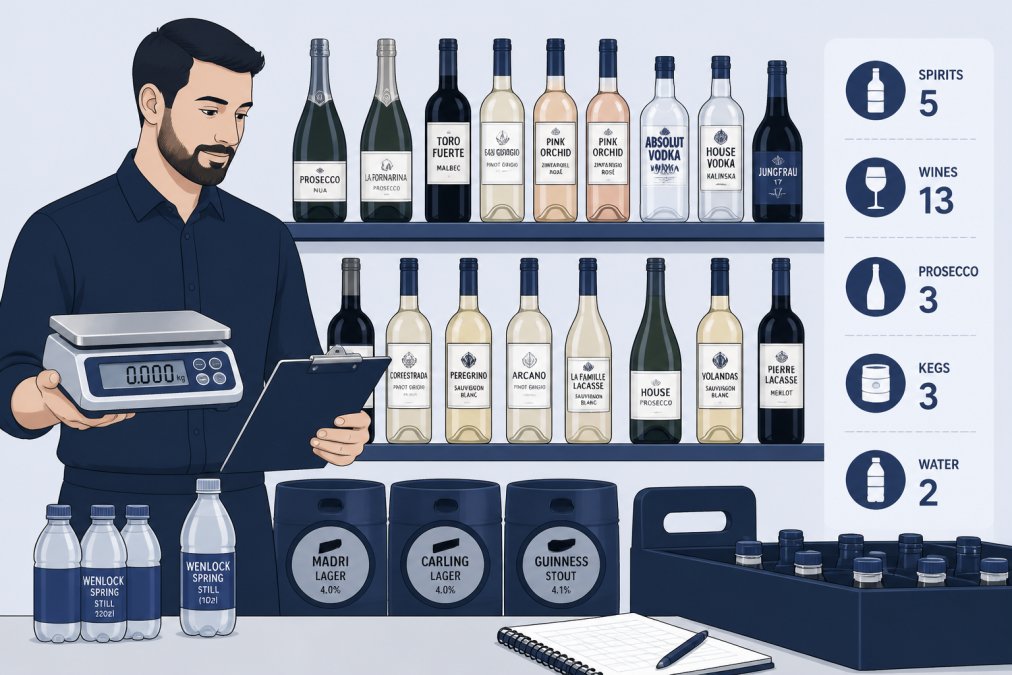
A precision scale is essential for measuring partial bottles accurately. You need one that measures in grams and reads to at least 0.1g precision. This matters because a half-full bottle of premium spirit represents real money. Digital scales designed for hospitality are durable and reliable.
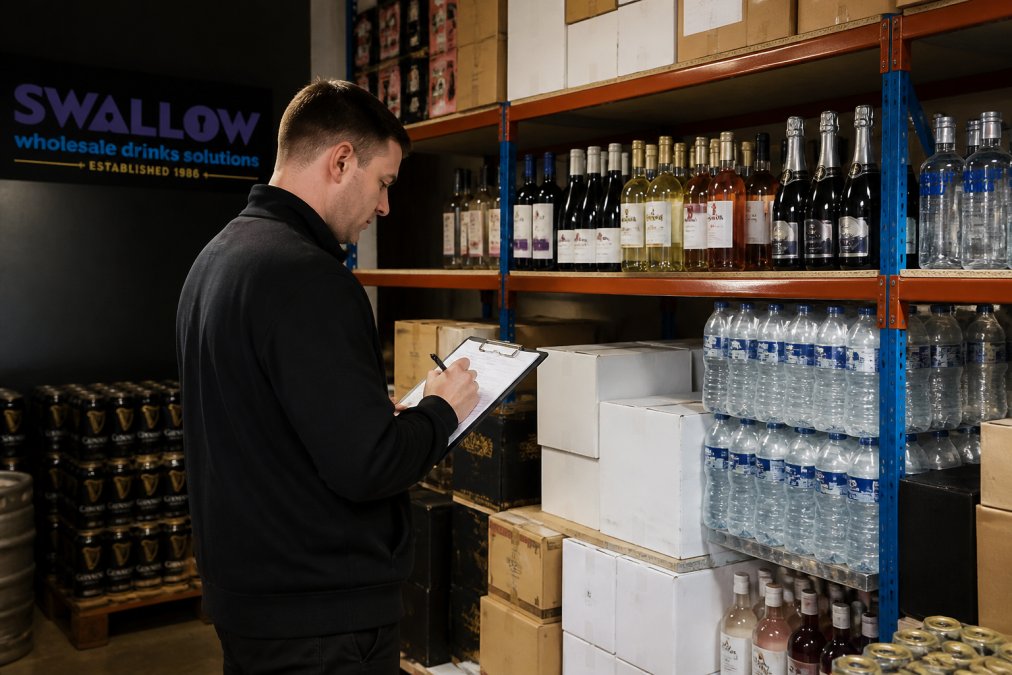
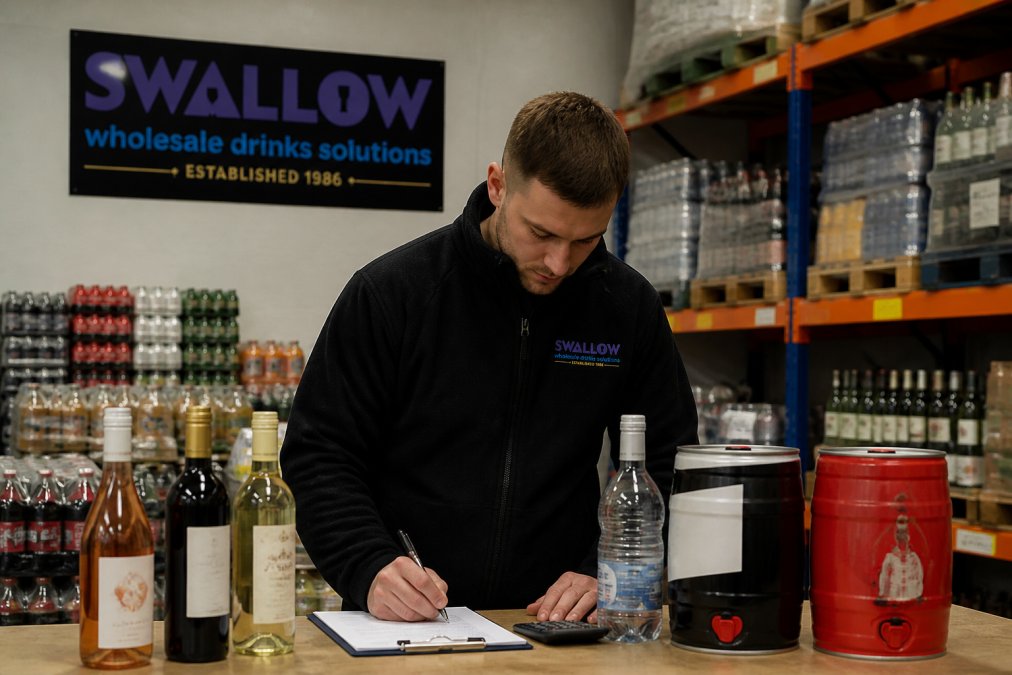
A clipboard and pen keep your count organised and prevent transcription errors. Write clearly, use one sheet per product category, and double-check entries before moving on. Some venues use printed stock sheets with pre-filled product names, which reduces mistakes.
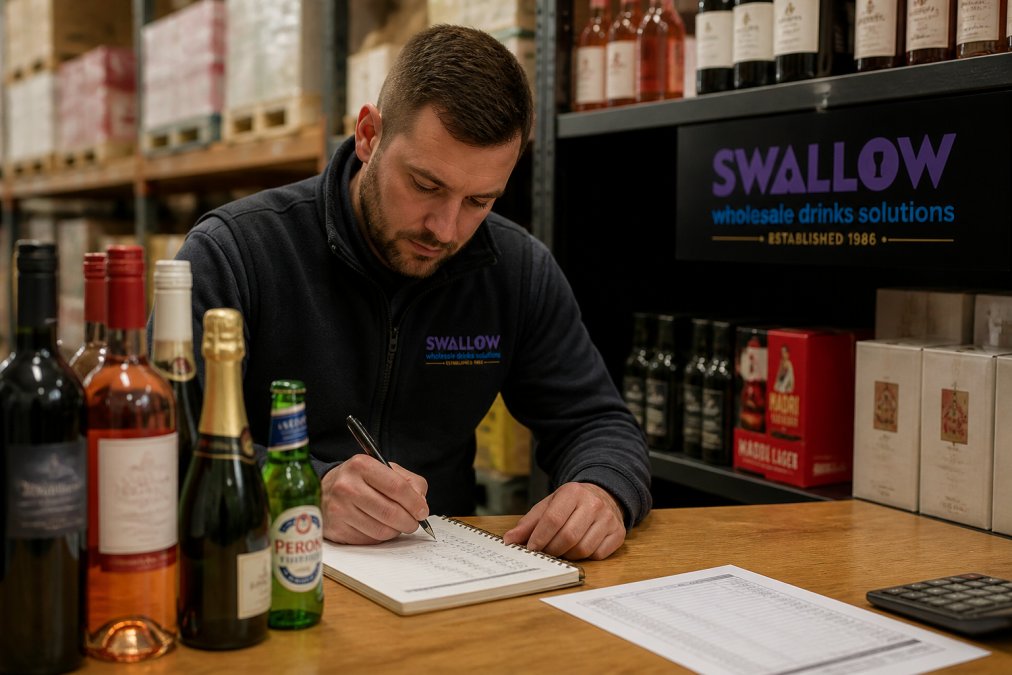
A bar stock control spreadsheet template is where your data lives. You'll record starting stock, ending stock, purchases, and variance. Without structure, you'll lose track of which numbers came from which count.
Access to your purchasing records is critical. You need to know exactly what you've bought between counts. Keep receipts from your supplier organised by date.
Staff availability and focus time is the final ingredient. Schedule your stock take during quiet hours, ideally when closed. A two-person count takes roughly 90 minutes for a typical bar.
A weekly stock take is the rhythm that keeps your bar honest. Monthly counts miss too much; daily counts are impractical.
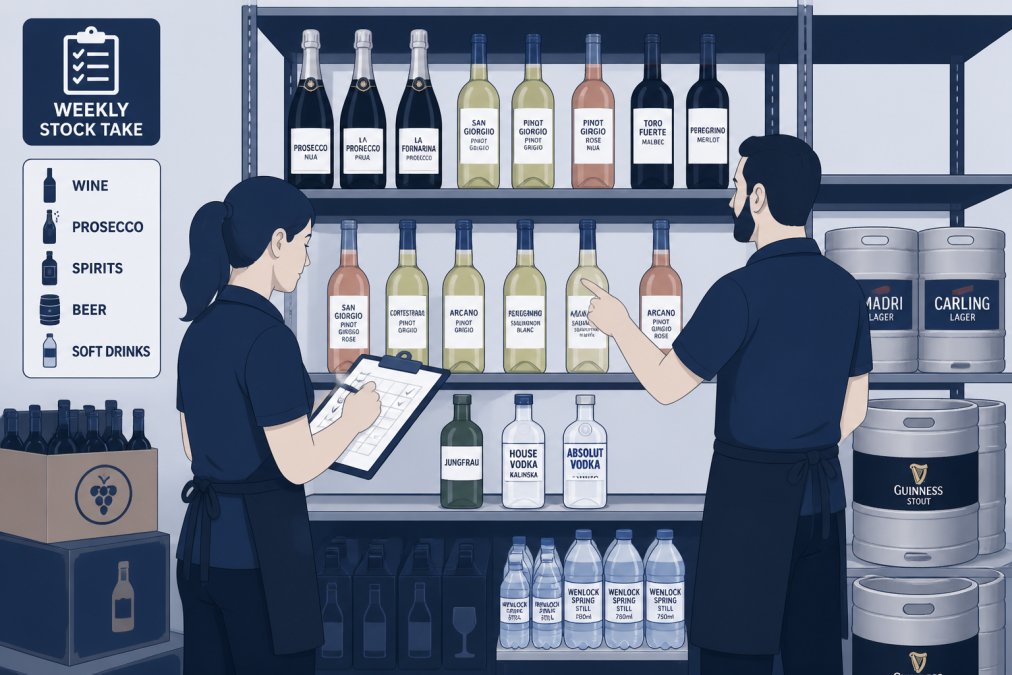
Pick the same day and time each week, many bars do this on Monday morning before deliveries arrive. This timing lets you count after the busy weekend when you'll see real usage patterns, and before fresh stock arrives.
Document your counting schedule and communicate it to your team. When staff know they're being counted weekly, they're more conscious of pour sizes and waste. Set a specific start time and aim to finish within a defined window. Rushed counts are inaccurate counts.
This is where most manual counts fall apart. Use your precision scale to weigh each partial bottle. Weigh the bottle with liquid inside, then subtract the weight of the empty bottle to get net liquid weight. Convert that to a percentage of a full bottle.
Alternatively, measure by pour size. If your standard pour is 50ml and you count 15 pours missing from a bottle, you've used 750ml, essentially a full bottle.
For wine, estimate visually, a three-quarters full bottle is clearly three-quarters full. Beer bottles are discrete units; count them as whole bottles unless tracking draught kegs, which require a separate system.
Document partial bottles on your spreadsheet with both the percentage remaining and the measurement you used. This creates an audit trail.
Your spreadsheet turns raw counting data into actionable information.
Organise your spreadsheet by product category: spirits, wine, beer, soft drinks, mixers, and any other relevant categories. Create a separate section for each category. Within spirits, break down by type: vodka, gin, rum, whisky, brandy.
For each product, list the brand and bottle size. Write "Smirnoff 700ml" rather than just "vodka". Specificity prevents confusion and makes ordering easier.
Product Category | Product Name | Bottle Size | Starting Stock | Ending Stock | Variance |
|---|---|---|---|---|---|
Spirits | Smirnoff Vodka | 700ml | 8 bottles | 6.5 bottles | 1.5 bottles |
Spirits | Tanqueray Gin | 700ml | 6 bottles | 5 bottles | 1 bottle |
Wine | Pinot Grigio | 750ml | 12 bottles | 9 bottles | 3 bottles |
Beer | Guinness Draught | Pint | 24 pints | 18 pints | 6 pints |
Your starting stock for this week is your ending stock from last week. Record it before you begin counting. This creates continuity and lets you spot if numbers don't match week to week.
As you count, record the ending stock for each product precisely. If you have 6 full bottles and one half-full bottle, record 6.5 bottles, not 6 or 7.
Calculate variance immediately: Starting Stock + Purchases - Ending Stock = Variance. This represents what you've used, sold, or lost to waste and shrinkage.
Variance numbers are only useful if you understand what they mean.
Variance is the difference between what you expected to use and what actually disappeared. Not all variance is waste; some is legitimate usage, some is spillage, some is over-pouring, and some might be theft or measurement error.
Track variance week to week. Look for patterns. If spirits variance is consistently high but beer variance is low, the problem is likely with how spirits are poured. If variance spikes in certain weeks, investigate what was different.
Cost of Goods Sold (COGS) is the actual cost of the drinks you've sold. Calculate it like this: Starting Stock (at cost) + Purchases (at cost) - Ending Stock (at cost) = COGS.
For example, if you started with £500 worth of spirits, purchased £800 more, and ended with £450 worth, your COGS is £850. If your spirits sales were £2,000, your COGS percentage is 42.5%. Most bars aim for COGS between 25-35% depending on pricing strategy.
When COGS creeps above your target, investigate. It usually means you're not charging enough, your variance is too high, or purchasing costs have increased.
Working with a reliable supplier like Swallow Drinks helps because you get consistent pricing and transparent invoicing. When you know exactly what you paid for each bottle, calculating COGS becomes straightforward. Our team has supported bar managers across Birmingham and the West Midlands for over 40 years, and we understand how critical accurate cost tracking is to your margins.
Beyond spreadsheets, several techniques improve counting accuracy and help you spot problems faster.
Par level tracking is simple but powerful. Set a target quantity for each product based on your sales patterns. If you sell eight bottles of Smirnoff per week, your par level might be 10 bottles. When your count drops below par, you order.
Barcode scanning can speed up your count. You scan each bottle, and the system records it. This reduces transcription errors but doesn't replace measuring partial bottles by weight.
Shelf layout optimisation reduces counting errors. Organise your stock by category and type, with each product in a designated location. When everything has a home, you count faster and miss fewer items.
Waste tracking logs capture waste separate from normal usage. When a bottle breaks, when you pour out expired stock, or when you have spillage, record it separately. This separates legitimate waste from shrinkage.
For bar managers looking to simplify ordering alongside counting, Swallow Drinks' trade ordering platform at webtrade.swallow.uk.com lets you place orders based on your stock take results, with consistent delivery across the West Midlands.
Most counting errors fall into predictable categories.
Counting during service introduces chaos. Bottles move, staff pick up stock, customers order drinks. Always count when closed or during the quietest possible time.
Not accounting for purchases between counts is a major error. If you count on Monday morning but received a delivery on Sunday, include that delivery in your starting stock or your variance will be wildly inaccurate.
Rounding partial bottles instead of measuring them is the most common source of variance. Measure every partial bottle.
Inconsistent counting methods between weeks make comparison impossible. Pick a method and stick to it.
Not training staff on why accuracy matters leads to sloppy counts. When staff understand that variance directly affects their venue's profitability, they take counting seriously.
Forgetting to record the count date and time is important. Always timestamp your counts.
Your counting system is only as good as the people executing it.
Start by explaining the purpose. Staff need to understand that accurate counts lead to better ordering decisions, which lead to better product availability and fewer stockouts.
Walk through the counting process step by step. Show them how to use the precision scale. Demonstrate how to record partial bottles. Have them practise on a small section of stock before conducting a full count.
Establish a two-person counting system. One person counts and calls out the number; the other records it. This creates a check against errors.
Rotate who counts. When the same person counts every week, they develop blind spots. Rotation keeps everyone sharp.
Debrief after each count. Review the variance numbers together. If variance is high for a particular product, discuss why. Involving staff in the analysis makes them feel ownership over the results.
Manual alcohol stock tracking requires discipline, but it gives you control that no software can match. You'll know exactly where your stock is going, where your margins are disappearing, and what needs to change.
When you're ready to optimise your ordering based on your counts, Swallow Drinks provides consistent supply across the West Midlands with transparent pricing and reliable delivery. Our team understands bar operations intimately; we've supported independent venues for over 40 years. Register with our trade ordering platform at webtrade.swallow.uk.com to place orders based on your stock take results and ensure your par levels stay accurate.
Most independent pubs benefit from a full stock take every one to two weeks, with weekly counts of high-turnover spirits and popular drinks. This frequency helps catch discrepancies early and prevents significant stock loss. Some venues do monthly full counts if they have strong day-to-day controls in place. The key is consistency; set a regular schedule and stick to it so you can spot trends in wastage and pour costs.
Count during a quiet period when you can focus without interruption. Measure partial bottles using a precision scale or graduated measuring jug to the nearest 25 ml. Work systematically through each shelf, recording quantities in your spreadsheet as you go. Verify your numbers by having a second person recount high-value bottles. Reconcile against your previous count to calculate variance, then investigate any significant discrepancies before they become losses.
Calculate stock variance by comparing your ending stock against your starting stock plus purchases, minus recorded sales. The difference is your unaccounted-for stock. Divide this by your total stock value to find your wastage percentage. To track pour costs, divide your total cost of goods sold by your total revenue. Most bars aim for a pour cost between 20-30%. Regular manual tracking reveals whether wastage is from spillage, theft, or inaccurate pouring, so you can take targeted action.
Don't skip counting partial bottles or assume they're negligible—they add up quickly. Avoid counting at busy times when you're likely to make errors. Never rely on memory or rough estimates; always record numbers immediately. Don't forget to account for stock used in cocktails or given as comps. Ensure staff understand the importance of accuracy and that par levels are realistic for your venue. Finally, review your records regularly so you can spot patterns and address problems before they become serious losses.
Members of:


AWRS Registration Number: XJAW00000100730