Jul 22, 2026
Last Updated: July 22, 2026
Managing wholesale alcohol prices is critical to bar profitability. The difference between paying the right price and overpaying determines whether a venue thrives or struggles. At Swallow Drinks, we've spent over 40 years helping bar owners navigate wholesale pricing: understanding what you pay directly determines what you can charge and what you keep.
The challenge isn't just finding a supplier. It's knowing whether quoted prices are competitive, calculating the true cost per drink, and structuring your menu so every pour contributes to your bottom line. Most bar operators focus on customer pricing and forget to reverse-engineer their wholesale costs. Your wholesale alcohol prices dictate everything downstream.
Your pour cost is the wholesale price you pay for every drink served, expressed as a percentage of revenue. This percentage, called your pour cost percentage, tells you whether a drink is profitable at your current menu price.
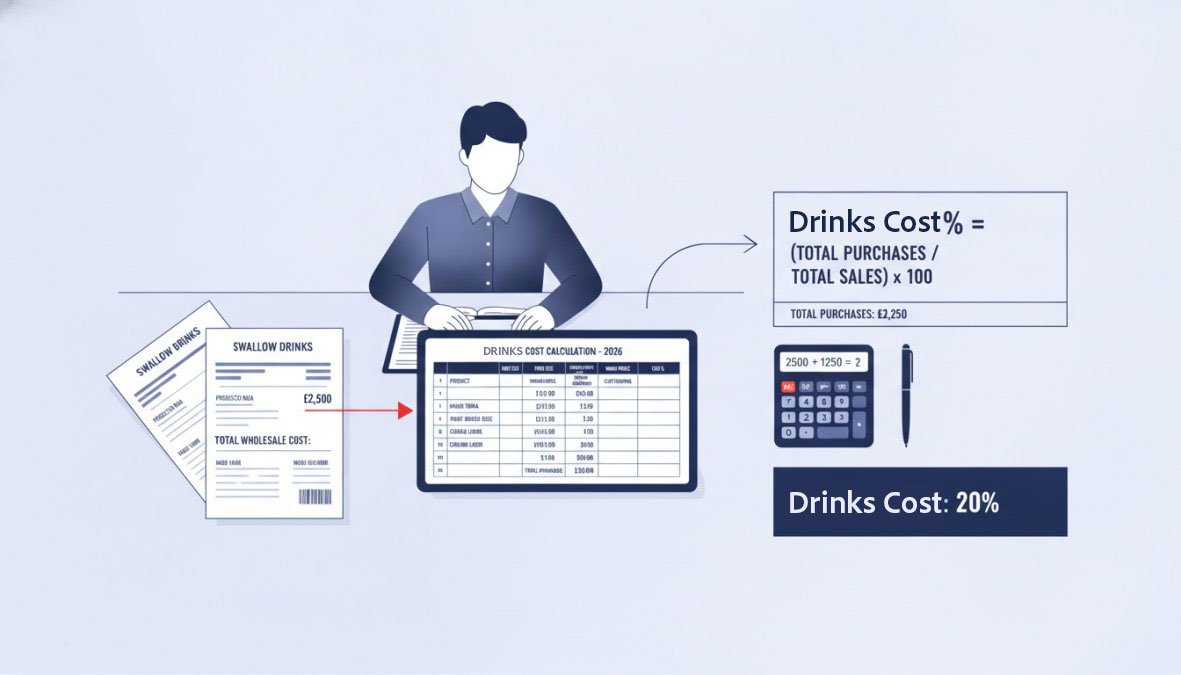
The basic formula: divide your cost of goods sold (COGS) by revenue, then multiply by 100. If a bottle of vodka costs £12.41 and yields 20 standard drinks, your cost per pour is roughly 62 pence. If you sell that drink for £7, your pour cost is 9%. If you sell it for £5, your pour cost jumps to 12%.
The industry benchmark sits around 20-28% pour cost for spirits-heavy venues, though this varies by concept. Craft cocktail bars might run 25-30% because customers expect premium ingredients. High-volume shots bars might run 15-18% because volume compensates for lower margins. Wine bars might run 30-35% because wine has different wholesale-to-retail ratios than spirits.
Pour cost percentage tells you what's left for operating expenses and profit. If your pour cost is 25%, you're keeping 75 pence from every pound of drink revenue before labour, rent, and utilities. A venue running 30% pour cost has 70% gross profit available. A venue running 28% pour cost has 72%. That 2% difference on £50,000 in monthly drinks revenue equals £1,000 monthly or £12,000 annually.
Some venues deliberately run higher pour costs in specific categories to build loyalty. Running 35% on premium spirits signals quality and justifies premium pricing. Running 18% on lager kegs drives volume. The key is intentionality, you choose your pour costs by category, not by accident.
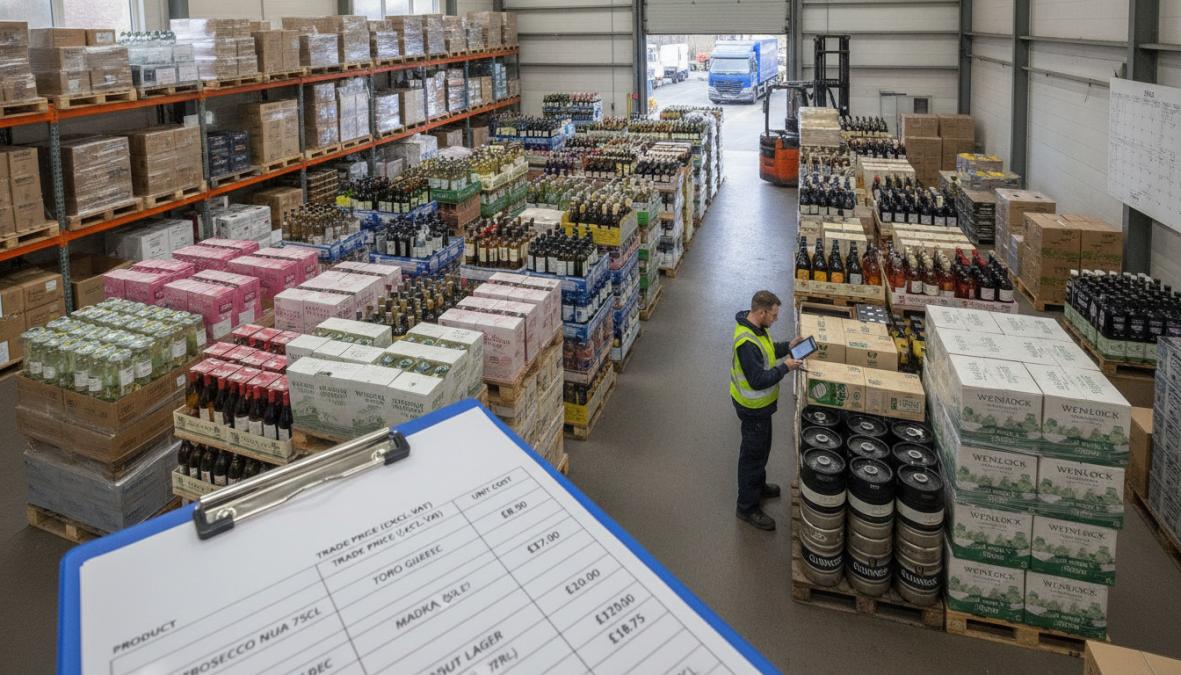
Pricing comparison visual for Close for wholesale alcohol prices
Cost per ounce is useful when mixing drinks with varying pour sizes. A standard spirit pour in the UK is 25ml or 50ml. A 70cl bottle contains roughly 28 standard 25ml pours. If that bottle costs £12.41, your cost per 25ml pour is 44 pence. Your cost per 50ml pour is 88 pence.
The markup formula is simple: divide your selling price by your cost. A £7 cocktail with 88 pence in spirits has a markup of roughly 8:1. A £5 pint with £1.20 in lager has a markup of roughly 4:1. Higher markups aren't always better, a 4:1 markup on high-volume lager might generate more absolute profit than an 8:1 markup on a specialty drink that sells three times weekly.
Many bars use a standard multiplier: cost × 3 or cost × 4, depending on category. This works as a baseline but ignores demand elasticity. If customers will pay £8 for a cocktail but you're charging £6, you're leaving money on the table.
Different alcohol categories have fundamentally different wholesale-to-retail economics. Spirits, wine, beer, and ready-to-drink (RTD) products each have their own supply chains, margins, and customer expectations.
Spirits typically offer the best margins. A bottle of house vodka wholesale at £12.41 can generate 20-28 drinks. At 25ml pours, that's 28 drinks. Even at conservative pricing of £6 per spirit-forward drink, a £12.41 bottle generates £84 to £168 in revenue. Your pour cost on spirits typically ranges from 8-15%.
Wine operates differently. A bottle wholesale at £6-£12 generates 5-6 standard 175ml glasses. Your pour cost on wine sits higher, typically 25-35%, because the wholesale-to-glass ratio is tighter. A £10 bottle selling at £7 per glass generates £35 revenue against a 28% pour cost. This is why wine bars charge premium prices.
Beer and lager kegs like Carling Lager 50L at £175.91 generate roughly 140-160 pints per keg. At £5 per pint, a £175 keg generates £700-£800 revenue. Your pour cost on draught lager typically sits 15-20%. Bottled beer is higher margin than draught because there's no line waste or spoilage risk.
Cocktails create real differentiation. A £12 cocktail with £2.50 in wholesale spirits, £0.50 in mixers, and £0.30 in garnish has a COGS of roughly £3.30, or 27% pour cost. That leaves 73% gross margin to cover labour, glassware, ice, and profit. High-end cocktail bars justify £14-£18 pricing on premium cocktails by sourcing rare spirits and creating signature recipes.
Your wholesale alcohol prices vary dramatically based on package size. A 50-litre keg of Guinness Stout at £184.01 generates roughly 140-160 pints depending on waste. Buying the same beer in bottles costs more per unit but eliminates keg rental fees, line maintenance, and spoilage risk.
Cases of bottled beer wholesale at roughly £0.70-£1.20 per bottle depending on brand and volume. Selling each bottle at £4.50-£6 gives you 60-87% gross margin. This is why independent bars often prefer bottled beer for slower-moving premium brands.
Spirits wholesale pricing depends heavily on volume and supplier relationships. A single bottle of house vodka at £12.41 is one price. Buying a case of 12 bottles might drop the per-bottle cost to £11.50. Buying a full pallet might drop it to £10.80. These volume discounts create real competitive advantage.
Your distributor relationship determines what you pay, how reliably you receive stock, and whether you can execute your bar concept profitably.
Wholesale pricing is what you pay your distributor. Retail pricing is what you charge customers. Most bars operate with wholesale prices 40-60% below retail, depending on category and concept. A spirit retailing at £7 per drink might wholesale at £2.50-£3 in COGS. A pint of lager retailing at £5 might wholesale at £1.20-£1.50.
Volume discounts are the primary lever for reducing wholesale prices. A small bar buying 6 bottles of a spirit might pay £12.41 per bottle. Buying 12 bottles might trigger a 3% discount. Buying 24 bottles might trigger a 5%. Buying a full case of 60 might trigger a 10%. These discounts compound significantly over a year.
The challenge is cash flow. A small bar can't afford to buy 60 bottles at once, even at a 10% discount, if it takes three months to sell through. Swallow Drinks, as a family-run independent wholesaler with 40 years serving the on-trade sector, understands this tension and works with bars on flexible ordering through Trade ordering.
Your wholesale alcohol prices only matter if you convert them into revenue efficiently. Inventory management, specifically reducing shrinkage and waste, is where many bars leak margin.
Shrinkage in bars comes from spillage, over-pouring, and theft. A 2-3% shrinkage rate is normal. Above 5%, you have a problem. The best defence is visibility. A modern point-of-sale system that tracks every drink sold by category, bartender, and time of day gives you data to spot anomalies. If bartender A averages 1.8 pints per keg while bartender B averages 2.1 pints, you've identified a training opportunity.
Waste comes from stock that expires or spoils. Wine and spirits don't expire, but they can oxidise if bottles are left open. Beer goes stale. The solution is simple: don't over-stock slow-moving items. Buy smaller quantities more frequently rather than large quantities infrequently.
POS integration with inventory management creates real-time visibility. You see what you sold, what you should have in stock, and what's actually on the shelf. When these numbers don't match, you've found your shrinkage.
Understanding where you sit relative to industry benchmarks helps identify opportunities. A bar running 32% pour cost in a market where the benchmark is 26% is either buying at higher wholesale prices or pricing too low.
Your target COGS depends on your concept. A high-volume lager bar might target 18-22%. A craft cocktail bar might target 25-30%. A premium wine bar might target 30-35%. These targets determine your wholesale pricing strategy and menu pricing.
Menu engineering means strategically adjusting your menu to shift sales toward higher-margin items. If your house cocktails have 27% COGS and your premium cocktails have 32% COGS, but customers would happily buy the premium version if you positioned it better, you've left margin on the table. Moving customers up to higher-priced, higher-margin offerings is one of the most effective levers for improving profitability without increasing wholesale prices.
Metric | Target Range | Why It Matters |
|---|---|---|
Spirit COGS | 8-15% | High-margin category; drives profitability |
Wine COGS | 25-35% | Lower margin; requires premium positioning |
Beer/Lager COGS | 15-22% | Volume driver; lower margin acceptable |
Cocktail COGS | 22-32% | Depends on premium vs. standard positioning |
Overall Drinks COGS | 20-28% | Benchmark for healthy bar operations |
Reducing your wholesale alcohol prices requires a multi-layered approach. Start by mapping your current costs. What are you actually paying for your top 20 products? Many bar owners are surprised to discover they're paying 10-15% more than they thought on their highest-volume items.
Next, consolidate suppliers. If you're split across four distributors, you're not getting volume discounts from any of them. Moving 70% of your volume to one supplier, particularly one like Swallow Drinks that understands the on-trade sector, creates immediate savings.
Third, negotiate actively. Get quotes from two or three suppliers for your core products. Most distributors will match or beat a competitor's price if it means keeping your business.
Fourth, manage your menu strategically. Use your POS data to identify which products have the best margins. Promote high-margin items and consider discontinuing low-margin ones.
Finally, stay informed about market trends. Wholesale alcohol prices fluctuate based on currency movements, harvest yields, and supply chain disruptions. A distributor who communicates these trends proactively is worth partnering with long-term.
Managing wholesale alcohol prices for bars is fundamentally about understanding your costs, negotiating strategically with suppliers, and translating those savings into menu pricing that protects your margin. The bar owners who succeed build reliable supplier relationships, manage inventory efficiently, and use data to make pricing decisions. Swallow Drinks combines competitive wholesale pricing with the service reliability and industry expertise that independent bars need to thrive. Start by mapping your current costs, consolidate your suppliers, and use your POS data to guide your menu strategy. The difference between a 26% pour cost and a 28% pour cost is thousands of pounds annually.
Pour cost percentage is calculated by dividing your total liquor cost (COGS) by your total drinks revenue, then multiplying by 100. For example, if you spend £500 on wholesale alcohol prices and generate £2,000 in drinks sales, your pour cost is 25%. Industry benchmarks typically target 20–28% depending on your concept and customer demographics. Tracking this metric helps you identify pricing gaps and optimise your menu to maintain healthy profit margins.
Wholesale alcohol prices are what you pay to suppliers or distributors when buying stock in bulk—typically per case or keg. Retail pricing is what you charge customers per drink. The markup varies by alcohol type: spirits often have 4–5x markup, wine 3–4x, and beer 2–3x. Swallow Drinks, with 40 years of experience serving bars across Birmingham, offers competitive wholesale pricing that allows independent bars to maintain healthy margins without requiring large minimum orders.
Build leverage by consolidating orders, committing to volume, and establishing long-term relationships. Request volume discounts, ask about seasonal promotions, and compare pricing across multiple alcohol distributors for bars. Transparency matters—ask for itemised invoices to identify hidden fees. Timing negotiations around slower trading periods or end-of-quarter can yield better terms. Consider registering on trade ordering platforms like Swallow's WebTrade (https://webtrade.swallow.uk.com/) to access real-time pricing and negotiate directly with your supplier.
Key factors include location (regional supply costs and UK licensing regulations), your bar's concept and customer demographics, purchase volume, and broader economic conditions like inflation and supply chain disruptions. Craft and premium brands command higher wholesale prices than standard options. Working with an established independent wholesaler like Swallow Drinks helps you navigate these variables and source quality spirits, wine, and beer that align with your menu strategy and budget constraints.
Members of:


AWRS Registration Number: XJAW00000100730