Jul 30, 2026
Last Updated: July 30, 2026
When running a bar, restaurant, or hospitality venue, selecting the right drinks wholesaler is one of your highest-impact purchasing decisions. A venue ordering £500 per week in drinks stock faces annual supplier spend of around £26,000. Even a 3-5% saving translates to thousands of pounds in recovered margin. At Swallow Drinks, we've spent over 40 years helping independent hospitality businesses across Birmingham and the West Midlands make informed sourcing decisions that balance cost with quality and consistency.

Most venue operators focus solely on per-bottle cost, then wonder why margins feel tight and service suffers. The difference between a good comparison and a poor one comes down to understanding hidden costs, minimum order quantities, delivery schedules, and payment terms that aren't immediately obvious in a price list.
Price alone misses the point. A supplier with lower unit costs but unreliable Friday deliveries costs far more in lost sales than a slightly pricier supplier who shows up consistently. A supplier with narrow product range forces you to work with multiple wholesalers, fragmenting purchasing power and complicating ordering.
Venues that perform best treat supplier selection as strategic, not transactional. They compare price, delivery frequency, payment flexibility, product availability, account support, and willingness to stock niche or local labels. That's where a structured wholesale drinks supplier price comparison becomes competitive advantage.
Understanding what drives pricing is essential before comparing quotes.
The larger your order, the lower your per-unit cost. This applies to spirits, beers, and soft drinks equally.
When comparing suppliers, request quotes at three volume levels: your typical weekly order, 50% higher, and 100% higher. This reveals where real savings kick in and helps you decide whether increasing order frequency makes financial sense.
A supplier with lower per-bottle prices but higher delivery charges may cost more than a pricier competitor who includes delivery. Many wholesalers offer free or reduced delivery on orders above certain value thresholds (often £150-£250).
Ask every supplier about their delivery model: Is delivery included or charged separately? What's the minimum order value for free delivery? How many days per week do they deliver to your postcode? Can they guarantee delivery on specific days?
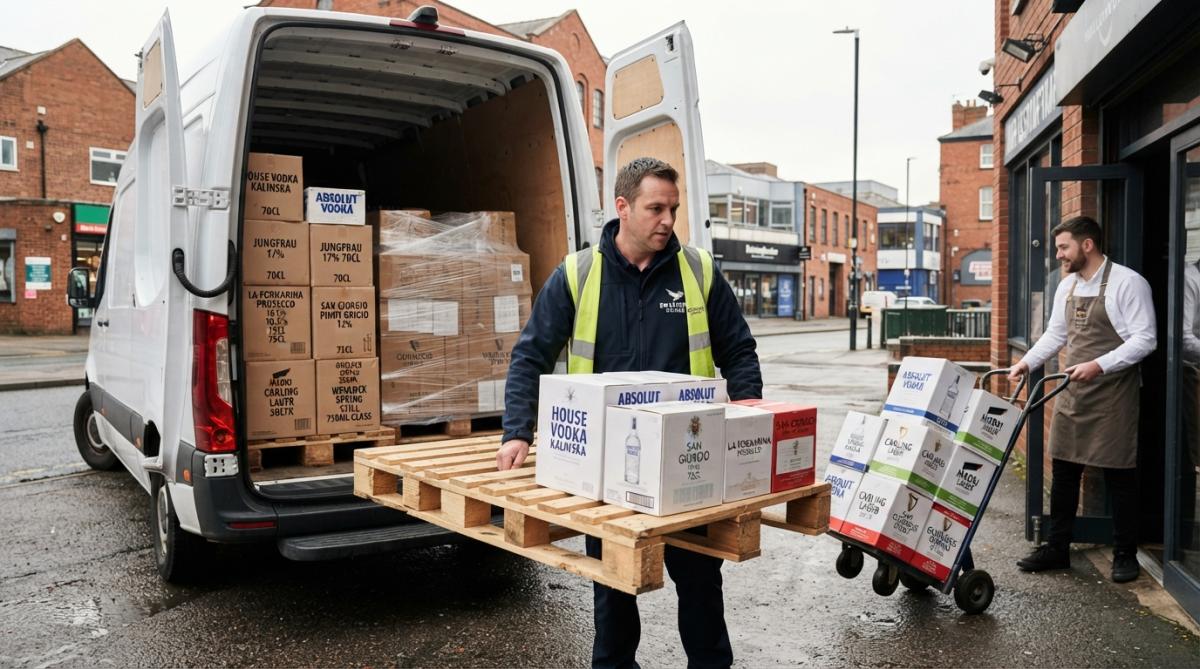
For venues in Birmingham and the surrounding West Midlands, Swallow Drinks offers six-day-a-week delivery, eliminating the Friday-night stock-out problem that plagues many independent operators.
Payment terms affect cash flow and working capital. A supplier offering 30-day payment terms lets you sell drinks before paying the invoice. A supplier requiring payment on delivery ties up cash immediately.
Compare these terms across suppliers: payment on delivery, Net 7, Net 14, or Net 30 terms, deposit requirements, and early payment discounts. For smaller venues, the difference between Net 7 and Net 30 can be substantial. Negotiate for the longest payment terms possible, especially as a new account.
Factor | Impact on Total Cost | Negotiable? |
|---|---|---|
Unit price per bottle | Direct (5-15% variance) | Yes, with volume |
Delivery charge | Per order (£10-£40+) | Yes, with commitment |
Minimum order quantity | Affects order frequency | Yes, for established accounts |
Payment terms | Cash flow impact | Yes, as you build trust |
Volume discount threshold | Incentivizes larger orders | Yes, discuss tiers |
Soft drinks form a substantial part of most on-trade venues' stock. A good soft drinks supplier should offer major brands at competitive wholesale prices, premium mixers for craft cocktail programmes, still and sparkling water options, and flexibility to trial new products without long-term commitment.
Swallow Drinks stocks an extensive range of soft drinks alongside our core spirits, wines, and beers portfolio. For venues in Birmingham and the West Midlands, we typically deliver soft drink orders within 24 hours, meaning you're not forced to over-order to avoid stock-outs.
When evaluating quotes, request pricing on your top 10 SKUs (stock-keeping units). This gives realistic comparison of your actual spend, not just headline prices on bestsellers.
Alcoholic drinks typically represent 60-75% of a venue's drinks spend. Getting this category right is where a structured wholesale drinks supplier price comparison delivers most value.
Spirits pricing varies dramatically based on brand and origin. Wine pricing depends heavily on region and vintage. Beer pricing is more standardised.
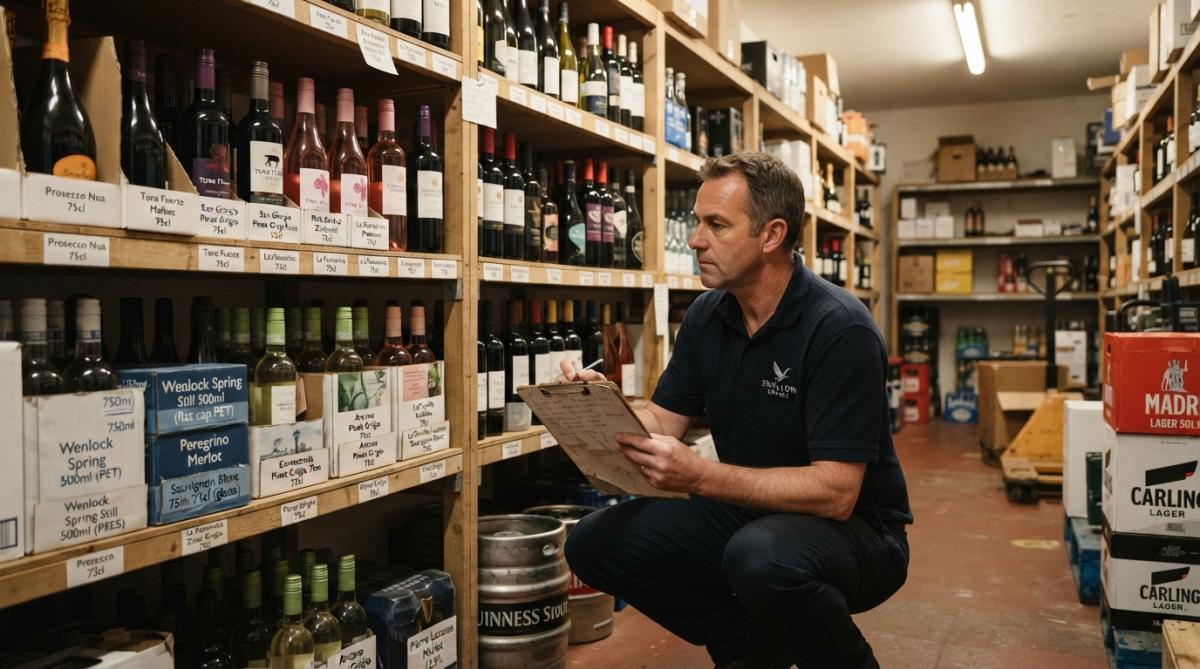
Swallow Drinks stocks a curated range including [House Pinot Grigio](https://www.swallow.uk.com/products.php?prd=wine&sprd=still-wine&pid=house-pinot-grigio-12-75cl#productcats) at £6.99 per 75cl bottle and House Merlot at the same price point, offering strong margins without compromising quality. Our House Vodka Kalinska 70cl is available for £12.41, and House Prosecco 11% 75cl for £7.89.
When comparing alcoholic drinks suppliers, request detailed price lists for at least 30 SKUs across these categories.
The quoted price per bottle is only part of total cost. Hidden fees and surcharges can easily add 5-10% to your effective spend.
Many wholesalers charge surcharges for small orders, deliveries outside primary service areas, rush delivery requests, returns of damaged stock, or credit card payments. Some suppliers offer rebates or promotional allowances.
When comparing wholesale drinks supplier quotes, ask explicitly: Are there any surcharges? What's the payment method policy? Are promotional discounts automatic or do I need to request them? What's your policy on damaged goods and returns?
Some suppliers lock you into long-term contracts with penalties for early termination. Before signing any agreement, clarify: Is there a minimum contract length? What are the early termination fees? Can you pause or reduce orders during quiet periods without penalty? Is there a price lock period?
Independent venues should be wary of suppliers requiring long-term commitments. Your business changes seasonally and strategically; your supplier agreement should reflect that flexibility. Swallow Drinks works with independent venues on flexible terms because we understand your needs evolve.
When comparing wholesale drinks suppliers, don't overlook the regulatory landscape. Compliance costs are real, and some suppliers build them into pricing whilst others don't.
If buying alcoholic drinks, your supplier must be registered with HMRC's Alcohol Wholesaler Registration Scheme (AWRS). This is a legal requirement for any business supplying alcohol in the UK. When vetting suppliers, always ask for their AWRS registration number and verify it on the HMRC website.
Beyond AWRS, suppliers must comply with duty labelling requirements, age verification protocols for delivery, and record-keeping for all alcohol transactions (typically 6 years). Some wholesalers charge compliance fees; others build these costs into pricing without itemizing them.
The Consumer Rights Act 2015 and Competition and Markets Authority (CMA) guidance on unfair commercial practices apply to B2B relationships, including wholesale drinks supplier agreements. Unfair contract terms include unilateral price increases without notice, automatic contract renewal with difficult cancellation, disproportionate penalties, and clauses allowing the supplier to change terms mid-contract without your agreement.
If a supplier's contract includes these terms, negotiate them out or walk away.
Understanding current market trends helps you anticipate pricing changes and identify opportunities to differentiate your venue.
The craft beer and premium spirits market continues to grow. Independent venues that stock carefully curated ranges command higher margins and attract customers willing to pay for quality and uniqueness. However, niche sourcing comes with higher costs and minimum order challenges.
Swallow Drinks has built relationships with independent breweries, distilleries, and producers across the UK, allowing us to source products that larger national wholesalers simply don't stock. When comparing suppliers, specifically ask about their niche and craft portfolio.
Low and no alcohol (LNAB) drinks have moved from niche health trend to mainstream category. However, margin potential is strong because consumers accept premium pricing for quality LNAB options.
When comparing wholesale drinks suppliers, ask about their LNAB range.
Now that you understand factors affecting pricing, here's how to conduct a wholesale drinks supplier price comparison and negotiate better terms.
Start by defining your actual needs. Compare suppliers on products you actually order, not their full range.
Step 1: Create a list of your top 30-50 SKUs. Include spirits, wines, beers, soft drinks, and speciality items. For each SKU, note the product name and size, your typical weekly order quantity, and current price if applicable.
Step 2: Request quotes from at least three suppliers. Provide your SKU list and ask for pricing at your typical order volume, plus two higher volumes (50% and 100% above typical) to see where discounts kick in.
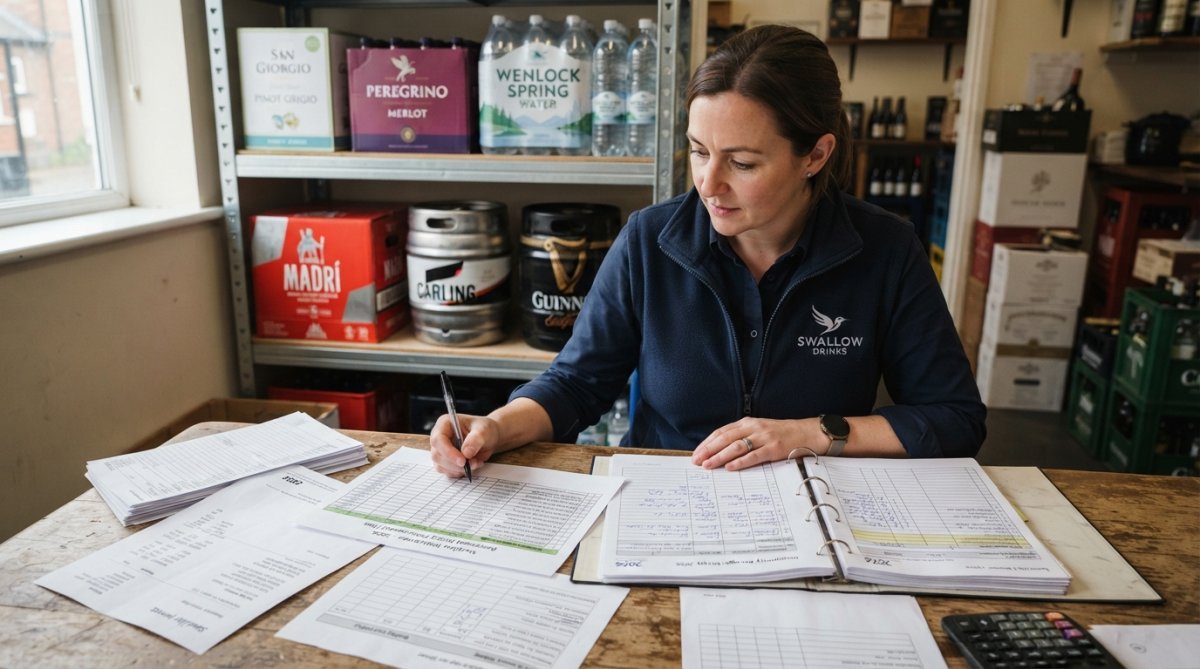
Step 3: Create a comparison spreadsheet calculating total weekly cost at each volume level, cost per SKU, delivery costs, payment terms, and any surcharges.
Step 4: Identify the lowest-cost option, but also note second and third options. Sometimes the cheapest supplier has service or range limitations that offset the price advantage.
Before committing to a new wholesale drinks supplier, ask these questions:
On pricing and terms:
On delivery and reliability:
On product range and support:
On the relationship:
For venues in Birmingham and the West Midlands, Swallow Drinks can answer all of these questions clearly. We're a family-run business with over 40 years of experience, offering six-day-a-week delivery, flexible payment terms for established accounts, and a dedicated approach to sourcing niche and local labels. We treat independent venues as partners, not transaction volumes.
Access our full product range and place orders through our trade ordering platform. Our product pages include House Vodka Kalinska 70cl at £12.41, House Prosecco 11% 75cl at £7.89, and [House Pinot Grigio 12% 75cl](https://www.swallow.uk.com/products.php?prd=wine&sprd=still-wine&pid=house-pinot-grigio-12-75cl#productcats) at £6.99, all positioned to support strong venue margins without compromising quality.
A wholesale drinks supplier price comparison done well transforms how your venue operates. You'll reduce costs, improve cash flow, gain access to better products, and build a partnership with a supplier who understands your business. Swallow Drinks has helped hundreds of independent venues across Birmingham and the West Midlands do exactly this. Get in touch to discuss your sourcing needs and how we can support your venue's growth.
Compare unit prices across the same volume thresholds, then factor in delivery costs, minimum order quantities, and payment terms. Request quotes from multiple suppliers using the same product list and order volumes. Create a spreadsheet tracking total cost per unit after all fees. Don't compare price alone—evaluate the full cost of goods sold (COGS), including any surcharges, rebates, or promotional allowances that affect your final invoice.
Watch for delivery surcharges (especially for small orders), fuel levies, handling fees, and minimum order penalties. Some suppliers charge for promotional materials or require exclusive stocking. Check contract terms for early termination fees, price-lock periods, or automatic renewal clauses. Ask explicitly about rebates and how they're applied—some are deducted at invoice, others credited quarterly. Always request a written breakdown of all charges before committing.
All suppliers must hold AWRS (Alcohol Wholesaler Registration Scheme) registration if they supply alcohol. They must comply with the Consumer Rights Act 2015 and the Unfair Contract Terms Act 1977, which protect you from unfair contract terms. Suppliers must provide transparent pricing and clear delivery terms. If you're in a tied pub arrangement, additional regulations apply. Always verify a supplier's AWRS status before trading and request their registration number for compliance records.
Members of:


AWRS Registration Number: XJAW00000100730