Aug 04, 2026
Reducing bar pour costs is one of the most direct levers available to hospitality operators seeking to protect margins. At Swallow Drinks, we've tracked pour costs across hundreds of on-trade venues, and venues that measure and standardise their pouring practices consistently outperform those that don't. Many bar owners discover that uncontrolled pouring costs them between 2-5% of annual revenue. Without clear systems, human nature tends toward generosity, a pour that should be 25ml becomes 30ml. Over hundreds of drinks per week, these small overages compound into significant losses.
Pour cost percentage directly affects gross margin. For a bar turning £8,000 per week in sales, a 2% improvement in pour costs translates to roughly £160 in recovered profit, or £8,320 annually.
The foundation of any pour cost reduction strategy rests on standardisation. A measured pour spout or jigger removes ambiguity and is the single most effective tool for reducing alcohol wastage and maintaining consistency across your team.
A jigger is a two-sided measuring cup, typically offering 25ml on one side and 50ml on the other. Measured pour spouts are fitted directly to bottle necks and dispense a fixed quantity with each trigger pull, typically 25ml or 50ml depending on the model.
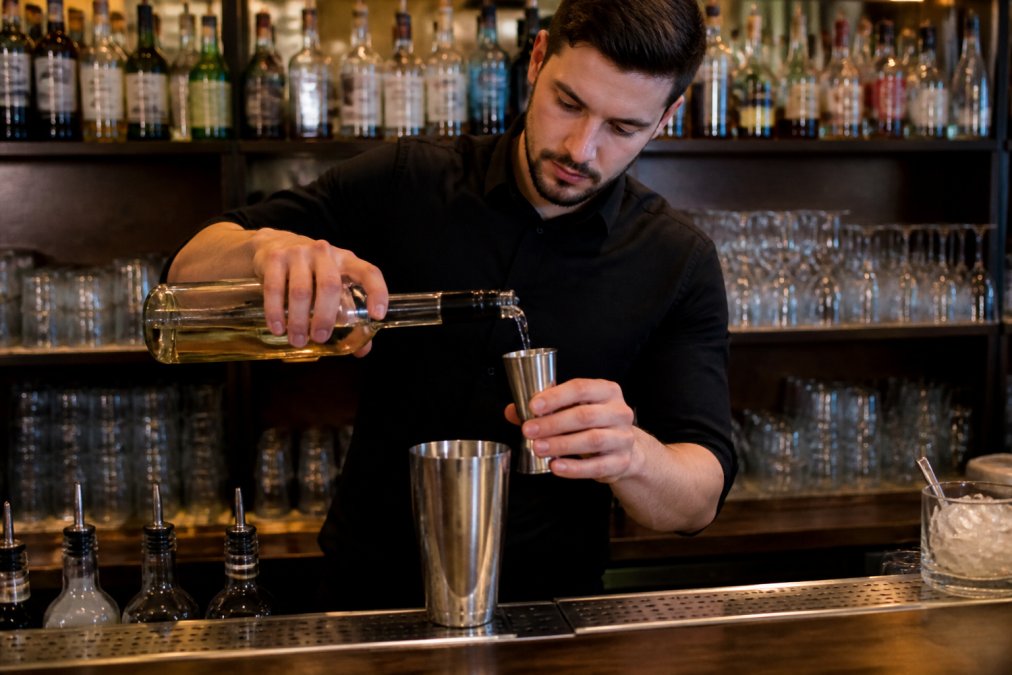
Customers don't perceive a 5ml difference in spirit volume, but they do notice inconsistency. Standardised portions eliminate this perception problem and create accountability. When bartenders know their pours are measured, they take ownership of that standard as a mark of professionalism.
:::pro In venues where staff report that customers appreciate knowing exactly what they're getting. Consistency builds trust and becomes part of your venue's brand identity. :::
Measured pour spouts cost between £1-3 per unit and last 6-12 months before requiring replacement. They're particularly effective in high-volume venues where speed is critical. Manual jiggers require no maintenance beyond occasional washing and last years. For most independent pubs and bars, a hybrid approach works best: use measured pour spouts for high-volume spirits and jiggers for premium or craft spirits where customers expect to see the measure. This balances speed with flexibility and signals quality where it matters most.
Your pour cost percentage is the ratio of the cost of alcohol used to the revenue generated from alcohol sales. The formula is: (Total Cost of Alcohol Used ÷ Total Alcohol Revenue) × 100 = Pour Cost Percentage.
To calculate accurately, you need opening stock value, closing stock value, and purchases during the period. A typical target pour cost percentage for pubs ranges between 25-30%, depending on your drink mix. A venue with high premium spirits might run 32-35% and still be profitable. A venue with high soft drinks and house spirits might achieve 20-22%. Start by calculating your pour cost percentage for the last three months using historical stock data, then implement standardisation measures and recalculate monthly. A 2-3% improvement within 90 days indicates your measures are working.
Your target pour cost percentage should be determined by your business model and customer expectations. Work backwards from your profit target. If you need 40% gross margin on alcohol sales, your pour cost must be 60% or lower. Track your actual pour cost percentage weekly, not just monthly. Most POS systems can generate this report automatically.
Training is where pour cost reduction either succeeds or fails. Start with a practical session where you show each bartender exactly how you want drinks prepared. Have them pour 10 drinks under your observation and discuss any variance. Document your pouring standards in writing and post them behind the bar as both a reference and evidence of your standard.
Accountability matters more than most operators realise. Conduct random audits monthly: watch a bartender make five drinks and verify that each one meets the standard. Make it routine rather than accusatory.
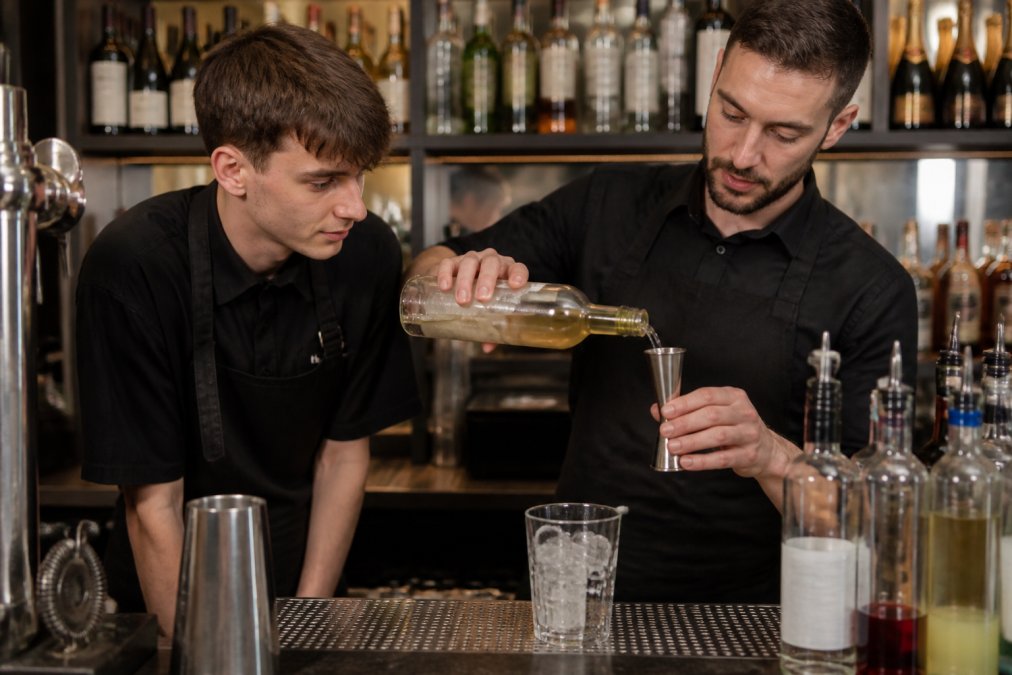
Reinforce training through positive feedback. When you observe a bartender executing perfect pours consistently, acknowledge it. This is far more effective than only commenting when something goes wrong.
Create a simple audit checklist that staff can complete weekly covering: Are measured pour spouts clean and functioning? Are jiggers being used for every pour of premium spirits? Is the pouring standard being followed? Did any customer complaints about drink strength arise? Use the checklist data to identify which staff members need additional coaching. Publishing aggregate audit results creates healthy peer accountability.
Wastage comes from multiple sources: spillage during preparation, evaporation in open bottles, drinks remade due to errors, and product that expires before use. Spillage during pouring is minimised through standardisation. Training staff to pour over a drip tray captures small spills that can be returned to the bottle. Evaporation in open bottles is harder to control but worth addressing, spirits in open bottles evaporate at roughly 2-3% per month. Keep bottle caps on when not actively pouring. Drinks remade due to error represent pure loss. Reducing these errors comes down to training and adequate staffing.
Implement a waste log where bartenders record any drink that's discarded for any reason, capturing date, time, drink name, reason, and cost. This creates visibility into where wastage is actually occurring. Shrinkage, the difference between theoretical stock usage and actual stock, often indicates either wastage or theft. Calculate shrinkage by comparing your stock count to what your POS system says should have been used. Some shrinkage is normal (1-3%), but anything above that warrants investigation.
Theft prevention starts with access control. Limit stock room access to a manager or designated senior staff member. Stock rotation using the FIFO method (first in, first out) prevents products from expiring before use.
Modern POS systems can track pour costs in real time if configured correctly. When a bartender rings in a drink, the system deducts the cost from your stock value and calculates running COGS. If the POS says you sold 100 vodka drinks this week but your stock count shows you used 110 bottles, that 10-bottle variance is flagged immediately.
Many independent pubs still rely on manual stock counts and spreadsheets. For a venue turning £8,000+ per week, upgrading to a basic POS system with stock management integration typically pays for itself within months through improved pour cost visibility alone.
Swallow Drinks can help you order more intelligently. When you understand your pour costs and sales mix, you can order more intelligently. Register on our trade ordering platform at swallow.uk.com to access real-time pricing, stock availability, and menu consultation tools designed specifically for independent venues.
Automated dispensing systems represent the next evolution beyond measured pour spouts, using electronic triggers and pre-set volumes to dispense exact measures automatically. The advantage is precision and speed; every pour is identical and recorded in real time. The disadvantage is cost and inflexibility. For most independent venues, measured pour spouts and jiggers remain the best balance of cost, control, and flexibility.
Your drink menu directly determines your pour cost percentage. Review your menu quarterly and calculate the pour cost and margin for each drink. If a drink is underperforming and has poor margin, remove it. If a drink is high-volume and high-margin, feature it prominently. Seasonal adjustments allow you to capitalise on seasonal drinking patterns. In summer, customers drink more wine and light spirits. In winter, they drink more whisky and stout.
Seasonal menu items create novelty and can command premium pricing. Working with a supplier like Swallow Drinks allows you to source specialty items that align with your menu strategy. Engage your team in menu decisions, bartenders know which drinks customers actually want.
Reducing bar pour costs requires discipline across three dimensions: standardisation of pouring practices, accurate tracking and measurement, and staff accountability. The venues that succeed treat pour cost control as an operational system rather than a one-time initiative. They measure weekly, train continuously, and adjust based on data.
The investment required is modest: a set of jiggers or measured pour spouts, a simple tracking spreadsheet or POS integration, and staff training time. The return is substantial: a 2-3% improvement in pour cost percentage translates to thousands of pounds in recovered margin annually.
For independent pubs and bars, Swallow Drinks offers more than just quality stock. We provide partnership in optimising your operation. Our 40 years serving the on-trade sector means we understand the specific challenges you face. We can advise on stock rotation, help you analyse your drink mix, and ensure you're ordering based on actual sales data rather than guesswork. Register on our trade ordering platform at webtrade.uk.com to access real-time pricing, stock availability, and menu consultation tools designed specifically for independent venues.
Start with standardised pouring measures this week. Track your pour cost percentage for 30 days. Then implement staff training and accountability systems. Within 90 days, you'll have the data you need to make informed decisions about your menu, pricing, and stock strategy.
| Strategy | Implementation Time | Expected Impact on Pour Cost | Best For |
|---|---|---|---|
| Measured pour spouts or jiggers | 1 day | 1-2% reduction | All venue types |
| Staff training and audit checklists | 2-3 hours initial, 30 min monthly | 0.5-1.5% reduction | Venues with high staff turnover |
| Waste logging and shrinkage tracking | 1 week setup, 10 min daily | 0.5-1% reduction | Venues with suspected theft or high wastage |
| POS integration with stock management | 1-2 weeks setup | 1-2% reduction | Venues with £8,000+ weekly sales |
| Menu engineering and seasonal adjustments | 2-4 weeks analysis | 1-3% margin improvement | All venue types |
Industry benchmarks for UK bars typically target a pour cost percentage between 20-30% of drink sales, depending on the venue type. High-volume nightclubs may operate closer to 20%, whilst premium cocktail bars might run 28-30%. Calculate your actual pour cost by dividing total alcohol cost of goods sold by total drink revenue, then multiply by 100. Track this monthly to spot trends and adjust pricing or portion sizes accordingly.
Implement waste logs to record spillage, breakage, and over-pouring. Train staff on proper handling techniques and establish clear pour policies using measured pour spouts or jiggers. Use stock reconciliation to identify shrinkage patterns. Stock management software helps track variance between expected and actual stock levels. Swallow Drinks can advise on product selection and portion control strategies during your ordering process via their trade area at webtrade.swallow.uk.com.
Standardise recipes and pour sizes using jiggers or measured pour spouts for every drink. Conduct regular training sessions covering proper technique, portion control, and cost awareness. Create audit checklists so staff understand what's being monitored. Pair new team members with experienced bartenders. Reward consistency and cost discipline through incentives. Many successful bars find that staff who understand the financial impact of their pours are more motivated to maintain standards.
Start by recording all alcohol purchases (cost of goods sold) over a set period, typically one month. Total your drink sales revenue for the same period. Divide total alcohol cost by total drink revenue and multiply by 100. For example, if you spend £2,000 on stock and sell £8,000 in drinks, your pour cost is 25%. Use POS systems to automate this calculation. Compare your result against your target margin to identify where adjustments are needed in pricing, portion sizes, or supplier costs.
Members of:


AWRS Registration Number: XJAW00000100730