Jul 14, 2026
Last Updated: July 14, 2026
How to reduce bar waste is one of the most pressing challenges facing hospitality businesses today. At Swallow Drinks, we've worked with hundreds of on-trade venues across Birmingham and beyond, and we've seen firsthand how wastage directly erodes profit margins. A typical bar loses between 15-25% of its stock value to spillage, overpouring, expired goods, and poor inventory management. This isn't just an operational inconvenience, it's a financial crisis hiding in plain sight.
The cost compounds quickly. A busy venue serving 150 covers per night might lose £50-100 daily to preventable waste. Over a year, that's £18,000-36,500 in lost revenue. Yet most bar managers treat waste as an inevitable cost of doing business rather than a controllable variable.
The good news: waste reduction is entirely within your control. With the right systems, training, and mindset, venues routinely cut waste by 30-40% within the first quarter. The strategies we cover below have generated measurable results across different bar sizes, from intimate wine bars to high-volume nightclubs.
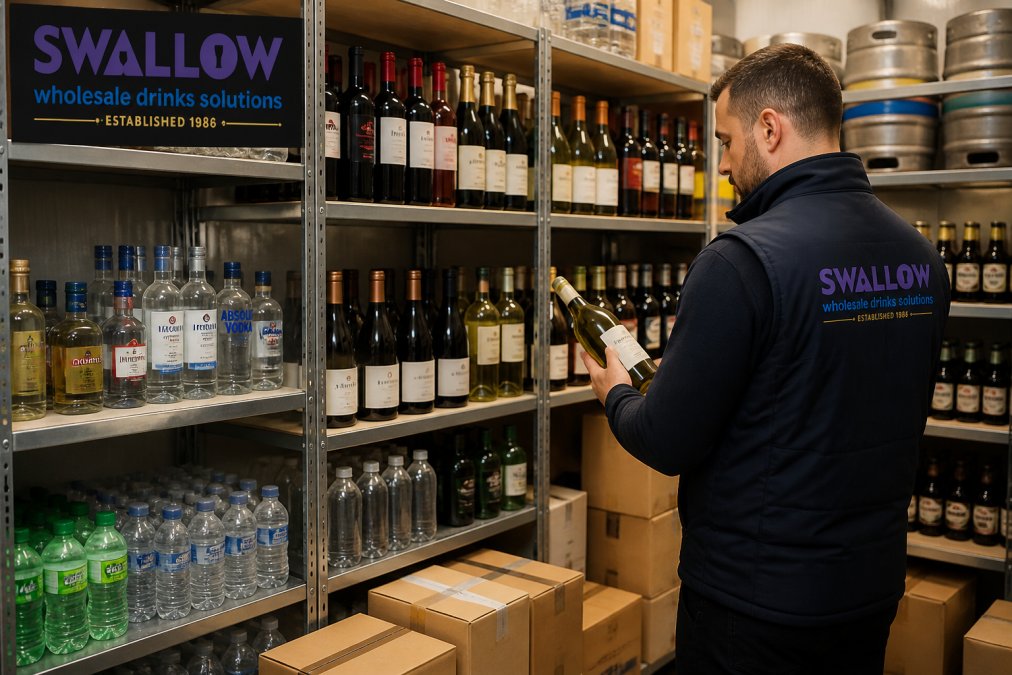
Effective inventory management is the foundation of waste reduction. Without accurate stock tracking, you're flying blind. You won't know which products are moving slowly, which are expiring, or where leaks in your supply chain are occurring.
Overpouring is the silent killer of bar profitability. A bartender who pours 50ml instead of 40ml on every spirit-based drink is giving away 25% of your margin on that product. Multiply that across a shift, and the losses become staggering.
The solution is non-negotiable: standardise every pour using calibrated jiggers. A quality jigger costs £3-8 and lasts years. The return on investment is immediate. When every bartender uses the same measurement tool, consistency improves, waste drops, and customers receive identical drinks regardless of who's behind the bar.
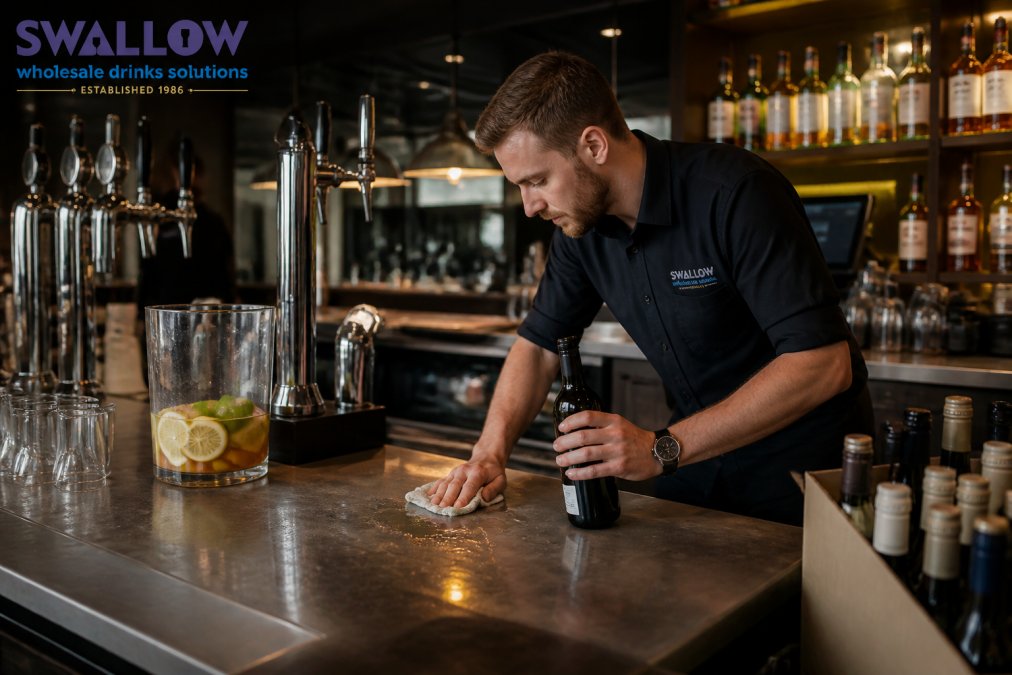
Place jiggers at every workstation. Make them mandatory, not optional. Train staff to use them for every cocktail, every shot, every mixed drink. Some venues resist this, claiming it slows service. The data tells a different story: standardised measurements actually speed up service because bartenders waste less time guessing and second-guessing themselves.
Swallow Drinks recommends implementing a simple audit system: every week, measure 10 random pours from each bartender and compare against the standard. If someone consistently overflows their jigger, that's a coaching moment, not a disciplinary issue. Most overpouring stems from habit or lack of awareness, not malice.
Perishable goods, fresh juices, cream, eggs, citrus, herbs, have short shelf lives and represent a significant waste category. A bottle of fresh lime juice opened on Monday will oxidise and lose quality by Thursday. Fresh mint wilts within days. Cream separates and curdles.
The best approach is to adopt a first-in-first-out (FIFO) system religiously. Label everything with the date it was opened or received. Store perishables in dedicated sections of your fridge with clear visibility. Train staff to check dates before using any ingredient.
For high-volume bars, consider buying perishables in smaller quantities more frequently rather than bulk orders that sit unused. A supplier like Swallow Drinks can help you refine your ordering cadence to match your actual usage patterns. This prevents waste while ensuring freshness.
Some venues are experimenting with frozen citrus components and powdered ingredients to extend shelf life without sacrificing quality. These alternatives work well for high-volume mixed drinks where consistency matters more than artisanal presentation. For premium cocktails, fresh ingredients remain essential, but manage them tightly.
Understanding your liquor cost percentage is essential for identifying where waste is happening. Liquor cost percentage is calculated as: (Cost of Drinks Sold ÷ Total Drinks Revenue) × 100. Most bars target 20-28% liquor cost, though this varies by venue type and pricing strategy.
If your liquor cost percentage is consistently above 30%, waste is likely the culprit. Overpouring, spillage, giveaways, and inventory shrinkage all inflate this number. By tracking it weekly, you create early warning signals that something needs attention.
A waste tracking sheet should capture three key metrics: stock received, stock used, and stock unaccounted for (waste). Here's a practical template you can implement immediately:
Product | Opening Stock | Received | Used (Sold) | Closing Stock | Variance | Waste % |
|---|---|---|---|---|---|---|
Vodka 1L | 8 | 4 | 9 | 2 | 1 | 5.3% |
Gin 1L | 6 | 3 | 7 | 1 | 1 | 6.7% |
Rum 1L | 5 | 2 | 5 | 1 | 1 | 8.3% |
Tonic Water 1L | 12 | 6 | 14 | 3 | 1 | 3.8% |
The variance column flags products where actual stock doesn't match expected usage. A variance of more than 5% warrants investigation. Is someone overpouring? Are bottles breaking? Is product being given away without being rung through the till?
Implement this weekly, ideally on the same day each week. Assign one person responsibility for the count, consistency matters. After four weeks, you'll have enough data to identify patterns. You'll see which products bleed stock and which bartenders have the highest variance rates.
Swallow Drinks customers can access this template through the trade ordering platform at swallow.uk.com, where you can also integrate stock tracking with your supplier orders to ensure accuracy.
Staff training is where waste reduction lives or dies. The best systems in the world fail if bartenders don't understand why they matter or how to execute them consistently.
Effective training covers three components: knowledge, skill, and accountability. Bartenders need to understand that overpouring doesn't just cost money, it affects consistency, customer experience, and their own job security. When venues struggle financially, staff hours get cut. Waste reduction directly protects their employment.
Skill training means hands-on practice with jiggers, proper pouring technique, and ingredient handling. Don't just tell someone to use a jigger; show them. Have them pour 20 drinks while you observe. Correct form in real time. Make it a standard expectation, not an exception.
Accountability means consequences and recognition. Track individual bartender variance rates. Publicly acknowledge those with the lowest waste. For those with high variance, provide additional coaching before considering disciplinary action. Most bartenders respond well to transparency and fair treatment.
Rotate staff through different bar stations regularly. This prevents entrenched habits and spreads best practices across the team. When one bartender discovers a technique that reduces waste, share it with everyone.
Beyond standardisation and tracking, several tactical approaches deliver immediate results. These are things your team can implement today.
First, implement a spillage protocol. Every spill gets logged, who spilled it, what product, estimated quantity. This isn't about blame; it's about identifying patterns. If one bartender spills twice as much as others, they need coaching on pouring technique. If a particular bottle design causes frequent breakage, switch suppliers.
Second, create a "waste reduction" meeting agenda item at your weekly team briefing. Spend five minutes reviewing the previous week's waste data. Celebrate wins. Address problems. Involve bartenders in problem-solving. Ask them: "What would help you pour more accurately?" "What's making it hard to follow FIFO?" Their frontline perspective is invaluable.
Third, audit your bar setup. Are jiggers easily accessible? Are perishables stored where staff can see expiration dates? Is your POS system configured to ring every drink so you can compare pours to sales? Small environmental changes remove friction and make the right behaviour the default.
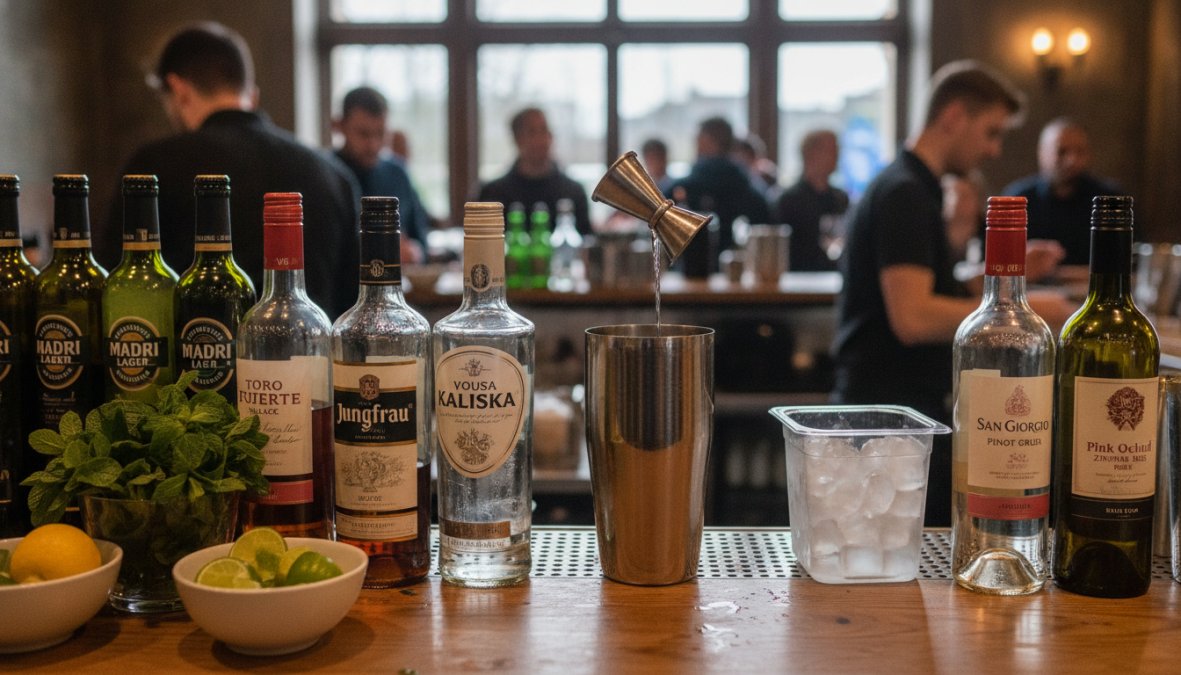
Fourth, review your supplier relationships. Are you ordering the right quantities at the right frequency? Swallow Drinks works with venues to optimise ordering patterns, buying more frequently in smaller quantities reduces the risk of stock sitting unused and expiring. This is especially valuable for perishable items and seasonal products.
Your menu directly influences waste. A menu that includes 40 different cocktails requiring 60 different ingredients creates complexity and waste. Slow-moving products sit on shelves longer, increasing the chance of expiration or deterioration.
Consider a tiered menu approach: core cocktails that you make consistently (these reduce variance and waste), seasonal specials that rotate quarterly, and custom drinks for engaged customers. This structure keeps your menu fresh without fragmenting your stock.
Analyse which drinks actually sell. If a cocktail on your menu hasn't been ordered in three weeks, remove it. Use that shelf space for products that move. This sounds obvious, but many venues keep low-volume items out of habit or ego.
Flexible offerings also mean adjusting your menu based on what's abundant in your stock. If you've suddenly received a large shipment of a particular spirit from Swallow Drinks, feature it in a special cocktail that week. This accelerates turnover and prevents overstock situations.
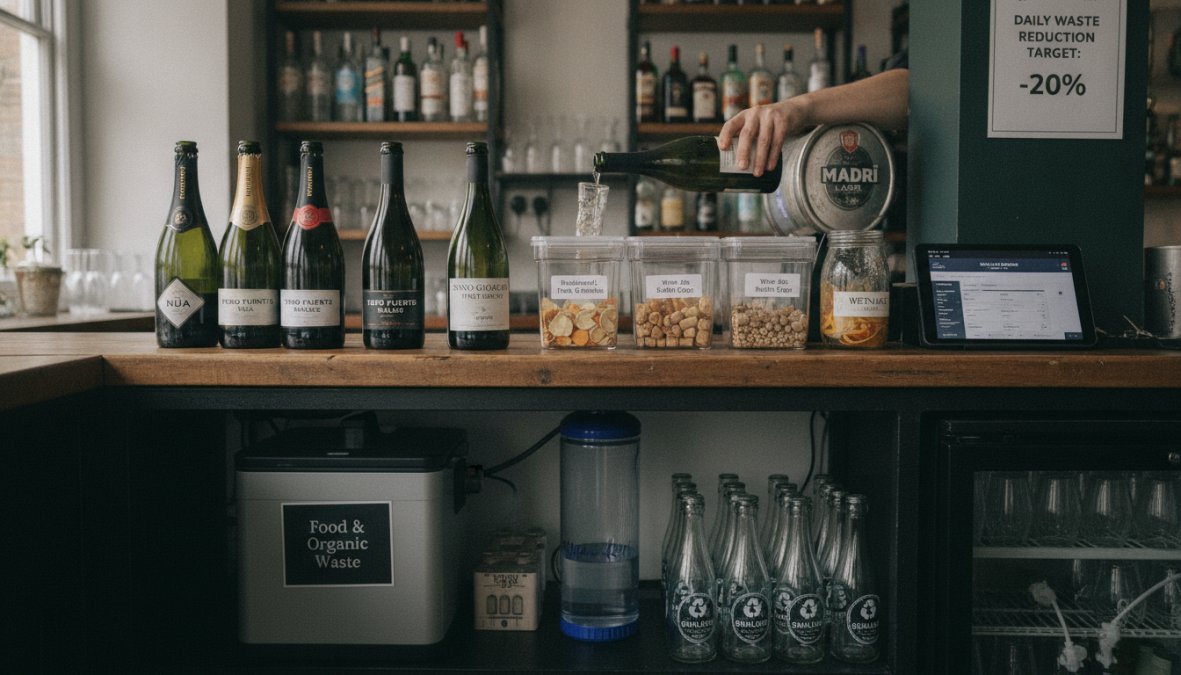
Sustainability and waste reduction align perfectly. Upcycling ingredients, using parts that would normally be discarded, reduces waste while creating unique products.
Citrus peels, for example, can be candied, infused into spirits, or used to make bitters. Herb stems that fall off during prep can be dried and used in tea infusions or garnish presentations. Slightly overripe fruit can be frozen and used in blended drinks or syrups rather than discarded.
Some venues are experimenting with zero-waste cocktail programs where every element of the drink, including the garnish, comes from ingredients that would otherwise waste. These programs attract environmentally conscious customers and create marketing opportunities.
However, sustainability should never compromise hygiene or quality. If an ingredient is genuinely spoiled, discard it. Using substandard products in the name of reducing waste damages your reputation and customer experience.
Modern POS systems can track waste in real time if configured correctly. Every drink rung through the system should correspond to an actual pour. If your POS shows 150 drinks sold but your stock count shows only 140 drinks' worth of ingredients used, that 10-drink variance is your waste signal.
Some POS systems integrate with scale-based dispensers that measure exact pours. A bartender pours a spirit into a jigger, the scale registers the weight, and the system automatically logs the pour. This eliminates human error and creates an audit trail.
Alternatively, simpler systems use video monitoring at the bar workstation. Cameras aren't about surveillance, they're about accountability. Knowing they're being recorded, most bartenders naturally become more careful with pours. The footage also provides coaching material: you can review a shift and identify technique issues.
The investment in technology should be proportionate to your venue size and waste problem. A small wine bar might benefit from careful manual tracking. A high-volume nightclub with 10 bartenders might justify automated pour systems. Swallow Drinks can advise on which approach fits your operation.
Bar waste isn't a fixed cost, it's a controllable variable that directly impacts your bottom line. The venues that treat waste reduction as a strategic priority, not an afterthought, consistently outperform their competitors.
Start with the fundamentals: standardised measurements, accurate inventory tracking, and staff training. These cost almost nothing and deliver measurable results within weeks. From there, layer in menu engineering, supplier optimisation, and technology as your operation scales.
Swallow Drinks has spent 40 years working with on-trade venues across Birmingham and the surrounding areas, and we've seen what works. Our team understands the pressures you face and the practical constraints of real bar operations. We can help you refine your ordering patterns, identify stock that's moving slowly, and connect you with products that reduce waste while maintaining quality.
Register for the Swallow Drinks trade area at swallow.uk.com to access inventory templates, supplier insights, and ordering tools designed specifically for reducing waste. Your profit margins depend on it.
Bar waste stems from several key sources: overpouring due to inconsistent measurements, spillage during service, expired perishable goods, over-ordering of slow-moving stock, and poor staff accountability. Standardised measurements using a jigger, effective stock rotation, and proper training significantly reduce these losses. Many bars also waste drinks through customer returns or incorrect orders—menu clarity and bartender training help minimise this.
To calculate liquor cost percentage, divide total drinks cost by total drinks revenue, then multiply by 100. For waste percentage, track wasted stock value monthly and divide by total stock purchases. Most bars aim for waste below 3–5%. Use a bar waste tracking sheet template to record spillage, expired goods, and overpouring incidents. This data reveals patterns and helps set reduction targets. Technology integration with your POS system automates much of this tracking.
Implement a structured bar inventory management system: conduct regular stock audits, use FIFO (first in, first out) rotation for perishable goods, set par levels for each product, and monitor shelf life closely. A bar waste tracking sheet template helps document losses daily. Swallow Drinks, with 40 years of industry experience, can support your supply chain with reliable stock management. Consider registering on the trade ordering platform at webtrade.swallow.uk.com/ for streamlined ordering and stock visibility.
Bartender training for waste reduction focuses on consistent pouring techniques, proper use of a jigger, spillage prevention, and accountability protocols. Train staff on perishable goods handling, menu knowledge to reduce wrong orders, and sustainable bar practices. Regular audits and shift management reviews reinforce best practices. When staff understand how overpouring and waste directly impact bar profitability, they become invested in waste reduction. Ongoing training ensures new techniques and sustainability initiatives are adopted.
Members of:


AWRS Registration Number: XJAW00000100730