Aug 05, 2026
Last Updated: August 5, 2026
The difference between a profitable pub and one that's constantly struggling often comes down to cellar stock management. Poor cellar management costs venues real money: stock goes out of date, lines get contaminated, kegs spoil in wrong temperatures, and staff order duplicates because nobody's tracking what's in storage.
At Swallow Drinks, we've worked with hundreds of pubs across Birmingham and the West Midlands for 40 years, and we've seen firsthand what separates venues that thrive from those that just survive. The ones that win have systems. They know what's in their cellar at any given moment. They rotate stock properly. They clean their lines on schedule. They forecast demand instead of reacting to it.
This guide covers the practical systems you need to manage pub cellar stock effectively: stock rotation, temperature control, stocktakes, waste reduction, and the tools that make it simpler.
Stock rotation using FIFO (First In, First Out) is the foundation of effective cellar management. Beer and cider have shelf lives. Ales degrade faster than lagers. Once a keg is tapped, it typically lasts 4-6 weeks depending on the product and your line hygiene. Cask ales last just 3-4 days after being breached. If you're not systematically moving older stock out first, you're either serving degraded product or throwing away drinks.
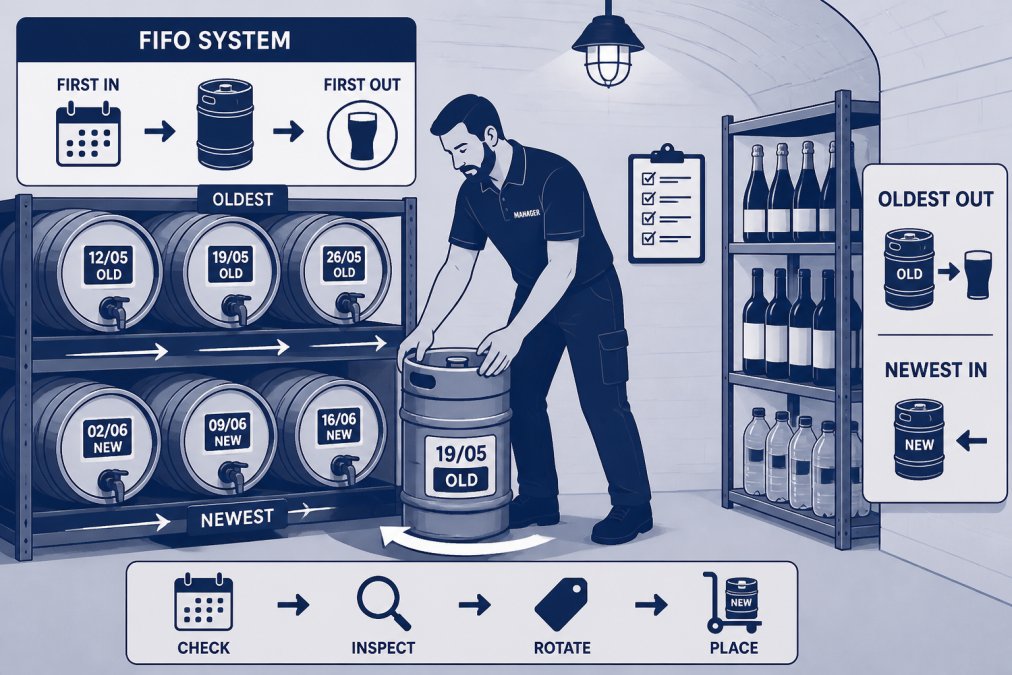
The practical system works like this: when new stock arrives, place it at the back of your cellar. Older stock moves to the front. Your staff always pulls from the front. This requires clear labeling, date every keg and cask when it arrives. Many venues use coloured tape or markers: one colour for each delivery day, or numbers for the week.
For draught lines, FIFO is even more critical. A line running for weeks without proper cleaning develops biofilm. The beer tastes flat, sour, or off. The fix is to clean the line and move to fresh product. This connects directly to your line cleaning schedule.
Common mistake: assuming FIFO is just about moving kegs around. It's actually about knowing what you have, when it arrived, and when it needs to leave. Write it down. Use a simple spreadsheet or cellar management software. Five minutes of admin per delivery saves you from serving bad product or throwing away stock.
Temperature control is non-negotiable for beer quality. The ideal cellar temperature for most ales is 12-14°C. Lagers need to be colder, around 7-9°C. Ciders typically sit at 8-10°C. These are the temperatures at which these drinks taste as the brewer intended.
Temperature stability matters more than hitting an exact number. A cellar that swings from 10°C to 16°C across a week is worse than one that sits steady at 13°C. Fluctuation causes the beer to expand and contract, introducing oxygen, which degrades flavour and causes oxidation.
UK cellars present specific challenges. Many pubs have cellars in old buildings with poor insulation. Summer heat can push temperatures up. Winter cold can drop them below ideal. Install a thermometer in your cellar and check it daily. If temperature drifts consistently above 15°C, improve ventilation or add cooling. If it drops below 8°C regularly, insulate pipes or adjust your cellar environment.
Humidity also matters. Aim for 50-70% humidity to prevent wooden casks from cracking and labels from peeling off.
A stocktake shows what's actually in your cellar versus what your records say should be there. Most venues do this monthly.
Step 1: Choose Your Day (30 minutes) Pick a quiet day, typically a Monday or Tuesday. Avoid busy service times.
Step 2: Prepare Your Template (15 minutes) Create a simple spreadsheet with columns: Product Name, Supplier, Keg/Cask Number, Date Received, Current Quantity, Expected Quantity, Variance.
Step 3: Count Everything (45 minutes to 2 hours) Walk through your cellar systematically. Count every keg, cask, and bottle. Record the count. Note any kegs that are damaged, leaking, or past their date.
Step 4: Compare to Records (30 minutes) Pull your delivery notes and sales records. Calculate what you should have. Compare to what you actually counted. Any variance larger than 2-3% needs investigation.
Step 5: Investigate Variance (15-30 minutes) A line might have leaked. A keg might have been damaged in delivery. Staff might have miscounted a pour. But if variance is consistently high, say 5% or more, you have a problem: theft, spillage from poor handling, or leaks from damaged equipment.
Step 6: Record and Act (15 minutes) Document your findings. Note any damaged stock and any patterns you're seeing.
Many venues do a full stocktake monthly and a quick count of high-value items weekly.
Wastage is profit walking out the door. A typical pub might waste 3-5% of its stock through spillage, expired product, line contamination, and theft. For a mid-sized venue, that's thousands of pounds per year.
The biggest sources of waste are line contamination, expired stock, and leaking equipment. A contaminated line forces you to throw out the entire line's worth of product, sometimes 10-20 pints, and then clean the line properly before serving again. Prevention is cheaper than the cure: clean your lines on schedule.
Expired stock happens when stock sits too long without being sold. Track what sells and what doesn't. If a product hasn't moved in two weeks, stop ordering it or find a way to promote it. Your Swallow Drinks account manager can help you identify slower lines and suggest alternatives that move faster in your market.
A slow drip from a keg valve or damaged line fitting might seem minor. Over a week, it's a full pint. Over a month, it's a keg's worth. Inspect your equipment weekly. Replace worn seals and fittings. A £5 seal replacement beats throwing away £50 of stock.
Train staff on proper pouring. Use calibrated measures. Make it clear that spillage costs the venue money.
Reducing waste by just 1% is significant. For a venue doing £5,000 per week in drinks sales, 1% is £50, over £2,600 per year.
Managing cellar stock on spreadsheets works, but software makes it faster and more accurate. Look for software that integrates with your POS system. Every drink sold is automatically deducted from your stock count. The system knows in real-time what's left.
Key features: real-time stock tracking, automatic low-stock alerts, POS integration, barcode scanning for faster stocktakes, and reporting that shows waste and variance by product. Some systems also track temperature and humidity if your cellar has IoT sensors.
Many venues in the West Midlands use systems that connect to their POS and give them a dashboard view of their cellar. When a keg runs low, they get an alert. They can order before they run out.
For most independent pubs, a mid-range system pays for itself within a few months through waste reduction and better ordering.
Swallow Drinks' trade ordering platform at Swallow Drinks WebTrade lets you manage your account, track deliveries, and see real-time pricing, all integrated with your cellar management needs. Many of our customers use it alongside their cellar software to keep everything connected.
Clean lines are the difference between serving great beer and serving something that tastes off. A contaminated line wastes product and damages your reputation.
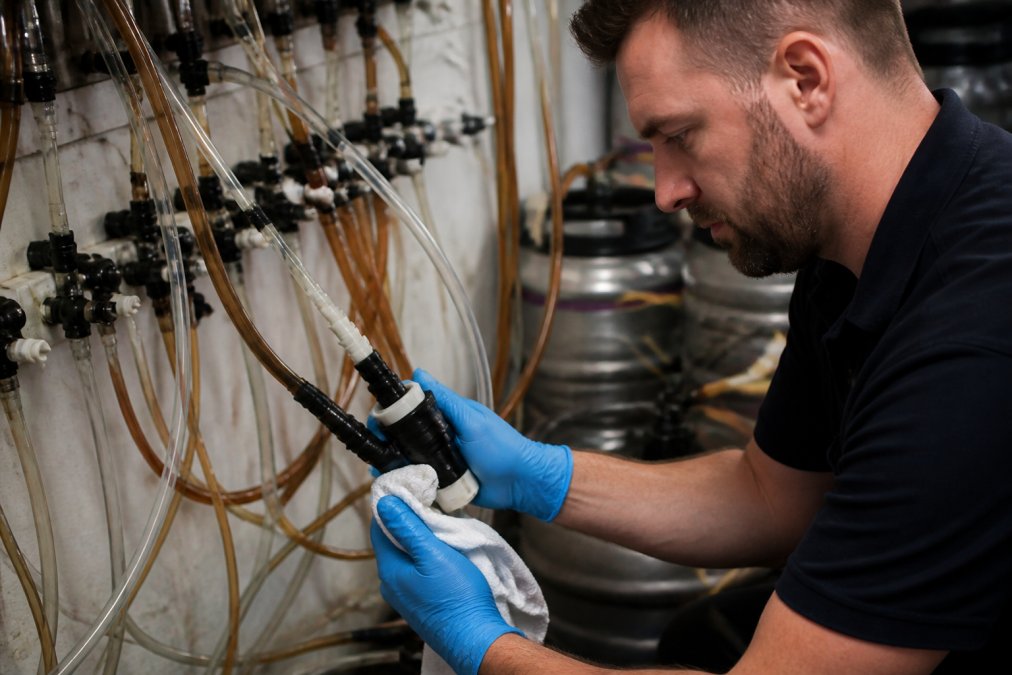
Weekly Deep Clean: Once per week, usually on a quiet day, run a proper cleaning solution through all lines. Use a dedicated line cleaner. Swallow Drinks Purple B/Line Cleaner is specifically formulated for beer lines and removes biofilm effectively. Run the solution through for 20-30 minutes, then flush with water thoroughly.
Daily Quick Flush: At the end of service, run water through each line for 30 seconds. This removes residual beer and prevents buildup between deep cleans.
Monthly Inspection: Check all line fittings, seals, and connections. Look for cracks, loose connections, or signs of leakage. Replace any worn components immediately.
Line Replacement: Even with perfect cleaning, lines degrade. Replace them every 18-24 months or sooner if you notice discoloration inside the line or persistent off-flavours in the beer.
Make line cleaning non-negotiable. Schedule it the same way you'd schedule a staff shift. Skipping it costs more in waste and customer complaints than the 30 minutes the cleaning takes.
For mixed gas systems, monitor your gas. Swallow Drinks Mixed Gas 60/40 and CO2 Gas are essential for maintaining proper pressure and carbonation. Check your gauges weekly. Order before you run out.
Keep your cellar clean and dry. Mold and mildew can contaminate product and equipment. Sweep regularly. Fix any leaks that create standing water. Store cleaning supplies separately from drinks stock.
Cleaning Task | Frequency | Time Required | Impact |
|---|---|---|---|
Daily line flush | Every service end | 5 minutes | Prevents immediate buildup |
Weekly deep clean | Once per week | 30 minutes | Removes biofilm and contamination |
Monthly inspection | Once per month | 20 minutes | Catches equipment problems early |
Line replacement | Every 18-24 months | 1 hour | Maintains beer quality long-term |
Cellar inspection | Weekly | 10 minutes | Prevents mold and leaks |
Managing pub cellar stock effectively requires consistency. You need systems for rotation, temperature control, counting, and cleaning. You need to track what's happening and act when something drifts off course. Cellar management directly affects your profit and your reputation.
The venues that do this well aren't necessarily the biggest or the fanciest. They're the ones that treat their cellar like the engine room of their business. Get the fundamentals right, and everything else becomes easier.
Swallow Drinks has been supporting independent pubs across the West Midlands for 40 years. Our trade ordering platform and direct relationships with quality suppliers mean you get consistent stock, reliable delivery six days a week, and expert guidance on what to stock. Register with Swallow Drinks WebTrade today to see how we can support your venue's cellar management and profitability.
UK pubs should maintain cellar temperatures between 12-15°C for cask ales and 2-4°C for keg lager. Consistent temperature control is critical because fluctuations damage product quality and shorten shelf life. Monitor humidity levels between 50-70% to prevent condensation and keg corrosion. Use a digital thermometer to check twice daily, particularly during summer months when ambient heat affects cooling systems.
Weekly stock takes are standard practice for most pubs, typically conducted on a quiet day or morning before service. This frequency catches discrepancies early, identifies slow-moving lines, and prevents over-ordering. Monthly deep audits should reconcile physical counts against POS records to identify stock variance and loss. Using a pub stock take template ensures consistency—record keg levels, cask counts, and spirit measures in the same format each time to spot trends.
The biggest sources of waste are line breakdowns, temperature fluctuations, and over-ordering. Implement FIFO (First In, First Out) rotation to prevent product expiring on shelves. Schedule line cleaning every two weeks using quality cleaners like Swallow Purple B/Line Cleaner to prevent blockages that force product disposal. Train staff to report faults immediately—a leaking keg or faulty tap can waste 20+ pints daily. Monitor demand forecasting to order only what you'll sell within shelf-life windows.
Stock rotation using FIFO is the golden rule: older stock must always be used before newer deliveries. This prevents product degradation, maintains quality, and reduces waste. Train all bar and cellar staff to understand this principle. Clearly label kegs and casks with delivery dates. Combine FIFO discipline with accurate stocktakes and demand forecasting to maintain optimal profit margins and product freshness throughout your cellar.
Members of:


AWRS Registration Number: XJAW00000100730