
Aug 11, 2026
Last Updated: August 11, 2026
A profitable wine list starts with clear organisation. The way you categorise your wines directly affects how staff recommend them, how customers navigate choices, and ultimately, how much profit you generate per bottle sold.
The most effective wine list structures combine two approaches: grouping by region of origin first, then by varietal within each region. This method works because customers often think in terms of geography ("I'd like something from France") or grape type ("Do you have a Pinot Grigio?"). A strong structure looks like this: France (subdivided by Bordeaux, Burgundy, Loire Valley), Italy (Tuscany, Piedmont, Veneto), Spain, New World regions, and sparkling wines. This hierarchy reduces decision paralysis and makes upselling natural, staff can easily guide customers from an entry-level Merlot to a premium option in the same region.
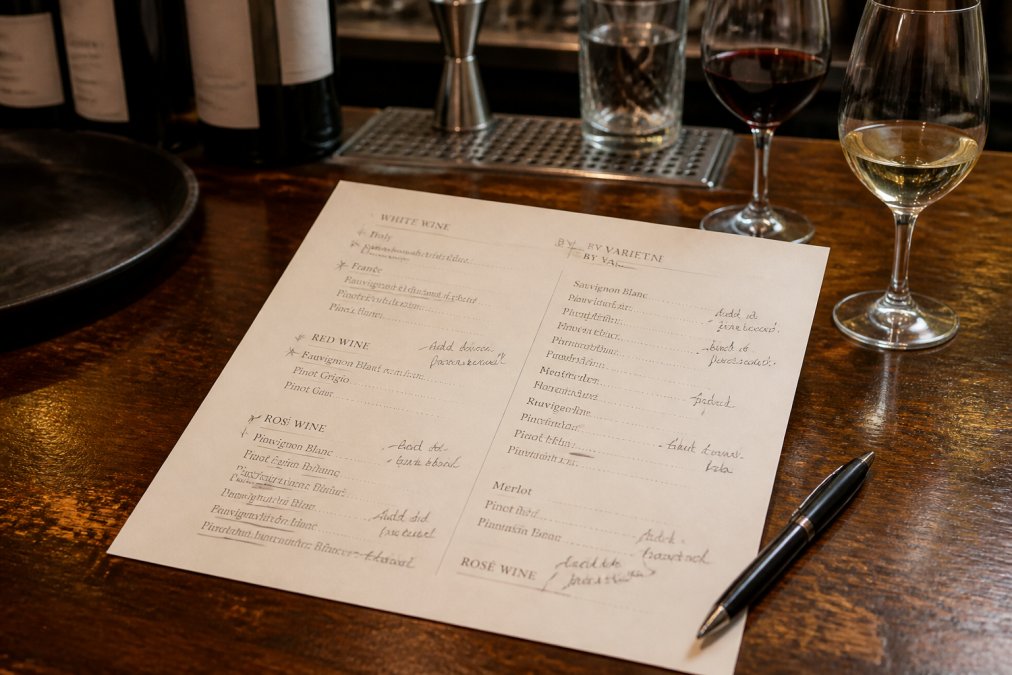
The structure also supports stock rotation. When wines are grouped logically, your team can identify slow-moving bottles quickly and adjust orders accordingly. Swallow Drinks, with over 40 years of experience supplying bars across the region, recommends starting with a core list of 20-30 wines, enough variety to offer choice without overwhelming staff or tying up capital in slow stock. Consider your venue's style when structuring: a gastropub might feature regional English wines alongside European classics, whilst a high-volume nightclub focuses on recognisable house wines and sparkling options for celebrations.
Pricing is where most bar owners leave money on the table. Many apply a standard markup across all wines, typically doubling the bottle cost or marking up by 60-70%. A smarter strategy uses tiered markups based on bottle cost and customer perception. Entry-level house wines can support higher markups because customers expect competitive pricing on basics. Premium wines often carry lower percentage markups but generate larger absolute profit per bottle due to their higher base cost.
By-the-glass pricing requires different logic. A standard pour is 125ml or 175ml depending on your venue. Calculate your pour cost (bottle cost divided by number of pours) and apply a consistent markup. If a bottle costs £8 and yields six 125ml pours, each pour costs roughly £1.33. Pricing that pour at £6-£8 delivers healthy margins whilst remaining competitive.
The most profitable wine list balances perceived value, pour cost, and customer willingness to pay. Wine flights, curated selections of three smaller pours, drive trial of higher-margin wines and increase average transaction value.
Stock management separates profitable venues from those that lose money on wine. Poor stock control leads to wines that age past their peak before selling and stockouts that force staff to recommend alternatives.
Effective bar wine stock management starts with understanding your turnover rate and pour cost. A healthy wine list rotates its entire stock every 4-6 weeks. Calculate days of stock held per wine by dividing the number of bottles in stock by your average weekly sales for that wine. A wine with five bottles in stock that sells two per week has 2.5 days of stock, efficient. A wine with eight bottles in stock that sells one per week has 56 days of stock, a dead weight.
Track which bottles move and which stagnate using a simple spreadsheet: wine name, bottles purchased, bottles sold per week, current stock level, and days held. Update it weekly. Wines exceeding 30 days of stock are candidates for replacement, unless they're anchor selections that define your venue's identity.
Pour cost percentage is equally critical. Calculate it for every wine you offer by the glass. If a bottle costs £8 and yields six 125ml pours, each pour costs roughly £1.33. If you price that pour at £6, your pour cost is 22% of revenue, excellent. If you price it at £4.50, your pour cost is 30%, marginal. A pour cost above 25% on premium wines or above 20% on house wines signals that either your pricing is too low or the wine itself doesn't belong on your list.
Seasonal adjustments matter strategically. Summer calls for lighter, crisper wines; your Pinot Grigio and Prosecco stock should increase. Winter favours fuller reds. Review your sales from the previous year's same season to adjust standing orders accordingly.

Implement a first-in, first-out (FIFO) system: date each bottle when it arrives, place new stock behind older stock, and pull forward older bottles first. This prevents oxidised or tired wines from reaching customers.
Work with a reliable supplier who understands your venue's needs and can support data-driven ordering. Swallow Drinks offers consistent six-day-a-week delivery across the region, meaning you can order smaller quantities more frequently based on actual sales velocity rather than guesswork. This reduces capital tied up in slow-moving stock and lets you respond quickly to what's actually selling. When you register on their trade ordering system at webtrade.swallow.uk.com, you can access their full product range and use their ordering tools to test new wines in small quantities before committing to larger stock levels.
Calculate monthly profit per wine and rank them. Your bottom 10% of wines by profit should be reviewed for replacement every quarter.
A wine list template for bars should be functional and strategically designed. Your template needs these core elements: wine name, varietal, region of origin, vintage (if relevant), and price. Optional additions include a brief tasting note (one sentence: "Crisp, citrus-forward"), alcohol percentage, and a "by the glass" price alongside the bottle price. Avoid lengthy descriptions; they slow down staff recommendations and confuse customers.
Visual hierarchy and placement drive sales. The first wines customers see and the wines that occupy the most visual space sell disproportionately more. If your list is printed, place your premium or highest-margin wines in the upper third and in the right column (where the eye naturally travels). A wine placed at the top of a section outsells an identical wine at the bottom by 15-20%. Use this strategically: your house Pinot Grigio can sit lower; your premium Pinot Grigio should be prominent.
Font size and visual weight matter. Wines you want staff to recommend should be in a slightly larger font or bold. Use white space generously; a crowded list overwhelms customers and increases decision paralysis. Group wines by region with clear subheadings to prevent customers from feeling lost.
Digital vs. physical lists require different strategies. A printed list is static; once it's in a customer's hand, the layout is fixed. A digital list (tablet, QR code menu, or screen) is dynamic and can be updated instantly. QR code menus linked to a digital wine list offer a hybrid advantage: customers scan a code at their table and see your current, accurate wine list on their phone. This eliminates friction and allows customers to browse at their own pace.
Consider a tiered template that separates house wines (your high-volume, profitable core), premium selections (for upselling), and limited editions (seasonal or special releases). This structure guides staff naturally toward recommending wines at different price points based on customer appetite.
Readability in bar lighting is non-negotiable. Printed lists should use 11pt minimum font size for body text and 14pt for wine names. Avoid light grey text on white backgrounds; contrast matters in dim lighting. Prices without currency symbols ("18" instead of "£18") feel lower and convert better, provided customers understand the currency context.
Update your template quarterly, not annually. As seasonal wines rotate in and out and as you test which price points and placements convert best, your template should reflect those changes.
Work with Swallow Drinks to source wines that fit your template strategy. When you register on their trade platform at webtrade.swallow.uk.com, you can browse their full range and identify wines at different price points that work for your house, premium, and limited-edition tiers.
Staff training transforms a wine list from a menu into a profit engine. Most bar staff receive no wine education beyond "what's the house red?" This gap costs venues thousands annually in missed upsells.
Effective training starts with the basics: what each wine tastes like, which foods it pairs with, and why a customer might choose it. A 30-minute session covering your top 10 wines, their flavour profiles, price points, and ideal customers, pays immediate dividends.
Train staff to ask questions before recommending. "Are you in the mood for something light or full-bodied?" "Do you prefer dry or off-dry?" These questions are shortcuts to the right recommendation. Frame upsells as helping customers discover better wines, not extracting more money. Role-play common scenarios to build confidence.
A profitable wine list isn't static. Market conditions change, customer preferences shift, and new suppliers bring fresh options. Monitoring performance tells you what's working and where to adjust.
Track three metrics monthly: sales by wine (which bottles are moving), profit by wine (which generate the most absolute profit), and stock turnover (how quickly stock rotates). A spreadsheet suffices; you need only wine name, bottles sold, profit per bottle, and days held in stock.
Identify your winners and losers. If a wine hasn't sold in 10 weeks despite reasonable pricing, it's a loser. Replace it with something similar but with better market appeal. If a wine consistently sells out, consider increasing its price, you're leaving money on the table if demand exceeds supply.
Seasonal analysis reveals patterns. Which wines peak in summer? Which in winter? Adjust your standing orders with your supplier to match seasonal demand. This reduces dead stock and ensures you're never caught short during peak season.
Gather informal feedback from customers and staff. What wines do people ask for that you don't stock? What complaints do you hear? Create a simple feedback loop where staff observations inform your ordering.
Work with Swallow Drinks to refine your selection. Their team understands the on-trade market across the region and can recommend wines that perform well in similar venues. Use their 40 years of experience to avoid costly mistakes.
Building a profitable wine list requires structure, strategy, and ongoing attention. Start by organising wines logically, price them strategically based on cost and customer perception, manage stock rigorously to avoid waste, train staff to recommend with confidence, and monitor performance to stay responsive to what actually sells.
The venues that win at wine treat their wine programme as a business within their business, not a sideline menu. When you apply the same rigour to wine that you apply to food or labour, profit follows naturally. Swallow Drinks has spent 40 years helping bars and pubs across the region build drinks programmes that work. Their vast portfolio of premium wines, reliable delivery, and trade ordering platform make it straightforward to source quality stock and adjust your selection based on real demand. Register on their trade platform at webtrade.swallow.uk.com to explore how a dedicated supplier partnership can simplify your wine programme and boost margins.
Organize by region and varietal first, then apply the 80/20 rule: stock 80% of your list with reliable, high-turnover wines that appeal to most guests, and 20% with premium or niche selections that build your reputation. Structure your menu for customer-friendliness with clear tasting notes and price points. Use a consistent hierarchical structure that guides guests from entry-level options to premium bottles. Monitor which wines sell fastest and adjust stock rotation accordingly to minimize waste and maximize profit margin.
Apply a pour cost calculation: multiply your bottle cost by 4 to 5 for by the glass pricing, and by 3 to 4 for full-bottle retail price. This ensures healthy profit margins while remaining competitive. Consider the 30/30 rule: 30% of your list should be affordable house wines, 30% mid-range selections, and 30% premium options. Review competitor price points regularly but focus on your own margins. Adjust pricing based on demand and stock turnover metrics, fast-moving wines can sustain lower margins, whilst slower items need higher markups to justify shelf space.
The 80/20 rule means 80% of your sales typically come from 20% of your stock. Identify your top-selling wines and ensure consistent supply of these reliable performers. Allocate most of your purchasing budget and shelf space to these core wines. Use the remaining 20% of your stock for experimentation, seasonal selections, wine flights, or niche local labels that differentiate your menu. This approach reduces waste, improves stock rotation, and ensures you always have bestsellers available. Track sales data regularly to identify which wines belong in your core 80%.
Trained staff can upsell wine effectively by understanding flavor profiles, making pairing recommendations, and confidently describing tasting notes. This increases average transaction value and helps move slower stock. When your team knows the story behind each wine, its region of origin, vintage, and characteristics, guests feel more confident purchasing premium selections. Training also reduces waste through proper handling and storage, and improves guest experience, leading to repeat business. Invest in sommelier-level knowledge for key staff, and ensure all team members can describe your house wines and suggest by the glass options that match customer preferences.
Members of:


AWRS Registration Number: XJAW00000100730