Sep 21, 2026
Last Updated: September 20, 2026
Drink cost control is the foundation of profitable hospitality operations, measuring what you're spending on drinks against what you're selling them for.
Divide your total cost of goods sold (drinks purchased) by your total drink revenue, then multiply by 100. Most independent hotels aim for a specific percentage, depending on their mix of premium spirits, wines, and soft drinks.
A jump from 30 to 34 per cent signals a problem: stock disappearing unaccounted for, over-pouring, or supplier pricing shifts. At Swallow Drinks, we've worked with independent hotel operators for over 40 years, and those tracking this metric weekly catch problems before they become expensive habits.
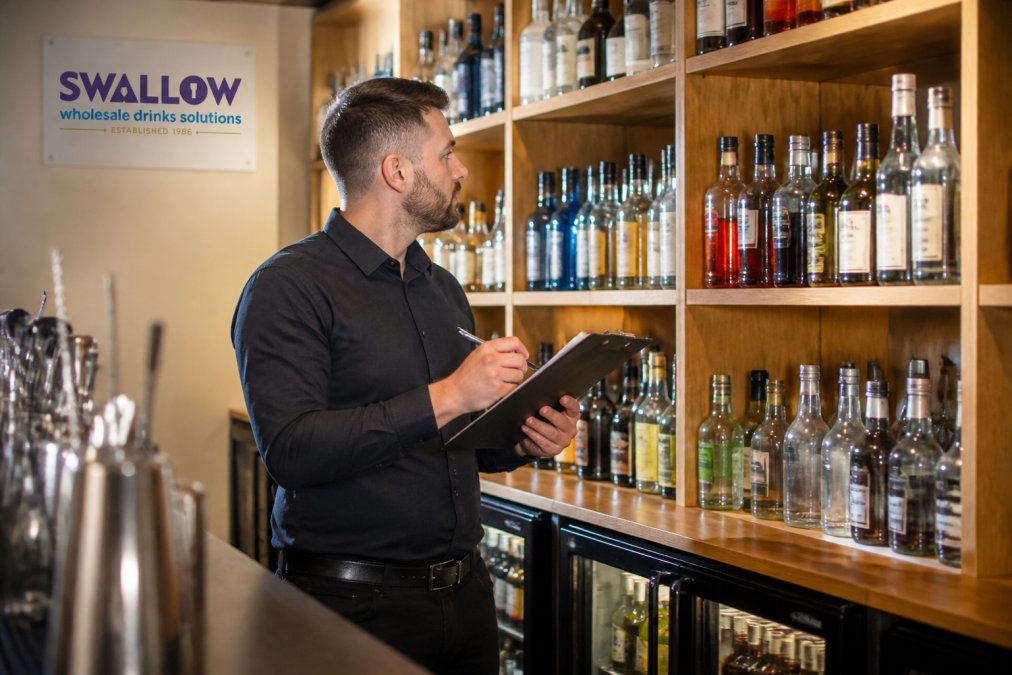
Accurate stocktaking is where most independent hotels fall short. Vague stock counts breed waste and theft.
A proper stocktaking procedure starts with a fixed schedule: weekly counts of high-value items (premium spirits, craft beers) and monthly counts of everything else. Consistency, same person, same time, same method, is what makes the numbers meaningful.
Create a standardised stock sheet listing every drink by brand, size, and location. Count physically, record opening stock, purchases, closing stock, and calculate usage. Compare actual usage against point-of-sale sales; the gap is your variance, where waste and theft hide.
Par levels define minimum stock needed for each product, based on sales velocity and delivery schedule. If your supplier delivers twice weekly and you sell 12 bottles per week, your par level might be 8 bottles.
Use the FIFO method (first in, first out) consistently: older stock to the front, used first. For cordials, soft drinks, and anything with a use-by date, FIFO is non-negotiable. Train your team to check dates on every delivery and rotate stock immediately.
Variance analysis reveals where your stock count and your sales don't align. If your point-of-sale system says you sold 20 bottles of gin but your stock count shows you only used 18, you have a 2-bottle variance. Small variances are normal (spillage, sampling, measurement error), but consistent variances signal a problem. Track variances by product and by staff member. If one bartender's shift always shows higher variance, that's a training opportunity or a theft indicator.
Wastage costs more than most managers realise. The average bar loses a significant percentage of stock to waste before theft. Identifying and stopping it requires systematic tracking, not intuition.
Over-pouring is the biggest controllable waste driver. A standard spirit measure is 25ml or 50ml. Many bartenders pour by eye and exceed the measure; over 100 drinks a night, that's 500ml unaccounted. Standardised measures (jiggers, pourers with built-in stops) enforce consistency.
Theft prevention starts with access control: limit stock room and till access, use security cameras, require staff to log stock movements. Most theft is small amounts; systematic counting catches it.
Modern hotels deploy automated stock monitoring to catch waste in real time. Hardware-based systems use weight sensors or RFID tags on bottles, creating a real-time pour log compared against point-of-sale data. If POS shows 20 gin and tonics sold but weight sensors show 600ml poured (24 drinks at 25ml), variance is flagged immediately. The trade-off: upfront investment and POS integration. Software-only solutions require staff to log pours manually, depending entirely on compliance. Many independent hotels use a hybrid: automated sensors on high-value spirits (premium gins, aged whiskeys) combined with manual logging for lower-cost items.
Track variances by product and staff member. If one bartender's shift always shows higher variance, that's a training opportunity or theft indicator. Quantify waste separately from variance: spillage and remakes are operational waste (1-2 per cent target); variance is where theft and over-pouring hide.
Waste reduction increasingly connects to broader sustainability goals. Hotels seeking to reduce their environmental footprint are finding that drink waste reduction aligns with cost control. Every bottle of spirits wasted is not just lost margin; it's unnecessary production, packaging, and transport. By implementing systematic waste tracking and automated monitoring, you reduce both cost and environmental impact.
BIB SWALLOW PEPSI MAX 12LTR - PINK →
Swallow Drinks supports this approach by helping independent hotel operators optimise their stock levels and supplier ordering to minimise overstock and expiration. Register with Swallow Drinks' trade ordering platform to access tools that help you forecast demand accurately and reduce the stock that sits unused and eventually expires.
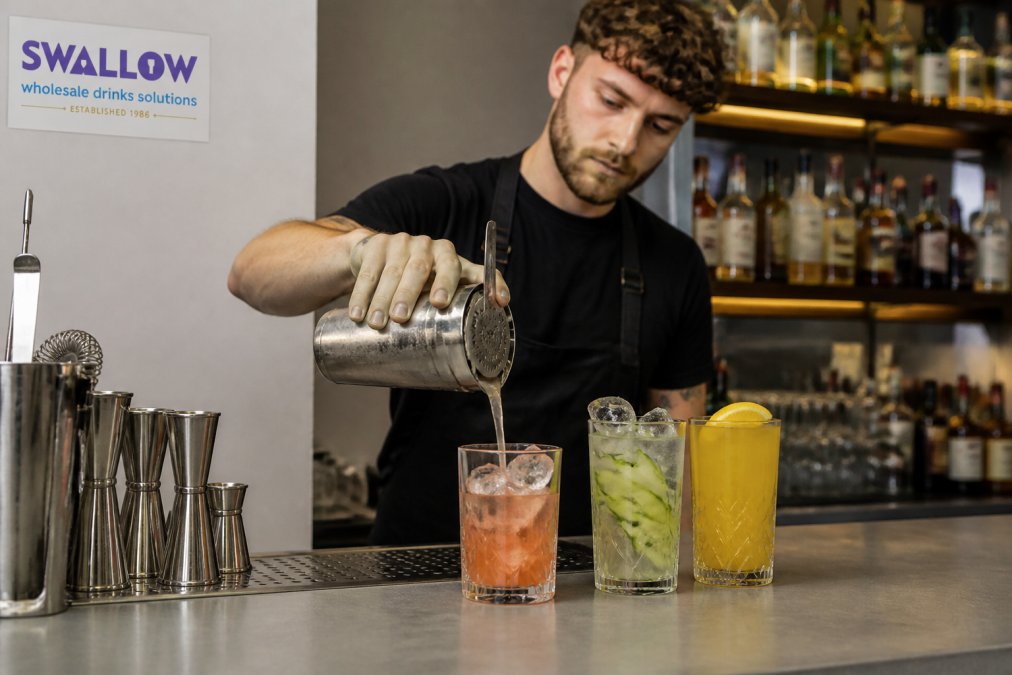
Every cocktail and mixed drink should have a written recipe with specific measures for every ingredient. This ensures consistency for customers, portion control for margins, and training for new staff.
A standardised recipe for a gin and tonic: 50ml gin, 150ml tonic, ice, lime wedge.
Your supplier relationship directly affects your cost percentage. A reliable supplier with transparent pricing, consistent quality, and flexible delivery schedules removes friction from your operation.
Your menu composition directly influences your drink cost percentage. A menu heavy in premium wines and spirits will naturally run higher cost than one focused on beers and house wines. Treat menu design as a dynamic tool to influence customer behaviour and margins, not as a static list.
Menu engineering means deliberately choosing which drinks to feature and how to position them. High-margin items (spirits, especially house spirits) should be prominent. Calculate pour cost and margin for every drink: a house gin and tonic costing £1.20 and selling for £7.50 has a 16 per cent pour cost and 84 per cent margin. Map your menu by margin and volume: identify "stars" (high-margin, high-volume) for prominent placement, and "dogs" (low-margin, low-volume) for removal or repositioning.
Guests evaluate prices relative to anchors and nearby prices. Price anchoring: if your most expensive cocktail is £12.50, a £9.50 cocktail feels reasonable; if your most expensive is £8.50, it feels expensive. Introduce a premium cocktail at £12.50 to anchor perception upward. Charm pricing: £7.95 feels cheaper than £8.00, driving volume on lower-margin items. Bundling: a wine pairing menu at £35 lets you choose wines and control cost while increasing transaction value. Menu positioning and language: "Botanist gin with Fever-Tree tonic and fresh grapefruit" justifies higher price than "house gin and tonic." Position high-margin drinks at the top of sections or in highlighted boxes.
Test menu changes and measure impact. Introduce one new cocktail or reposition one section; track sales volume and pour cost over two weeks. Use your point-of-sale system to identify which drinks sell and when. A cocktail selling well on Friday nights but not Tuesday afternoons might be repositioned rather than removed. Test price changes incrementally: raise a high-volume, high-margin drink by 50p and monitor volume.
Don't let your menu stagnate. Refresh it seasonally or quarterly. Remove drinks that don't sell, introduce new ones, adjust prices based on cost changes. A menu that changes keeps staff engaged (they have new items to learn and recommend), keeps guests interested (returning customers see something new), and lets you test new suppliers or products.
Beyond drink cost percentage, track these metrics to maintain control:
| Metric | What It Measures | Target Range | Frequency |
|---|---|---|---|
| Drink cost percentage | Cost of goods sold vs. revenue | 28-35% | Weekly |
| Variance | Difference between stock count and POS | Under 2% | Weekly |
| Stock turnover | How quickly stock moves | Regularly | Monthly |
| Pour cost per drink | Cost of ingredients in each drink | Varies by drink | When menu changes |
| Gross profit margin | Revenue minus cost of goods sold | Varies | Monthly |
Divide the cost of drinks sold by total drink revenue, then multiply by 100. For example, if drinks cost £5,000 and revenue is £15,000, your drink cost percentage is 33%. Track this monthly to spot trends. Most hotels aim for a specific percentage depending on drink type and venue positioning. Regular calculation helps identify shrinkage and pricing issues early.
Spillage during service, over-pouring, staff theft, expired stock, and poor rotation cause most wastage. Implement portion control measures, train staff on correct measures, and use FIFO stock rotation to reduce losses. Regular audits reveal which areas leak the most cost. Establishing accountability and clear procedures can significantly cut wastage in most venues.
A reliable supplier ensures consistent pricing, reliable delivery, and quality stock, which directly impacts your cost structure and profitability. With 40 years' experience serving hospitality venues, Swallow Drinks provides transparent pricing, six-day-a-week delivery, and menu consultation to help you control costs. Supplier partnerships also give you access to niche and craft options that support menu engineering and premium positioning.
Stock audits reveal shrinkage, theft, and variance between recorded and actual stock. Monthly reconciliation against point of sale data identifies cost leaks and staff accountability issues. Venues that audit monthly typically recover lost margin. Audits also inform procurement decisions and help you adjust par levels based on actual demand patterns, improving cash flow and operational efficiency.
Members of:


AWRS Registration Number: XJAW00000100730