Sep 18, 2026
Last Updated: September 17, 2026
Low calorie beer is a category of beer engineered to deliver flavour with fewer calories per serving than traditional full-strength lagers and ales. The distinction matters for hospitality venues: understanding what makes a beer "low calorie" helps you stock the right products for customer demand and wellness-conscious drinkers.
Most low calorie beers fall between 90-150 calories per 330ml bottle or pint, compared to 180-250 calories in standard lagers. The reduction comes from two primary sources: lower alcohol by volume (ABV) and reduced residual sugars left after fermentation. Some breweries achieve this through extended fermentation processes that consume more of the malt sugars, whilst others use specialised yeast strains or lighter grain bills.
The calorie content in any beer depends on two factors: alcohol and carbohydrates. Alcohol contains 7 calories per gram, whilst carbohydrates contain 4 calories per gram (the NHS). A beer with 4% ABV and 5 grams of carbohydrates will typically contain around 120 calories per 330ml serving. Higher ABV means more calories; higher residual sugar means more calories.
This is where low calorie beer differs fundamentally. A sessionable ale at 3.5% ABV with 3 grams of carbohydrates might deliver just 95 calories. For pubs targeting health-conscious customers or those managing dietary intake, this transparency matters. Many customers now ask about calorie counts before ordering, so stocking low calorie options signals that you understand their priorities.
The brewing process directly controls calorie content. Extended fermentation, allowing yeast to work longer, consumes more of the sugars in the wort, leaving fewer carbohydrates in the finished beer. This is why some low calorie beers taste drier than their full-strength counterparts: there's genuinely less residual sweetness.
Some breweries use specialty grains that ferment more completely, whilst others employ specific yeast strains selected for their ability to break down complex sugars. The carbonation level also plays a subtle role; higher carbonation can enhance perceived flavour, allowing brewers to use lighter grain bills without sacrificing taste. Understanding these technical details helps you explain to staff why certain low calorie options taste fuller than others, it's not a compromise, it's a different approach to brewing.
Beyond calories, the full nutritional profile of low calorie beer matters to customers following specific dietary approaches. A typical low calorie beer contains 2-6 grams of carbohydrates per 330ml serving, whilst full-strength lagers often contain 8-12 grams. For customers tracking macros or managing blood sugar, this distinction is material.
However, carbohydrate content alone tells an incomplete story. What matters more is net carbohydrates, the carbs your body can digest. Most low calorie beers contain minimal fibre, so net carbs are roughly equal to total carbs. A 330ml serving of low calorie lager at 3 grams of carbohydrates means 3 grams of net carbs, making it suitable for low-carb and ketogenic diets where daily carb limits are strict (typically 20-50 grams per day).
Sugar content varies significantly. Residual sugars in beer come from incomplete fermentation; yeast cannot convert all malt sugars to alcohol. Low calorie beers minimise this by allowing fermentation to progress further, often leaving less than 1 gram of sugar per serving. Full-strength lagers, by contrast, may contain 2-4 grams of residual sugar. For customers avoiding added sugars or managing blood glucose levels, this difference is meaningful.
Protein content is another overlooked metric. Beer contains trace amounts of protein (typically 0.5-1.5 grams per 330ml), derived from the grain bill. Whilst not a significant protein source, it's worth noting for customers tracking macros. A low calorie beer at 120 calories, 3 grams of carbohydrates, and 1 gram of protein fits cleanly into most macro-tracking frameworks without derailing daily targets.
This nutritional transparency is becoming table stakes. Customers want to know what they're drinking, and venues that can answer these questions confidently build loyalty. When stocking low calorie beer, having access to full nutritional information for each product, not just calories, but carbs, sugar, protein, and alcohol content, lets your staff answer questions accurately. That confidence sells. When stocking low calorie beer, having access to full nutritional information for each product, not just calories, but carbs, sugar, protein, and alcohol content, lets your staff answer questions accurately. That confidence sells.
Sourcing low calorie beer wholesale requires finding a supplier who understands both the product range and your venue's specific needs. At Swallow Drinks, we've spent over 40 years building relationships with breweries and distributors, which means we can access a diverse range of low calorie options.
The wholesale market for low calorie beer has expanded significantly. Where five years ago options were limited, today there are sessionable ales, mid-strength lagers, and even craft interpretations of low calorie styles. The key is working with a supplier who stocks products consistently and can guarantee reliable delivery.
Consistency matters more than most venues realise. Running out of a popular low calorie option on a Saturday night frustrates customers and loses revenue. A reliable supplier ensures your stock levels remain predictable, with regular delivery schedules that match your sales patterns.
Swallow Drinks operates a six-day-a-week delivery model across the region, which means your stock can be replenished regularly rather than relying on sporadic bulk orders. This approach keeps your cash flow flexible, you're not tying up capital in excess stock, and you're not scrambling to reorder when demand spikes.
When selecting a wholesale partner, ask about their ordering flexibility. Can they accommodate last-minute additions to your order? Do they stock backup options if your preferred product runs low? These practical details separate a good supplier from one that simply takes orders.
View our low and non-alcoholic range →
Building a no and low alcohol menu requires more than simply adding low calorie beer to your drinks list. It's a strategic decision that signals your venue understands changing customer preferences and wellness trends. The hospitality sector is shifting: venues that offer compelling no and low alcohol options attract a broader customer base and increase per-visit spending.
Customer demand for low calorie and low alcohol options has accelerated significantly. Many drinkers now alternate between alcoholic and non-alcoholic drinks during a session, or choose low alcohol entirely on certain occasions. This isn't a niche market, it's mainstream behaviour, particularly among younger drinkers and those managing health priorities.
Wellness trends have legitimised this shift. Customers no longer feel they need to justify choosing a lower-calorie option; it's simply a choice. Your menu should reflect this normality. Featuring low calorie beer prominently, not tucked away in a corner, tells customers you take their preferences seriously.
A strategic no and low alcohol menu includes tasting notes and pairing suggestions. A light, crisp low calorie lager pairs differently than a sessionable pale ale with citrusy hops. Training your staff to describe these flavour profiles, and suggest pairings with food, elevates the entire experience.
Tasting notes matter because they frame low calorie options as choices, not compromises. Instead of "we have a light beer," try "our low calorie pale ale delivers citrus and pine notes with a dry finish." The language changes perception. Customers feel they're selecting a product for its qualities, not avoiding full-strength options.
Selecting which low calorie beers to stock depends on your customer profile and venue type. However, certain options have proven track records in the hospitality sector for consistent sales and customer satisfaction.
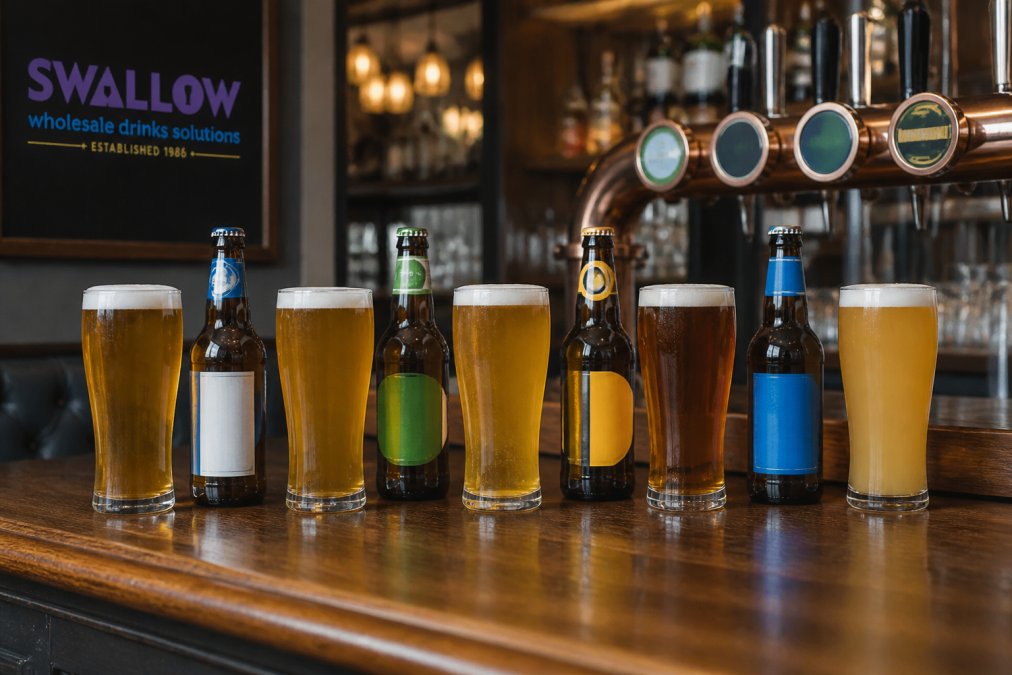
Swallow Drinks stocks several low calorie options that perform well across different venue types. CARLING LAGER (50 LTRS) 4% at £175.91 remains a reliable choice for high-volume venues, delivering familiar flavour at a lower calorie count than many expect.
Sessionable beers, typically 3.5-4.5% ABV, are designed for extended drinking sessions without the heaviness of full-strength options. Mid-strength lagers sit at the sweet spot: enough body and flavour to satisfy, without excessive calories or alcohol impact.
Low calorie beers span a range of flavour profiles. Some deliver clean, crisp finishes with minimal aftertaste. Others offer more pronounced hop character or subtle malt sweetness. Understanding these differences helps your team recommend products confidently.
The comparison between low calorie and full-strength beer often frames low calorie as the "healthier" option. That's partly true, but it misses the real distinction: they're different products serving different occasions.
Success with low calorie beer requires three practical steps: stocking the right range, training your team, and positioning the products confidently.
Most low calorie beers range from 90 to 120 calories per pint, depending on ABV and brewing method. Session pale ales and light lagers typically sit at the lower end. Carling Lager at 4% ABV and similar mid-strength options offer a balanced choice for venues looking to stock lower-calorie alternatives without sacrificing flavour. Swallow Drinks supplies quality low calorie beer wholesale options suitable for any venue size.
Position low calorie beer as part of a wellness-focused lifestyle rather than a restriction. Highlight refreshing taste profiles, sessionable nature, and macro-friendly nutritional information on menus. Train bar staff to recommend them as alternatives for customers watching their intake. Feature them prominently during peak hours and pair suggestions with food offerings. A no and low alcohol menu strategy works best when presented as choice, not compromise.
True zero-calorie beer does not exist because fermentation produces residual carbohydrates and alcohol, both containing calories. However, alcohol-free and very low-alcohol options (under 0.5% ABV) contain minimal calories, typically 20-40 per pint. These serve customers seeking non-alcoholic alternatives. Swallow Drinks stocks both low and non-alcoholic options suitable for comprehensive menu planning.
Full-strength beers typically contain 150-200 calories per pint with 4.5-5.5% ABV, whilst low calorie beers range from 90-120 calories at 3.5-4.5% ABV. The difference lies in fermentation efficiency and residual sugar content. Low calorie options maintain flavour through careful brewing whilst reducing carbohydrate levels. For pubs, offering both allows customers choice based on dietary preferences and drinking occasion.
Members of:


AWRS Registration Number: XJAW00000100730