Oct 22, 2026
Last Updated: October 21, 2026
An essential bar stock list for new hotel openings decides whether your first weekend of service runs smoothly or ends with a panicked run to a supermarket.
Get it wrong and you face two costs: cash tied up in bottles that never move, and empty shelves on a Saturday night. Both are avoidable.
Below, we break down what to order, in what quantities, and how to keep it under control.
The bar opening checklist is the sequence of decisions you make before a single bottle is ordered. Skip a step and you will over-order or discover a gap mid-service.
Work through these in order:
The menu-first rule matters most. Ordering stock before the menu exists is how hotels end up with three bottles of something no one orders.
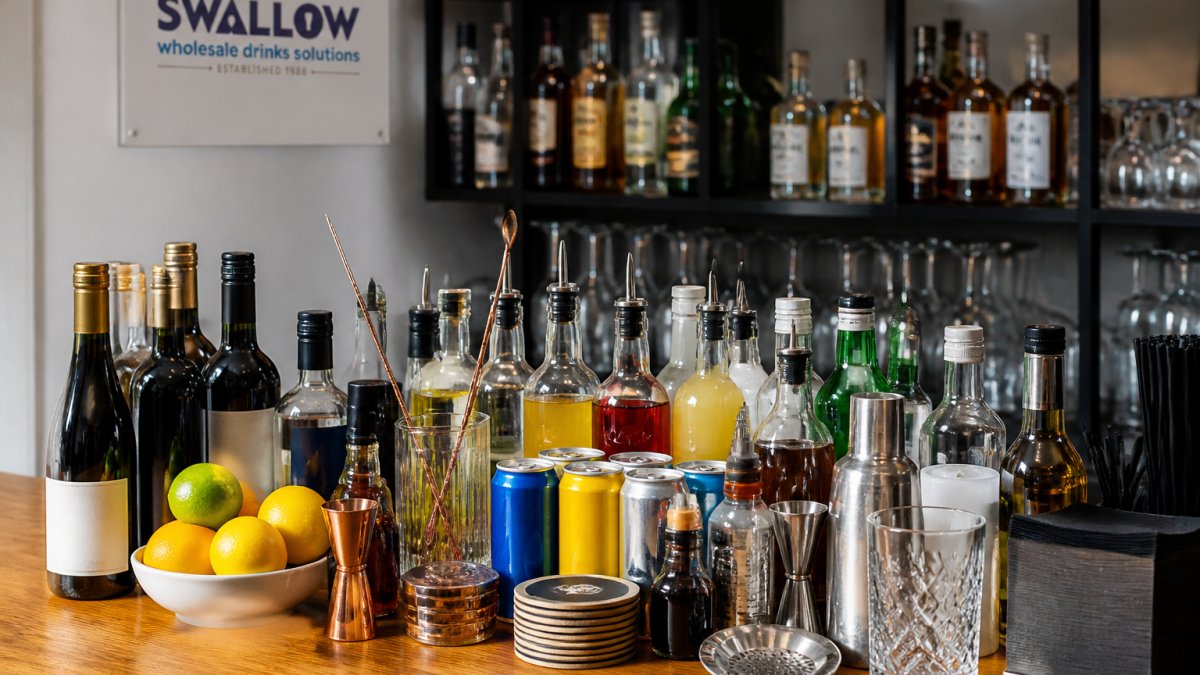
Your base spirits are the foundation of the entire bar stock list. Cover the core categories well rather than spreading budget thinly across specialities.
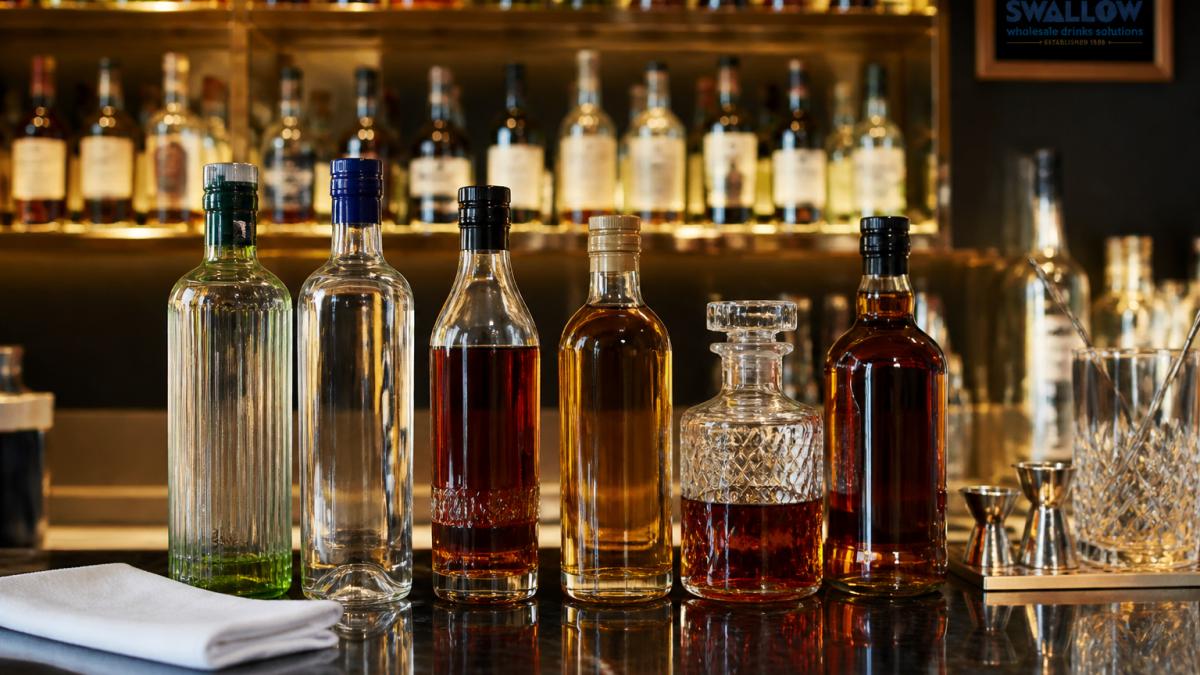
These three carry most mixed drinks, so they deserve the deepest par levels. A quality London dry gin such as Bombay Sapphire Gin 70cl at £21.70 handles everything from a gin and tonic to a martini. For vodka, Absolut Vodka 70cl at £16.09 is a versatile workhorse, while Captain Morgan Spiced 70cl at £19.13 covers rum and cola and darker cocktails.


Whiskey is where hotel guests expect a recognisable name. Jack Daniels 70cl at £25.07 gives you a familiar bourbon for the back bar. Add a Scotch and a brandy to round out the category.
This is the category most new bars under-stock. A small, focused set covers the classics: Aperol 70cl at £23.77 for spritzes, Amaretto Disaronno 70cl at £18.95 for sours and coffees, and Angostura Bitters 44.7% 20cl at £11.57 for an Old Fashioned.
Mixers move faster than spirits in most hotel bars, and running dry on tonic is a visible failure. Stock premium mixers in volume: Fever Tree Tonic 24 x 200ml at £17.98 and Fever Tree Soda Water 24 x 200ml at £21.36.
Add Monin Grenadine 70cl at £18.87 for cocktails and soft drinks, plus fresh citrus, juices and garnishes ordered weekly.
Nonalcoholic options deserve real attention. A hotel bar with one token soft drink loses the designated driver and the health-conscious guest. NHS guidance on alcohol units is worth reading when you plan your low and no-alcohol range, because guests increasingly ask for it. We stock a dedicated nonalcoholic drinks range to cover that demand properly.
The bar equipment checklist covers everything that is not a drink, and it is where new hotel bars most often under-order. Get the volumes right and service flows; get them wrong and your team fights the bar all night.
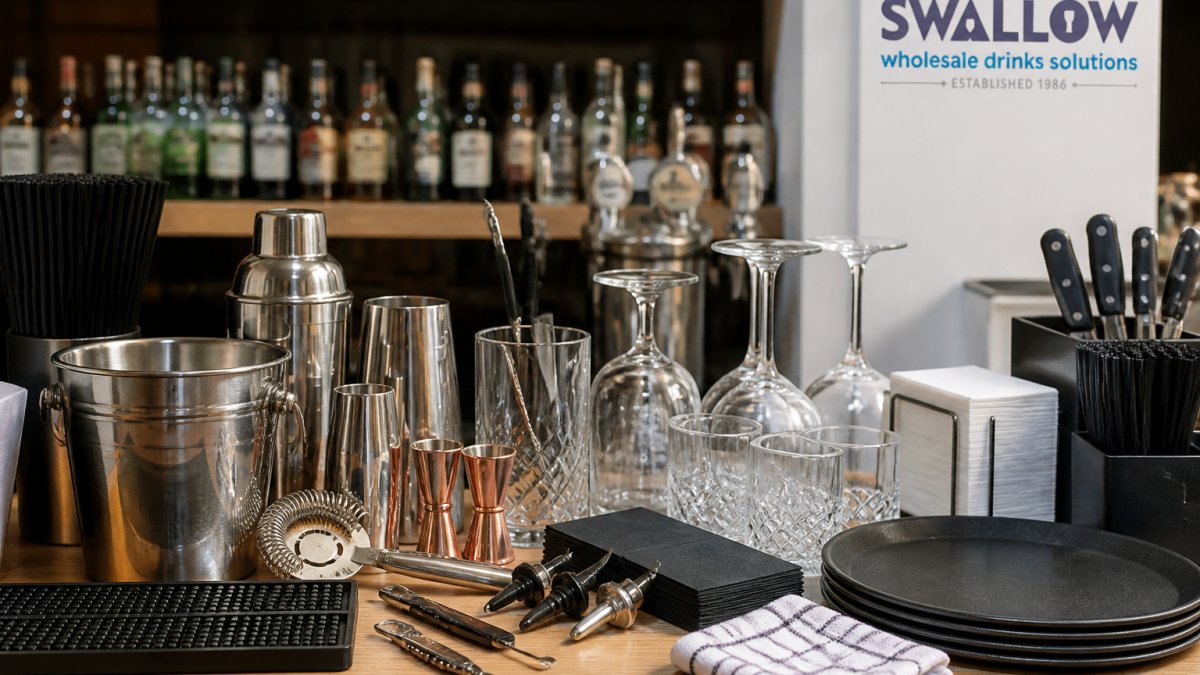
A lobby bar, a restaurant bar and an events bar do not need the same kit. Use this as a starting framework and adjust to your menu:
Equipment | Lobby bar | Restaurant bar | Events bar | Why it matters |
|---|---|---|---|---|
Cocktail shaker | 4 | 6 | 8 | One per bartender plus spares for peak service |
Jigger | 2 | 3 | 4 | Consistent measures and cost control |
Hawthorne strainer | 4 | 6 | 8 | Shaken drinks; fine strainers for doubles |
Bar spoon and muddler | 2 each | 3 each | 4 each | Stirred drinks and muddled cocktails |
Speed pourer | 1 per bottle | 1 per bottle | 1 per bottle | Faster service and fewer spills |
Ice scoop and bin | 2 | 3 | 4 | Ice is the most-used ingredient in the bar |
Glasswasher racks | 4 | 6 | 8 | Throughput on busy shifts |
Glassware is the item new hotels underestimate most. Order to your finalised drinks menu, not a generic list. A short menu of highballs, rocks, wine and flutes needs far less variety than a full cocktail list, so lock the menu first and order glass to match.
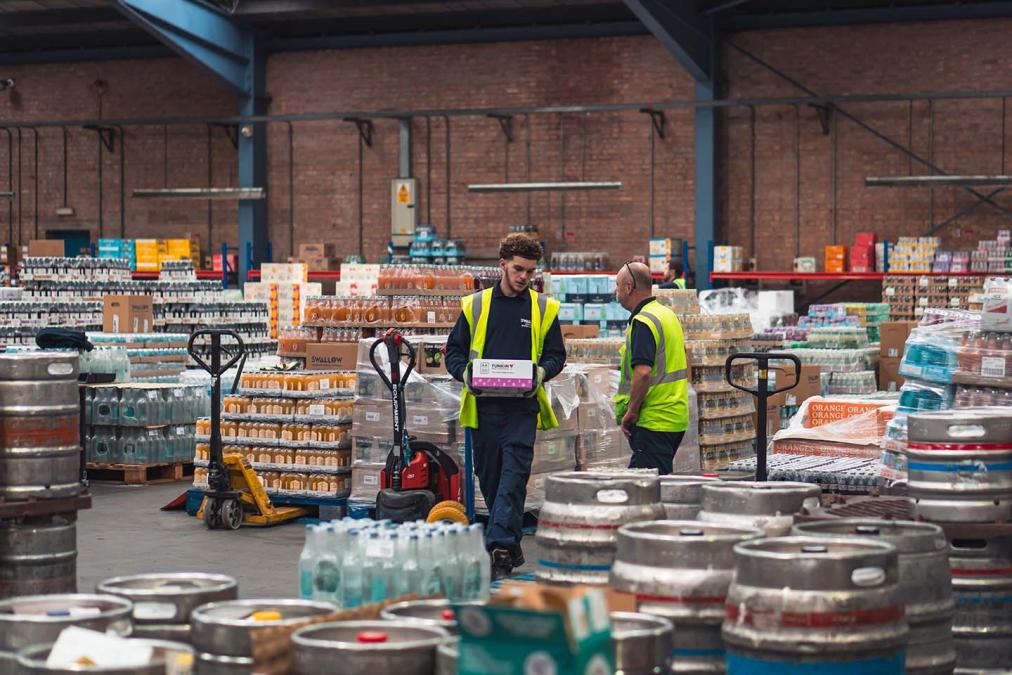
Ice deserves the same scrutiny as spirits. Confirm your ice machine capacity against your busiest expected shift, and arrange a backup supply for events, which need a separate ice plan from the lobby bar. Refrigeration and glass storage should be sized to your par levels, not the store room. Your Swallow Drinks order arrives by white van on a scheduled delivery, agree the delivery window and access route with your supplier before opening week so stock lands in the right store, not in reception.
A hotel bar drinks menu should be short, profitable and built around the stock you can actually hold; long menus look impressive and cost you money in dead stock.
Our approach is three tiers, each tied to stock you already hold:
Every item on the menu should trace back to a product on your bar stock list. If it does not, either add it to the list or cut it from the menu.
A single menu across every outlet is a common opening mistake. A lobby bar can carry a broader cocktail list because guests linger; a restaurant bar should be shorter and food-friendly; an events bar needs speed above variety; room service and minibars need sealed, single-serve, low-breakage formats. Build one core menu plus a short outlet-specific overlay rather than four separate lists.
Cost every cocktail against your purchase price before the menu is printed. If a serve uses a £21.70 gin, your pour cost and selling price must reflect that, and the same discipline applies to mixers and garnishes. Cost each line at your target pour cost. Review the menu after the first month of trading and cut any line that is not earning its shelf space.
For licensing and responsible service context, the GOV.UK guidance on alcohol licensing sets out the framework your premises licence sits within, and the Licensing Act 2003 is the legal basis for the sale of alcohol. Build the menu around what you can serve legally and consistently, not around what looks good on paper, including measures, age verification and any conditions attached to your premises licence.
If you want a supplier who understands hotel operations and can keep delivery consistent across outlets, register for our trade ordering portal. We have spent over 40 years getting this right for hospitality businesses, and we would rather help you plan the menu and the list together than watch you run out on a Saturday.
Bar stock management is the discipline of setting par levels, tracking usage and costing every serve, the difference between a bar that makes money and one that quietly leaks it.
Start with par levels by outlet size:
Outlet Type | Spirits Par Level | Mixers Par Level | Review Cycle |
|---|---|---|---|
Small lobby bar | 2-3 bottles per line | 2-3 cases | Weekly |
Restaurant bar | 4-6 bottles per line | 4-6 cases | Twice weekly |
High-volume events bar | 8-12 bottles per line | 8-12 cases | Daily |
Cost every cocktail against your purchase price. If a serve uses a £21.70 gin, your pour cost and selling price must reflect that. Review par levels after the first month of trading.
Compliance and staff readiness close the loop on your bar stock list. Stock without trained staff is a liability, not an asset.
Your team needs training on measures, age verification and refusing service. The Licensing Act 2003 sets the legal framework for the sale of alcohol, and every member of bar staff should understand what it requires of them.
We also recommend a pre-opening dry run.
If you want a supplier who understands hotel operations and can keep six-day delivery consistent, register for our trade ordering portal.
Opening a hotel bar is a procurement problem disguised as a drinks problem.
Start with the base spirits that cover the widest range of cocktails: gin, vodka, rum, whiskey and a liqueur or two. Add vermouth, bitters, tonic and soda water, plus a small wine and beer selection. From there, build out a hotel bar drinks menu around the cocktails you plan to serve. Swallow Drinks supplies these core lines and can help you match quantities to your outlet size, so you are not over-ordering before you know your footfall.
There is no single number, but a sensible approach is to set par levels by outlet size and expected covers, then hold around one to two weeks of core lines as opening stock. Fast movers such as vodka, gin and mixers need higher par levels than niche liqueurs. Track usage weekly through your bar stock management process and adjust. Swallow Drinks can review your menu and forecast with you to set realistic opening quantities.
A basic bar equipment checklist covers a cocktail shaker, jigger, strainer, bar spoon, muddler, ice buckets and scoops, chopping boards, knives, speed pourers, glassware for each drink type, and a reliable glasswasher. You also need cleaning cloths, bin bags and a first-aid kit. Confirm what the fit-out provides before ordering, so you do not duplicate items. Swallow Drinks focuses on the drinks side and can advise on glassware and garnish needs alongside your stock order.
Group stock by category (spirits, mixers, wine, beer, soft drinks) and label shelves clearly. Keep a simple stock sheet or use your till system to record deliveries and daily usage. Count key lines weekly and full stock monthly, and set reorder points so you never run dry on a Saturday. A written bar stock management routine, with one person responsible, keeps variance low and makes your ordering with Swallow Drinks faster and more accurate.
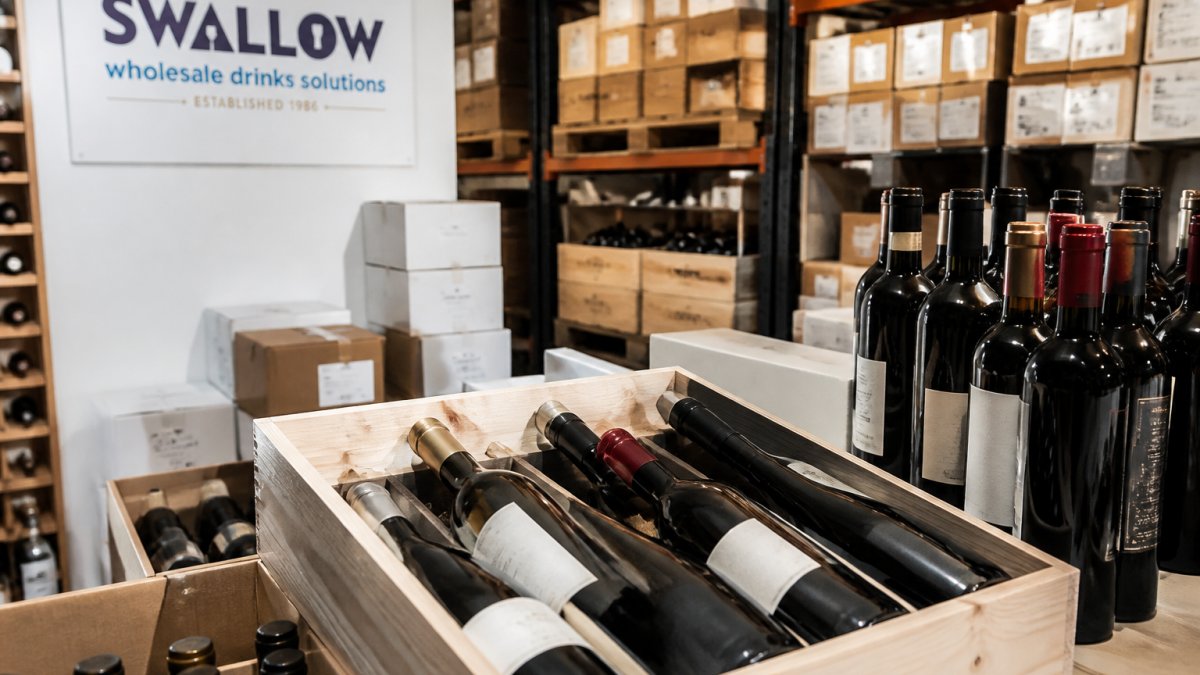
The essentials are gin, vodka, rum, whiskey and a bourbon, plus a liqueur such as amaretto and a vermouth or aperitif for spritzes and cocktails. Bitters are also worth stocking for classic recipes. These cover most guest requests and form the base of a hotel bar drinks menu. Swallow Drinks stocks core brands across these categories, so you can build a versatile selection without tying up cash in slow-moving lines.
Members of:


AWRS Registration Number: XJAW00000100730