Oct 19, 2026
Last Updated: October 18, 2026
Getting your independent venue stocked properly separates thriving bars from those that struggle. Essential bar supplies form the backbone of smooth operations, without them, you'll face bottlenecks, frustrated staff, and disappointed customers. At Swallow Drinks, we've spent over 40 years helping independent venue owners build bars that work.
The challenge isn't having some supplies, it's having the right supplies in the right quantities. Most new venue owners either over-stock and waste money, or under-stock and run out mid-service. This guide covers what you need, how much to order, and where to source it.
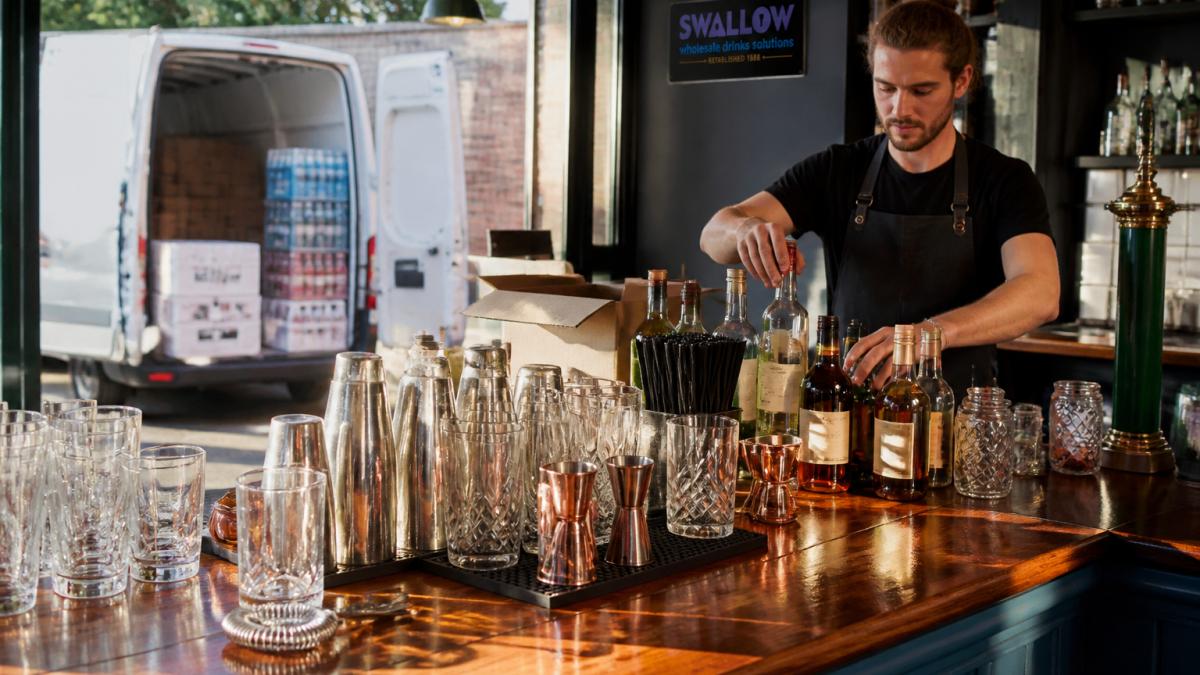
Your essential bar supplies break down into five categories: core equipment and tools, glassware, drinks stock (spirits, mixers, and non-alcoholic options), cleaning and maintenance supplies, and safety equipment. Skip one and your operation suffers.
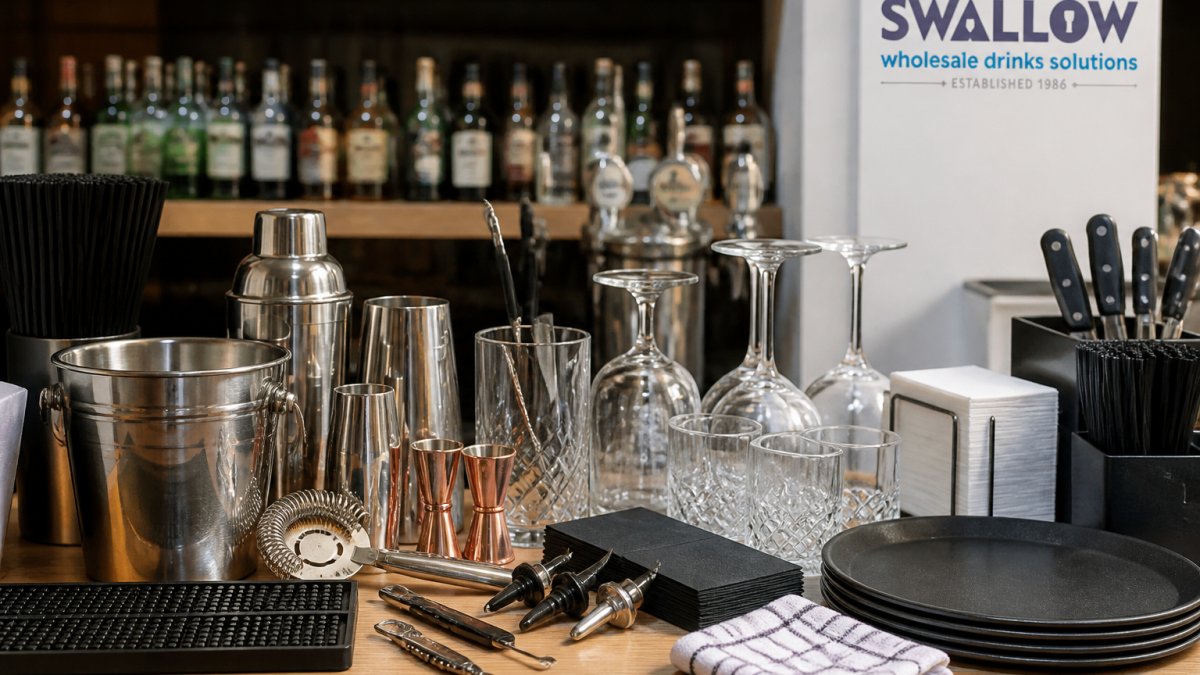
Your bar equipment forms the foundation of service speed and staff safety. A well-equipped bar needs shakers, jiggers, strainers, mixing glasses, bar spoons, peelers, and ice equipment.
A cocktail shaker is non-negotiable. The Boston shaker (two-part design) works best for high-volume venues because it's faster and more durable than single-piece alternatives. You'll want at least two per bartender on shift. Jiggers for measuring spirits and mixers come in standard 25ml and 50ml sizes.
Strainers remove ice and solids from mixed drinks. A Hawthorne strainer (the one with the spring) fits most mixing glasses and shakers; stock at least two. Mixing glasses and bar spoons for stirred cocktails are separate from shaking equipment.
Peelers for citrus garnishes are simple but essential; buy a few because they wear quickly. Ice equipment depends on your volume, if you have an ice maker, budget for maintenance supplies; if buying bagged ice, factor it into weekly costs and par levels.
For draught beer, you'll need line cleaning supplies. Swallow Drinks supplies professional-grade cleaning solutions like the Swallow Purple B/Line Cleaner (5 litre), which keeps your lines hygienic and your beer tasting right.
| Equipment | Quantity Per Bartender | Replacement Frequency | Cost Consideration |
|---|---|---|---|
| Cocktail shakers | 2 | Annual | Durability matters |
| Jiggers | 1 + 2 spares | 6-12 months | Buy in bulk |
| Strainers | 2 | 12-18 months | Standard Hawthorne type |
| Mixing glasses | 2 | 18-24 months | Crystal or heavy glass |
| Bar spoons | 2 | 12-18 months | Long handle essential |
| Line cleaner | 1 bottle per 4-6 weeks | Ongoing | Budget weekly |
| Gas cylinders | 2 active + 1 backup | As needed | Exchange or refill |
Glassware isn't decoration, it affects how drinks taste, how quickly you serve, and your profit margins. Broken glasses mean constant replacement costs. Mismatched glassware looks unprofessional and confuses customers about portion sizes.
Your core glassware needs are: highballs (for spirits and mixers), rocks glasses (for neat pours and short cocktails), martini/coupe glasses (for stirred and shaken cocktails), and shot glasses.
Buy glassware in bulk from reliable suppliers. Swallow Drinks sources premium glassware that withstands commercial dishwashing cycles. A standard 285ml highball costs roughly the same whether you buy 6 or 60, so buy more, you'll break them, lose them, and need backups during busy service.
Stock levels depend on service volume and dishwashing speed. A small independent bar with one dishwasher and 40 covers per night needs roughly 80-100 highballs and 60-80 rocks glasses; a busier venue (100+ covers) needs double.
Specialty glassware (margarita, hurricane, copper mugs) is tempting but dilutes your focus. Stick to core types first, then add specialty glasses only if your menu demands them, too many types means higher breakage, more washing, and complicated ordering.
Your drinks stock is where you make money or lose it. The right selection matches your venue's style and customer base, an independent gastropub stocks differently than a nightclub or cocktail bar.
Core spirits for most independent venues include gin, vodka, rum, and whisky. These four cover 70% of cocktail orders and mixed drinks. Start with mid-range options, premium brands matter less when customers are ordering mixed drinks.
Mixers are where consistency matters most. Customers taste the difference between premium and cheap tonic water. Fever Tree tonic and soda water are industry standard, and Swallow Drinks supplies these products to keep your bar stocked with quality mixers.
Non-alcoholic options are no longer optional. Swallow Drinks supplies a full range of Non Alcoholic Drinks including premium syrups and fruit purées, giving your staff the tools to create interesting non-alcoholic options that customers will order.
Wine and beer depend on your venue type. A gastropub needs a curated wine list, even 15-20 bottles across styles and price points builds credibility.
Par levels for spirits vary wildly by venue. A busy bar might sell 3-4 bottles of gin per week; a quiet pub might sell 1.
Stock management separates profitable independent venues from those bleeding money. Par levels, rotation, and waste tracking aren't thrilling, but they're where margins live.
Par levels are the minimum stock you maintain for each item. If your par level for gin is 4 bottles, you reorder when you drop to 3, preventing mid-service stockouts while avoiding over-stocking.
FIFO rotation (First In, First Out) is essential for drinks, especially anything with a shelf life. Date every bottle or case when it arrives and use older stock first. Spirits last years, but mixers, juices, and syrups degrade.
Waste tracking reveals where money leaks. Track spillage, over-pours, comped drinks, and expired stock separately.
Delivery consistency matters. Swallow Drinks offers six-day-a-week delivery across the region, so you can maintain tighter par levels without fear of running out, less cash tied up in stock and less waste.
Stock audits should happen monthly. Count key items (spirits, premium mixers, gas cylinders) and compare to your par levels. Discrepancies reveal theft, spillage, or over-pouring, catching problems early.
| Stock Management Task | Frequency | Impact |
|---|---|---|
| Par level review | Monthly | Prevents stockouts and over-stocking |
| FIFO rotation check | Weekly | Reduces waste and maintains quality |
| Waste tracking | Daily | Identifies cost leaks |
| Full stock audit | Monthly | Catches discrepancies early |
| Supplier reorder | 2-3x weekly | Maintains consistency |
Budget reality varies by size and style, but the principle is the same: know your costs, track them, and adjust. A small independent bar with 30-40 covers per night budgets differently than a busy venue with 100+ covers.
Initial setup costs for a basic bar include equipment (shakers, jiggers, strainers, glassware, bar spoons), initial drinks stock, and gas cylinders.
Ongoing weekly costs for drinks stock depend entirely on your sales volume. A small independent bar might spend £300-500 per week; a busier venue might spend £1,000+.
Gas cylinders are available through Swallow Drinks, with exchange options to keep your draught systems running smoothly. Budget for at least two active cylinders plus one backup.
Cleaning and maintenance supplies (line cleaner, sanitiser, glassware cleaner) run £20-40 per week depending on your volume. Swallow Purple B/Line Cleaner keeps your draught lines clean and your beer tasting right.
Staffing and training isn't a supplies cost, but it affects how efficiently supplies are used. Well-trained staff waste less, pour more accurately, and handle glassware carefully, reducing per-drink cost and improving margins.
The key insight: venues that track actual spending, rather than guessing or using industry averages, spot problems quickly.
If you're opening a new independent venue, the setup feels overwhelming. Break it into phases: get the basics working first, then refine based on real data.
Phase 1: Core Equipment and Glassware (Week 1) Order your bar equipment (shakers, jiggers, strainers, mixing glasses, bar spoons) and glassware based on expected staff size and service volume.
Phase 2: Initial Drinks Stock (Week 1-2) Start with core spirits: gin, vodka, rum, whisky. Include non-alcoholic options from day one, Swallow Drinks supplies a full range of Non Alcoholic Drinks including syrups and purées that cost little but let your staff make interesting mocktails.
Phase 3: Gas and Draught Setup (Week 1-2) If you're serving draught beer, get your CO2 cylinders and line cleaner sorted immediately. Dirty lines ruin beer and customer experience.
Phase 4: Establish Par Levels (Week 2-4) After your first 2-3 weeks of service, count what you've sold and set realistic par levels.
Phase 5: Implement Stock Tracking (Week 3 onwards) Set up a simple system to track sales, waste, and par levels. A spreadsheet works fine for small venues.
Register with Swallow Drinks Trade Ordering to access our full product range, pricing, and delivery options. The portal lets you place orders, track deliveries, and manage your account in one place.
Getting your essential bar supplies right takes planning, but it's not complicated. Contact us or register at swallow.uk.com to discuss your venue's needs.
A small independent venue needs cocktail shakers, jiggers, bar spoons, strainers, mixing glasses, essential glassware (highballs, rocks, coupes), core spirits (gin, vodka, white rum), premium mixers like Fever Tree tonic and soda water, and non-alcoholic options. You'll also need draught equipment maintenance supplies and ice. Start with this foundation and expand based on your menu. Swallow Drinks stocks all these essentials and can advise on starter quantities that suit your service volume.
Prioritise multi-purpose tools: a Boston shaker works for multiple cocktails, and a single jigger handles most measurements. Buy glassware in bulk to reduce per-unit cost. Stock core spirits that work across many cocktails rather than specialist bottles. Use premium mixers like Fever Tree to elevate basic drinks without overstocking. Set realistic par levels based on your average weekly sales. A reliable supplier offering six-day delivery helps you avoid tying up cash in excess stock, so you only order what you'll sell quickly.
Bar stock management is tracking what you have, setting par levels (minimum quantities to maintain), rotating stock so older bottles sell first, and monitoring waste. It prevents running out on busy nights and stops cash sitting in slow-moving bottles. Track sales daily, rotate stock using FIFO (first in, first out), and adjust par levels seasonally. Waste often comes from over-ordering niche spirits or leaving draught lines uncleaned. A consistent supplier like Swallow Drinks with six-day-a-week delivery lets you order smaller, more frequent shipments and respond quickly to what's actually selling.
No. A small venue can operate with five core glassware types: highballs for long drinks, rocks glasses for shorts, coupes for cocktails, wine glasses, and beer glasses. These cover 80% of cocktails. Specialty glasses (martini, margarita) are nice but not essential for a small independent venue starting out. Buy durable, dishwasher-safe options in bulk. As your venue grows and your menu becomes more defined, you can add specialist glassware for signature drinks.
Clean draught lines weekly to prevent bacteria buildup and maintain beer quality. You'll need a beer line cleaner like Swallow Purple B/Line Cleaner (£5.72 for 5 litres) and the correct gas cylinders: either mixed gas 60/40 (£27.07) or CO2 gas (£24.18) depending on your system. Follow your equipment manufacturer's instructions for cleaning frequency and method. Neglecting line cleaning causes flat beer, off-flavours, and customer complaints. Include line cleaning in your weekly maintenance schedule and budget for replacement gas bottles regularly.
Members of:


AWRS Registration Number: XJAW00000100730