Oct 04, 2026
Last Updated: October 3, 2026
Local drink wholesalers are independent, family-run suppliers who stock, sell and deliver beer, wine, spirits and soft drinks to pubs, bars, restaurants and hotels within a defined trading area.
At Swallow Drinks, we have spent 40 years supplying the on-trade across Birmingham and the surrounding areas. Below, we break down where local sourcing pays off and how to judge a wholesaler before you sign anything.
Cost efficiency in drinks wholesale comes from three places: the price per keg or case, the delivery cost built into that price, and the stock you tie up in your cellar.
National distribution often looks cheaper on the headline rate. Industry guidance from the British Beer and Pub Association consistently points to tight margin pressure across the sector, which makes small, repeated savings matter more than one-off discounts.
Ask any potential supplier for a full price list before you commit, including delivery charges, keg deposits and out-of-hours fees. A wholesaler confident in its pricing will hand that over without hesitation.
Drinks wholesale delivery logistics decides whether a venue runs smoothly. A six-day schedule lets you order against real sales rather than guessing a week ahead, cutting both stockouts and dead stock.
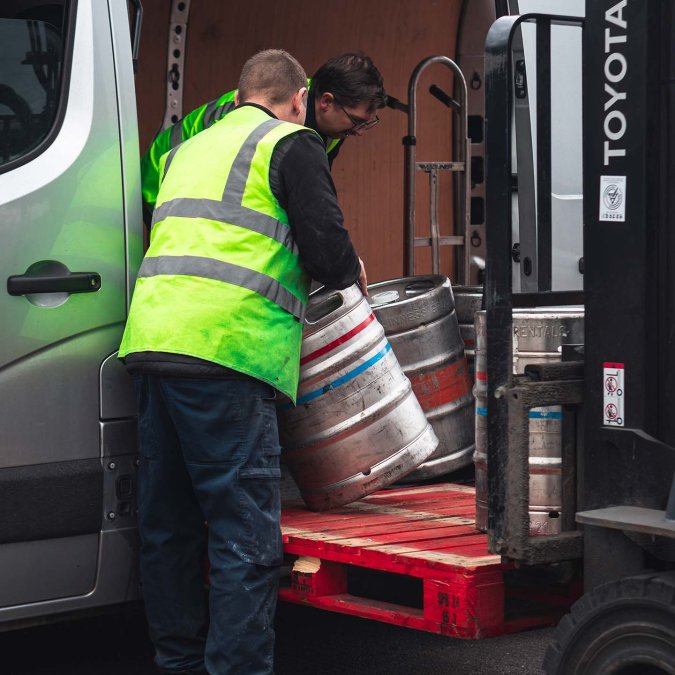
A failed gas line or a keg that will not pour at 8pm on a Friday is the real test of a wholesaler. Ask, before you switch, what the out-of-hours process is.
The practical questions worth asking:
A supplier that cannot answer these clearly is unlikely to answer them well at 8pm either. Trade customers who register for an account through Swallow Drinks trade ordering get a direct route to the team rather than a call centre queue.
Product variety matters less than fit. A long catalogue is only useful if it holds the lines your customers actually order, plus a few rotating or seasonal options.
A workable cellar range usually covers four groups:
Getting the balance right is where a local wholesaler earns its keep. A supplier that understands your menu can tell you which lines turn over quickly in similar venues.
Range group | What to stock | Why it matters |
|---|---|---|
Core lager | One house, one premium | Covers most draught orders |
Stout and dark | One reliable line | Steady, weather-resistant demand |
Cider | One dry, one fruit | Broadens appeal without clutter |
Soft drinks and low or no alcohol | Full range | Serves drivers and mixed groups |
Hospitality stock management tips repeat the same handful of habits, and they work because they are simple. The goal is to know what you have, what you sell and what you need without spending hours on it.
Start with these core habits:
The venues that struggle most are usually ordering by habit. A wholesaler that shares sales patterns across similar venues can help you spot a line quietly costing you money.
Most independent operators still order by eye or memory, which is why stockouts and dead stock happen in the same week.
The practical benefits are straightforward:
Trade customers who register through Swallow Drinks trade ordering get access to this kind of platform, which means the ordering process takes minutes rather than a phone call during service. For a busy venue, that time saving matters as much as the stock itself.
A par level is only useful if it reflects what you actually sell. A common mistake is setting par levels once and never revisiting them, seasonal shifts, menu changes and even the weather move demand noticeably.
Review par levels when you review your menu, typically once a quarter. Look at which lines sold out before the next delivery and which sat untouched, then adjust upward for the first group and downward for the second.
Ordering to a fixed weekly list without checking actual sales is the most common cause of dead stock. It ties up cash and takes up cellar space you could use for lines that sell.
Wastage in drinks comes from three sources: stock going out of date, kegs tapped too early or too late, and over-pouring at the bar.
Track wastage by line for a full quarter before making changes. You will usually find a small number of products account for most of the loss, those are the lines to cut, reduce in par level, or move to a smaller pack size.
Wholesale wine and spirits sourcing is where a local supplier offers something a national depot often cannot: speed on niche and small-production labels. If you want a regional craft beer or a limited wine, a local wholesaler can usually source it faster because it already deals with smaller producers.
Freshness matters most on draught. A keg that sits too long in a warm cellar will not pour well, whatever the brand. Shorter delivery routes and regular drops keep stock moving, which is the simplest quality control there is.
Low and no alcohol is the fastest-growing part of many menus. A full range of low and no alcohol drinks means you can serve every table properly, including drivers and anyone cutting back, without sending them to the soft drinks fridge.
Risk, compliance and sustainability are the three areas buyers leave until something goes wrong. All three are easier to manage with a local supplier.
Licensing and responsible retailing sit with you as the venue, but a good wholesaler supports your compliance in practical ways. Under UK licensing law, you are responsible for ensuring alcohol is sold responsibly and that staff have accurate product data, correct ABV labelling and clear allergen information for every line you stock.
A local wholesaler should be able to provide:
If a supplier cannot provide this information quickly, it creates a compliance risk that sits with you, not them. A local wholesaler with a named contact can turn around a product query in hours rather than days.
The past few years have shown how quickly international supply chains can be disrupted. Port delays, haulage shortages and global ingredient shortages hit national distribution networks harder than regional ones, because a national network has more links and more distance to cover.
A local wholesaler with a regional depot is less exposed to this disruption. The stock is already in the country, often already in the depot, and the delivery route is short.
When assessing a wholesaler's risk profile, ask:
Sustainability is the angle most buyers overlook, but it is becoming a deciding factor for venues that want to demonstrate environmental responsibility.
Many pubs, bars and restaurants now include sustainability commitments in their marketing, and saying your drinks come from a local wholesaler with efficient delivery routes is a credible point of difference.
A local wholesaler can also help you source more regional and small-production lines, which reduces the distance those products travel from producer to venue.
One practical risk of switching supplier is being locked into a contract that does not work for your venue. A confident local wholesaler will usually offer a trial period rather than a long tie-in, because they know their delivery record speaks for itself. Ask for it in writing, and check the notice period.
When you assess a wholesaler, score them on these:
Ask a prospective wholesaler for a trial period rather than a long contract. A supplier confident in its delivery record will usually agree, and it removes the risk of being locked in.
The hardest part of switching supplier is not the paperwork. It is finding one that still delivers on the Saturday of a bank holiday weekend, when everyone else has gone quiet.
That is the standard we hold ourselves to at Swallow Drinks. As a family-run independent wholesaler with 40 years in the trade, we supply a broad portfolio of premium wine, beer, spirits and soft drinks across Birmingham and the surrounding areas, backed by six-day delivery and a team that knows your menu.
A local wholesaler runs shorter routes, so vans reach your venue faster and more predictably. That means six-day-a-week delivery you can plan your cellar around, rather than a national schedule that leaves gaps on your busiest nights. If a line goes down on a Friday, a local team can often get someone out the same day instead of waiting until Monday. Shorter routes also cut transport costs, which keeps pricing steadier across the year. For venues in Birmingham and the West Midlands, that proximity is the difference between running out on a Saturday and trading through it.
Independent suppliers tend to offer clearer pricing, flexible order sizes and genuine product knowledge. You are not tied to minimum orders that lock up cash, and you can usually speak to someone who understands your menu rather than a call centre. Many also carry niche local labels and craft beers that larger distributors skip. Stock rotation advice, menu consultation and quick sourcing of one-off lines all come as standard when your supplier knows your venue. Swallow Drinks has operated as a family-run independent wholesaler for over 40 years, so that experience sits behind every order.
Regular, predictable deliveries let you hold less stock without risking gaps. You can order to match demand, rotate kegs properly and avoid tying up cash in slow-moving lines. A local partner can also flag when a product is trending and suggest swaps before a line goes flat. Pair that with a simple par-level system for your best sellers, and you cut both waste and emergency top-up runs. Trade customers can register at webtrade.swallow.uk.com to manage orders and see the full range online.
A missed delivery on a Friday night costs you sales you never recover. Reliability covers showing up when promised, having the stock you ordered, and responding quickly when equipment fails. Venues that switch suppliers usually do so because of inconsistency, not price. Ask any prospective wholesaler about their delivery days, their cover for breakdowns and what happens if an item is out of stock. A supplier that answers those questions clearly, and puts it in writing, is the one worth building a long-term relationship with.
Get started with Swallow Drinks and give your venue a supplier that turns up when it says it will.
Members of:


AWRS Registration Number: XJAW00000100730