Oct 17, 2026
Last Updated: October 16, 2026
Bar equipment maintenance is the routine care of the tools, machines and surfaces behind your bar so they keep working, stay hygienic and last longer. Get it right and your team serves faster, wastes less and avoids costly breakdowns. At Swallow Drinks, we have supplied the on-trade for over 40 years, and we have seen how a simple maintenance routine separates smooth venues from chaotic ones.
The problem is that maintenance gets pushed aside during service. A busy Friday night leaves little time for cleaning ice machines or checking beer lines. So small issues build up until something fails. Below, we break down exactly how to build a routine that works, even in a high-volume venue.
A bar equipment maintenance checklist works when it splits tasks by how often they need doing. Daily jobs keep service clean. Weekly jobs catch wear. Monthly jobs prevent breakdowns.
Most guides get this wrong. They hand you a giant list with no order, so nothing gets ticked off. A better approach is a rotating schedule pinned near the cellar or back bar, with names against each task.
Keep daily tasks short. Your team is tired at close, so five to ten minutes is realistic.
Daily:
Weekly:
Monthly:
| Task | Frequency | Who | Why It Matters |
|---|---|---|---|
| Wipe bar surfaces | Daily | Bar staff | Stops bacteria and sticky build-up |
| Clean ice machine | Weekly | Duty manager | Protects ice quality and hygiene |
| Clean beer lines | Monthly | Trained staff | Keeps draught beer tasting right |
| Descale water lines | Monthly | Duty manager | Prevents scale and slow flow |
Commercial ice machine cleaning and maintenance is the single most overlooked job in most bars. Ice touches almost every drink you serve, so a dirty machine affects taste and hygiene directly. It is also the machine most likely to fail mid-service, because scale and slime build quietly where nobody looks.
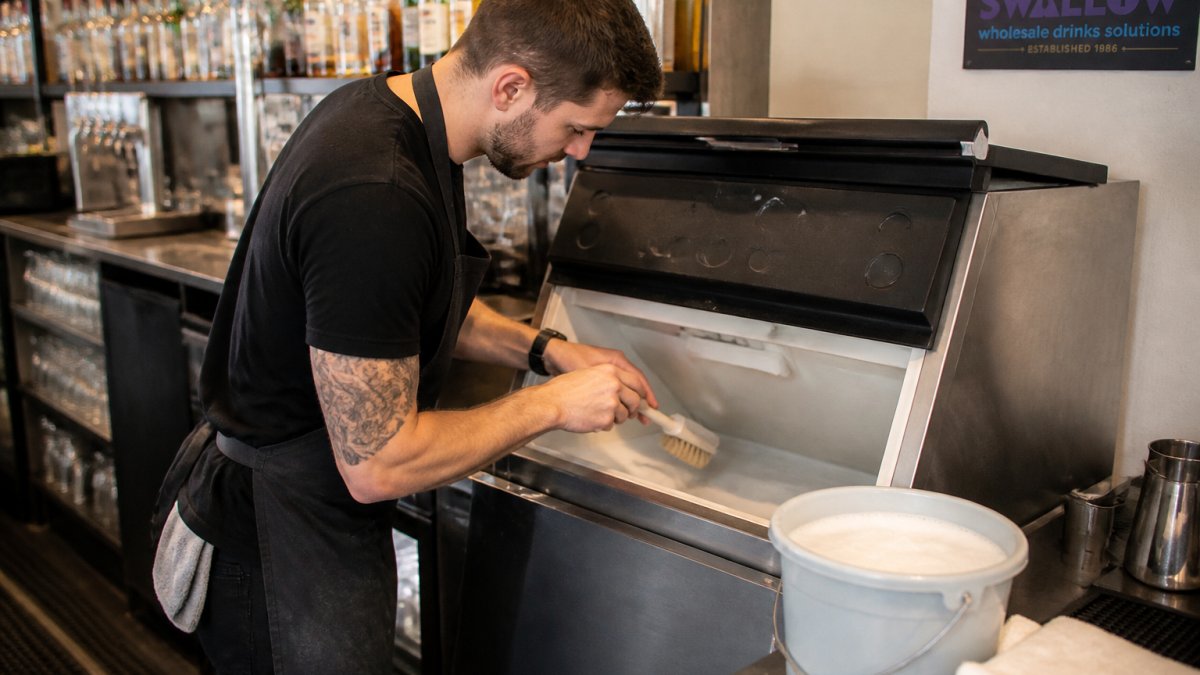
A common mistake is only emptying the bin. The real work is inside the machine. Scale and slime build on the evaporator, the water trough and the distribution tubes, and that is where problems start. Once flow is restricted, the machine works harder, makes less ice and eventually trips out.
Service intervals and cleaning procedures vary by manufacturer, so always check the maker's manual first. What follows is a sensible starting point that most venues can adapt.
| Equipment | Daily | Weekly | Monthly | Quarterly |
|---|---|---|---|---|
| Ice machine | Empty and rinse bin, check ice quality | Brush evaporator and bin interior, check for slime | Descale water lines and check filter | Sanitise full water circuit, inspect for leaks |
| Glasswasher | Check salt and rinse aid, clear debris | Clean filters and spray arms | Descale and run a service wash | Check door seals and dosing |
| Coolers and fridges | Check temperature, wipe seals | Vacuum condenser coils | Inspect door gaskets and drainage | Check refrigerant lines for frost |
| Draught system | Check pour quality and temperature | Check line clarity and couplers | Full line clean | Replace worn washers and seals |
| Water filters | Check pressure and flow | , | Replace cartridge on maker's schedule | Sanitise housing |
Treat the table as a prompt, not a rulebook. If the manufacturer says clean every two weeks, follow the manufacturer.
Water quality decides how fast scale builds up. Hard water leaves mineral deposits that block flow and cut ice output. A water filter is the simplest fix, and it pays for itself by extending equipment lifespan and reducing service calls.
Check filters monthly and replace them on the maker's schedule. If ice looks cloudy, tastes odd or forms clumps, treat it as a warning sign, not a small detail. The same applies to glasswashers and drink systems, where scale dulls glassware and slows dosing.
If you would rather not think about filters and cleaning fluids, our trade ordering service keeps the consumables you need coming six days a week, so the schedule never slips because something ran out.
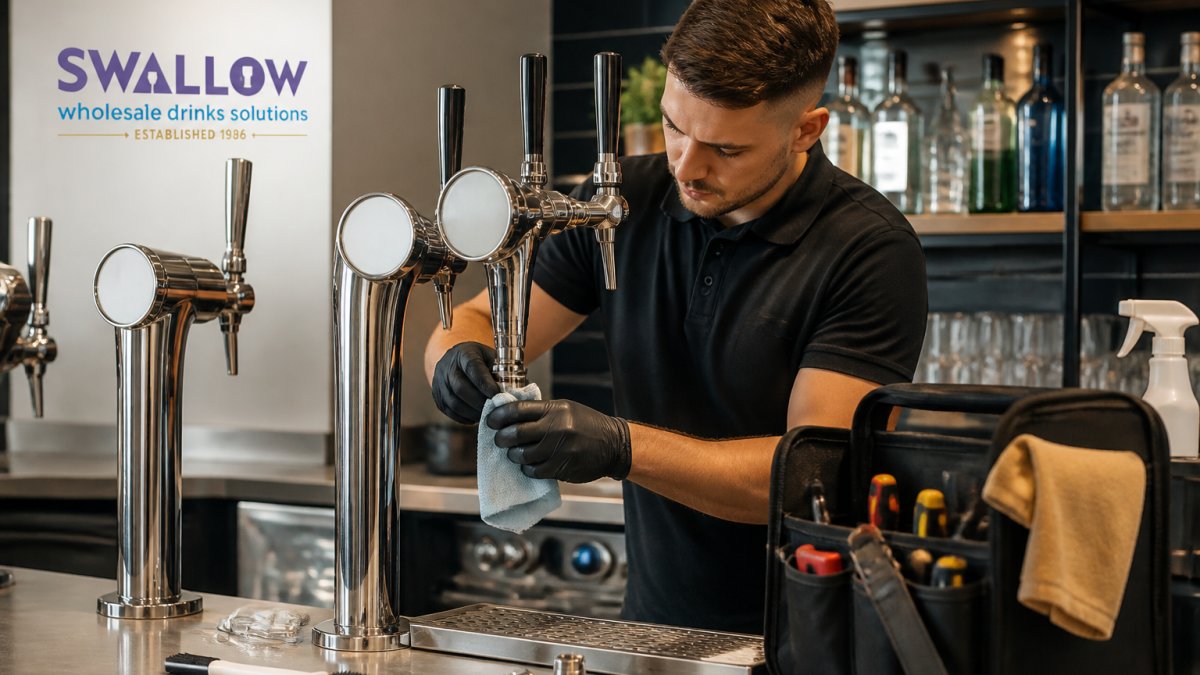
A beer line cleaning schedule is not optional if you serve draught. Beer lines build up yeast and bacteria fast, and that shows up as off-flavours and flat pints.
The routine that works is simple: clean the lines on a fixed cycle, usually every week for high-volume venues and at least monthly for quieter ones. Use the correct line cleaning fluid and flush thoroughly.
If you are unsure what your lines need, ask your supplier. At Swallow Drinks, we help venues across the region get their draught setup right, and our trade ordering service keeps the cleaning supplies and stock you need coming six days a week.
Things to check every time:
A bar cleaning checklist keeps hygiene consistent across every shift. The goal is simple: nothing gets missed, no matter who is working.
Use this as your master list and tick each item as you go:
Print it, laminate it and keep it where staff can reach it. A checklist only works if it is used.
Troubleshooting starts with knowing what "normal" looks like. When something changes, you spot it early. That is why the most useful tool behind your bar is not a spanner but a log.
A log makes maintenance auditable. It shows who did what, when, and what happened next. Keep one per machine, or one master sheet for the whole bar if that is easier to manage.
| Date | Equipment | Task | Frequency | Staff initials | Issue found | Follow-up | Status |
|---|---|---|---|---|---|---|---|
Print it, laminate it and keep it near the cellar or back bar. The point is not paperwork for its own sake. It is that a signed log turns "we think it was cleaned" into "we know it was cleaned, by whom, and what they saw".
Some problems are routine. Others need a qualified engineer. The skill is telling them apart before a small fault becomes a lost night of trade.
Escalate immediately when you see:
For anything you cannot fix safely, call a qualified engineer. Do not let staff open sealed equipment. This protects them, protects the machine and protects your warranty.
At Swallow Drinks, we have supplied the on-trade for over 40 years, and we have seen how a simple log separates venues that catch problems early from those that discover them at 7pm on a Friday. If you want your venue stocked and supported properly, register for our trade area and let us look after the supply side while you focus on service.
Downtime costs more than the repair. A failed ice machine or dead beer line stops sales, frustrates customers and pushes staff to improvise.
Prevention is cheaper than repair in almost every case. A filter change, a line clean and a monthly inspection take minutes. A breakdown during a Friday rush costs you a full night of trade.
Better still, good maintenance extends equipment lifespan. Machines that are cleaned and serviced last longer, so you replace them less often.
If you want your venue stocked and supported properly, register for our trade area and let us look after the supply side while you focus on service. We have been Birmingham's number one wholesaler for a reason: we know what busy bars need.
Daily cleaning covers bar surfaces, tools and glassware. Weekly tasks include deep cleaning of ice bins, drains and beer lines. Monthly maintenance should cover refrigeration coils, ice machine descaling and thorough inspection of all dispensing equipment. Beer lines need cleaning at least weekly, and some high-volume venues clean them every three to four days. Keep a written bar equipment maintenance checklist so nothing gets missed during busy periods.
A solid checklist covers daily wipe-downs of surfaces and tools, glassware washing and sanitising, ice bin cleaning, and beer line flushing. Weekly items include deep cleaning of drains, sinks and coolers, plus pest checks. Monthly tasks should cover refrigeration coil cleaning, ice machine descaling, and inspection of worn tools like shakers and strainers. Record who completed each task and when, so you can spot recurring problems before they cause downtime.
Empty and clean the ice bin daily with warm soapy water, then rinse and dry thoroughly. Weekly, remove and clean the ice scoop and check the bin for any buildup. Monthly, inspect the condenser coils and clean them if dusty, and check the water filter. Descale the machine every three to six months depending on your water hardness. If you notice cloudy ice, unusual tastes or reduced production, book a service call rather than waiting for a breakdown.
Prevention comes down to routine, records and escalation. Follow a rotating cleaning schedule covering every piece of equipment, log each task with a date and initials, and train staff to report anything unusual immediately. Watch for warning signs like warm coolers, slow beer flow, or ice that looks cloudy. When something needs a technician, call straight away rather than waiting until the weekend. A reliable drinks supplier like Swallow can also help you keep stock rotating properly, reducing strain on your coolers.
Running a bar means juggling stock, staff and service, and equipment maintenance is easy to push down the list until something breaks. Swallow Drinks supports venues with a vast portfolio of premium drinks, six-day-a-week delivery and over 40 years of on-trade experience. Our trade ordering platform and non-alcoholic range make it simple to keep your bar stocked and your menu fresh. Get started with Swallow Drinks and keep your bar running without the last-minute panic.
Members of:

AWRS Registration Number: XJAW00000100730