Oct 16, 2026
Last Updated: October 15, 2026
Getting wine labelling right isn't optional. It's a legal requirement. Mistakes cost money, damage reputation, and can trigger enforcement action from Trading Standards. At Swallow Drinks, we've worked with independent bars, restaurants, and hotels across the region for over 40 years. We've seen what happens when teams don't understand wine labelling laws, and it's always preventable.
Your staff are your first line of defence. When they know what goes on a label and why, compliance becomes automatic. They spot problems before bottles leave your stock. They answer customer questions confidently. They protect your business.
This guide walks you through the essentials. We'll cover what the law demands, how to build a training programme that sticks, and how to keep records that prove your team knows the rules.
Wine labelling laws in the UK exist to protect consumers and ensure fair competition. Your team needs to understand the core requirements so they can spot non-compliant stock before it reaches customers.
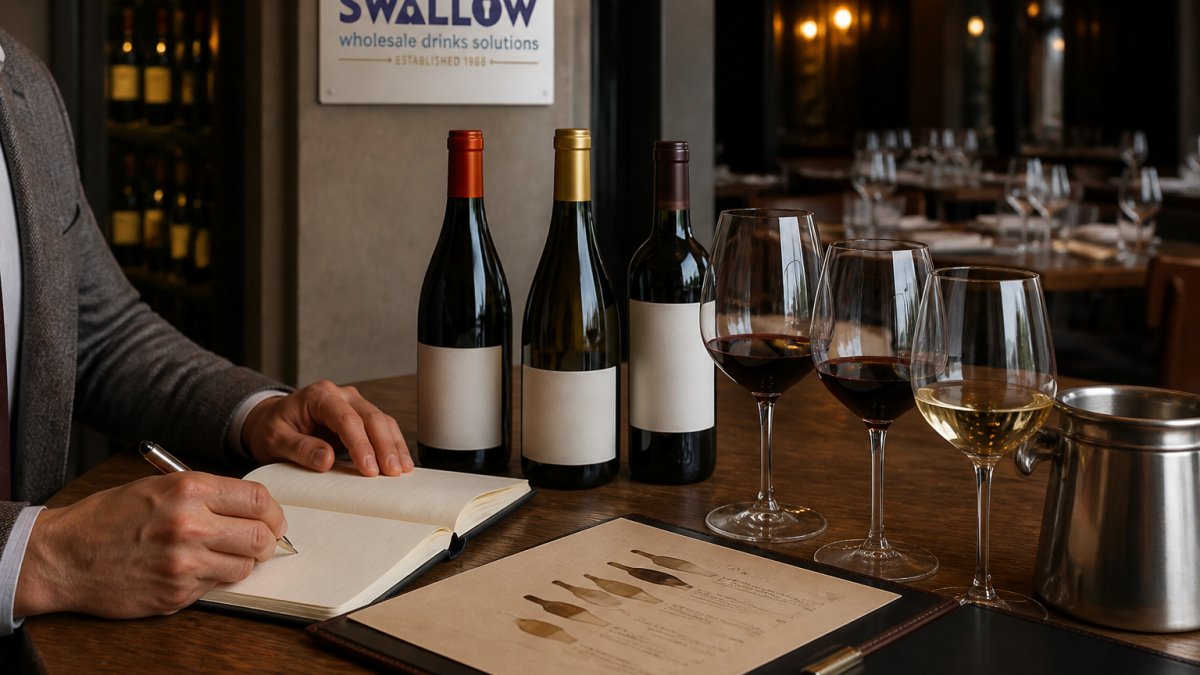
Every wine label must display specific information. Your staff should be able to identify each element on sight.
The product name comes first. This tells customers what they're buying. It might be a grape variety, a region, a style, or a brand name.
Alcoholic strength is mandatory. This is shown as a percentage by volume, written as "% vol" or "% alc/vol". It must appear on every bottle.
The net quantity must be shown in litres or millilitres. A standard wine bottle is 750ml.
The origin statement is critical. It tells customers where the wine comes from. This might be a country, a region, or a protected designation.
The name and address of the producer, bottler, or importer is required. This is the responsible business operator.
Sulphites are used in winemaking to preserve freshness. They're present in almost all wine. The label must state "contains sulphites" or similar wording. This is non-negotiable because some customers have genuine allergies.
Your team should know that sulphite declarations aren't optional extras, they're legal requirements. If a bottle doesn't carry this statement, it shouldn't be on your shelves.
Other allergens must also be declared if present. These might include egg white (used in fining) or milk proteins. The rules are clear: if an allergen is used in production, it must be declared on the label.
The producer is the person or company that made the wine. This might be a vineyard, a cooperative, or a merchant. Their details must appear on the label.
The bottler is the person or company that put the wine into bottles. This might be the producer or someone else. If it's not the producer, this must be stated clearly.
The importer is the responsible business operator if the wine comes from outside the UK. This is you if you import stock. Your name, address, and contact details create a clear chain of responsibility.
Your team should understand that these details aren't just bureaucratic, they're the trail that enforcement officers follow if there's a problem. Clear, accurate information protects your business.
A checklist turns complex rules into a simple, repeatable process. Your team uses it every time they receive new stock or prepare to sell wine.
Create a physical checklist that lives in your stock area. It should ask clear yes-or-no questions:
If the answer to any question is no, the bottle doesn't go on your shelves. This simple rule prevents most compliance problems before they start.
Keep a copy of this checklist in your training materials. Make it part of your induction process for new staff. Laminate it and post it where your team receives and stores stock.
Effective training sticks because it's practical, relevant, and broken into manageable chunks. Your team needs to understand not just what the rules are, but why they exist and what happens if they're broken.
Start here. Your team needs to understand the legal framework and their role in it.
Begin with a simple question: Why do wine labels matter? The answer is consumer protection and fair competition. Customers need to know what they're buying.
Explain that Trading Standards enforces these rules. They inspect stock, review labels, and take action if they find breaches.
Make it personal. Explain that every member of staff has responsibility. When they receive stock, they check it. When they sell it, they're confident it's compliant.
Cover the key legislation briefly. The Food Standards Act 1999 and Food Labelling Regulations set the framework.
End this module with a simple statement: "Your job is to make sure every bottle that leaves this business has a correct, complete label."
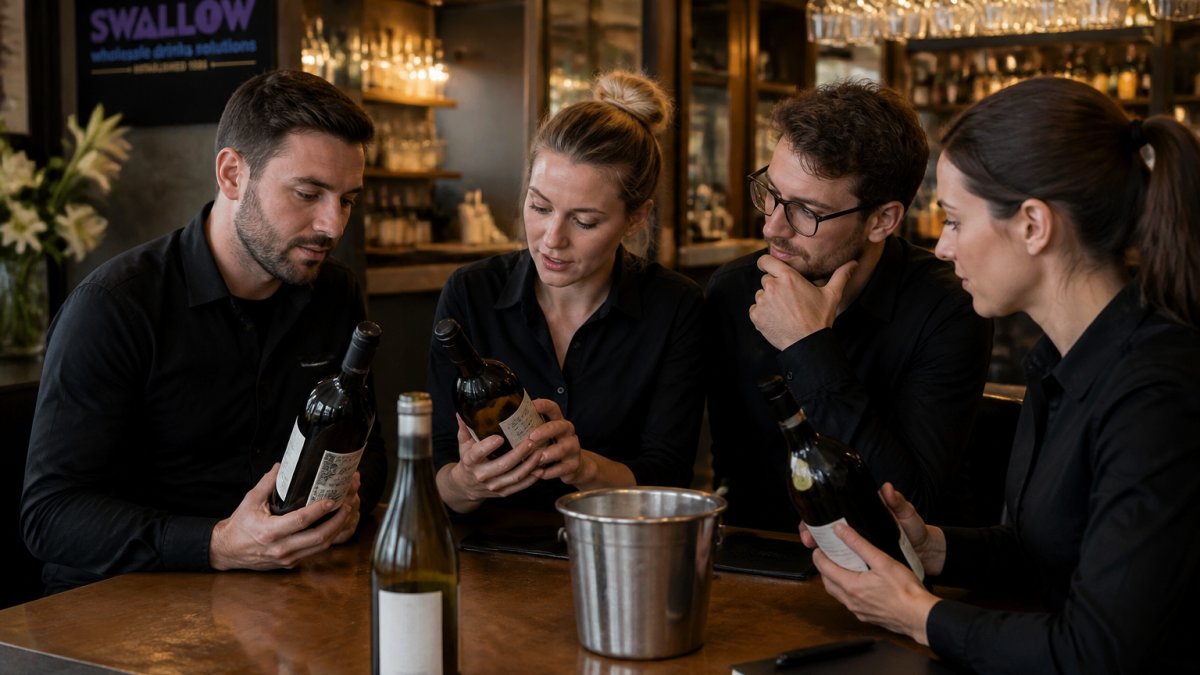
This is hands-on. Your team reviews actual wine bottles and learns to spot what's required.
Bring in examples of compliant labels and non-compliant ones. Then show them common mistakes: missing sulphite declarations, unclear origin statements, illegible text, incomplete producer information.
Walk through the checklist together. For each bottle, ask: Does it pass? Why or why not? What's missing?
Introduce the concept of lot identification. This is a code that links the bottle to production records. It helps with traceability if there's a problem.
Discuss language. Labels must be in English or another language customers understand.
Practice the review process. Give your team 10 bottles and 10 minutes. They use the checklist and report back. This builds confidence and catches gaps in understanding.
Different roles have different responsibilities. Make this explicit.
Stock receivers check compliance when bottles arrive. They use the checklist. If a bottle fails, they don't unpack it. They report it to management.
Bar or restaurant staff sell the wine. They should be able to answer basic questions about origin, strength, and allergens. They're not expected to be experts, but they should be confident enough to help customers.
Managers maintain records. They keep copies of labels, notes on compliance checks, and evidence that training happened. This is your defence if enforcement officers ask questions.
Importers and retailers have the biggest responsibility. You ensure that every bottle you bring into the market is compliant. You keep records. You train your team. You're the responsible business operator.
Make clear that everyone has a role. Everyone matters.
This is your working document. Use it every time you receive new stock.
| Element | What to Check | Pass or Fail |
|---|---|---|
| Product Name | Is it clear and accurate? | ☐ |
| Alcoholic Strength | Is it shown as % vol or % alc/vol? | ☐ |
| Net Quantity | Is it in litres or millilitres? | ☐ |
| Origin | Is the country or region stated? | ☐ |
| Producer Details | Name and address visible? | ☐ |
| Sulphite Declaration | Does it say "contains sulphites"? | ☐ |
| Text Legibility | Is the text clear and readable? | ☐ |
| Language | Is it in English or another understood language? | ☐ |
If any box is unchecked, the stock is non-compliant. Don't sell it. Contact your supplier and report the issue.
Keep this checklist in your stock area. Train your team to use it. Review it quarterly to make sure your process stays sharp.
Training only works if you verify that it stuck. Assess your team. Keep records that prove they know the rules.
Run a simple knowledge check after training. Ask questions like: What must appear on every wine label? What does sulphite declaration mean? If a label is missing producer details, what do you do?
Your team should answer confidently. If they don't, repeat the training. One-off sessions don't build lasting knowledge.
Keep records of who attended training, when it happened, and what was covered. This is your evidence if Trading Standards asks questions. It shows you're serious about compliance.
Review your process every six months. Ask your team if they've spotted any compliance issues. Ask if the checklist is working. Update your training if the rules change or if you find gaps in understanding.
Learning from others' mistakes saves time and money.
The most common error is missing or incomplete allergen information. Sulphites are easy to overlook, especially on older stock or imported wines.
Unclear origin statements cause problems. If a label says "Product of Europe" instead of naming a specific country, it's vague. Customers deserve to know exactly where the wine comes from.
Illegible text is another frequent issue. If the label is so small or faded that customers can't read it, it fails the test.
Incomplete producer information is common on smaller producers' bottles. If there's no address or contact detail for the responsible business operator, it's non-compliant.
Ignoring lot identification sounds minor, but it matters for traceability. If enforcement officers need to track a batch, they use this code. Your records should link lot codes to suppliers and production dates.
Wine labelling compliance isn't complicated, but it demands attention. Your team is your first line of defence. Train them well, give them a checklist, and verify they understand the rules.
At Swallow Drinks, we support independent hospitality businesses across the region with reliable stock and the guidance you need to stay compliant. We've built our reputation over 40 years by helping businesses like yours succeed. Our team understands the challenges you face, from sourcing quality wines to managing compliance, and we're here to help.
When you're ready to simplify your ordering and access our full range of compliant stock, visit Swallow Drinks trade ordering platform to register and start managing your account. You'll find the wines and spirits your customers want, backed by a supplier who knows the rules and supports your success.
Wine labels must display the product name, alcoholic strength, net quantity, origin, producer details, allergen declarations (particularly sulphites), and the name of the responsible business operator. All mandatory information must be legible and in English. Labels must also show lot identification and comply with food labelling legislation. Trading Standards enforce these requirements, and non-compliance can result in enforcement action.
Use a wine label compliance checklist covering all mandatory fields: product name and category, alcohol by volume percentage, net volume in millilitres, country of origin, producer and bottler details, allergen warnings (sulphites), and responsible food business operator information. Check that text is legible, language is English, and no misleading claims appear. Document each review and keep records for audit purposes. Staff should flag any missing or unclear information before stock reaches the shelf.
Effective training covers regulatory overview and staff responsibilities (30 minutes), hands-on label review and compliance checks (45 minutes), and role-specific duties for purchasing, receiving, and retail staff (30 minutes). Include knowledge checks, practical label-review exercises, and competency assessments. Training should be documented, refreshed annually or when regulations change, and tailored to each role. Partners like Swallow Drinks can advise on current requirements and support your compliance culture.
The responsible food business operator (typically the importer, distributor, or retailer) is legally accountable for label compliance. In practice, purchasing staff should verify labels when stock arrives, shelf staff should spot-check during rotation, and managers should oversee the process and maintain records. Clear role assignment and training ensure no gaps. Regular audits and documented checks protect your business from Trading Standards enforcement.
Members of:

AWRS Registration Number: XJAW00000100730