Oct 30, 2026
Last Updated: October 29, 2026
Quick Summary
Choose eco-friendly alcohol packaging solutions in the UK by venue type, not by slogan: cans suit high-volume and outdoor trade, lightweight glass suits premium serves, and bag-in-box suits by-the-glass lists. At Swallow Drinks we have spent 40 years supplying the on-trade, so we have seen which format switches hold up behind a busy bar.
At Swallow Drinks, we have spent 40 years supplying the on-trade. Below, we break down seven eco-friendly alcohol packaging solutions in the UK that actually hold up behind a busy bar.
The short answer: choose your format by venue type, not by slogan. Cans suit high-volume and outdoor trade, lightweight glass suits premium serves, and bag-in-box suits by-the-glass lists.
Format | Best For | Main Trade-Off |
|---|---|---|
Lightweight glass | Premium bottles, spirits | Still heavy to transport |
Recycled-content glass | Standard beer and wine lines | Needs clean kerbside sorting |
Bag-in-box wine | By-the-glass lists | Shorter opened shelf life |
Wine pouches | Events and festivals | Limited premium perception |
Paper bottles | Brand-led launches | Narrow availability |
Cans | High-volume beer and RTDs | Some drinkers resist |
Returnable bottles and kegs | Draught-led venues | Return logistics needed |
Lightweight glass is the simplest sustainable drinks packaging switch most venues can make this quarter. It keeps the premium feel of glass while cutting the weight moved per case.
Recycled content matters just as much.
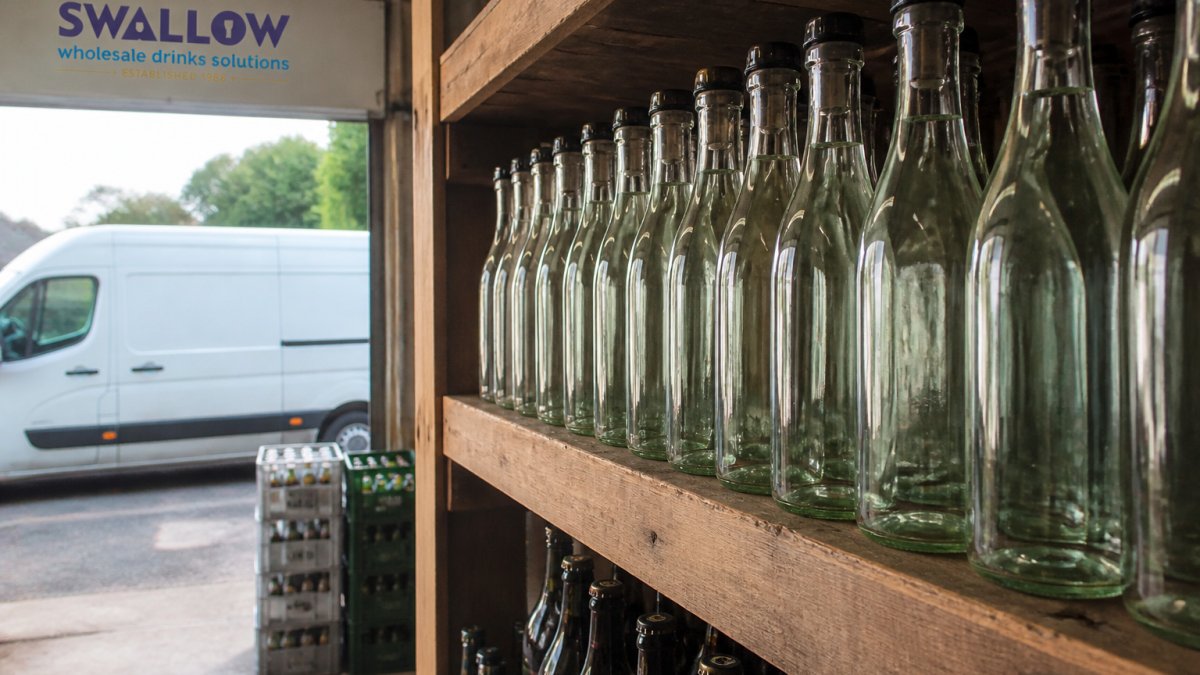
Watch out: lightweight bottles are more prone to breakage in transit, so check your cellar handling and ask about protective packaging before you commit a full range.
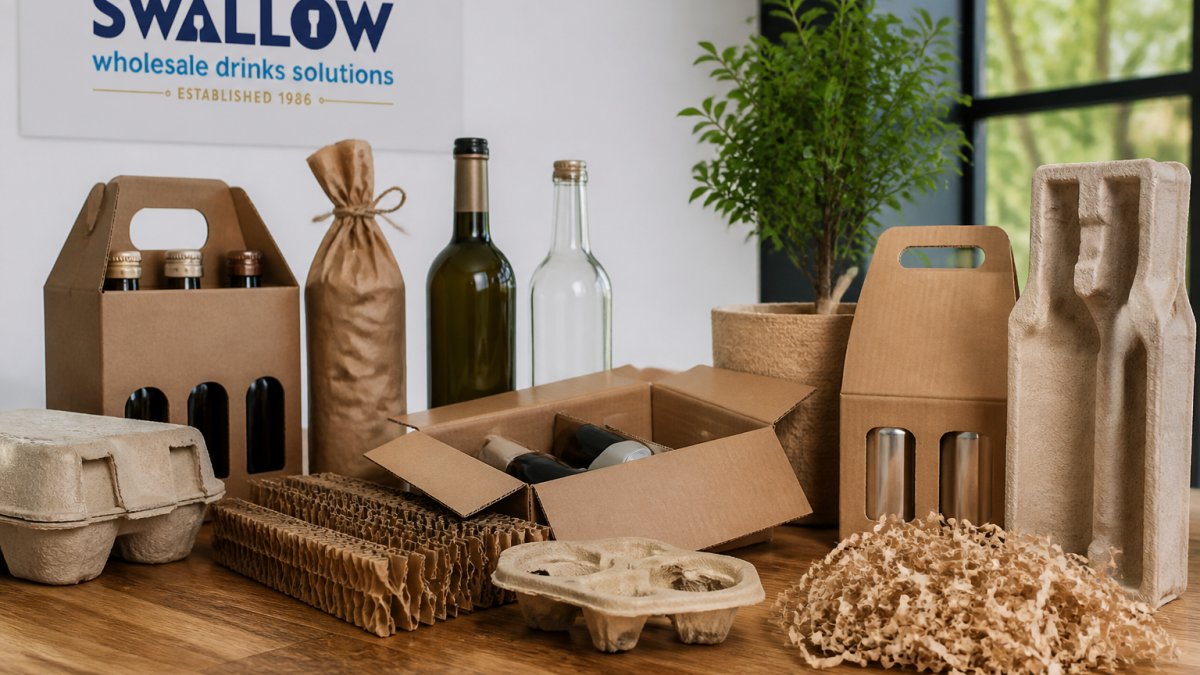
Eco-friendly wine packaging now covers three credible formats beyond the bottle: bag-in-box, pouches and paper bottles. Each one cuts packaging weight, and each one suits a different part of your list.
Bag-in-box works best for house wines sold by the glass. You decant less often, waste less at the end of a slow night, and the format is widely recyclable where cardboard collection exists. Pouches suit events, festivals and pop-up bars where weight and breakage risk matter more than shelf presence.
Sustainable beer packaging comes down to three routes: cans, returnable bottles and kegs. Cans are the lightest mainstream option and recycle well, which is why so many craft lines now launch in them first.
Returnable bottles and kegs beat single-use formats on lifecycle impact, but only if the returns actually come back. That means deposit schemes, cellar space and staff who remember to collect. Get that wrong and the environmental gain disappears.
Recyclable alcohol packaging depends on what your local authority collects, and that varies across the country. Glass bottles and jars are collected kerbside almost everywhere, while plastic pots, tubs and trays are more patchy. The practical rule: glass goes in the kerbside box, and everything else gets checked against your council's list before you tell staff where to put it. Cardboard from cases is widely collected, but it must be flattened and kept dry.
What most guides skip is the difference between a pack being technically recyclable and a pack actually being collected and reprocessed where your venue sits. A glass bottle is endlessly recyclable in principle, but only if it reaches a re-melt facility. A laminated pouch may carry a recycling logo yet be refused by your kerbside scheme because the layers cannot be separated at the local materials recovery facility. That gap is where green claims fall apart under scrutiny.
Three mechanisms decide whether your pack gets recycled in practice:
For a venue, the useful test is to ask your supplier three questions before you commit a line: which material stream does this pack enter, is that stream collected in my council area, and what evidence do you have that it is reprocessed rather than downcycled? A supplier who cannot answer all three is offering a slogan, not a recyclable pack.
Thatchers Ched/Valley 20LTR BIB 6% →
Once you know which glass bottles your collections accept, a standard line such as is an easy addition to a recyclable range. For venues building a canned range, aluminium is one of the most consistently collected and reprocessed streams in the country, which makes Brewdog Punk IPA 12 x 330ml a low-risk format switch on end-of-life grounds alone.
It also pays to keep an eye on producer obligations. Packaging waste rules place responsibilities on businesses that handle packaging, and those duties are tightening (Extended producer responsibility for packaging). Rather than assume your supplier has it covered, ask who is responsible for the packaging you buy in and what data you will need to provide. Getting that right early saves a scramble later.
Format choice should follow your pour profile, not a sustainability badge. A cocktail bar selling premium spirits needs glass. A high-volume nightclub needs cans and kegs. A gastropub with a strong by-the-glass list should look hard at bag-in-box. But the decision does not stop at matching format to occasion, it has to survive a margin check and a practical implementation check.
Start with the total cost of the pack, not the unit price. A lighter format can cost more per unit yet still save money once you account for breakage, storage space, delivery frequency and waste at the end of a slow night. The trade-offs that move the numbers most are:
Before you order, run a supplier checklist. Ask about minimum order quantities, compatibility with your filling or dispense setup, lead times, and what evidence the supplier can provide for any environmental claim. A supplier who can show recycled content figures, recyclability by stream, and a clear end-of-life route is worth more than one quoting a lower unit price with no evidence behind it.
Range balance matters too. Keep a no-alcohol option so the format decision does not shrink your offer. Our Non Alcoholic Drinks range lets a venue round out its offer.
At Swallow Drinks we have spent 40 years supplying the on-trade, so we have seen which format switches hold up behind a busy bar and which quietly get abandoned. Register for trade ordering at our trade portal and start with one format change on one line.
Picking a format is the easy part. Getting it delivered consistently, six days a week, is where most venues get let down.
We are a family-run independent wholesaler with 40 years in the trade, and we supply wine, beer, spirits and soft drinks across Birmingham and the surrounding areas.
Register for trade ordering at our trade portal and start with one format change on one line.
There is no single winner. In practice, lightweight glass with high recycled content, aluminium cans and bag-in-box all perform differently depending on transport distance and end-of-life. Compare weight, recycled content and whether your local authority collects the material before switching.
Aluminium cans are lighter and recycle indefinitely, which cuts shipping emissions, but glass bottles are widely accepted in UK kerbside collections and can carry high recycled content. For high-volume venues, cans often win on weight; for premium serves, recycled glass keeps the presentation.
Yes. Recycled glass reduces the need for new glass. Ask your supplier for the recycled-content figure in writing before you commit to a listing.
Returnable bottles, kegs and refillable growlers replace single-use formats. Producers are exploring alternative packaging options. Check the deposit and return logistics with your wholesaler before switching.
Weigh four things: recycled content (Allpack's Wineguard cartons contain 70% recycled content), whether your local authority collects the material, the weight and shipping emissions, and the cost per serve. A recyclable glass bottle may beat a non-recyclable plastic pouch, as a Reddit discussion in r/recycling notes, so check recyclability rather than the material label alone. Then confirm pricing in GBP with your supplier.
Members of:


AWRS Registration Number: XJAW00000100730