
Oct 26, 2026
Last Updated: October 26, 2026
Quick Summary
To choose keg cider for a pub, match the keg size and cider style to your actual pour rate: a standard 50-litre keg pours roughly 88 pints, so track weekly sales per tap and pick a style your drinkers will clear within four weeks. Stock a dry and a sweeter option, then check coupler type, shelf life once tapped and cellar conditions before ordering.
Draught cider earns its space behind the bar because it sells steadily, suits food, and gives drinkers a reason to stay for a second pint. The global cider market is projected to grow from around £15.3 billion in 2026 to £29.5 billion by 2036, a compound annual growth rate of 6.8% (Future Market Insights cider market report). That growth is not happening by accident. Pubs that get their keg cider range right keep the tap busy.
At Swallow Drinks, we have supplied the on-trade for over 40 years, and we know the difference between a cider that flies and one that sits in the cellar. This guide walks you through seven practical steps, from keg sizes to stock planning, so you can choose with confidence.
Here is what most guides miss: cider is not one drink. Sweet, dry, cloudy and sessionable styles pull very different crowds, and picking the wrong one costs you sales.
Most pub kegs run at 50 litres, which pours roughly 88 pints. That is the standard workhorse size for a busy bar. Smaller formats exist for slower venues or trial runs, but 50 litres remains the go-to for steady turnover.
Before you commit, check three things:
A 50-litre keg of Aspalls Cyder at 4.5% is a solid benchmark. It suits drinkers who want a crisp, medium cider without a heavy finish. Ordering the wrong size ties up cash and risks waste. If you want to see the full range of keg cider we stock, our keg cider range shows what is available now.
Watch out: ordering a large keg for a quiet midweek slot often means pouring the last few pints flat. Match size to demand first, then scale up.
Here are the keg facts to check before you place an order.
Item | Value | Note |
|---|---|---|
Standard pub keg size | 50 litres | The go-to for steady turnover |
Pints per 50-litre keg | Roughly 88 pints | At a full measure |
Benchmark cider | Aspalls Cyder at 4.5% | Crisp, medium cider without a heavy finish |
Capacity | Pints a full keg yields | Check before you commit |
Coupler type | Matches your existing tap system | Check before you commit |
Shelf life once tapped | How quickly you must sell it through | Check before you commit |
Cider styles for pubs break into a few clear camps, and each one attracts a different drinker. Knowing them helps you build a range that covers more tastes.
Consumer awareness of sessionable ciders, those under 3% ABV, has risen to 49% in 2026, up from 44% in 2024. That shift matters. More drinkers want a lower-strength option they can enjoy over a longer visit.
A common mistake is stocking only one style. Give drinkers a dry choice and a sweeter choice, and you cover most of the room.
Cider sales planning starts with knowing your weekly pour rate, not guessing it. Track how many pints leave each tap over a fortnight, then order to match. That simple habit prevents both empty lines and dead stock.
Start with the yield maths. A standard 50-litre keg pours roughly 88 pints at a full measure, so a tap selling 40 pints a week will empty a keg in just over a fortnight. That is a comfortable turnover for most pubs. A tap selling 15 pints a week takes nearly six weeks to clear the same keg, which is where quality and cash flow both suffer.
Here is a workable approach:
A common pattern in busy pubs is to run one high-turnover cider as the house pour and a second, slower line for variety. The house line justifies the 50-litre format; the second line may suit a smaller keg or a trial slot. If a line consistently sits for more than four to six weeks, either move it to a smaller format or replace it. Slow-moving stock ties up cash and risks a flat last few pints.
For busy periods, our guide on preventing drink stockouts during the World Cup rush covers how to plan ahead. The principle is simple: forecast from your own pour data, order early, and keep a buffer. If you want to see which lines turn well for other pubs, our keg cider range shows the full selection, and our team can help you match formats to your forecast.
Cider keg storage and serving comes down to temperature, pressure and clean lines. Store kegs cool and still, serve at the right pressure, and clean your lines on schedule. Get these three right and every pint lands well.
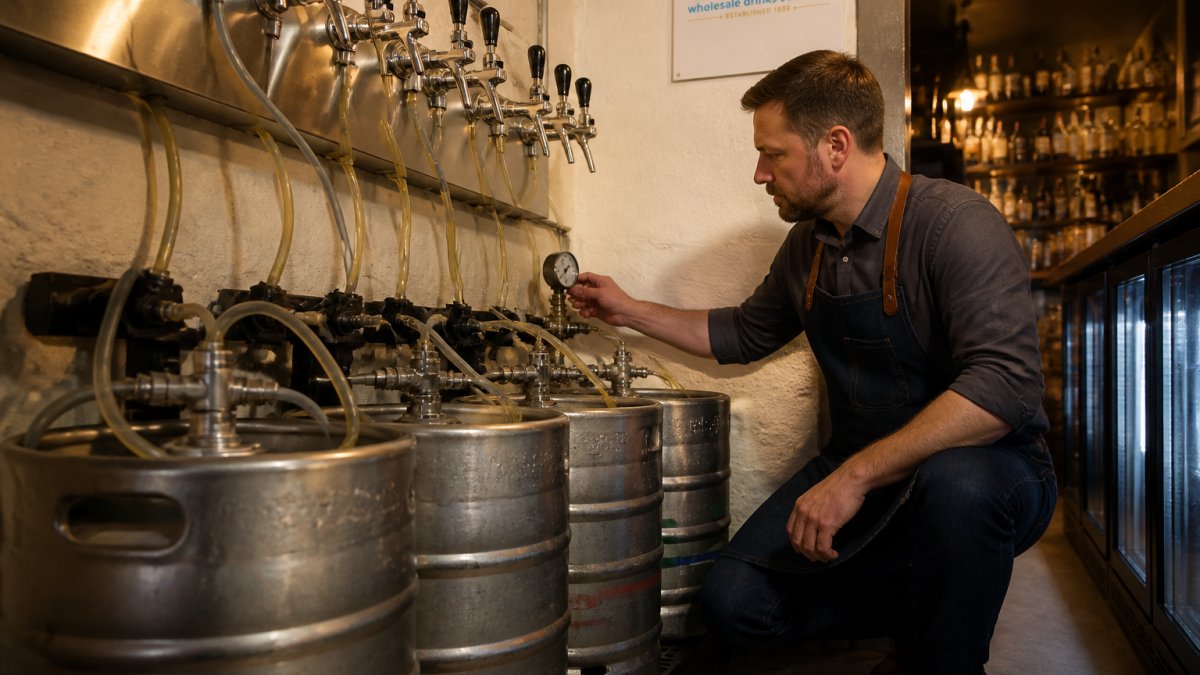
Kegs should sit upright in a cool cellar, away from direct heat and out of draughts. Keep the cooler steady, because temperature swings affect taste and condition. A common target is a cellar temperature in the region of 11-13°C for the keg store, with the cider served cooler at the tap through your python or cooler.
A few serving essentials:
What most guides miss is line cleaning. Dirty lines ruin a good cider faster than anything else. Build it into your routine, not your to-do list. A common pattern is to clean each line weekly and record it, so you can spot a drop in quality before customers do.
Dispense consistency matters as much as storage. Foaming usually points to a pressure or temperature mismatch, while flat pints often mean the keg is near empty or the gas is running low. Keep a spare coupler washer and a clean jug to hand, and train bar staff to flag any change in pour quality early.
If you want to see how different keg formats fit your cellar, our keg cider range lists what is available, including options like Weston's Caple Rd Cider 50L for a steady house line. When you are ready to plan your range, register through our trade ordering portal and our team can help you match kegs to your cellar and tap setup.
The right keg depends on who walks through your door. A food-led gastropub and a high-volume bar need different ciders. Match the style to your crowd, and the tap pays for itself.
Ask yourself:
Weighing up supply options? A local supplier who knows your trade often responds faster when something goes wrong on a Friday night. Our guide to local vs national drink distributors helps you work out which suits your venue.
Choosing keg cider for a pub is easier with a supplier who knows the range. Swallow Drinks has supplied the on-trade for over 40 years as a family-run independent wholesaler, and we stock a broad portfolio of premium drinks.
When you open a trade account, you get a partner who understands your menu, not a call centre. If you are still weighing up suppliers, our guide on how to choose a reliable drink wholesaler sets out what to look for. Our team helps you pick the right styles, plan stock, and keep delivery consistent. New labels arrive regularly, including options like Flattler Mango for something different.
Then sign up through our trade ordering portal to start building your cider range.
Most pub keg cider comes in 50-litre kegs, which is the standard size across the trade. Swallow Drinks supplies 50-litre kegs such as Aspall Cyder at 4.5% (£135.80), Thatchers Gold at 4.8% (£138.98), Inch's Cider at 4.5% (£102.31) and Thatchers Somerset Haze at 4.5% (£125.70). Smaller formats exist for lower-volume venues or trial runs, including a 20-litre bag-in-box option for mango cider. Match the size to your weekly pour rate so a keg clears before it loses condition.
Work backwards from your expected weekly cider sales. A 50-litre keg yields roughly 88 pints, so a venue selling 40 to 60 pints a week will clear one in around ten to fourteen days, which suits freshness. If you sell fewer than 20 pints a week, a smaller format or a bottled range alongside one keg keeps waste down. Consider your cellar space and how many lines you can run too. Swallow Drinks can advise on keg cider sizes against your actual till data.
Start with your drinkers: a dry, apple-forward cider suits traditional ale drinkers, while a sweeter or fruit-led option brings in a younger crowd and works for food. Check the ABV against your pricing and responsible service policy, confirm the keg fits your coupler and cooler, and think about turnover so the product stays fresh. Range matters as well, since one mainstream cider plus one distinctive option covers most demand without tying up cellar space.
Store kegs in a cool, dark cellar at a steady temperature and keep them upright before tapping. Once connected, serve through a clean line at the correct pressure for your system, and clean lines on a regular schedule to protect flavour. Cider is best served chilled but not ice cold, so set your cooler to suit the style. Rotate stock so older kegs go on first, and check gas and couplers weekly to avoid a flat pour on a busy Friday night.
Getting the cider range right takes a little planning, but the payoff is a tap that keeps pouring. Swallow Drinks can help you choose styles, plan stock, and keep delivery steady with our broad portfolio, family-run service and over 40 years of trade experience. Get started with Swallow Drinks and build a keg cider range your drinkers come back for.
Members of:


AWRS Registration Number: XJAW00000100730