Oct 23, 2026
Last Updated: October 22, 2026
Quick Summary
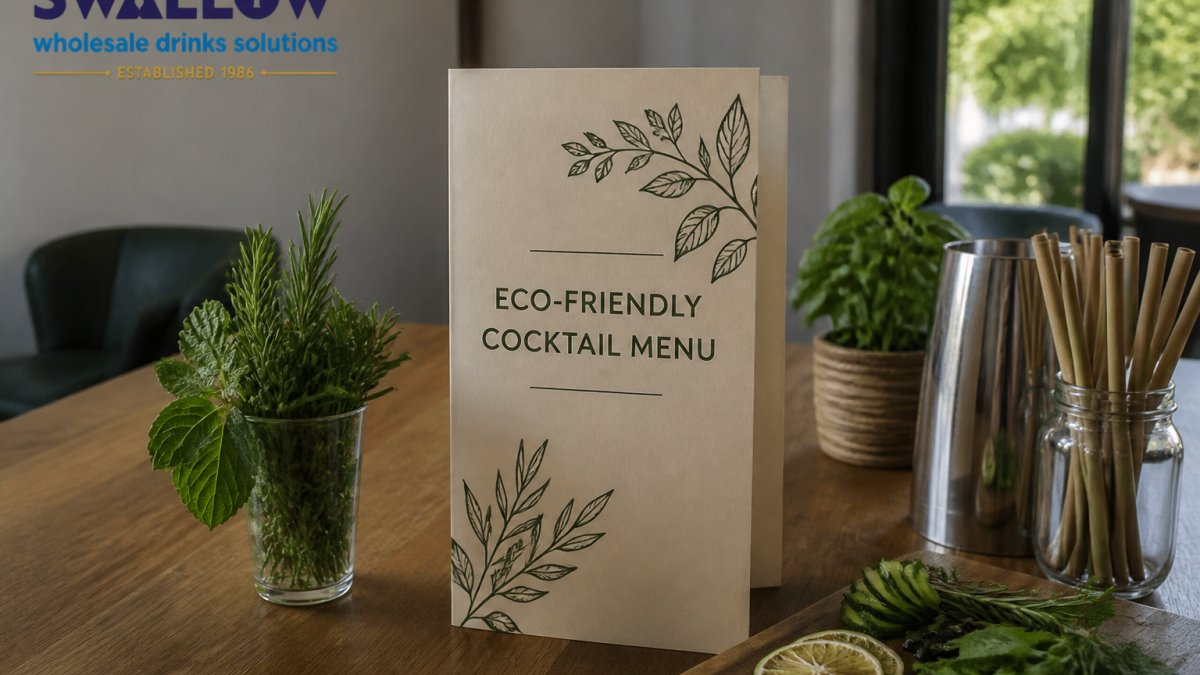
An eco-friendly cocktail menu is a drinks list built to cut waste, favour seasonal and local produce, and keep costs visible from pour to plate. Build one by auditing your bar, designing zero-waste serves, planning seasonal rotation, and tracking cost per serve against waste. Swallow Drinks has supplied the on-trade for over 40 years and can help you get there.
An eco-friendly cocktail menu is a drinks list built to cut waste, favour seasonal and local produce, and keep costs visible from pour to plate. At Swallow Drinks, we have supplied the on-trade for over 40 years, and we have watched this shift move from niche to expected. Guests now ask where the garnish came from.
Boutique hotels gain more than goodwill. A tighter list means less stock sitting idle, fewer half-used bottles, and a bar that runs leaner through quiet midweek trade. The Sustainable Restaurant Association's 2026 trends guidance points to zero-waste garnishes and fermented ingredients as practical routes in. Below, we walk through five steps to build a menu that holds up behind the bar.
Start with what you already own. A full stock audit shows which bottles move, which sit untouched, and where money is quietly leaking.
Work through it in this order:
The findings usually surprise managers. A short list of slow sellers is often funding a long list of forgotten bottles. Trim before you design.
Zero-waste cocktails are drinks designed so that every part of the ingredient earns its place, from peel to pulp to stem. That is the definition worth holding onto.
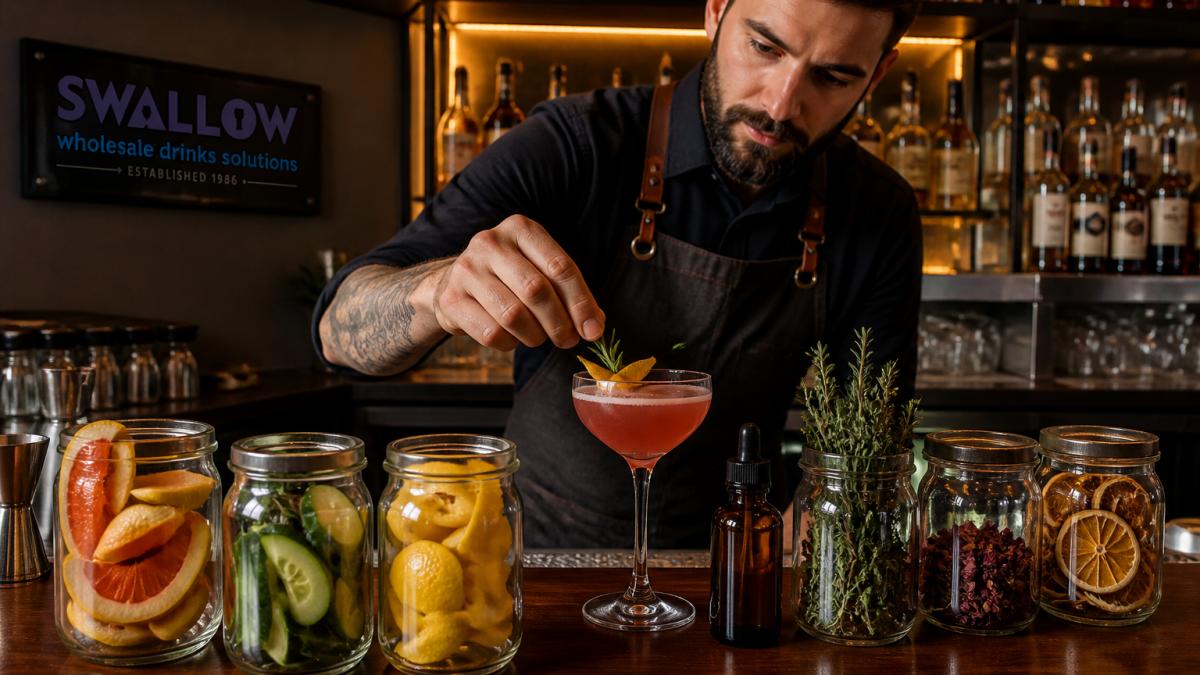
The practical moves are simple. Use citrus peel for oils and twists rather than binning it. Turn herb stems into syrups. Save juice pulp for garnishes or dehydrate it for texture. A house cordial built from fruit trim can replace three bought-in bottles.
We stock AQUA RIVA AGAVE SYRUP 250ML at £5.65 and BOTTLEGREEN ELDERFLOWER CORDIAL 50CL at £7.14. Both stretch a drinks list without adding fresh waste.


A seasonal cocktail menu follows what is actually available, rather than forcing the same twelve drinks through every month of the year.
The Green Lodging News guide to sustainable menu structure makes the case for seasonal sourcing, local procurement and plant-based ingredients as the backbone of a greener list. That lines up with what we see from buyers.
Build in two changes a year at minimum. Spring and summer lean on lighter, fresher serves. Autumn and winter move toward warmer, richer builds. Rotate three or four drinks each time rather than rewriting the whole list, and let the kitchen's surplus guide the specials board.
Ready-to-drink cocktails for hotels solve a specific problem: consistency when the bar is stretched.
DOPPIO PASSO ORGANIC 13% 75CL →
Pre-mixed serves remove the guesswork on busy nights. They cut prep time, reduce over-pouring, and keep the standard identical whether your best bartender or a new starter is on shift. For boutique properties with small teams, that matters.
We carry a full range through our ready-to-drink and premixed cocktails collection, including bottled ready-to-drink and canned ready-to-drink options. Use them as the base, then finish with a fresh garnish for the house touch.
Menu Gap | Eco-Friendly Fix | Impact |
|---|---|---|
Slow service at peak | Canned or bottled RTD base | Faster pours, less waste |
Inconsistent recipes | Pre-mixed core serves | Same drink every time |
Spoiled fresh stock | Seasonal rotation | Less bin, lower spend |
Unused citrus and herbs | Zero-waste garnishes | Trim becomes flavour |
A cocktail menu template is a working document, not just a printed page. Build one that tracks cost per serve, waste per drink, and stock used.
Include these columns:
Update it each time a drink changes. When cost per serve sits next to waste, the weak drinks show themselves fast. That is the whole point.
The biggest error is treating sustainability as a garnish. It has to run through sourcing, prep, and pricing, or it falls apart within a month.
Other frequent slip-ups:
A sustainable list is a discipline. Keep it tight, keep it costed, and keep it seasonal.
Building a greener drinks list takes planning, but the payoff shows up in your margins and your guest feedback. Swallow Drinks can help you get there. We are a family-run independent wholesaler with over 40 years of experience, a vast portfolio of premium brands, and six-day-a-week delivery across the region. Register for our trade ordering portal and start building a menu that works as hard as your team does.
Start with an audit of what your bar throws away each week, then design drinks around what you already stock. Reuse citrus peel, herb stems and offcuts as garnishes, batch syrups from fruit that would otherwise go to waste, and swap imported ingredients for local or seasonal alternatives where the flavour holds up. Keep the list short enough that stock turns over quickly, and track waste per cocktail so you can see which drinks cost you money in spoilage. A supplier who understands your menu makes the switch easier.
Yes, particularly for terrace service, events and quieter shifts where batching fresh cocktails creates waste. Ready-to-drink options give consistent measures and longer shelf life, so you throw less away. Swallow Drinks stocks bottled and canned ready-to-drink cocktails through its trade range, so you can add them to a hotel menu without building a separate supply chain. Check each product's listing for its strength and format before you price it.
Four times a year works well for most boutique hotels, aligned to the seasons so ingredients are at their best and cheapest. Swap two or three drinks per change rather than rebuilding the whole list, which keeps training simple and lets you keep your best sellers. Review sales and waste figures before each change so you drop the drinks that are not earning their place.
Whole citrus used for both juice and peel, herbs that work in several drinks, and syrups made from fruit trimmings all reduce waste. Agave syrup and elderflower cordial are useful because a small measure goes a long way and they keep well. Swallow Drinks lists Aqua Riva Agave Syrup at £5.65 for 250ml and Bottlegreen Elderflower Cordial at £7.14 for 50cl, both of which let you build low-waste serves without fresh fruit spoilage.
Members of:


AWRS Registration Number: XJAW00000100730