Oct 20, 2026
Last Updated: October 19, 2026
Running out of a best-selling line on a Friday night is one of the most expensive things that can happen to a bar.
A stockout costs you twice. You lose the sale, and you lose the customer's trust. A guest who cannot get their usual drink may not order a second round at all.
The good news is that most emergencies are preventable, and the ones that are not can be handled calmly with a clear plan.
Below, we will show you exactly how to assess, prioritise and restock when the pressure is on.
Before you pick up the phone, run a quick check. This takes ten minutes and stops you ordering things you already have in the cellar. A proper bar stock checklist covers the whole venue, not just the front shelf.
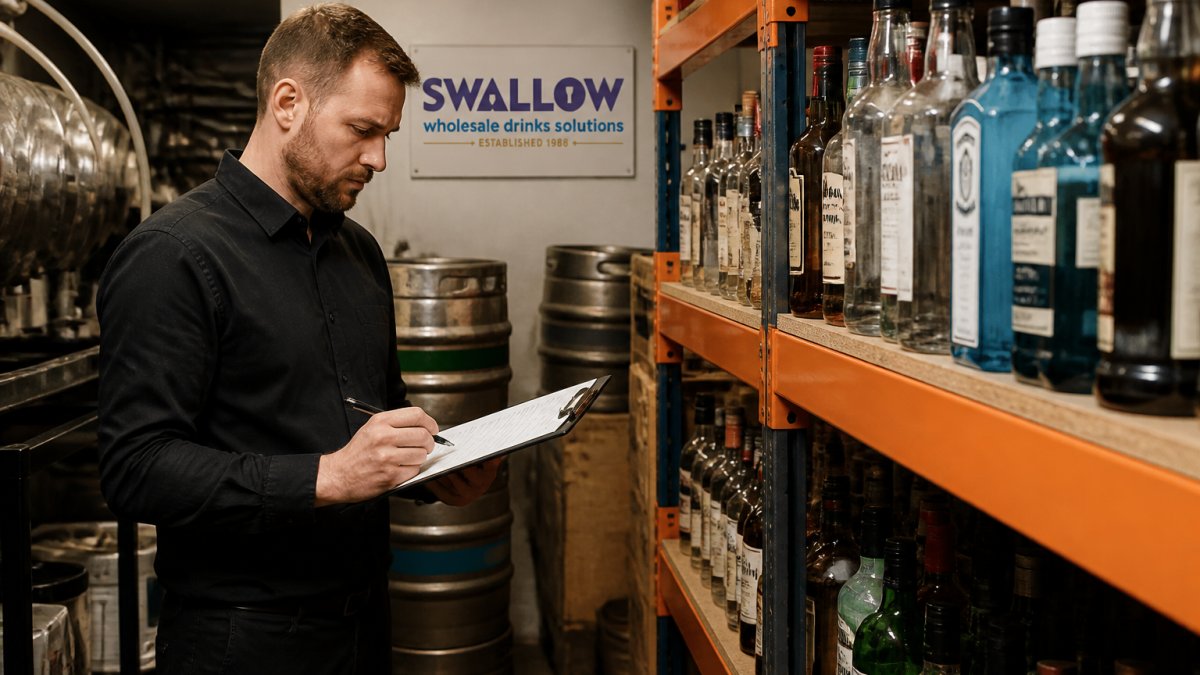
Work through these in order:
Mark each line as fine, low or out. That simple three-way status tells you what is a real gap and what only looks like one.
Learning how to manage bar stock well is the difference between a calm week and a frantic one. Good bar management rests on a few habits, not a big system.
First, set a reorder point for every core line. That is the level at which you order, well before you hit zero.
Third, track waste and loss. A bottle that walks out the back door is a shortage you never saw coming.
Our trade ordering platform at trade ordering makes repeat ordering quick, so the routine top-up never becomes an emergency.
The right emergency drinks supplier answers the phone, knows your account, and can deliver fast. That sounds basic, but it is where many venues get let down. When you need drinks stock urgently, a call centre that cannot see your account is no help at all.
Look for a supplier with:
We built Swallow Drinks as a family-run, independent wholesaler for exactly this reason. You deal with people who understand your menu, not a script. If you are setting up a supply relationship, registering for trade is the first step.
Good drinks stock ordering in a crisis comes down to being specific and working through channels in a fixed order. Give the supplier everything they need in one go, so nobody has to call you back, and escalate only when a channel cannot meet your deadline.
Lead with the essentials:
Then confirm the price and the delivery window before you hang up. Ask what is genuinely in stock today, because product availability changes fast. A good supplier will tell you honestly what they can get to you and when.
Most venues find that a single call is rarely enough in a real emergency. A common pattern is to work through four channels in sequence, moving on only when the previous one cannot meet your deadline:
When two channels can both supply, compare them on three things: what is confirmed in stock today, the earliest delivery slot they can guarantee, and the total cost including any rush charge. A cheaper line that arrives after service has started is worth nothing. Ask each channel to confirm the cut-off time for same-day or next-day delivery, and write down the name of the person who confirmed it.
Emergency buying is where budgets leak. Set a spending limit that a duty manager can approve without escalation, and require a second approval above it.
If you are setting up a supply relationship or want a named contact who can act quickly, registering for trade at trade ordering is the first step. Swallow Drinks has supplied the trade for over 40 years and can cover spirits, beer, wine and soft drinks through a single account.
When you cannot get everything, restock in order of what earns the most and what the menu cannot run without. Emergency stock prioritisation is about protecting sales, not filling shelves evenly.
Start with the high-velocity products that underpin your best sellers. If your house lager is out, that is the first call. Then cover the base spirits and mixers behind your most-ordered cocktails. Soft drinks and mixers matter too, because a drink without its tonic is still a lost sale.
Work through these questions for each out-of-stock line:
A simple priority order:
| Priority | What to restock | Why it comes first |
|---|---|---|
| 1 | Best-selling lager and house spirits | Highest sales volume, biggest loss if out |
| 2 | Core mixers and soft drinks | Needed for almost every serve |
| 3 | Cocktail modifiers and liqueurs | Supports the menu, lower volume |
| 4 | Slow-moving niche lines | Can wait for the next scheduled order |
This keeps your bar stock working where it counts.
Prioritisation only works if the team knows what to do when a line is missing. Agree two or three approved swaps per gap in advance, brief staff before service, and update the menu or specials board so guests see the change rather than discovering it at the bar.
Compliance matters here too. In the UK, you must follow licensing law and age-verification rules, and any change to what you serve should stay within your premises licence. Check that substitute products fit your licence conditions, keep records of what was supplied and when, and brief your team on responsible service.
If you want a supplier who can help you plan core lines and backups before the next shortage, register at trade ordering. Swallow Drinks has supported the trade for over 40 years and offers a broad portfolio so one account can cover your priority lines.
Sometimes the right answer is not a delivery, it is a swap. A well-handled substitution keeps service moving and guests happy.
Train staff on two or three approved swaps per gap. If the usual gin is out, offer a close alternative and say so confidently. Guests accept a substitution far more readily than a flat "no".
Compliance matters here too. In the UK, you must follow licensing law and age-verification rules, and any change to what you serve should stay within your premises licence.
A shortage never arrives at a good time, but a calm plan turns a crisis into a ten-minute job. The venues that cope best are the ones with a reliable supplier and a simple routine.
At Swallow Drinks, we have supported the trade for over 40 years with a vast portfolio of premium brands and dependable service. Our trade ordering platform makes urgent top-ups quick, and our team knows your menu. Get started with Swallow Drinks and keep your bar stocked with confidence.
Start by counting what you actually have left rather than guessing. Work through a quick bar stock checklist across core spirits, beer, wine, mixers and non-alcoholic drinks, then rank what runs out first. Call your emergency drinks supplier with exact quantities, product codes and the delivery window you need. If a line cannot arrive in time, agree a substitution and brief staff on how to explain it at the bar. After service, log what happened so your reorder points move up for that product.
Give the product name, pack size and quantity for each line, plus the exact delivery address and access details for the drop. State the time you need it by and what happens if it arrives later. Mention whether substitutions are acceptable and which lines are non-negotiable. Confirm who will be on site to receive the delivery and sign for it. Clear drinks stock ordering information on the first call saves a second round of messages while your bar is already running short.
Rank by sales volume and how central the product is to your menu. High-velocity products such as your house lager, best-selling spirit and main tonic sell fastest and cause the most visible gaps. Next come cocktail modifiers and liqueurs without which several menu items cannot be made. Bottles used in one niche drink can wait. Your sales data from the last few weeks gives the order, so pull it before you call rather than working from memory.
Set a reorder point for every high-velocity product based on how much you sell across your longest delivery lead time, then add a safety stock buffer on top. Check stock levels at a fixed time each week and again before weekends or events. Keep a written bar stock checklist so counts are consistent whoever does them. Build a relationship with a backup supplier, and register for trade ordering so you can place replenishment orders quickly when a line starts moving faster than expected.
Members of:


AWRS Registration Number: XJAW00000100730