Aug 09, 2026
Last Updated: August 9, 2026
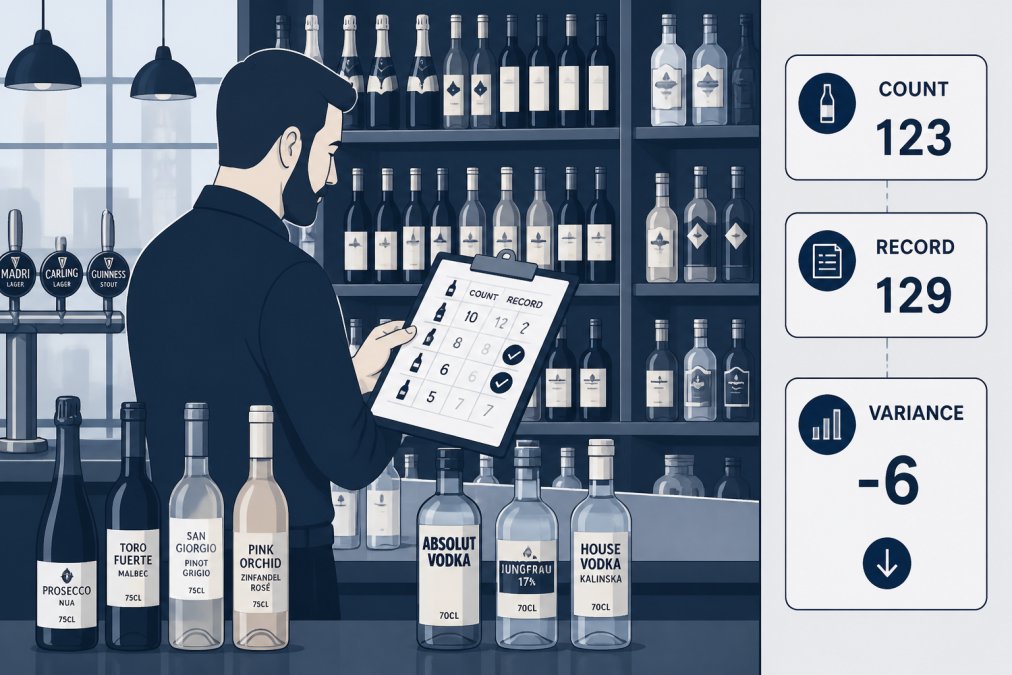
Bar stock shrinkage is the difference between the stock you record in your system and what you actually have on your shelves. If your records show 100 bottles of premium vodka but a physical count reveals only 92, that's 8% shrinkage. Multiply this across your entire drinks portfolio and you'll see how much money walks out the door unaccounted for every week.
Shrinkage affects your cost of goods sold, which directly impacts your profit margins. When actual stock doesn't match your records, you're either overcharging customers, undercharging because your systems are wrong, or losing revenue to unrecorded wastage and theft. According to the British Institute of Innkeeping guidance on stock control, proper stock reconciliation is essential for financial accuracy in licensed premises.
The real challenge isn't identifying that shrinkage exists, it's understanding where it comes from and stopping it.
Bar stock shrinkage rarely has a single cause. Most venues experience a combination of factors working simultaneously, each chipping away at margins.
Employee theft accounts for a significant portion of shrinkage in hospitality venues. It's rarely dramatic; more often it's systematic: a staff member pouring a free drink for a friend, underringing sales, or pocketing cash without recording the transaction.
Hospitality staff often feel undervalued relative to the trust placed in them. When someone has access to premium spirits worth £20-40 per bottle and earns minimum wage, the rationalisation becomes easier. Most venues don't audit regularly enough to catch patterns early. By the time you notice a £500 variance, the behaviour has been happening for months.
Common internal fraud patterns include underringing transactions, free pours for friends without recording the sale, switching premium spirits for cheaper alternatives, claiming false breakages, and collusion between bar staff and till operators.
Genuine wastage happens in every bar. Normal wastage typically runs 2-3% of your total stock value monthly, including accidental breakages and drinks discarded due to contamination.
Excessive wastage, anything above 4-5%, usually signals poor training, inadequate equipment, or deliberate waste. A bar with unreliable draught lines experiences more spillage. Staff using worn-out pourers create unrecorded waste. Over-pouring becomes a habit when staff aren't trained on standardised measures.
Unrecorded spillage is the sneaky kind. A staff member spills a drink, cleans it up, and doesn't report it. Multiply that across ten staff members over a week, and you've lost stock that never appears on your records.
Your systems are only as good as the data entered into them. Administrative errors create phantom shrinkage that doesn't represent actual loss, but inaccurate record-keeping.
Common mistakes include incorrect opening stock counts, delivery notes recorded incorrectly, manual entry errors in your POS system, failing to record complimentary drinks, not accounting for stock transfers between areas, and rounding errors in manual counts. These errors don't represent real loss; they represent confusion. But from a financial perspective, the impact is identical.
You trust your supplier to deliver what you ordered. Sometimes they don't, and if you're not checking, you'll discover the shortfall only at stocktake.
Common supplier-related shrinkage includes short shipments, damaged goods in transit, wrong items delivered, incorrect quantities on delivery notes, and unrecorded breakages. A reliable supplier who knows your business will flag discrepancies and work with you to resolve them quickly. Swallow Drinks, with over 40 years' experience serving hospitality venues across the West Midlands, builds accountability through long-term relationships.
Calculating your shrinkage percentage is straightforward, but accuracy depends on precise stock counts and reliable records.
The basic formula is:
Shrinkage % = (Theoretical Stock - Actual Stock) / Theoretical Stock × 100
Theoretical Stock is what you should have based on your records. Start with your opening stock count, add everything you've received from suppliers, subtract everything you've sold according to your POS system.
Actual Stock is what you physically count on your shelves.
Example calculation:
A shrinkage rate of 6.9% is above the industry norm and signals a problem needing investigation. To make this calculation meaningful, you need accurate data at every stage. Many venues use cycle counting, counting high-value stock weekly rather than everything monthly, to catch discrepancies faster.
Controlling shrinkage requires systems, discipline, and accountability. Venues that keep shrinkage below 3% share common practices.
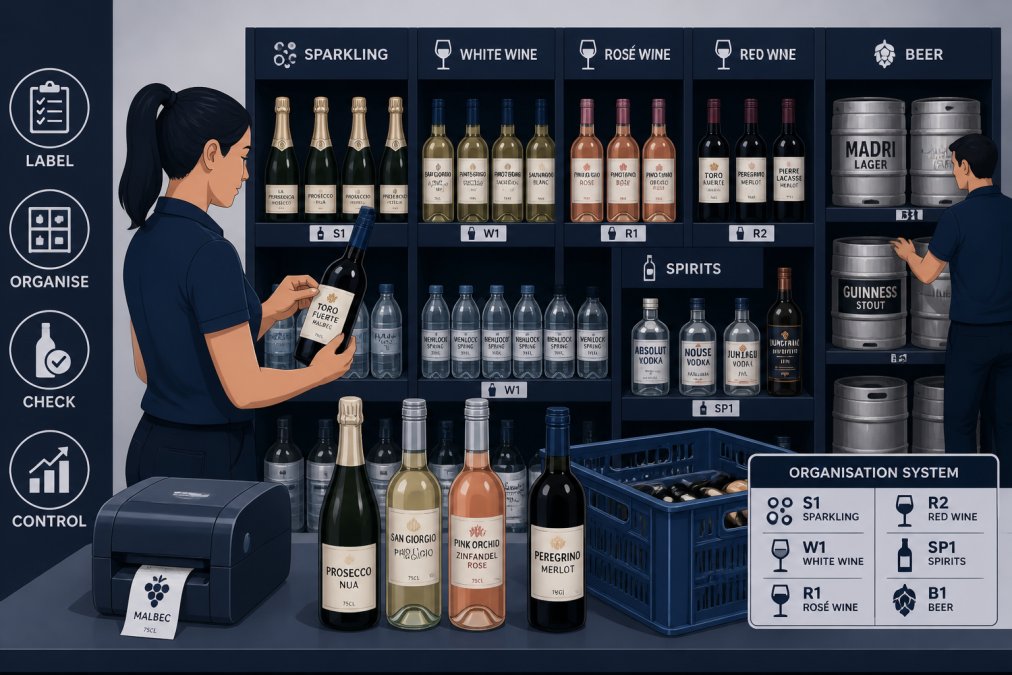
Implement cycle counting. Count high-value items weekly and lower-value items fortnightly. This catches discrepancies before they become large problems.
Use standardised pour measures. Free-pouring leads to inconsistency and unrecorded wastage. Invest in quality pourers and train staff to use them consistently.
Reconcile POS data daily. Your till should balance every shift. If it doesn't, investigate immediately rather than letting discrepancies accumulate.
Segregate duties. The person who receives deliveries shouldn't be the only person who records them. Separation of duties creates natural checks and balances.
Train staff on proper procedures. Most shrinkage isn't malicious, it's careless. Staff who understand why accurate pouring matters will prioritise it.
Use secure storage for premium stock. High-value bottles should be locked or kept behind the bar where they're visible.
Document everything. When a bottle breaks, record it. When you give a complimentary drink, ring it through as a comp. These records become your audit trail.
Preventing theft requires a combination of systems, culture, and honest conversation about expectations.
The first step is acknowledging that theft happens in hospitality. Your job is to make those shortcuts difficult and to create a culture where honesty is the default.
Screen carefully during hiring. Ask specific questions about previous roles and why people left. Check references thoroughly.
Make expectations explicit. Have a written policy on complimentary drinks, staff discounts, and what happens if stock goes missing. Make sure every staff member signs it.
Use technology wisely. CCTV behind the bar deters opportunistic theft. POS systems that require login for every transaction create accountability.
Pay competitively. Staff who feel fairly compensated are less likely to rationalise theft.
Create accountability without blame. When you find discrepancies, investigate calmly and address them directly.
Rotate staff positions. Someone who works the same till every shift might develop habits. Rotating positions keeps people alert.
Modern POS systems and stock management software make shrinkage control far easier than manual systems. The right technology provides real-time visibility into what you have, what you've sold, and where discrepancies exist.
A good bar management system should record every transaction in real time, allow you to set par levels for each drink, alert you when stock falls below par, generate variance reports, track which staff member rang each transaction, enable cycle counting with mobile devices, and integrate with your supplier's ordering system.
The investment in proper software typically pays for itself within months through reduced shrinkage alone. When you can see that spirits shrink at 8% but beer shrinks at 2%, you know where to focus your attention.
Shrinkage is a direct attack on profit margins. Unlike other costs you can control through negotiation or efficiency, shrinkage represents pure loss.
Consider a bar with £50,000 annual drinks sales and a 5% shrinkage rate. That's £2,500 in unaccounted losses every year. For a venue operating on typical hospitality margins of 15-20%, that £2,500 shrinkage loss is equivalent to needing an additional £12,500-£16,500 in sales just to break even.
Shrinkage also distorts your understanding of profitability. If your actual cost of goods sold is 35% but your recorded cost is 30%, you think you're more profitable than you actually are. This leads to poor pricing decisions and difficulty comparing your performance to industry benchmarks.
When staff see that shrinkage isn't taken seriously, the message is clear: theft is acceptable. Conversely, venues that take shrinkage seriously establish a culture of accountability.
Working with a reliable supplier like Swallow Drinks, with four decades of experience supporting independent bars across the West Midlands, means having a partner who understands these challenges. A good wholesaler helps you manage costs, provides consistent service, and supports your business.
Controlling bar stock shrinkage requires attention to detail, reliable systems, and a culture where accuracy matters. Venues that keep shrinkage below 3% do so through consistent discipline: accurate counts, proper training, segregated duties, and swift investigation of discrepancies. If shrinkage is currently costing you thousands annually, investing time in these practices will return that investment many times over. For support with stock management and reliable supply partnerships, Swallow Drinks offers the consistency and expertise that independent venues depend on. Register for our trade ordering platform to simplify your ordering and gain better visibility into your stock movements, helping you identify and address shrinkage faster.
The main causes are employee theft, wastage from spillage and over-pouring, administrative errors in recording stock movements, and supplier short-shipments. Employee theft accounts for a significant portion, but wastage and clerical mistakes often go undetected. Regular cycle counts and reconciliation help identify which cause is affecting your bar most.
Use this formula: (Opening Stock + Purchases - Closing Stock) ÷ Opening Stock × 100 = Shrinkage %. For example, if you start with £1,000 stock, purchase £500, and end with £1,200, your shrinkage is (1,000 + 500 - 1,200) ÷ 1,000 × 100 = 30%. Track this monthly to spot trends and identify problem areas in your bar stock management.
Yes, through a combination of measures: implement clear accountability systems with named staff responsible for stock areas, conduct regular unannounced cycle counts, use point-of-sale integration to track every transaction, and foster a culture where stock control is everyone's responsibility. Transparent pricing and fair wages also reduce motivation for theft. Swallow Drinks can help you source reliable bar supplies and support consistent stock management through our Trade ordering platform at webtrade.swallow.uk.com.
Shrinkage is the overall difference between recorded and actual stock, which includes all losses. Wastage refers specifically to product loss through spillage, breakage, over-pouring, and evaporation. Wastage is one component of shrinkage; other components include theft and administrative errors. Understanding this distinction helps you target prevention efforts more effectively.
Members of:


AWRS Registration Number: XJAW00000100730