Oct 28, 2026
Last Updated: October 27, 2026
Quick Summary
Wine storage best practices for Birmingham businesses start with temperature stability rather than chasing a single number, because a steady cellar outperforms one that swings between 8°C and 20°C. Log readings daily at bottle height, keep stock out of direct light, and rotate older bottles to the front so nothing passes its best before sale.
Wine storage best practices for Birmingham businesses come down to one uncomfortable truth: a bottle ruined by heat or light is a bottle you have already paid for and cannot sell.
We have supplied the on-trade across the West Midlands for over 40 years.
Most operators chase a number. The better question is how much your temperature moves. A cellar sitting at a steady 14°C will outperform one swinging between 8°C and 20°C every single week, because fluctuation drives oxidation and pushes wine through its ageing curve faster than a stable, slightly warmer room.
Three quieter enemies do as much damage as heat. Low humidity dries corks, letting air into the bottle. Direct sunlight and UV exposure degrade wine faster than most people expect, which is why a display rack in a south-facing window is a bad place for anything you plan to sell at a premium. Vibration from a cellar fridge compressor, a cellar cooling unit or a busy cellar door agitates sediment and unsettles older bottles.
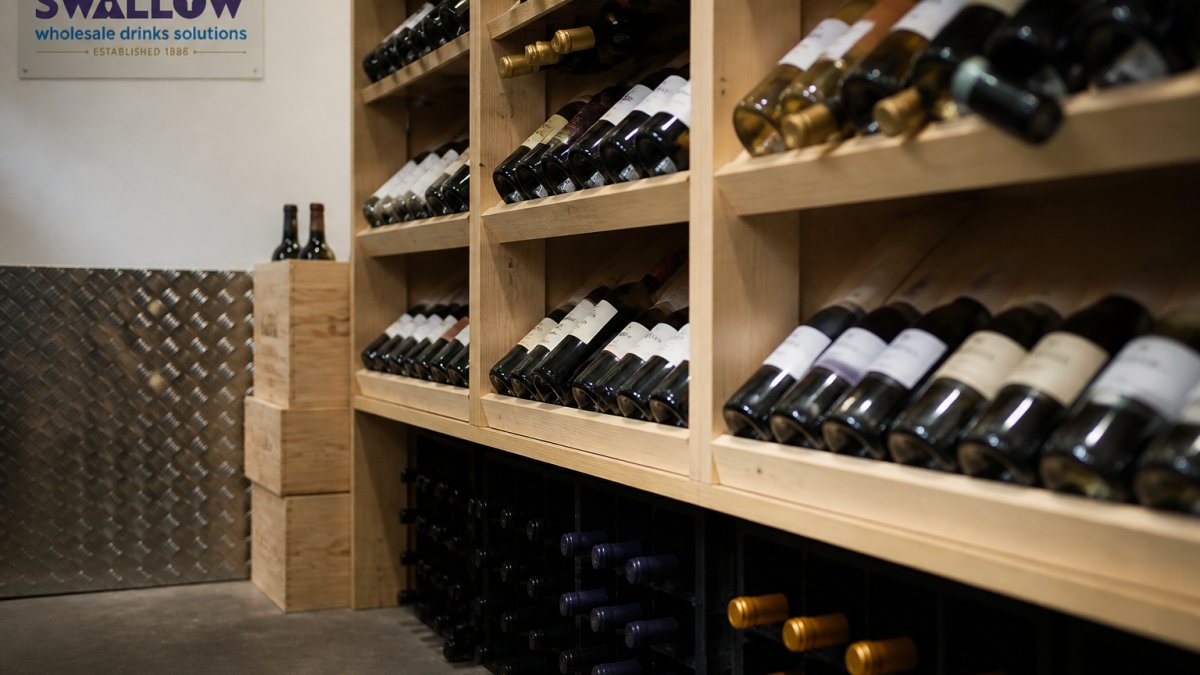
Keep corks moist by storing bottles horizontally, keep racks out of direct light, and site any cooling equipment away from the bottles it serves where you can.
A wine fridge for restaurants and bars is a temperature-controlled cabinet sized to your list and your service rhythm, and the specification that matters most is recovery time after the door opens, not the headline capacity on the box.
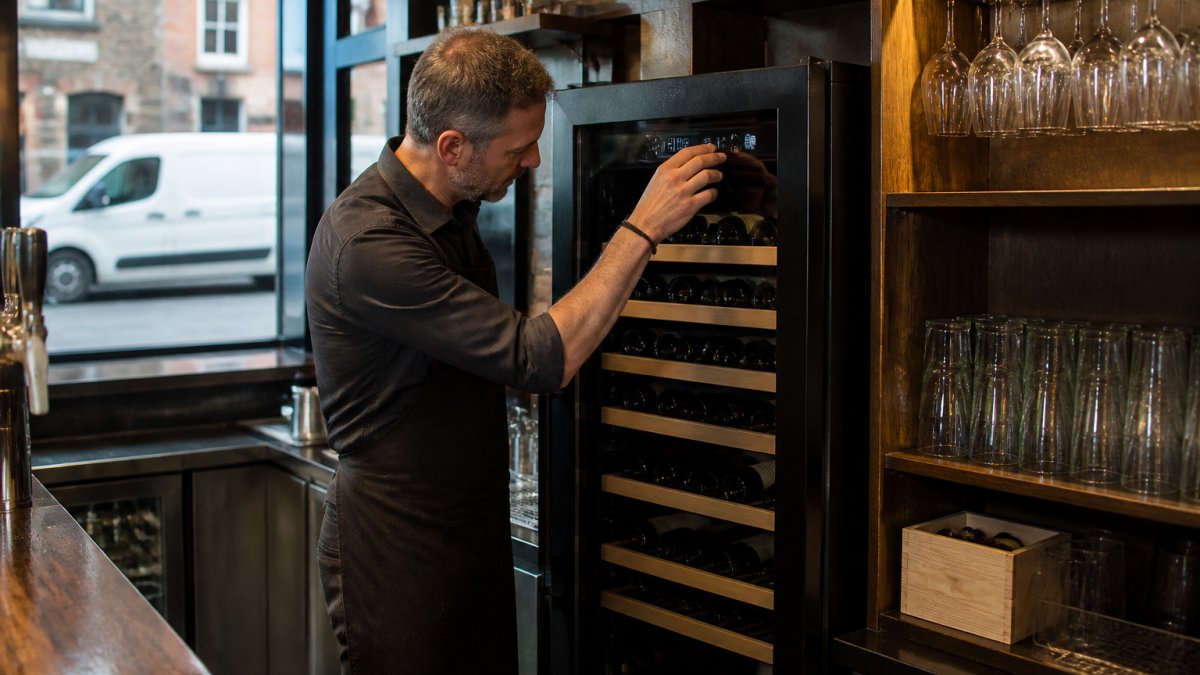
Work through this checklist before you buy:
If the cabinet sits in a cellar or back room, check it against your fire risk assessment. Do not block escape routes, keep the compressor clear of combustible stock, and make sure the socket is not daisy-chained from an extension lead. Your insurer may also expect the unit to be on a circuit that is not shared with kitchen equipment that trips.
A commercial cabinet is rarely the cheapest option per bottle stored, but it is often the most predictable. When comparing a cabinet against a converted room or a specialist storage arrangement, total up:
A useful rule of thumb is that the cabinet should be sized to hold at least a full delivery cycle plus a buffer, so you are never forced to stack bottles on the floor or block the airflow to make room. Where a fridge is not practical, a purpose-built cellar with a properly sized cooling unit and good air circulation does the same job.
You can register for trade ordering.
Wine stock rotation is the practice of selling older stock before newer arrivals so that nothing sits at the back of the rack until it is past its best.
Label every delivery with its arrival date, load from the back, and pull from the front. Keep a short written rule for your team: new stock goes behind old stock, always, no exceptions for the wine someone prefers to reach for.
Storing opened wine bottles between services is about slowing oxidation, and the method matters less than the discipline. A vacuum stopper, inert gas or simply a tight seal all buy you time; none of them buy you a week.
The trade-off is honest: a tight seal and a cold fridge will carry a bottle through a quiet Tuesday, but not through to the following weekend. Plan your by-the-glass list around what you can sell within your own limit.
Temperature monitoring is only useful if it wakes somebody up. A data logger that records a failure you discover on Monday morning is a record of your loss, not a defence against it. For a business, monitoring is also an evidence trail: if a customer disputes a bottle, or an insurer asks what happened during an outage, the log is what you have.
At minimum, log temperature at bottle height in the warmest part of the store, and log humidity if you hold stock for ageing. A standalone logger with a USB download is adequate for a small venue; a networked logger that pushes readings to a dashboard or app is better where several people need visibility.
Give at least two named people on the rota access to alerts, and test the alert path monthly by triggering a test notification. An alarm nobody has tested is an assumption, not a control.
A small uninterruptible power supply will keep a logger and alarm running through a short outage, but it will not run a compressor. Plan for the cabinet or cellar to warm rather than pretending it will not:
Write it down and rehearse it once a quarter:
Keep the log with your other business records. If you need to claim, the insurer will want the temperature history, the time of failure, the action taken, and the value of stock affected.
Finally, review the plan after any near miss. If you are building a storage plan from scratch, our team can help you match delivery volumes to the space and equipment you have; register for trade ordering to keep stock moving at a rhythm your storage can support.
| Mistake | Why it costs money | Fix |
|---|---|---|
| Storing against a sun-facing wall | Heat and UV exposure age stock early | Move racks to an internal, shaded wall |
| Chasing a temperature number, ignoring swings | Fluctuation drives oxidation | Log readings daily and stabilise the room |
| Burying new deliveries behind old stock | Old bottles pass their best before sale | Date on arrival, load back, pull front |
| No alarm on the cellar | A failure is discovered after the loss | Text alert to two named people |
| Overfilled fridge blocking air circulation | Warm pockets form inside the cabinet | Leave ventilation clearance as specified |
| Keeping opened bottles past the house limit | Returns and reputational damage | Set and enforce a written limit |
One more that rarely gets mentioned: buying in volumes your storage cannot hold steadily. A deal on a pallet is only a deal if the wine survives long enough to sell.
Getting storage right is half the job. The other half is making sure the stock arrives consistently, in the volumes you can actually hold at a stable temperature, from a supplier who understands your list.
At Swallow Drinks, we have supplied the on-trade across the West Midlands for over 40 years as a family-run independent wholesaler, with a broad portfolio of premium wine, beer, spirits and soft drinks. If you are setting up a list that includes lighter options, our low and non-alcoholic range is worth a look alongside it.
Professional guidance recommends holding wine between 10°C and 15°C, with humidity around 65% to 70%. The exact figure matters less than keeping it steady, because repeated swings push wine through expansion and contraction that stresses the cork and speeds up oxidation. Set your fridge or cellar to a mid-range point, record it daily, and treat any sudden change as a fault to investigate rather than a number to adjust.
Store cork-closed bottles horizontally so the wine stays in contact with the cork and keeps it moist. A dry cork shrinks, lets air in and taints the wine. Screw-cap bottles can stand upright without harm, and sparkling wine is often stored upright to keep the yeast sediment settled before service. Whichever way you store, keep bottle orientation consistent and label the racking so staff can find a bin number without pulling bottles out of position.
Use first in, first out as the rule and make it physical. Date every delivery on arrival, load new stock behind existing bottles, and keep a bin card or spreadsheet entry per line. Review slow sellers monthly and put them on the by-the-glass list or a staff recommendation before they pass their best window. A wholesaler who delivers six days a week helps here, because you can order to demand instead of tying cash up in cases that sit at the back of the cellar.
A still white or rosé is usually best within one to three days of opening, a red within three to five, and a fortified wine considerably longer. Vacuum stoppers and inert gas sprays slow oxidation but do not stop it. Label every opened bottle with the date and time, keep them in the fridge even for reds, and taste before service. Anything past its window should go into cooking or the bin, not into a customer's glass.
Look for a unit that holds a stable temperature across the whole cabinet rather than a single zone with hot spots, plus adequate ventilation and a door that seals properly under heavy service use. Check the usable capacity against your list, the noise level if it sits near diners, and whether the shelving takes the bottle shapes you actually stock. Ask how the unit behaves in a warm back-of-house room in summer, and confirm what servicing and parts support is available locally.
Yes, as far as possible. Ultraviolet light degrades the compounds in wine and produces the smell and taste often described as light strike, which is why brown and green glass offers only partial protection. Keep storage away from windows, skylights and bright display lighting, and use LED fittings rather than halogen near any open racking. A back-of-house store with no natural light is the simplest solution, and it also keeps the temperature more even.
Store sparkling wine upright, in a dark, steady place at the cooler end of your range, so the sediment settles and the cork is not sitting in contact with the wine for long periods. Chill only what you expect to pour over the next few days, and bring bottles down slowly rather than dropping them into an ice bath from a warm store. Avoid stacking them loose, because movement and vibration disturb the sediment and the pressure inside the bottle.
The challenge is not finding wine to buy. It is holding it in condition good enough to sell at the price you paid for it. Swallow Drinks supports that with trade ordering built for independent operators, a portfolio that spans wine, beer, spirits and soft drinks, and a team that has spent four decades working with venues across the region. Get started with Swallow Drinks and build a stock position your list can rely on.
Members of:


AWRS Registration Number: XJAW00000100730