Sep 08, 2026
Last Updated: September 8, 2026
Wine pairing basics are the difference between a server who takes an order and one who builds a memorable evening. When your team understands why a crisp Sauvignon Blanc lifts a plate of oysters, they stop guessing and start guiding. In this guide from Swallow Drinks, we break down the five core principles your hotel staff need, along with the scripts and exercises to make them stick.
Training in these fundamentals pays for itself. A server who can confidently recommend the right bottle raises the average spend per table without appearing pushy. Over our 40 years supplying hotels across the West Midlands, we have seen how the right training transforms an evening service.
Wine presents the single biggest upselling opportunity at the dinner table. Unlike a main course, a bottle can be suggested at several price points, and guests often welcome a confident recommendation. When staff understand the menu and the wine list together, they can steer guests toward higher-margin bottles naturally.
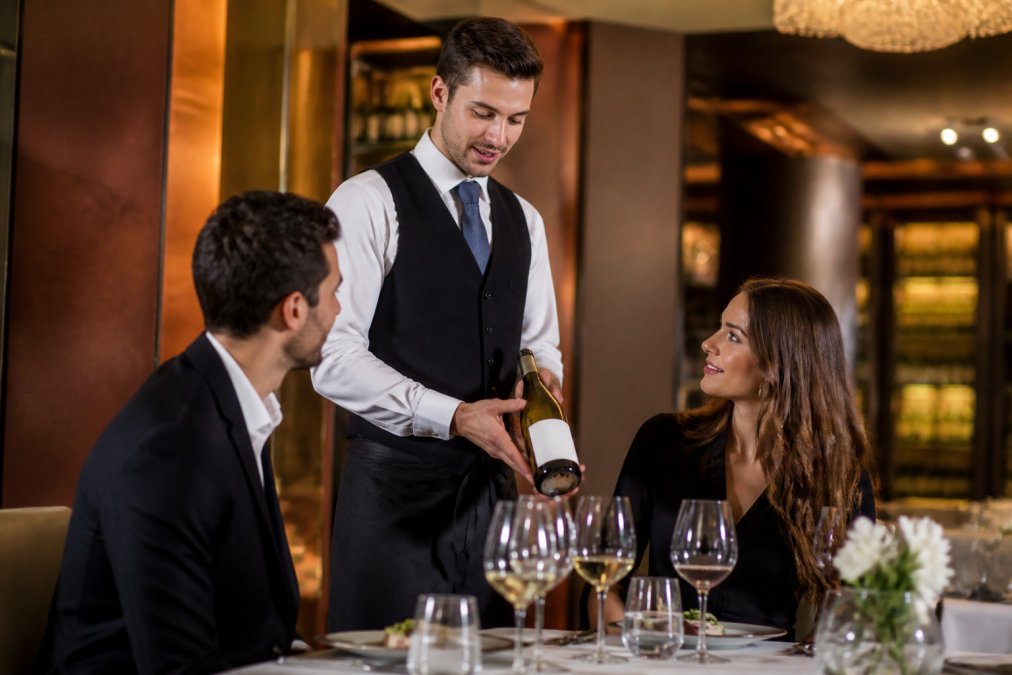
The return on training is not just financial. A team that speaks about wine with authority reduces hesitation at the table. Guests trust a server who can explain why a light Pinot Noir suits their salmon, and that trust extends to the whole venue. According to guidance on hospitality service standards, knowledgeable staff are central to a positive dining experience UK Hospitality service quality guidance. In practice, this means fewer returns, better reviews, and more repeat business.
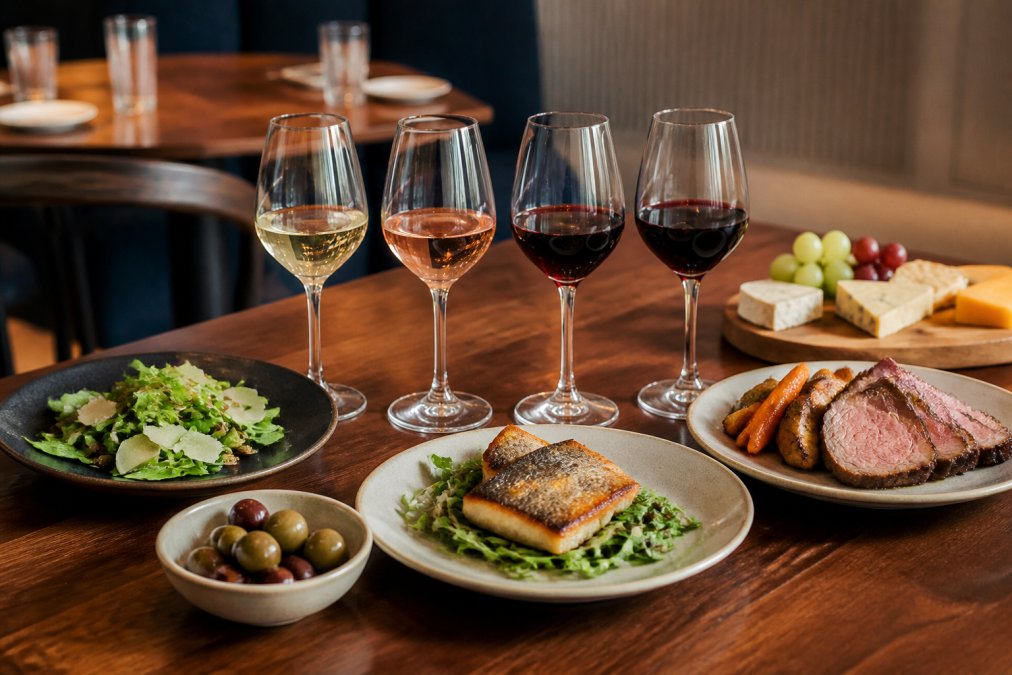
Wine pairing basics come down to five principles that work across any menu: balancing flavour intensity, matching acidity, respecting tannins, understanding sweetness, and considering texture or mouthfeel. Teach these as a framework, not a rulebook. In a hotel environment, these principles are not just about taste, they are the engine of your upselling strategy.
The first rule is weight. A delicate pan-fried sole needs a light, subtle wine, while a slow-braised beef cheek demands something with body and depth. Match the wine's body to the dish's weight. Light dishes suit light wines like a Pinot Grigio, while rich, hearty plates pair well with fuller styles such as a Shiraz or a bold Merlot.
A common mistake is matching by colour alone. Red wine with meat and white with fish is a starting point, but it ignores intensity. A grilled tuna steak can handle a light red, and a creamy chicken dish might suit an oaked Chardonnay better than a thin red. Encourage staff to look at how the dish is cooked.
The sales angle: Teach your team to use weight as a stepping stone to a higher price point. When a guest orders a rib-eye, the server should reach for a fuller-bodied premium red that stands up to the char. A simple line like, "With the rib-eye, I would suggest the [premium red] because its structure holds up to the char and doesn't get lost, it makes the dish taste even better," positions the upgrade as a service, not a sale. This 'trade-up pairing' technique can be a core driver of wine-led revenue growth in hotels.
Acidity is the wine's freshness, its ability to cut through rich food and cleanse the palate. High-acid wines like Sauvignon Blanc or Albariño work beautifully with fatty fish, creamy sauces, and fried foods because they slice through the richness. Tannins, found mainly in red wines, create a drying sensation that pairs well with protein and helps balance fatty meats.
Texture matters more than most guides admit. A wine with a silky mouthfeel complements a smooth, buttery sauce, while a grippy, tannic red stands up to a charred steak. For a practical example, the Wine and Spirit Education Trust pairing guidance explains how structural components like acidity and tannin interact with food. Staff should taste the wine and the food together and ask: does the wine feel lighter or heavier after a bite?
The sales angle: Acidity is your best tool for selling wine by the glass as an 'appetiser.' When a guest orders a rich, creamy starter, a server can suggest a glass of high-acid white to 'cut through the richness and prepare the palate for the main.' This adds a glass sale to the ticket before the main course is even ordered. Staff who understand this mechanism can be far more effective at building a multi-glass sale than those who simply ask, "Would you like a drink?"
Sweetness in wine must be managed carefully. A wine should generally be as sweet as, or sweeter than, the dish it accompanies. A dry wine served with a sweet dessert will taste thin and sour. Conversely, a touch of sweetness can tame spicy food, which is why off-dry Riesling is a classic match for Asian cuisine.
Teach your staff the difference between a dry wine and one that merely tastes fruity. Many people mistake the ripe, fruity flavours of a New World red for sweetness. The UK Government alcohol labelling guidance requires clear information on labels, but the taste test is what matters at the table. Ask your team to describe a wine as dry, off-dry, or sweet, and to know which of your listed wines fall into each camp.
The sales angle: This is where you handle the most common guest objection: "I don't like dry wines." Train staff to see it as an invitation to explore the sweeter end of your list. A server who can confidently say, "If you prefer a touch of sweetness, you might enjoy the [off-dry Riesling], it has a lovely hint of fruit that makes it very approachable, and it will pair beautifully with the spicy notes in your dish," turns a potential rejection into a guided discovery.
This wine pairing cheat sheet for servers condenses the basics into a quick reference. Print it and keep a copy at the pass or behind the bar for quick glances during service.
| Dish Weight | Style Example | Wine Match | Why It Works |
|---|---|---|---|
| Light | Grilled fish, salads | Crisp white, e.g. Sauvignon Blanc | High acidity refreshes the palate |
| Medium | Chicken, pork, creamy pasta | Soft red or oaked white | Balances flavour without overpowering |
| Rich | Steak, lamb, slow-cooked beef | Bold red, e.g. Shiraz | Tannins cut through rich protein |
| Sweet | Desserts, spicy Asian food | Off-dry or sweet wine | Wine must be as sweet as the dish |
Scripts give new staff a safety net. They provide the words to use until the knowledge becomes instinctive. Use these wine and food pairing scripts for staff as a starting point and encourage your team to adapt them to their own voice.
A good recommendation feels like a suggestion, not a sale. Start by asking what the guest is eating, then offer a specific wine with a clear reason. Here is a simple structure to follow:
"May I suggest the [wine name] this evening? It has lovely fresh acidity that will really complement the [dish name]. It is one of our most popular choices with that dish, and I think you will enjoy how it brings out the flavours. Shall I bring a bottle for you to try?"
Guests will sometimes hesitate, often over price or unfamiliarity. The best response is to acknowledge the concern and offer a smaller commitment. Never pressure the guest; instead, make the decision feel easy.
"I completely understand. If you would prefer, I can bring a glass of the [wine name] first so you can see if it suits your taste. Alternatively, the [alternative wine name] is a little lighter and very approachable, and it pairs beautifully with your starter. Which would you prefer to try?"
Best practices for wine service go beyond the pairing itself. The way a bottle is presented and poured shapes the guest's perception of its quality. Always show the label to the host before opening, confirm it is the correct wine, and pour a small taste for approval before filling the host's glass first.
Temperature is a frequent oversight. Reds served too warm taste flat and alcoholic, while whites served too cold lose their aroma. Store white wines at around 8-10°C and reds at 16-18°C. A wine list should also be legible and grouped by style rather than just by country, helping guests and staff find a suitable match without a lengthy search. Regular tastings with your team keep this knowledge fresh and practical.
Classroom theory only goes so far. The most effective training gets staff tasting and talking. To build a genuinely confident team, you need structured, repeatable exercises that mirror the pressures of a live service. Below is a ready-to-run session plan that takes about 45 minutes and requires only three bottles, a few props, and your menu.
This exercise forces staff to adapt their pairing logic to different hotel dining environments. Set up three stations representing different service scenarios:
Pair staff up. One plays the server, the other the guest. The server must recommend a specific wine from your list, explain the reasoning in one or two sentences, and handle a scripted objection from the guest. Rotate stations every five minutes so every team member practices all three environments.
This exercise sharpens the team's ability to match wine to unexpected flavours. Prepare three small dishes that are not on your menu but represent common flavour profiles, for example, a smoked mackerel pâté (oily and salty), a dark chocolate truffle (bitter and sweet), and a spicy hummus with chilli oil (heat and texture).
Give each staff member a tasting sheet with three columns: 'Dish Flavour Profile,' 'Wine Style I Would Choose,' and 'Why.' Open three wines with contrasting profiles. Ask the team to taste each wine against each dish and note which pairing works best. The goal is not to find a single 'correct' answer but to get staff articulating why a pairing works, the language they will use at the table.
This exercise focuses on the upselling psychology that most wine guides miss. Write down three price points from your wine list: a house wine, a mid-tier wine, and a premium wine. Give each staff member a scenario card describing a guest.
Each staff member must practice 'laddering' the guest from the house wine to the mid-tier or premium option using a value-based reason, not a price-based one. The exercise trains staff to anchor on the guest's food choice, not the price list, which is a far more effective and natural way to increase average spend.
To support these sessions, Swallow Drinks can help you build a balanced list that gives your team the range they need to make confident pairings. You can explore our full portfolio and register for trade ordering through our trade portal to see the styles available for your training tastings.
Training your team in wine pairing basics is not a one-off event; it is an ongoing investment in your guest experience. The five principles of intensity, acidity, tannins, sweetness, and texture give your staff a framework they can apply to any dish on any menu. With practice, scripts, and regular tastings, your team will recommend wines with genuine authority.
At Swallow Drinks, we have spent over 40 years supplying premium wine to hotels and restaurants, and we know the value of a well-trained team. We offer a vast portfolio of wines to suit every list, from crisp whites to bold reds, supported by reliable, six-day-a-week delivery. Get started with Swallow Drinks and build a wine programme your guests will remember.
The core principles focus on balancing key components: acidity, tannins, sweetness, and body. A high-acidity wine suits creamy or oily dishes, while tannic reds pair best with rich meats. The goal is to match the wine's weight with the food's weight so neither overpowers the other. For hotel staff, the key is to learn a few reliable combinations rather than memorising every possibility, then use a wine pairing cheat sheet for servers as a quick reference during service.
The 5 S's are See, Swirl, Smell, Sip, and Savour. See involves checking the wine's clarity and colour. Swirl releases the aromas. Smell identifies fruit, floral, or earthy notes. Sip allows the wine to coat the palate. Savour means focusing on the finish and aftertaste. Teaching these steps helps hotel staff describe wines confidently and guide guests toward choices they will enjoy.
The most effective training combines theory with practice. Start with the five basics of acidity, tannins, sweetness, body, and flavour intensity. Then run tasting sessions where staff try pairings themselves, such as a crisp Sauvignon Blanc with a goat cheese salad. Provide wine and food pairing scripts for staff to rehearse, and use role-play scenarios to build confidence. Regular short sessions work better than one long lecture, as knowledge is retained through repetition.
A frequent mistake is recommending by colour alone, such as suggesting any red with steak. Tannin levels vary widely between reds, so a light Pinot Noir may not suit a heavy steak. Another error is ignoring the sauce, which often dominates the dish's flavour. Staff should also avoid pushing the most expensive bottle. Instead, they should ask about the guest's taste preferences and suggest a mid-priced option that genuinely complements the meal.
Members of:


AWRS Registration Number: XJAW00000100730