Aug 30, 2026
Last Updated: August 30, 2026
A drinks supply contract is your legal and operational foundation for working with a drinks wholesaler. It defines product quality, delivery schedules, payment terms, liability, and exit rights. Without clear written terms, you're vulnerable to misunderstandings, inconsistent service, and disputes that damage your business.
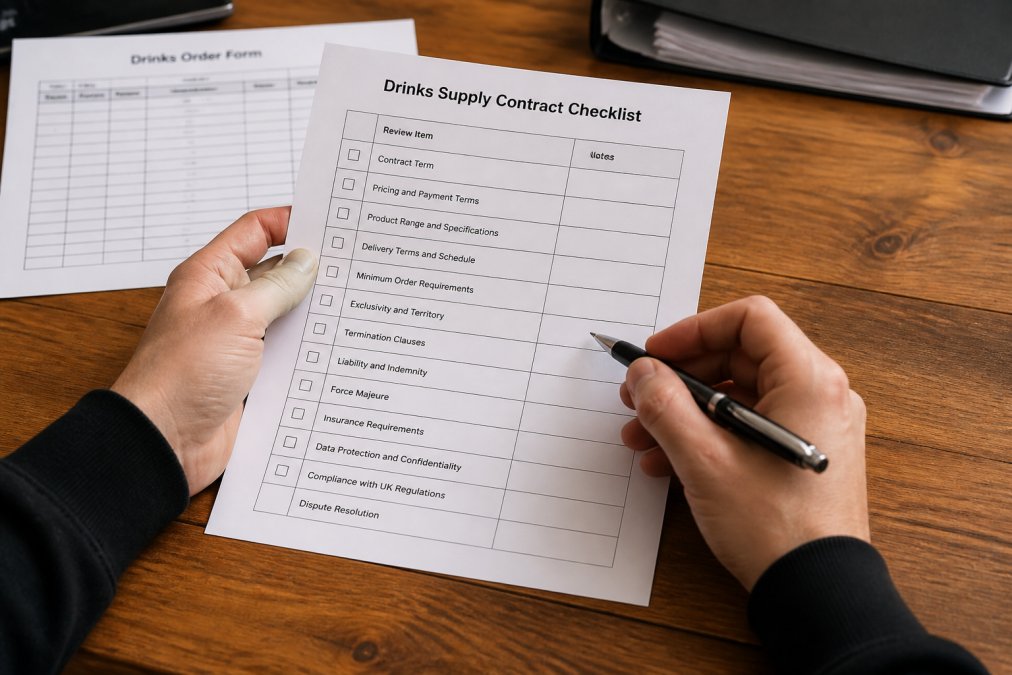
A well-drafted contract protects your interests, clarifies expectations, and gives you recourse if something goes wrong. For independent hospitality venues, pubs, bars, restaurants, and hotels, your drinks supplier directly impacts your menu, cash flow, and customer experience.
At Swallow Drinks, we've worked with hundreds of venues across the region for over 40 years and seen firsthand how a clear supply agreement prevents operational headaches. Whether you're negotiating with a new supplier or reviewing an existing contract, knowing what to look for puts you in control.
Every drinks supply contract should include core clauses addressing the practical realities of the on-trade business. These determine whether your supplier delivers on time, whether you can rely on consistent stock, and what happens when something goes wrong.
Pricing should specify the base price per unit, volume discounts, and how often prices can be reviewed. Annual price reviews are common and protect you from sudden hikes whilst giving your supplier visibility on cost changes.
Payment terms typically run Net 30 (payment within 30 days of invoice). Some suppliers offer settlement discounts for earlier payment. Clarify whether you're paying per delivery, weekly, or monthly, and ask about surcharges for small orders, late-night deliveries, or specialist products. Request an itemised breakdown of all charges upfront. Document whether pricing includes delivery or if that's charged separately, as delivery costs can significantly affect your bill outside major urban centres.
This clause details the brands and products you're ordering, their sizes, and quality standards. For wines and spirits, specify vintages or product ranges. For beers and soft drinks, clarify whether you're ordering specific brands or whether substitution is permitted if stock runs out.
Your contract should state that all products arrive in good condition with intact packaging and correct labelling. Specify acceptable shelf life and "best before" dates, and include a clause allowing you to reject damaged or expired goods without penalty. If menu consultation or tasting notes are important, make this explicit rather than assuming it's included.
Consistency separates a reliable supplier from a problematic one. Your contract should specify delivery frequency (many venues need six-day-a-week delivery) and a delivery window so your staff know when to expect the lorry.
Include a clause on minimum order quantities that works for your business without forcing over-ordering. Document lead times for standard and specialist orders. Specify what happens if the supplier misses or delays a delivery, including a process for reporting issues and a timeframe for resolution.
This clause limits the supplier's liability if something goes wrong. For example, liability for late delivery might be capped at the value of that single order rather than all lost sales. Indemnification means the supplier covers you if their products cause harm, such as contamination causing customer illness.
These clauses protect both parties, but shouldn't let the supplier escape responsibility entirely. Push back on clauses excluding liability for gross negligence or breach of food safety laws. You need recourse if the supplier fails to meet basic standards.
A force majeure clause addresses circumstances beyond either party's control, extreme weather, supply chain disruptions, or pandemics, that temporarily suspend obligations without breach. Specify what triggers force majeure and how long suspension lasts before contract termination.
Contingency planning is increasingly important. What if your primary supplier can't deliver? Does the contract allow you to source emergency stock elsewhere without penalty? Does the supplier have backup logistics arrangements?
This clause defines how either party can end the contract. Some contracts lock you in for a set term with automatic renewal unless you give notice. Others allow termination for convenience with notice periods (typically 30 or 60 days). Termination for cause allows immediate exit if the supplier breaches key terms, such as missing deliveries repeatedly or failing quality standards.
Read this carefully. If locked into a long contract and service deteriorates, you need a way out. Aim for balanced terms: reasonable notice for termination for convenience, and clear grounds for termination for cause. Independent suppliers like Swallow Drinks typically value long-term relationships over contractual penalties.
A template provides a starting point but shouldn't be used without customisation. Many generic templates favour the supplier's interests. Look for one specific to the UK hospitality sector that references relevant UK legislation, particularly the Sale of Goods Act 1979 and the Consumer Rights Act 2015 (legislation.gov.uk).
Customise the template to your situation. If you need six-day delivery, make that explicit. If you require menu consultation, add that to product specifications. If you're concerned about supply chain resilience, add a contingency planning clause. Consider having a solicitor review the contract before signing, particularly for your first agreement with a new supplier.
Negotiation ensures the contract works for your business. Most independent suppliers, including Swallow Drinks, expect negotiation and respect venues that understand their needs.
Be clear about what you actually need: how many days per week you need delivery, your typical order value, and your smallest likely order. Smaller, independent suppliers often have more flexibility on minimums and frequency than large wholesalers.
Document your delivery requirements in writing before negotiating. Show the supplier your typical weekly order profile so they can price accordingly. Discuss lead times for specialist products, how quickly can they source craft beers or niche wines? This matters if you want to respond to customer demand or seasonal trends.
Ask for a detailed breakdown: base price, volume discounts, and delivery charges. Request this in writing to prevent surprise surcharges later. Agree on a price review mechanism (annual reviews are standard) and clarify whether mid-year price changes are possible and under what circumstances.
Consider negotiating a tiered discount structure. For example, orders over a certain value per week might earn a percentage discount; larger orders might earn a higher percentage. This incentivises larger orders without forcing over-stocking.
Your menu should evolve. Include a clause allowing you to modify your regular order without penalty. Discuss how the supplier handles niche or specialist brands. If you want to stock a local brewery's beer or small-batch gin, can they source it? How long does it take? What's the minimum order?
If menu consultation or tasting notes are valuable, make this explicit in the contract or clarify expectations informally.
A free-of-tie arrangement means you're not locked into buying all your drinks from one supplier. You can source from multiple wholesalers, choosing the best option for each category. This gives you negotiating power: if one supplier's prices drift too high or service deteriorates, you have options.
Independent venues increasingly prefer free-of-tie arrangements, allowing you to build a portfolio reflecting your positioning, perhaps premium wines from one supplier, craft beers from another, and soft drinks from a third. However, this requires managing multiple supplier relationships, delivery schedules, and invoices.
If switching to a free-of-tie model, check your current contract's termination clause. Understand the notice period and any exit costs, then identify suppliers who can serve your needs, whether that's Swallow Drinks for a comprehensive portfolio or multiple specialists for different categories.
Watch for these warning signs:
Unlimited price increases. A contract allowing price rises without notice or cap prevents margin planning. Insist on a price review mechanism with notice requirements and reasonable caps.
Vague product specifications. "Assorted wines" or "standard spirits" invites substitution disputes. Specify brands, vintages, and sizes.
No delivery guarantees. A contract not committing to specific delivery days or times leaves you exposed. If the supplier can't commit, that's a red flag about their logistics.
One-sided liability clauses. If the supplier has zero liability for late deliveries or damaged goods, the contract favours them. Push back, there should be consequences for poor performance.
Long lock-in periods with automatic renewal. A contract with automatic renewal unless you give notice is a trap. Insist on shorter initial terms or explicit renewal requirements.
No termination for convenience. If you can only exit for cause with a narrow definition, you're stuck. You should be able to terminate with reasonable notice.
Hidden or undefined fees. Surcharges should be documented upfront. If the supplier won't specify, that's a red flag.
Confidentiality clauses preventing discussion of terms. Some suppliers prevent you from sharing pricing with other venues. This is anti-competitive and should be resisted.
Your contract should reference compliance with UK food safety and labelling legislation: the Food Safety Act 1990 and the Food Information Regulations 2014 (legislation.gov.uk). These set standards for product traceability, allergen labelling, and safe handling.
Your supplier is responsible for ensuring products meet these standards before delivery. All products should arrive with correct labelling, including allergen information, nutritional data, and country of origin. This is particularly important for wines and spirits, where labelling requirements are strict.
For soft drinks, labelling must comply with the Food Information Regulations (food.gov.uk). Alcoholic drinks have additional requirements under the Alcohol Labelling Regulations. Your supplier should guarantee compliance, and your contract should allow you to reject non-compliant products.
Traceability is critical. Your supplier should provide batch numbers and production dates for all products. If there's a recall or safety issue, you need to identify affected stock quickly. Include a clause requiring the supplier to notify you immediately of any product recalls or safety alerts.
Before signing any drinks supply contract, work through this checklist:
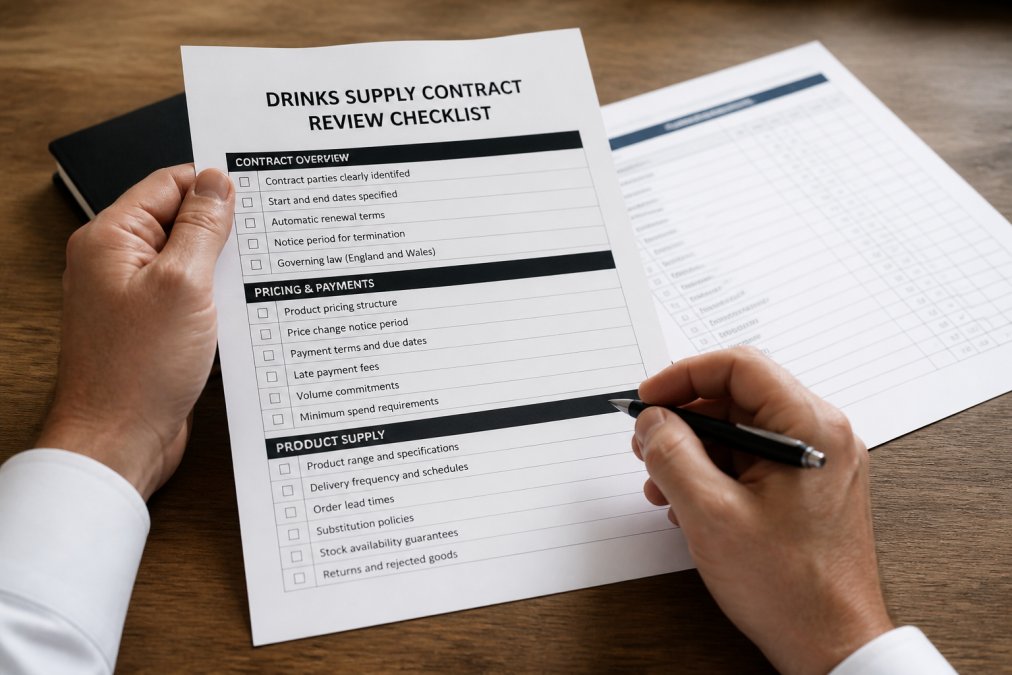
Work through this checklist with your supplier before signing. If they resist clarifying any points, that's a warning sign. A good supplier, like Swallow Drinks, will be transparent about their terms and willing to discuss your concerns.
Once you've agreed on terms, get everything in writing. Verbal agreements are unenforceable. A written contract is your protection and theirs. If you're managing multiple suppliers or want to streamline your ordering process, consider using trade ordering systems that allow you to place and track orders efficiently across your supply chain.
Getting a drinks supply contract right takes time, but it's time well spent. A clear, balanced contract prevents misunderstandings, protects your interests, and sets the foundation for a reliable partnership. Whether you're working with an established wholesaler or exploring options like Swallow Drinks, the principles are the same: be clear about what you need, negotiate transparently, and document everything in writing. Your venue depends on consistent, quality drinks supply, a strong contract ensures you get it.
A strong drink supply contract must cover pricing and payment terms (including net 30 or similar frameworks), product specifications and quality assurance standards, delivery schedules and logistics arrangements, limitation of liability and indemnification clauses, force majeure provisions, termination rights, and compliance with food safety regulations and labelling requirements. Each element protects both your business and the supplier, ensuring clarity on expectations and reducing dispute risk.
A tied agreement binds you to purchase exclusively or primarily from one supplier, often in exchange for discounted pricing or financing. A free-of-tie agreement gives you the freedom to source from multiple suppliers without penalty. Free-of-tie arrangements offer greater flexibility to switch suppliers, negotiate better terms, and adapt your stock to customer demand, critical advantages for independent hospitality venues seeking menu variety and competitive pricing.
Delivery schedules must specify the frequency (e.g., six-day-a-week), agreed delivery windows, which party bears transport costs, and what happens if delivery is missed or delayed. Include provisions for emergency or rush orders, and clarify whether the supplier guarantees stock availability or only 'best efforts' delivery. Clear logistics terms prevent weekend stock-outs and operational disruptions, essential for high-volume venues that rely on consistent supply.
Watch for hidden fees or surcharges not mentioned upfront, vague product specifications that allow quality variations, one-sided termination clauses that lock you in but allow the supplier to exit easily, lack of force majeure or contingency planning language, and absence of dispute resolution procedures. Also flag minimum order quantities that tie up excessive cash, inflexible pricing with no review mechanism, and contracts that restrict your ability to source niche or local brands. A reliable supplier like Swallow Drinks prioritises transparency and flexibility.
Members of:


AWRS Registration Number: XJAW00000100730