Aug 12, 2026
Last Updated: August 12, 2026
A drink menu consultation is a strategic service that helps hospitality venues optimise their drinks offering for both customer satisfaction and profitability. Rather than simply listing available products, this service examines your entire drinks programme, from pricing and positioning to staff knowledge and operational workflow, and reshapes it to drive revenue.
Most independent bars and restaurants approach their drinks menu reactively. A supplier suggests something, a staff member requests it, or a competitor seems to have it. The result is a disjointed list that confuses customers and leaves money on the table. Proper drink menu consultation changes that by introducing structure, data, and intentional design to every choice.
At Swallow Drinks, we've worked with hospitality venues across the region for over 40 years, and we've seen firsthand how the right menu strategy transforms a venue's performance. The venues that succeed aren't the ones with the longest lists, they're the ones with the most thoughtfully curated selections, clear pricing logic, and staff who can actually sell what's on offer.
Menu engineering is the deliberate design of your drinks list to maximise both sales volume and profit margin. It's not about offering everything; it's about offering the right things in the right way.
The foundation of effective menu engineering starts with categorisation. Group your drinks by type (wines, spirits, beers, soft drinks, cocktails) and then by price tier within each category. This structure helps customers navigate the menu and gives your staff clear upselling pathways. A customer ordering a basic spirit and mixer can be guided toward a premium option in the same category. A wine drinker can move from house to premium selections.
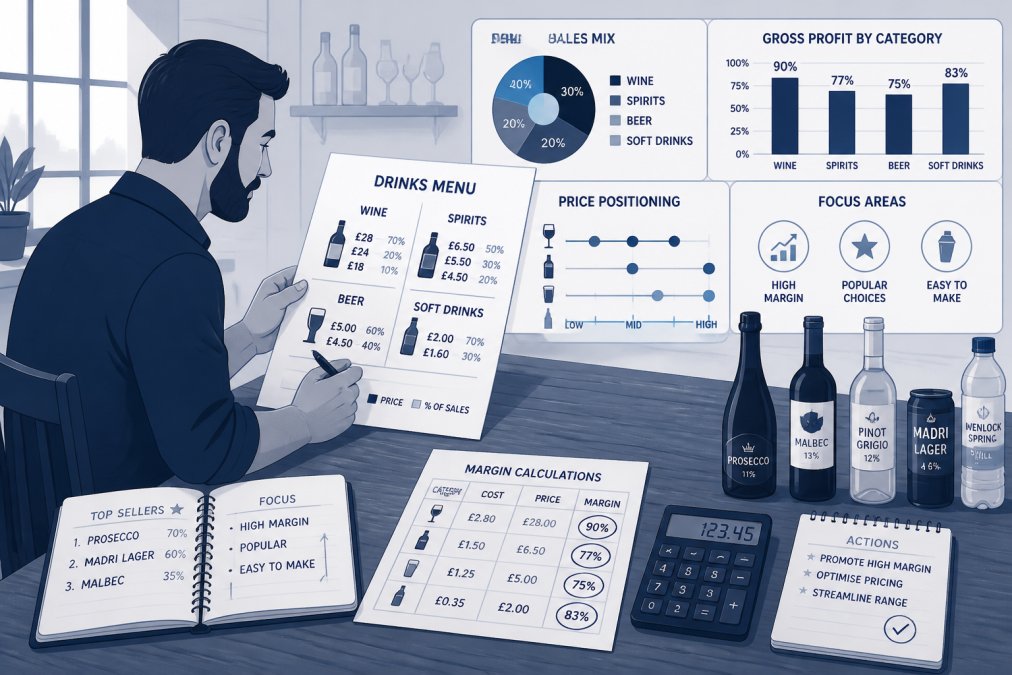
Pricing architecture matters enormously. Most venues price reactively, they mark up whatever they've purchased. The better approach is to work backwards from your target profit margin, then select products that fit that margin. If you're aiming for a 70% margin on spirits (a standard target for many venues), you know exactly what wholesale cost you can afford. This prevents the common mistake of stocking premium products at prices customers won't pay, or budget products at prices that leave you with thin margins.
Signature cocktails are where menu engineering really shows its value. A well-designed signature, one that uses in-stock ingredients, requires minimal technique, and sits at a strong price point, becomes your profit engine. It's not just about creativity; it's about profitability. A cocktail using premium spirits and fresh ingredients can justify a higher price than a simple mixed drink, and customers expect to pay more for something positioned as "signature."
Rotation and seasonality also matter. A summer menu featuring lighter, refreshing drinks creates natural opportunities to introduce new products and adjust pricing. A winter menu with warming drinks and heavier spirits tells a different story. Changing your menu quarterly keeps regular customers engaged and gives you reasons to retrain staff on new items.
Understanding your margins is non-negotiable. Without it, you're flying blind on profitability.
Start with the basics: your cost of goods sold (COGS) divided by your selling price tells you your margin percentage. If a bottle of spirit costs you £12 wholesale and you pour 25ml servings, each pour costs roughly £0.60. If you sell it for £5.50 as a mixed drink, your margin is approximately 89%. That's healthy. If you're selling the same pour for £3.50, your margin drops to 83%, still reasonable, but the difference adds up across hundreds of pours per week.
Most venues aim for margins between 70-80% on spirits, 65-75% on wines, and 60-70% on beers. These aren't arbitrary targets, they account for spillage, training waste, and the reality that not every drink sells at full price. Some customers negotiate, some drinks are comped, some bottles are damaged. Your margin needs to absorb these realities while still delivering profit.
The mistake many venues make is pricing everything the same way. A premium spirit deserves a different margin structure than a house spirit. A craft beer might command a lower margin because it drives traffic and pairs with food. A soft drink, which costs very little, can support a higher margin without customers noticing.
Pricing strategy also involves psychological anchoring. If your cheapest spirit cocktail is £4.50 and your most expensive is £6.50, customers see that range and make decisions within it. If you introduce a £8 premium cocktail, suddenly the £6.50 option feels like better value. This is menu engineering at work, the presence of a premium option shifts perception of your entire menu upwards.
Track your actual sales data. Which drinks sell most? Which generate the most profit? A drink that sells 50 times per week at a 70% margin generates more profit than a drink that sells 5 times per week at an 85% margin. Volume matters. Understanding which products drive both sales and profit lets you make intelligent restocking decisions and guides your supplier relationships.
Effective menu design is visual and functional. The layout, typography, and organisation all influence what customers order and what staff recommend.
Grouping drinks by experience rather than just category works well in many venues. Instead of "Spirits" and "Mixers," you might have "Classics" (recognisable drinks customers know), "Our Signatures" (house creations), and "Seasonal" (rotating specials). This framing helps customers understand what they're choosing and positions your venue as thoughtful rather than generic.
Descriptions matter. A drink listed as "Vodka and Tonic" tells customers nothing. "House Vodka Kalinska with premium tonic and fresh lime" tells them what they're getting and justifies a higher price. Descriptions should highlight quality ingredients, technique, or story. "House Prosecco" is functional; "Chilled house Prosecco with fresh fruit" is more appealing.
Wine lists benefit from a different structure. Many independent venues struggle with wine because they either stock too little (limiting choice) or too much (confusing customers and creating waste). A focused list of 12-18 wines, organised by style (light whites, full whites, light reds, full reds, rosés, sparkling), often outperforms a sprawling 60-wine list. Customers can navigate it, staff can speak confidently about every bottle, and slower movers don't sit gathering dust.
Pricing visibility also shapes behaviour. Some venues hide prices to encourage upselling; others display them prominently to build trust. For independent venues, transparency usually wins. Customers who feel surprised by the bill are less likely to return. Clear, consistent pricing builds loyalty.
Soft drinks and non-alcoholic options deserve the same design attention as alcoholic ones. A venue with a thoughtful mocktail programme or premium soft drink selection appeals to designated drivers, non-drinkers, and customers reducing their intake. These aren't niche markets anymore, they're significant. A well-designed alcohol-free option can be as profitable as an alcoholic drink while expanding your addressable market.
A perfectly engineered menu fails if your staff can't sell it. Training transforms menu strategy into actual revenue.
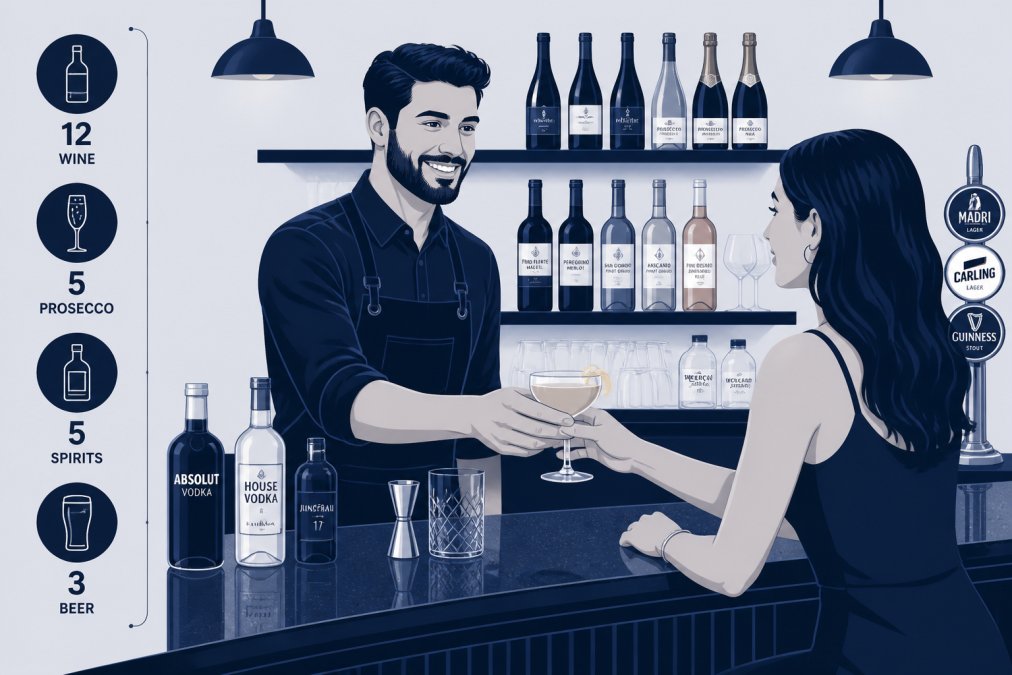
Start with product knowledge. Your staff needs to understand what they're selling: the key flavour profiles, what it pairs well with, why it's priced the way it is. A server who can confidently describe a wine's characteristics and recommend it based on a customer's preferences sells more wine. A bartender who knows the story behind a spirit or the technique behind a cocktail creates a better experience and justifies premium pricing.
Upselling training is critical but often done poorly. Staff shouldn't be taught to push the most expensive option; they should be trained to recommend based on customer preference. "That's a great choice, if you'd like something similar but with a bit more depth, I'd suggest this one instead." That's consultative selling, and it works.
Operational efficiency comes from standardisation. Recipe cards for every cocktail ensure consistency, the same drink tastes the same whether it's made on a Tuesday afternoon or a Saturday night. Standardised pour sizes prevent waste and ensure accurate margin calculations. Clear workflows behind the bar reduce bottlenecks during busy service.
Stock rotation and stock management prevent waste and ensure freshness. FIFO (first in, first out) discipline keeps older stock moving. Regular counts catch discrepancies early. Many venues lose 5-10% of their drinks budget to waste, spillage, and theft, proper systems reduce that significantly.
Technology can support efficiency. A good till system tracks what sells, when it sells, and at what price. This data guides restocking decisions and reveals which staff members are most effective at upselling. Some venues use tablets at tables, which reduces server trips and speeds service. Others use stock management software that alerts when stock is running low, preventing the Saturday night scramble to find alternatives.
Your supplier relationship shapes your menu more than you might realise. A good supplier doesn't just take orders, they help you think strategically about what to stock.
Consistency matters enormously in hospitality. Customers expect their favourite drink to taste the same every time they visit. This requires reliable supply of the same products. A supplier who can guarantee six-day-a-week delivery, who maintains stock of your core range, and who communicates proactively about availability is worth far more than one who offers slightly lower prices but unreliable service.
Swallow Drinks has built its reputation on exactly this, reliable supply of a vast portfolio of premium wines, spirits, beers, and soft drinks across the region. Over 40 years, we've learned that independent venues need a partner who understands their constraints: smaller order volumes than chains, need for flexibility, and requirement for genuine local service.
Niche and craft products are increasingly important. Customers want discovery, they want to try local breweries, independent spirits, or unusual wines. A supplier who actively sources these items and brings recommendations to you becomes a strategic partner, not just an order taker. This is where menu innovation happens.
Pricing transparency prevents surprises. You should understand exactly how your supplier's pricing works: unit cost, any minimum orders, delivery charges, promotional pricing. Hidden fees or surprise surcharges damage trust. A supplier who shows you their margin structure and explains why certain products cost what they do builds confidence that you're getting fair value.
Payment terms and flexibility matter for cash flow. A supplier who offers reasonable credit terms and can adjust delivery schedules when your needs change supports your ability to manage stock efficiently. For smaller independent venues, this flexibility can be the difference between smooth operations and cash flow stress.
The best drink menu consultant for your venue combines industry expertise with understanding of your specific business model and constraints.
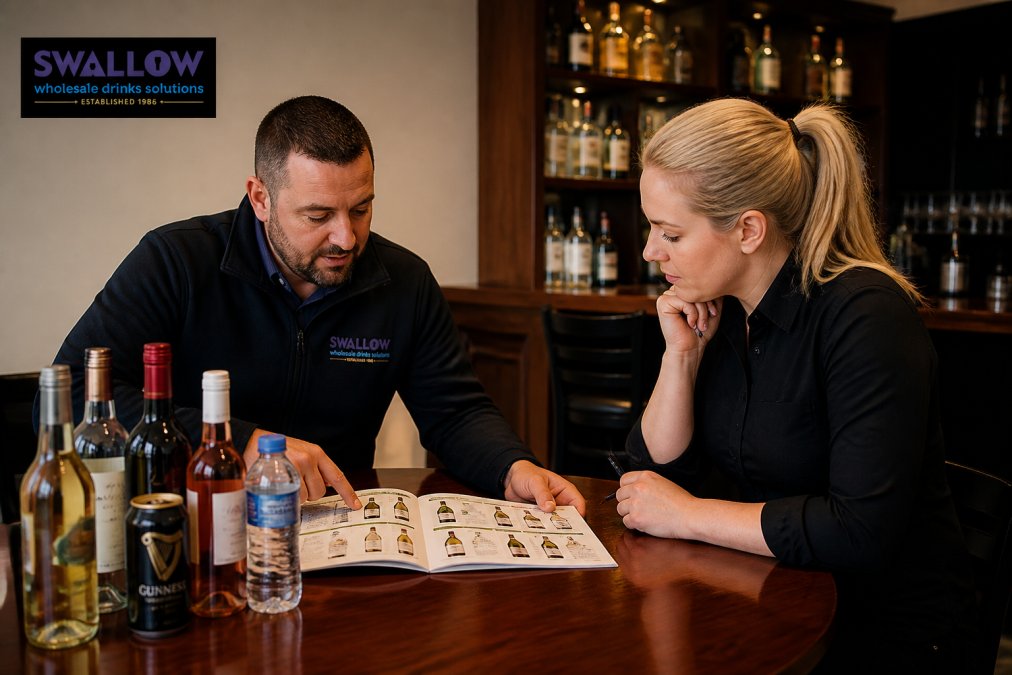
Look for consultants who ask questions before making recommendations. They should want to understand your venue's concept, your customer base, your current performance, and your goals. A consultant who immediately starts suggesting changes without understanding your context is probably not the right fit. The best ones listen first.
Experience matters, but the right kind of experience. A consultant who's worked with venues similar to yours, independent bars, gastropubs, boutique hotels, understands the constraints and opportunities specific to your situation. Chain restaurant experience doesn't always translate to independent venues.
Transparency about process and cost is essential. You should understand what the consultant will do, how long it will take, and what you'll pay. Some consultants charge by the day, others by the project. Some include implementation support; others stop at recommendations. Understand what you're getting before you commit.
Check whether the consultant has relationships with quality suppliers. A good consultant can recommend products and suppliers they've worked with, which speeds implementation and ensures quality. They should also respect your existing supplier relationships, the goal is to optimise what you have, not force wholesale change.
Consider whether they offer ongoing support. A consultation that ends with a report isn't as valuable as one that includes staff training and follow-up. Implementation is where the real work happens, and a consultant who supports that process delivers better results.
Swallow Drinks can help with this process. As a long-established independent wholesaler with deep knowledge of the region's hospitality sector, we understand what works for independent venues. We can advise on menu strategy, source products that fit your concept, and provide reliable supply to support whatever menu you develop. If you're considering a menu consultation, speak with us about how your current supplier relationships can support that work.
For venues serious about optimising their drinks programme, consider registering with our trade ordering platform at Swallow Drinks Trade Area. It gives you direct access to our full range, transparent pricing, and the ability to manage your ordering efficiently.
A drink menu consultant reviews your current drinks offering, analyses profitability, and redesigns your menu to increase sales and margins. They typically handle menu engineering, pricing strategy, signature cocktail development, staff training on upselling techniques, and supplier relationship optimisation. The goal is to align your drinks programme with your venue's brand and financial targets, ensuring every item on your list generates profit rather than just filling space.
Consultants improve margins through three key levers: first, they analyse your pour costs and repricing strategies to ensure drinks are priced correctly for your market; second, they engineer your menu to highlight high-margin items and remove low-performers; third, they train staff on upselling and suggestive selling techniques that increase average transaction value. Many venues discover they're underpricing premium spirits or missing opportunities to sell signature cocktails that carry better margins than standard drinks.
Drink consultancy is typically project-based, with costs varying by scope. A single menu review or staff training session may cost £500-£2,000, whilst a comprehensive consultation including menu redesign, pricing analysis, and implementation support can range from £3,000-£10,000 or more depending on venue size and complexity. Many consultants offer tiered packages, and some work on performance-based fees tied to margin improvements. Always request a detailed proposal before committing.
A supplier relationship and a drink consultant serve different purposes. Your supplier provides stock and logistics; a consultant provides strategic guidance on what to stock, how to price it, and how to sell it effectively. Many independent bars benefit from both: a reliable supplier like Swallow Drinks ensures consistent six-day delivery and quality, whilst a consultant optimises the commercial side. Some venues find that working with a consultant actually improves their supplier negotiations because they understand their margins better.
The real value of drink menu consultation isn't the initial strategy, it's the ongoing discipline of executing that strategy consistently. The venues that see the biggest improvements are those that commit to the process: training staff thoroughly, tracking what actually sells, adjusting based on data, and maintaining strong supplier relationships. A consultant gives you the framework and guidance. Your execution determines the results.
Members of:


AWRS Registration Number: XJAW00000100730