Oct 03, 2026
Last Updated: October 2, 2026
Reducing drink waste during high volume events means planning, pouring and tracking drinks so less stock is spoiled, over-served or thrown away.
It matters because wasted drinks are wasted cash. Every litre poured down the drain was bought, stored, chilled and carried by someone.
Most drinks waste is preventable, it comes from guesswork, not bad luck. Below are six practical steps, from forecasting to a full post-event waste audit, that any high-volume venue can run.
Drink stock forecasting for events means matching what you order to what you expect to pour, using past sales data rather than instinct. It is the single biggest lever on drinks waste. Pull sales reports from your last five similar events and look at:
Then build a simple forecast. If 400 guests drank 1.8 drinks each on average, plan for 720 drinks with a small buffer. Order to that figure, not a round number that feels safe. Over-ordering "just in case" ties up cash and cellar space, and extra kegs and cases often go out of date before the next event.
Event stock management best practices are the routines that keep stock moving, rotated and visible during a busy service. The core habits are simple:
Most waste happens at the point of pour, not in the storeroom: a keg that runs flat because nobody checked the gas, or a bottle left open on the back bar overnight. Assign one person per shift to own stock checks, and rotate the duty so it does not fall on the same tired manager every Saturday.
Bulk dispensing and reusable service ware cut waste at the serve point, where most losses hide, and cut single-use plastics at the same time. The detail that separates a bar that saves money from one that just buys shiny kit is the logistics, how drinks are dispensed, how empty containers are handled, and how each waste stream is separated.
Bag-in-box syrup systems are the workhorse here. They dispense consistent measures every time, so staff pour less by eye and waste less by accident. Swallow Drinks stocks bag-in-box syrup ranges including Pepsi and Pepsi Max in 7-litre and 12-litre formats, priced from £47.22, so you can match the box size to your expected volume rather than opening more than you need.
For draught beer and cider, the biggest waste lever is gas and line management. A keg that pours foamy because the line is warm or the gas pressure is wrong gets poured down the drip tray. Two practical additions help:
If sensors and smart taps are out of reach, a simpler version works: a laminated pour card at each station, a jigger for every spirit, and a nominated person to check gas pressure at the start of each shift.
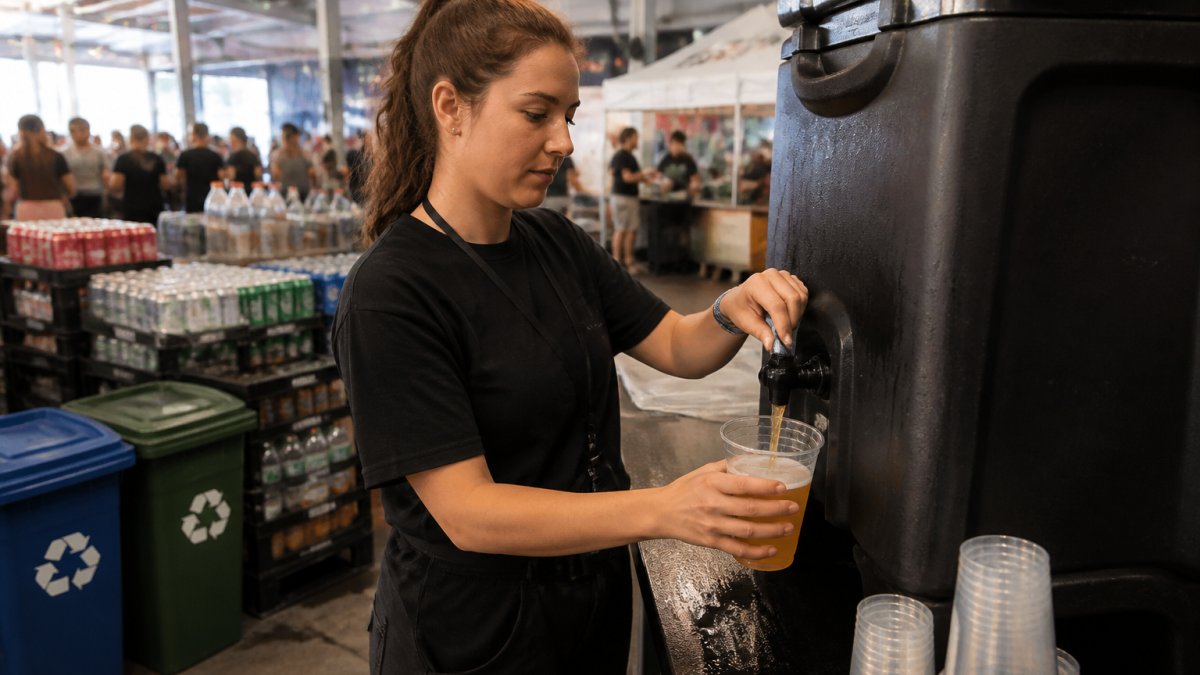
Reusable cups and glassware reduce breakage and single-use waste, but the trade-off is logistics: a wash-up plan, a collection point at every exit, and a count-in and count-out process so cups do not walk. A £1 deposit refunded at the collection point lifts return rates sharply. Pair reusable service with clearly labelled recycling bins and glass collection points so staff know where each waste stream goes.
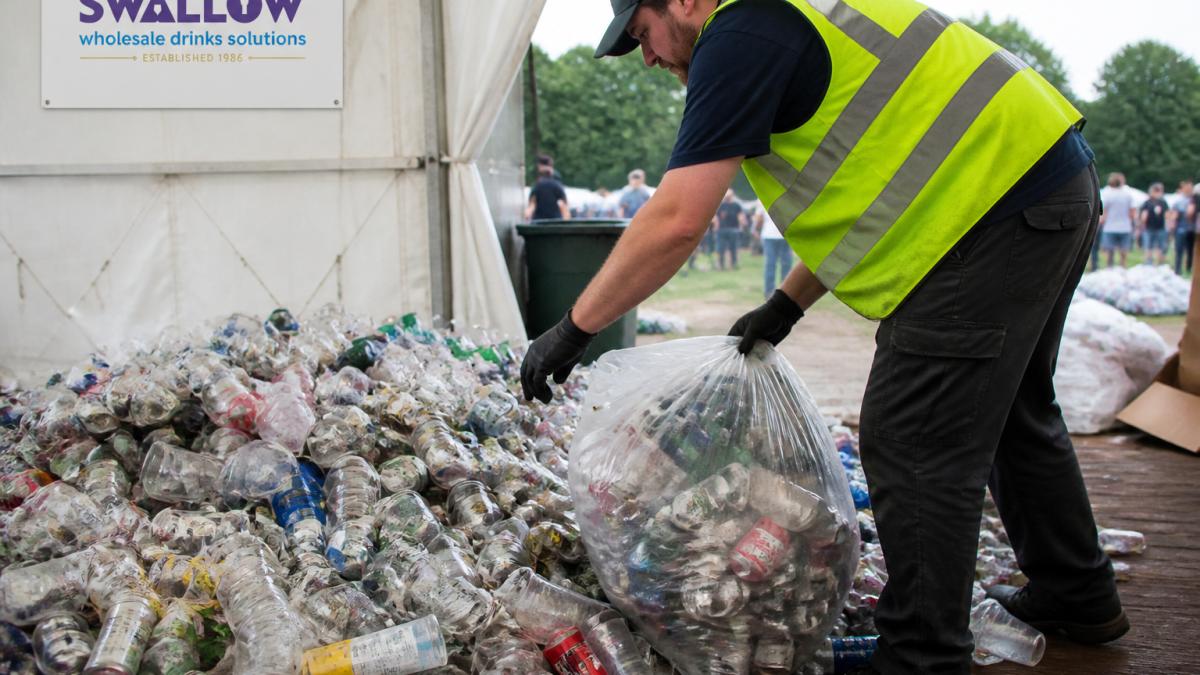
The three main drinks waste streams behave very differently at a high-volume bar:
| Stream | What it looks like | Practical handling |
|---|---|---|
| Glass | Bottles, broken glassware | Separate glass bin, never mixed with general waste; broken glass in a designated sharps-style container to protect staff |
| Aluminium | Cans, kegs, some bar tools | Cans crush flat to save space; empty kegs go back to the supplier on the next delivery |
| Plastic | PET bottles, cup lids, bag-in-box bladders | Bag-in-box bladders and caps are usually not recyclable kerbside, check with your waste contractor before binning them |
Contamination is the quiet killer: one greasy glass in the glass bin can send the whole load to general waste. Label bins with pictures, not just words, and put a member of staff on bin duty during peak windows.
For lower-volume or daytime events, a well-stocked non-alcoholic range keeps guests drinking without opening full cases of alcohol that then spoil. Swallow Drinks carries a broad soft drinks range alongside its alcohol portfolio, so you can build a menu that matches the event rather than over-ordering alcohol to cover a gap.
Staff training is where a waste plan either works or falls apart. Untrained teams over-pour, mis-sort recycling and bin drinks that were perfectly sellable. Here is a short, repeatable protocol you can run before every big event.
Run this before doors open, short enough to fit a shift handover, specific enough to change behaviour.
BIB SWALLOW PEPSI MAX 12LTR - PINK CONNECTOR →
Give staff short lines so they do not freeze:
Portion control is about consistency, not being stingy. A bar that pours to a jigger wastes less and serves fairer measures, which keeps regulars happy. Make the measure visible, an optic, a jigger or a smart tap in front of the guest, so it reads as professional rather than tight. For cocktails, batch where you can: a pre-batched cocktail poured to a marked line wastes less than one built free-pour at a time and speeds up service at peak.
A waste log is only useful if someone owns it. Assign one person per shift, rotating the duty so it does not always fall on the same tired manager. The log should capture:
At the end of the shift, the owner signs it off. At the end of the event, it feeds straight into the post-event audit in Step 6.
A common mistake is assuming experienced staff already know this. They often do not, especially at temporary event bars where teams are thrown together for one night. Swallow Drinks has supported the on-trade for 40 years and can advise on stock and menu builds that reduce waste at the pour. Trade customers can register at Swallow Drinks trade ordering to order online and keep the bar stocked without the guesswork.
Minimising drink spoilage in the on-trade comes down to storage, rotation and speed of use. Most spoilage is a storage problem, not a demand problem. Key rules that work:
The real difference between venues that waste little and venues that waste a lot is how fast they move slow stock. If a niche spirit or craft beer is not selling, either push it on the menu or stop ordering it in bulk. Swallow Drinks, a family-run independent wholesaler with a vast portfolio of premium brands, can advise on which lines suit your menu and volume, and source niche or local labels.
A post-event waste audit is a short, structured review of what was poured, sold and thrown away, turning one night's waste into next event's savings. Do it within 48 hours while details are fresh: gather your sales data, waste log and opening and closing stock counts, then compare them.
| What to check | What it tells you | What to change |
|---|---|---|
| Drinks sold vs stock used | Pour accuracy and over-pours | Retrain or re-measure |
| Spoiled stock logged | Storage and rotation faults | Fix cellar or rotation |
| Recycling bin contents | Contamination levels | Improve signage and training |
| Sold-out lines | Under-forecasting | Raise par levels |
| Untouched lines | Over-ordering | Cut or shrink order |
A waste audit is not a blame exercise. It is a feedback loop. Run it after every major event and your forecast gets sharper each time.
Cutting drinks waste at high-volume events is a habit, not a one-off clean-up. It starts with a real forecast, runs through stock routines, bulk dispensing, staff training and storage, and ends with an audit that sharpens the next event.
Swallow Drinks has supported the on-trade for 40 years as a family-run independent wholesaler.
Get started with Swallow Drinks and turn your drinks waste into margin you keep.
Start with accurate forecasting based on ticket sales and previous event data, then use bulk dispensing systems for soft drinks rather than individual cans. Portion control measures, such as using measured optics for spirits, prevent over-pouring. Set up clearly labelled recycling bins for glass, cans and compostable packaging to reduce contamination. Training staff on waste segregation and running a post-event waste audit will show you exactly where waste occurs so you can adjust for the next event.
Forecasting uses historical sales data, expected attendance and drink preferences to calculate how much stock you actually need. Over-ordering leads to surplus stock that may spoil or go out of date, while under-ordering causes rushed top-up orders at higher cost. A wholesaler with a broad portfolio, such as Swallow Drinks, can help you match order quantities to realistic demand and adjust mid-event if needed. Reviewing forecast accuracy after each event sharpens the numbers for next time.
Drinks spoil faster when stored at the wrong temperature or handled poorly. Keep kegs and casks in a cool, consistent environment and rotate stock so older items are used first. Bag-in-box syrups should be stored according to the supplier's guidance and checked for connector compatibility before the event. Draught lines need regular cleaning to prevent bacterial build-up that affects taste and shelf life. Good storage practice directly reduces the volume of drinks you have to pour away.
Staff are your first line of defence against waste. Training them on correct portion sizes, how to use bulk dispensing equipment and where to place waste streams reduces over-pouring and contamination. Brief them before each event on the waste diversion targets and what goes in which bin. A short debrief after the event highlights what worked and what needs adjusting. Well-trained staff also spot spoilage and stock issues early, before they become costly problems.
Members of:


AWRS Registration Number: XJAW00000100730