Sep 27, 2026
Last Updated: September 27, 2026
If you want to know how to clean beer lines in pubs 2026, start with the reason it matters: dirty lines ruin beer, and ruined beer ruins reputations. At Swallow Drinks, we have supplied the on-trade for over 40 years, and we have seen what happens when cellar management slips. A pint pulled through a neglected line tastes flat, smells sour, and pours with a poor head. Customers notice. They do not complain; they simply stop coming back.
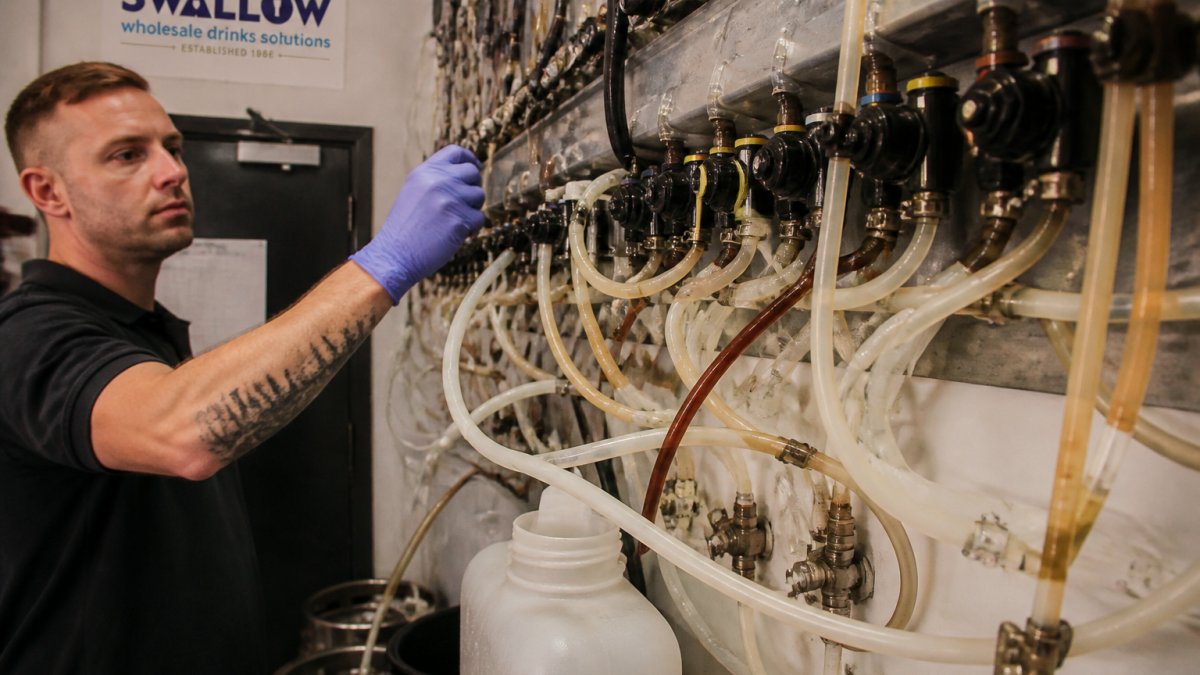
Beer line cleaning is the routine of flushing draught system pipework with cleaning chemicals to remove yeast buildup, beer stone, and sediment. Without it, microbial growth takes hold inside the lines within days.
The British Beer and Pub Association guidance on cellar management treats line hygiene as a core part of dispense quality. Get it wrong and you pour money down the drain in beer wastage.
The industry standard is to clean every beer line every seven days. This is the 7-day rule, and it applies whether you sell ten pints a week or ten thousand. Yeast and bacteria do not care how busy you are.
Some venues stretch to fourteen days. That is a mistake. Sediment builds faster than most landlords expect, and off-flavours develop long before the line looks dirty.
A few factors shorten the cycle further:
If any of these apply, clean more often, not less.
The BBPA beer line cleaning protocol sets out the recognised method for safe, effective line cleaning. It covers chemical concentration, contact time, rinse cycle, and record keeping.
The protocol exists because line cleaning is a chemical task, not just a scrubbing one. Caustic soda and similar cleaners are hazardous, and the rules around their use are strict.
Key points of the protocol:
Following the protocol protects your beer quality and your staff. It also keeps you on the right side of COSHH regulations on hazardous substances, which require safe handling and storage of cleaning chemicals.
A proper clean needs more than a bucket and a brush. The kit you choose determines whether you shift beer stone in one pass or waste an hour fighting residue that never fully clears.
Core equipment for a standard multi-line bar:
Professional beer line cleaning chemicals fall into three groups:
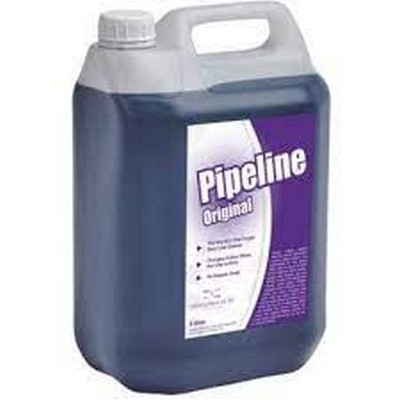
For everyday line cleaning, a dedicated product such as SWALLOW PURPLE B/LINE CLEANER 5LTR does the job at £5.72. It is built for plastic beer line systems and takes the guesswork out of mixing.
Matching chemicals to line material:
SWALLOW PURPLE B/LINE CLEANER 5LTR →
Not all lines behave the same. PVC lines are the traditional standard and respond well to caustic cleaners. Barrier tubing, common in modern installations, has a smoother bore that resists yeast adhesion, but it can be damaged by overly aggressive chemicals or excessive contact times. Stainless steel lines are rare in pubs but appear in some long-run systems; they tolerate stronger caustic but require thorough rinsing to prevent pitting.
If you are unsure which material your lines use, check with your supplier before choosing a chemical. Using the wrong product on barrier tubing can shorten line life and create a false economy.
Storing chemicals safely under COSHH:
COSHH regulations on hazardous substances require you to store line cleaning chemicals in a locked, ventilated area away from food and drink stock. Keep safety data sheets accessible, label all containers clearly, and never decant chemicals into unmarked bottles. A spill kit in the cellar is good practice and often expected by insurers.
For trade customers who need reliable stock and fast delivery, Swallow Drinks offers a full range of bar supplies and cellar chemicals. Register at Swallow Drinks trade ordering to access trade pricing and six-day delivery.
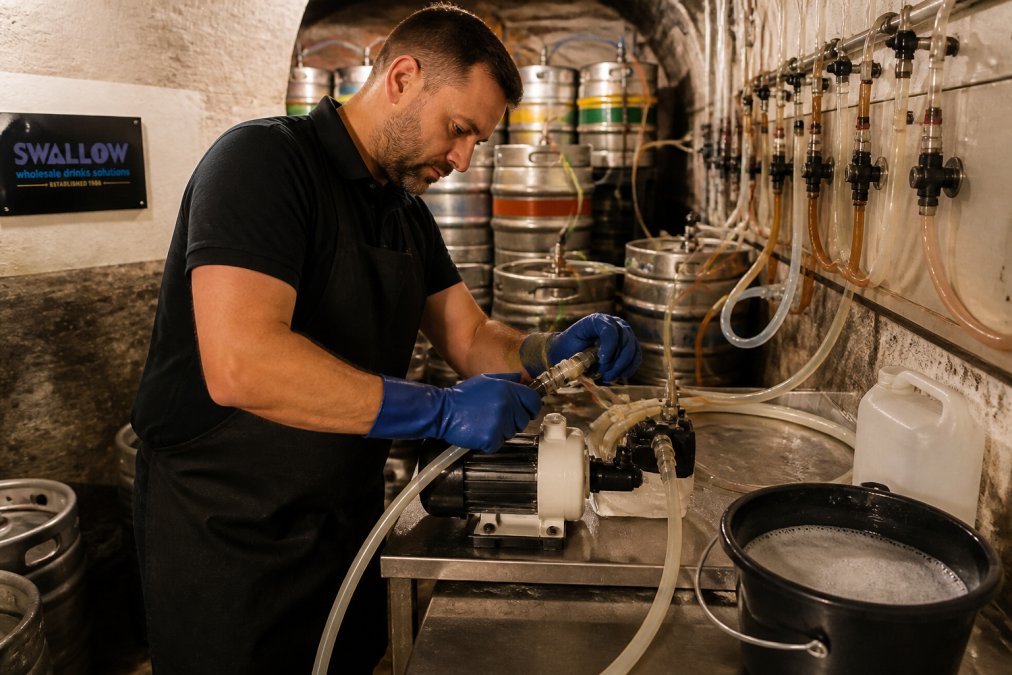
Follow these steps for a safe, thorough clean. Set aside around 45 minutes for a typical multi-line bar.
What your log should capture:
Paper vs digital logs, a practical comparison:
| Factor | Paper log | Digital log |
|---|---|---|
| Setup cost | Low | Varies by platform |
| Reminder function | None, relies on staff memory | Automatic reminders and alerts |
| Photo evidence | Not possible | Attach photos of cleaned lines or chemical labels |
| Audit readiness | Manual retrieval | Searchable, exportable records |
| Risk of loss | High, spills, misplacement | Low, cloud backup |
| Staff adoption | Familiar, no training | Requires brief training |
Digital tools worth considering:
How logs support troubleshooting:
For trade customers who want to streamline cellar management, Swallow Drinks supplies the chemicals, equipment, and support to keep every line clean and every log complete. Register at Swallow Drinks trade ordering for trade pricing and six-day delivery.
Most off-flavours trace back to one of a few fixable problems. Here is how to diagnose them.
| Problem | Likely Cause | Fix |
|---|---|---|
| Cloudy beer | Sediment or yeast buildup | Clean more often, check contact time |
| Sour or vinegary taste | Microbial growth in lines | Full sanitisation and rinse cycle |
| Flat beer | Carbonation levels or gas issue | Check gas, clean dispense head |
| Poor head retention | Residue on glassware or tap | Clean tap hygiene, check rinse |
| Chemical taste | Incomplete rinse cycle | Flush with clean water again |
Beer line cleaning frequency should follow the 7-day rule, meaning lines require cleaning at least once every seven days. This aligns with BBPA guidance and helps prevent yeast buildup, beer stone and microbial growth. If your pub has low throughput on certain lines, you may need to clean more often or consider removing slow-selling taps. Regular cleaning protects beer quality and keeps you compliant with hygiene standards.
The BBPA beer line cleaning protocol requires cleaning every seven days using approved chemicals, correct contact time and thorough rinsing. It also expects documented records for each clean. Following this standard helps maintain beer quality, reduces wastage and demonstrates due diligence. Swallow Drinks supplies the chemicals and trade support to help you meet it consistently.
You will need a line cleaning pump, suitable chemicals such as Swallow Purple B/Line Cleaner 5LTR, a cleaning log, PPE including gloves and eye protection, and a rinse water supply. A coupling and dispense head tools help you connect and flush each line properly. Always follow COSHH guidance for safe handling and storage.
Swallow Drinks is a family-run independent wholesaler with 40 years in the trade, supplying beer line cleaning chemicals and dispense equipment to pubs across Birmingham and the West Midlands. Register at our trade portal for six-day-a-week delivery and consistent stock. We also offer menu and cellar support so your lines, logs and dispense standards stay in order.
Members of:

AWRS Registration Number: XJAW00000100730