Sep 25, 2026
Last Updated: September 24, 2026
Strong drink distribution contracts protect your hotel's interests while establishing clear expectations with your supplier. The foundation is mutual clarity: what you're buying, when it arrives, what happens if something breaks down, and how you exit if the relationship doesn't work.
The best contracts spell out specific obligations on both sides. Your supplier commits to delivery schedules, stock availability, and service standards. You commit to minimum orders and payment terms. When both parties know exactly what's expected, disputes shrink dramatically.
Swallow Drinks has spent over 40 years building distribution relationships with hotels across the region. We've learned that the contracts that work best are the ones that acknowledge reality: sometimes demand spikes, sometimes a delivery slot gets missed, sometimes you need to source something unusual. A rigid contract creates friction. A flexible one, with clear escalation steps, creates partnership.
The real difference between a mediocre contract and a strong one isn't length. It's specificity. Vague language like "reasonable effort" or "best endeavours" creates conflict when something goes wrong. Clear language, "delivery by 6 a.m. on scheduled days" or "48-hour notice required for special orders", removes guesswork.
Exclusivity clauses restrict whether you can buy from other suppliers. Some contracts demand you source all your drinks from one distributor. Others allow secondary suppliers for specific categories. Territory clauses define the geographic area the supplier serves and whether they can sell to your direct competitors.
Before accepting exclusivity, ask yourself: does this supplier actually stock everything I need? If they don't, you'll be forced to breach the contract or go without. Partial exclusivity, where they're your primary source but you can supplement, often works better for hotels.
Territory restrictions protect the supplier's investment in serving your area. That's fair. But read the detail carefully. If you operate multiple properties, does the clause lock you into using them at every location? Can you switch if service quality drops?
The best approach is negotiating exclusivity that's conditional on service levels. Your supplier remains your primary choice if they meet delivery commitments and stock availability targets. If they don't, you can source elsewhere without breach.
Minimum order quantities protect suppliers from handling tiny orders that cost more to fulfill than they generate in revenue. For your hotel, they're a cash flow constraint. You need to stock enough to hit minimums, even if demand is slower than expected.
Most suppliers set minimums based on product category. Spirits might have a higher minimum than soft drinks. Kegged beer often has different minimums than bottled stock. Read what the minimums actually are. Some suppliers quote them per order, others per week or month.
The trap is accepting minimums you can't sustain. If your minimum is £500 per order and you can only move £400 of stock per week, you'll accumulate excess stock. That ties up capital and risks spoilage on perishables.
Negotiate minimums that match your actual turnover. If you're unsure, ask the supplier for benchmarks from similar properties. They know what works. A supplier who sets realistic minimums is more interested in partnership than volume.
Termination clauses define how either party can end the relationship. Some contracts lock you in for years. Others allow exit on 30 days' notice. The difference is enormous for your flexibility.
Read what triggers termination. Can you exit for convenience (you just want to change suppliers), or only for cause (they breach the contract)? If it's cause-only, what counts as a breach? Late deliveries? Stock-outs? Pricing changes? The definition matters.
Some contracts include penalty clauses for early termination. You might owe them a month's worth of fees or a flat exit charge. These are negotiable. If you're committing to a supplier, they should offer reasonable terms that don't punish you for changing circumstances.
The best contracts include a trial period. Thirty to 60 days where either party can exit without penalty. This gives you time to test whether the supplier actually delivers what they promised. After the trial, longer notice periods are fair.
Ask about asset recovery too. If the supplier has installed equipment (draught lines, coolers, signage), who owns it if you leave? Can you keep it, or do they remove it? Get this in writing.
Choosing the right wholesale drinks supplier shapes your entire drink program. Start with the basics: do they stock the categories you need? Can they deliver on your schedule? Are their prices competitive?

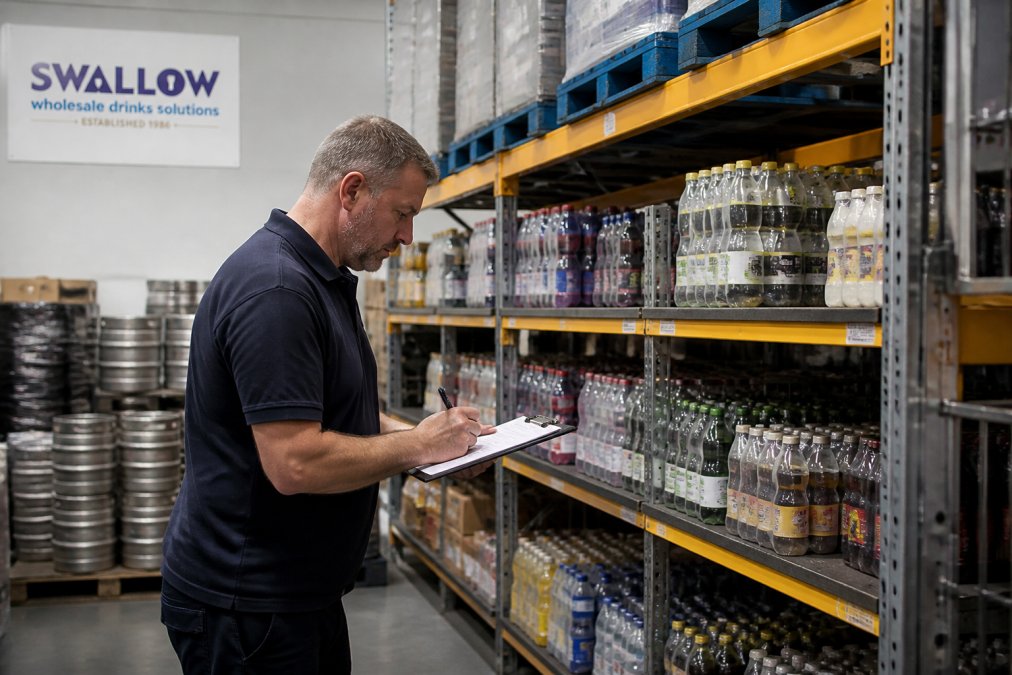
But go deeper. Visit their warehouse if possible. See the stock rotation, the storage conditions, the order-picking process. A supplier with poor stock management will deliver products in poor condition. Ask about their stock system. Can they tell you in real time what's in stock? Can they reserve items for you?
Check their delivery reliability. Ask for references from other hotels they supply. Call those references. Ask specifically: do they deliver when promised? What happens when they can't? How responsive is their customer service?
Swallow Drinks operates across the region with consistent six-day-a-week delivery. We maintain stock of premium wines, spirits, beers, and soft drinks. The key is reliability: your bar shouldn't run dry on a Saturday night because your supplier missed a delivery.
Price matters, but it's not everything. A supplier 5% cheaper isn't a win if they're unreliable or their stock quality is poor. You'll lose revenue from disappointed customers and staff frustration. Look at total cost of ownership: price plus reliability plus service.
Ask about their range. Can they source niche or local labels if you want them? How quickly? Some suppliers stock only mainstream brands. Others can source craft beers, independent wines, or local spirits. If your hotel positions itself around curated selections, this matters.
A drinks supply agreement template provides the structure you need without starting from scratch. It covers the essential clauses: product specifications, pricing, delivery terms, payment terms, minimum orders, exclusivity, and termination.
Start with a template, but customise it for your situation. Generic templates often include language that doesn't fit hospitality. For example, they might not address draught beer maintenance or equipment provided by the supplier. Adjust the language to reflect your actual needs.
Key sections to focus on:
Product Specifications. Define exactly what you're ordering. Don't just say "premium vodka." Specify the brand, bottle size, and quantity. This prevents disputes about what was supposed to arrive.
Pricing and Escalation. State the unit price for each product. Include any volume discounts. Address how pricing changes. Do prices adjust quarterly based on wholesale costs? Is there a price-lock period? How much notice do you get before increases?
Delivery Terms. Specify days and times. "Six-day-a-week delivery, Monday through Saturday, 6 a.m. to 10 a.m." is clear. "Regular delivery" is not.
Payment Terms. State whether you pay on delivery, invoice, or 30 days. If you're a new customer, suppliers often demand payment on delivery until trust builds. That's normal.
Liability and Damage. What happens if stock arrives damaged? Can you refuse it? Do you get credit? How quickly must you report damage?
Confidentiality and Non-Compete. Some suppliers include clauses that restrict your ability to share pricing information or work with competitors. Read these carefully. Overly restrictive clauses can limit your flexibility.
Access a template through your industry association or work with a supplier like Swallow Drinks who can provide a starting point.
Drink procurement involves multiple fee structures. You might negotiate rebates based on volume. You might pay for delivery. You might pay for equipment installation. Understanding the full fee picture prevents surprises.
Drinks supply involves regulatory requirements. You must hold the correct licensing for on-premises sales. Your supplier must be licensed to distribute. Certain products have age restrictions (Age restricted products). Some require specific storage conditions.
Supply chain disruptions happen. Weather delays deliveries. Suppliers face stock-outs on popular items. Your job is building resilience so disruptions don't cripple your operation.
Focus on exclusivity terms, minimum order quantities, termination conditions, delivery frequency guarantees, and price escalation clauses. Ensure the contract specifies service level agreements for delivery reliability, compensation structures including rebates, and compliance with UK liquor licensing requirements. A clear exit strategy protects your hotel if the relationship doesn't work out. Ask your supplier for a drinks supply agreement template that covers all these elements before signing.
Evaluate delivery consistency, stock availability, and responsiveness to urgent requests. Check whether they can meet your six-day-a-week delivery needs without stock-outs on high-volume nights. Ask for references from other hotels they supply. Verify they hold proper UK liquor licensing and have systems to manage asset maintenance if they provide equipment. A supplier with 40 years of experience and a track record in hospitality procurement is more likely to understand your operational challenges.
Exclusive agreements restrict you to one supplier for certain drink categories, which can lock you in but may offer better pricing through volume commitments. Non-exclusive agreements let you source from multiple suppliers, giving you flexibility but potentially higher unit costs. Evaluate whether exclusivity clauses include territorial restrictions that prevent you from sourcing locally or from niche producers. Consider your menu strategy and whether you need the flexibility to pivot quickly to new suppliers or products.
Review annually or whenever significant operational changes occur, such as menu redesigns or changes in guest volume. Use reviews to assess whether the supplier meets service level agreements, whether pricing remains competitive, and whether rebate structures still align with your purchasing patterns. Post-pandemic supply chain resilience is increasingly important, verify your supplier can handle demand spikes and has contingency plans for disruptions. Regular reviews ensure your procurement strategy stays aligned with your hotel's F&B operations and profit margins.
Members of:


AWRS Registration Number: XJAW00000100730