Nov 07, 2026
Last Updated: November 6, 2026
Quick Summary
Keg wine benefits small hospitality venues through fresher wine in the glass, faster service, less packaging waste and better control over portions and cost per glass. Because the wine stays sealed until poured, it avoids the air exposure that spoils opened bottles. It suits venues with steady, predictable wine sales.
Keg wine is becoming a practical option for small pubs, bars and restaurants across the West Midlands.
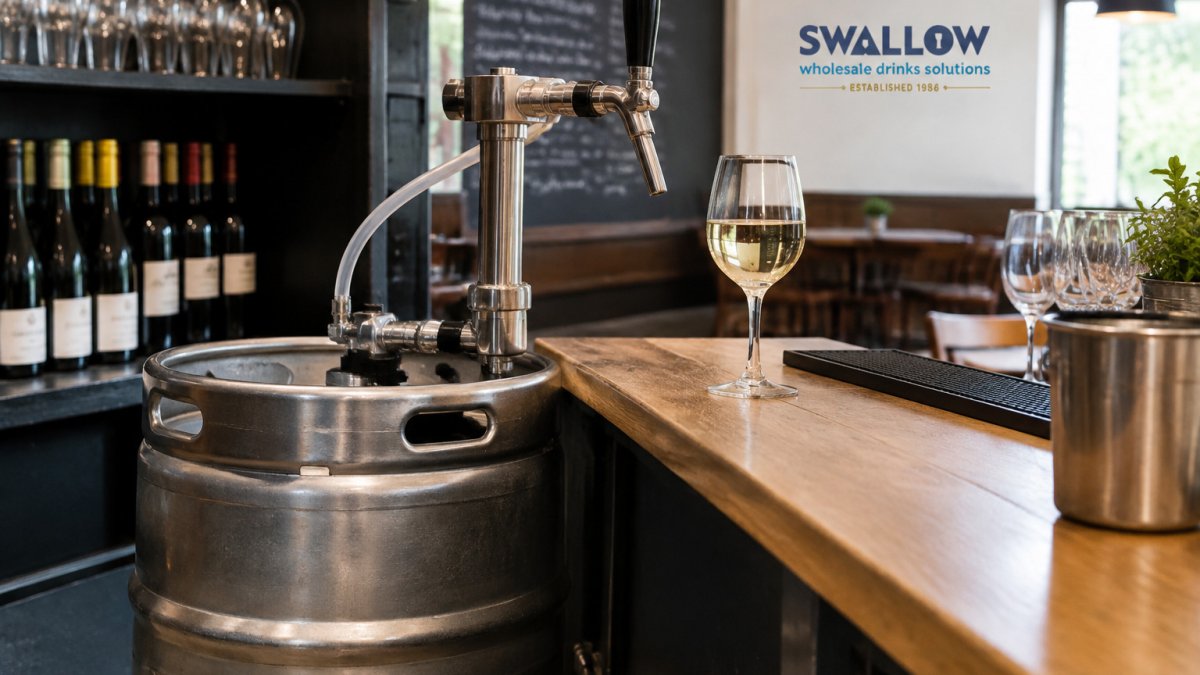
Wine on tap is wine served from a keg through a dispensing line, not from an opened bottle.
Wine on tap is often cited for a few recurring benefits:
The Journal of Cleaner Production has published research on keg-wine technology as a sustainability innovation, and it links the approach to reduced packaging waste and better resource efficiency Journal of Cleaner Production research on keg-wine technology.
Keg wine also suits venues with steady, predictable wine sales. A quieter restaurant that opens one bottle a week may find bottles simpler, while a busy bar that pours through a house white every evening has more to gain.
A wine on tap system has four parts that have to work together: the keg, the gas or pressure source, the dispenser and chiller, and the food-grade line that carries wine from the cellar to the tap. Get any one of them wrong and the wine in the glass suffers, even if the keg itself is sound.
Small-venue systems typically combine a keg coupler, a regulator to hold back pressure, a wine chiller or cooled line, and a tap at the bar. The wine stays sealed inside the keg until it is poured, which limits contact with air, the single biggest cause of spoiled wine in an opened bottle.
Keg capacity is the first decision, because it drives storage, cash tied up in stock, and how long a keg sits connected. The common formats available in the trade are:
A useful rule of thumb is to size the keg so it empties within the freshness window your supplier recommends once tapped. Match the keg to your weekly pour rate, not to the best price per litre.
White and rosé wines are best served at around 6-8°C and reds at around 14-16°C, so the chiller and line cooling need to hold those temperatures at the tap, not just in the cellar.
Line length and bore also affect pour pressure. Too much pressure and the wine foams or pours too fast; too little and it trickles. Your installer should balance the regulator to the line length and the tap height, then test the pour before handover.
Line cleaning is not optional. Wine lines need regular cleaning, and more often on low-volume lines where wine sits in the tubing between pours. Cleaning involves flushing with a food-grade line cleaner, rinsing thoroughly, and logging the date. Keep a written log behind the bar, it protects wine quality and gives you a record if a customer ever questions a pour.
Before you commit, ask your supplier to confirm:
Equipment cost varies with the number of taps, whether lines are cooled, and whether you need a new chiller. You can browse the range and register for a trade account at Swallow Drinks Trade Ordering.
Restaurants often choose wine on tap to speed up service. A tap pour takes a few seconds, while opening and decanting a bottle takes longer, especially during a Friday rush.
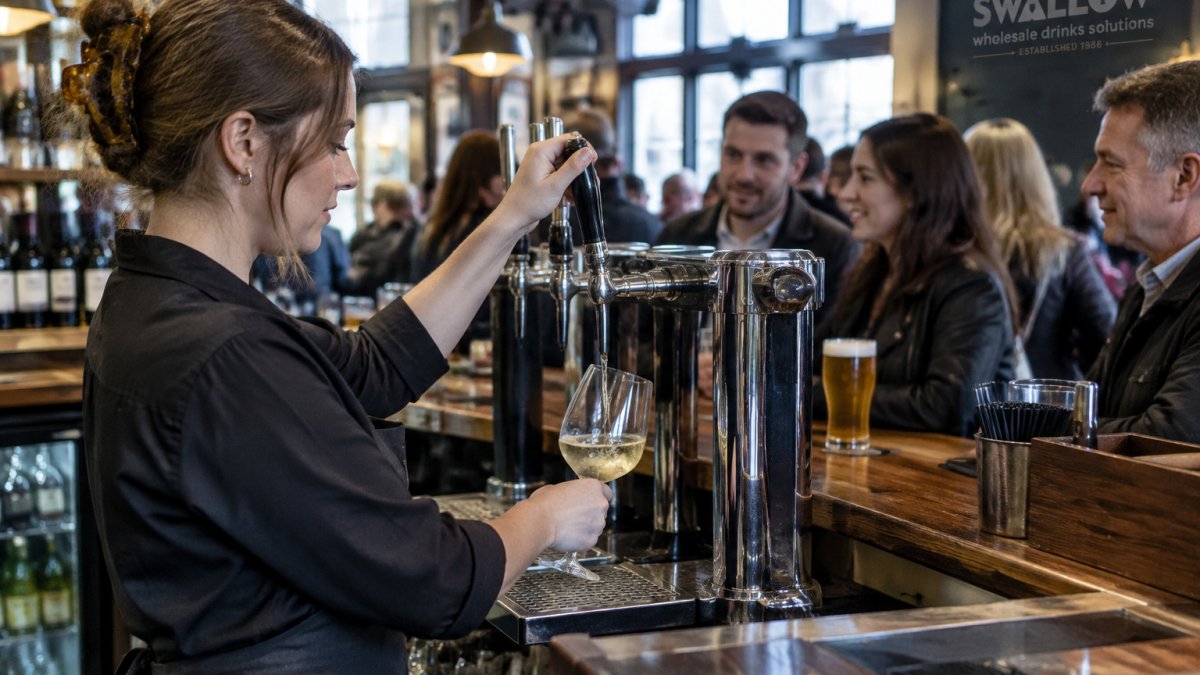
Pour consistency matters just as much. Every glass from a calibrated tap holds the same measure, which makes costing easier and keeps portions honest across staff shifts.
Keep the house wine list short. Two or three well-chosen wines on tap usually serve a restaurant better than a long list that needs many kegs in stock at once.
Bars need the system sized to their trade. A high-volume bar may need several taps and larger kegs, while a small bar might run one or two lines.
Setup is best left to a qualified installer. Lines must be cleaned on a set schedule, because wine residue left in tubing can spoil the next pour. Ask your supplier for a written cleaning routine and keep a log of when lines were last cleaned.
Line maintenance is where many small venues run into trouble. A poorly cleaned line can taint the wine, so build cleaning into your weekly tasks rather than leaving it until something tastes wrong.
Wine on tap keeps well because the keg limits air exposure. Oxidation is the main threat to wine quality, and a sealed keg slows it down compared with an opened bottle.
Quality still depends on handling. Store kegs at the temperature the producer recommends, keep lines clean, and serve the wine at the right temperature. A warm line or a dirty tap will spoil even the best wine.
If a keg is left connected for longer than the recommended period, the wine can lose its freshness, so note the date each keg was tapped and rotate stock regularly.
Waste is one of the clearest reasons venues give for switching to keg wine. An opened bottle that does not sell within a day or two is usually lost, while a keg keeps its contents sealed until it is poured.
Keg service also cuts the number of partly used bottles behind the bar. Fewer open bottles mean less stock written off at the end of the week.
Premium sparkling wines are generally better suited to bottle service, so keep them for occasions where a bottle is what the customer wants. Use keg wine for the everyday glass.
Keg service changes how much wine is lost, and the article's main points on waste compare the two formats side by side.
| Factor | Opened bottle | Keg (wine on tap) |
|---|---|---|
| Air exposure | Exposed once opened | Sealed until poured |
| Unsold stock at week's end | Often written off | Less stock written off |
| Partly used bottles behind bar | Many open at once | Fewer open containers |
| Best use | Premium and sparkling wines | Everyday house glass |
Keg wine is not right for every venue, and a candid look at the risks is more useful than a sales pitch. The operators who get the most from wine on tap are the ones who went in with their eyes open about equipment, maintenance, choice and demand.
You do not need a spreadsheet to decide whether keg wine suits your venue. Work through these questions honestly:
A quiet restaurant that opens one bottle of a given wine a week, a venue with a deliberately broad and rotating list, or a business with no reliable space for kegs will usually find bottles simpler and cheaper to run. Premium and sparkling wines are also better suited to bottle service, so keep them for occasions where a bottle is what the customer wants and use keg wine for the everyday glass.
A sensible middle path for a small venue is a trial: run one line of your best-selling house wine for a few months, log pours, waste and cleaning time, then decide whether to expand. If you are weighing that against buying in bulk, see whether bulk wine purchasing is worth it for small bars. If you are unsure which of your wines would carry a keg, talk to Swallow Drinks, with 40 years supplying the on-trade, we can help you pick a trial line and register for a trade account.
Once you have decided whether keg wine suits your venue, the next step is choosing a supplier who can deliver consistently. Swallow Drinks supplies wine, beer, spirits and soft drinks to the on-trade across Birmingham and the surrounding areas.
To buy from us, register for a trade account at https://webtrade.swallow.uk.com/. Our range also covers Non Alcoholic Drinks, which you can browse on our product pages.
For a clearer comparison of options before you order, read our guide to premium wine suppliers for restaurants, or see whether bulk purchasing suits your volumes. Pricing depends on quantity, dates and delivery, so request a quote for your venue's needs.
Keg wine can reduce bottle waste, because one keg replaces many single-use bottles, and it helps venues pour a consistent measure each time. Wine dispensed from a sealed keg is also protected from air once tapped, which can help it stay fresher across service than an open bottle. Swallow Drinks can advise on which wines suit draught service, and you can register for a trade account at https://webtrade.swallow.uk.com/ to start the conversation.
Pricing depends on the wine, the keg size, delivery schedule and your current equipment, so there is no single saving that applies to every venue. Keg service can reduce some costs, such as bottle handling and waste, but it also requires dispensing equipment and regular line maintenance. For current prices and a quote tailored to your volumes, contact Swallow Drinks through your trade account at https://webtrade.swallow.uk.com/.
Shelf life once tapped depends on the wine, how well the keg is sealed and kept cool, and how well the line is cleaned. Keeping the system cold and dispensing regularly helps maintain quality. Ask your supplier for the recommended serving window for each wine you order, and follow the guidance provided with your dispensing equipment.
Members of:


AWRS Registration Number: XJAW00000100730