Aug 17, 2026
Last Updated: August 17, 2026
Bar menu psychology is the deliberate application of behavioural science and design principles to influence how customers order and what they choose to spend money on. It's not manipulation, it's understanding how your guests make decisions and structuring your menu to reflect their preferences whilst improving your profit margins.
The core insight is simple: customers don't read menus sequentially. They scan. Their eyes follow patterns. Certain colours catch attention. Prices anchor expectations. Descriptive language triggers cravings. When you understand these patterns, you can design a menu that guides guests toward your most profitable drinks without feeling forced.
This matters because independent bars operate on thin margins. A 2-3% improvement in average transaction value or a shift toward higher-margin spirits can mean the difference between breaking even and building a sustainable business. Menu psychology isn't about tricking anyone, it's about making your best offerings visible and appealing.
At Swallow Drinks, we've spent over 40 years working with bar operators across the region, and we've seen firsthand how menu design directly impacts what moves off the shelves. The bars that think strategically about their menus don't just sell more, they sell smarter.
The honest answer: yes, but only if you implement it correctly and measure the right metrics.
A well-designed menu doesn't guarantee success. A poorly executed one almost guarantees waste, wasted shelf space, wasted staff attention, wasted stock that doesn't move. The ROI depends on three things: your current baseline, how much you're willing to change, and whether you actually track what works.
Many bar operators see measurable improvements in their top-line revenue within the first month of restructuring their menus. What they typically report includes higher attachment rates (customers adding a second drink to their order), reduced decision fatigue (faster ordering means faster table turnover), and a natural shift toward higher-margin items without customers feeling pressured.
The real cost is time. Redesigning a menu takes thought. Testing it takes discipline. Tracking the results takes systems. If you're running a small independent bar and you're already stretched thin, the upfront effort might feel like a luxury you can't afford. But consider this: a 5% increase in average drink spend across a busy Friday night is real money. Over a year, that compounds.
Where menu psychology fails is when operators treat it as a one-time project. You design a menu, print it, and assume it's done. Markets shift. Customer preferences change. New stock arrives. Your menu becomes outdated within weeks. The bars that see sustained ROI are the ones that review and refine their menus quarterly, testing small changes and measuring what happens.
A wine list is often the first place bars lose money through poor organisation. Customers feel overwhelmed, staff can't make recommendations quickly, and bottles sit untouched because they're buried in a confusing layout.
Start with structure. Organise by style, not just region. Most drinkers think "I want something light and crisp" or "something full-bodied and rich," not "I want a Burgundy." Group your wines by how they taste and what they pair with: crisp whites, fuller whites, light reds, medium reds, full reds, sparkling. Within each category, list by price ascending. This does two things: it helps customers self-select, and it creates natural anchor points where your margins sit.
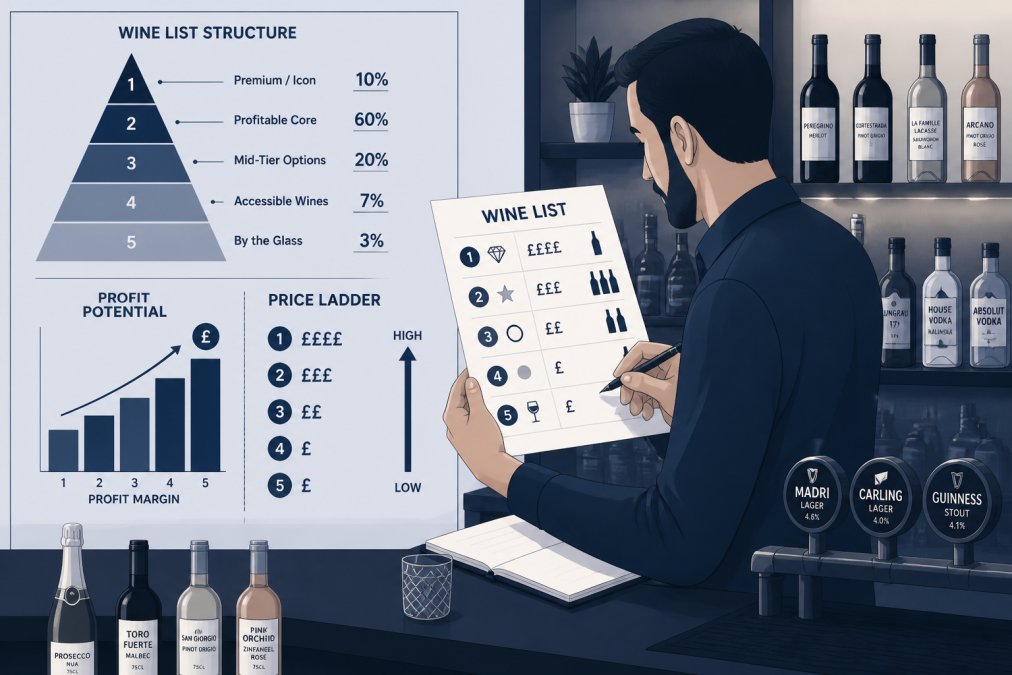
Your house wine should be your profit engine. This is where you place your highest-margin stock. Many bars make the mistake of treating house wine as a loss leader, cheap, forgettable, barely mentioned. Instead, source something decent that costs you £5-7 per bottle and sell it for £18-22 per glass. Train your staff to recommend it first. If you're moving 15-20 glasses per night, that's £150-300 in margin before you've sold a single premium bottle.
For your premium selections, follow the golden triangle principle: place your best-margin wines in the top-left corner, the middle, and the bottom-right of your wine list. These are the positions customers' eyes naturally land on. Your second-tier wines (good quality, good margin) go in the obvious places. Your lowest-margin wines or slow movers go in the corners and edges.
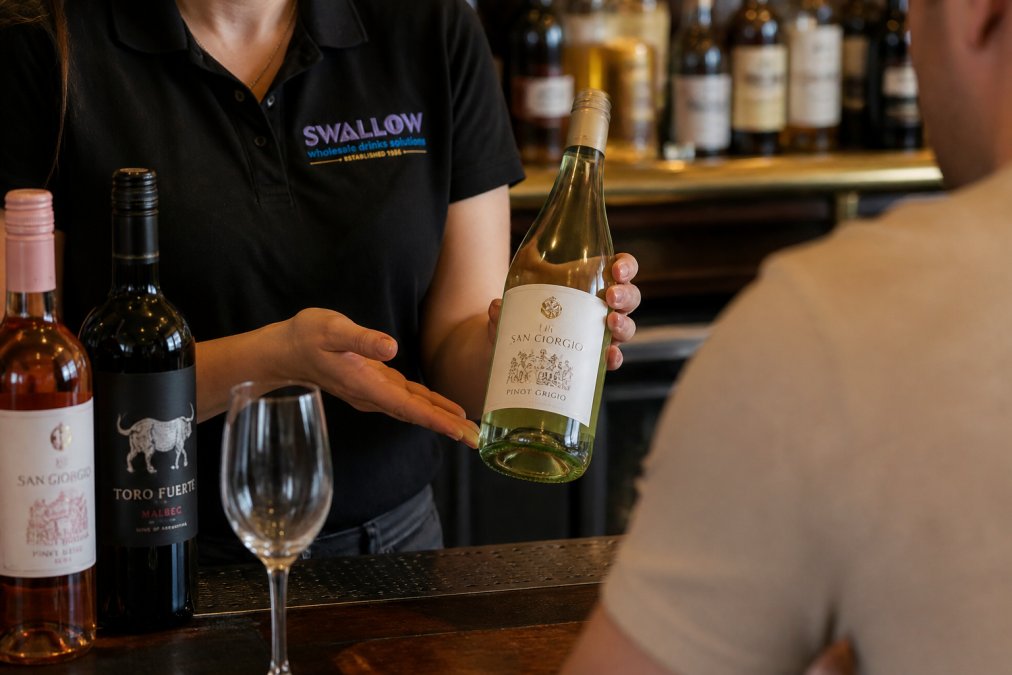
Swallow Drinks can help you source wine that balances quality with margin. We work with independent operators to build wine lists that reflect their venue's style whilst hitting their profit targets. Our team understands the on-trade sector, we know what moves and what sits, and we can advise on stock that will work for your specific customer base.
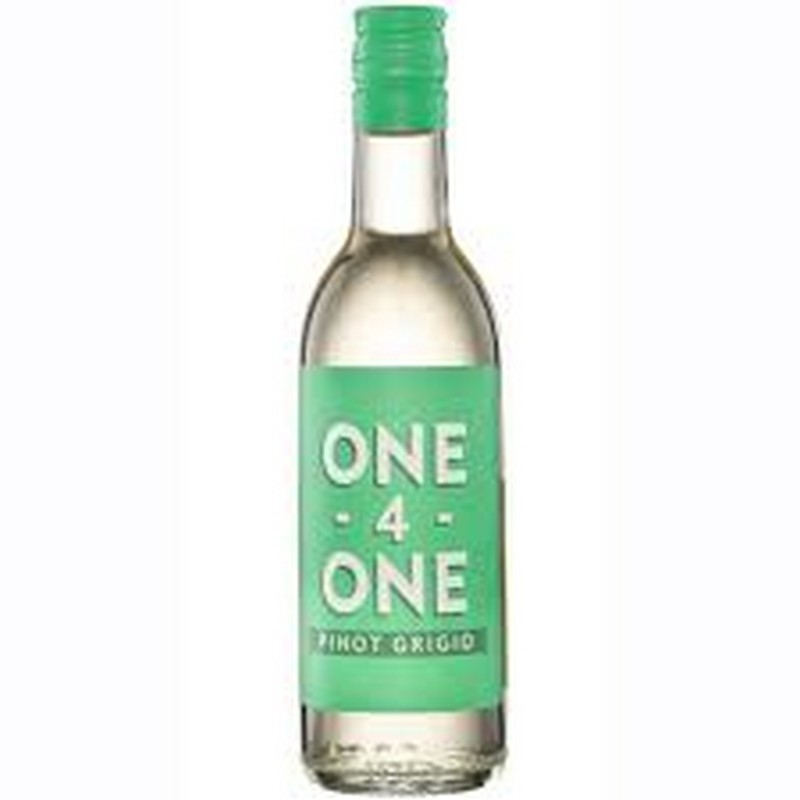
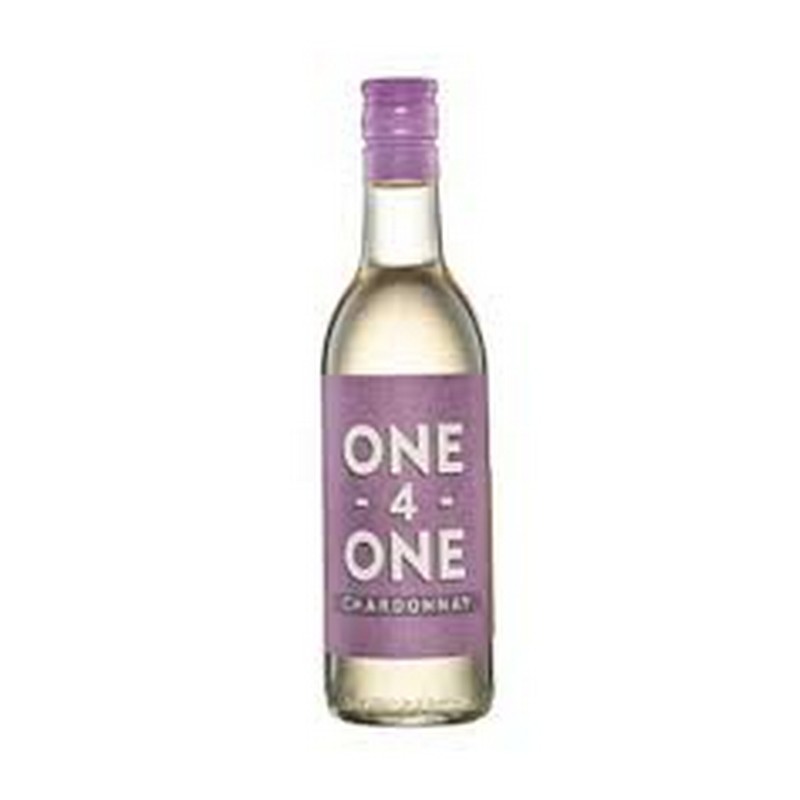
Consider single-serve options like ONE4ONE PINOT GRIGIO 24 X 187ML (V) 11.5% at £37.24 per case or ONE4ONE CHARDONNAY 24 X 187ML (V) 12.5% at £37.24. These work well for bars where customers want a glass without committing to a full bottle, and they reduce waste from open bottles.
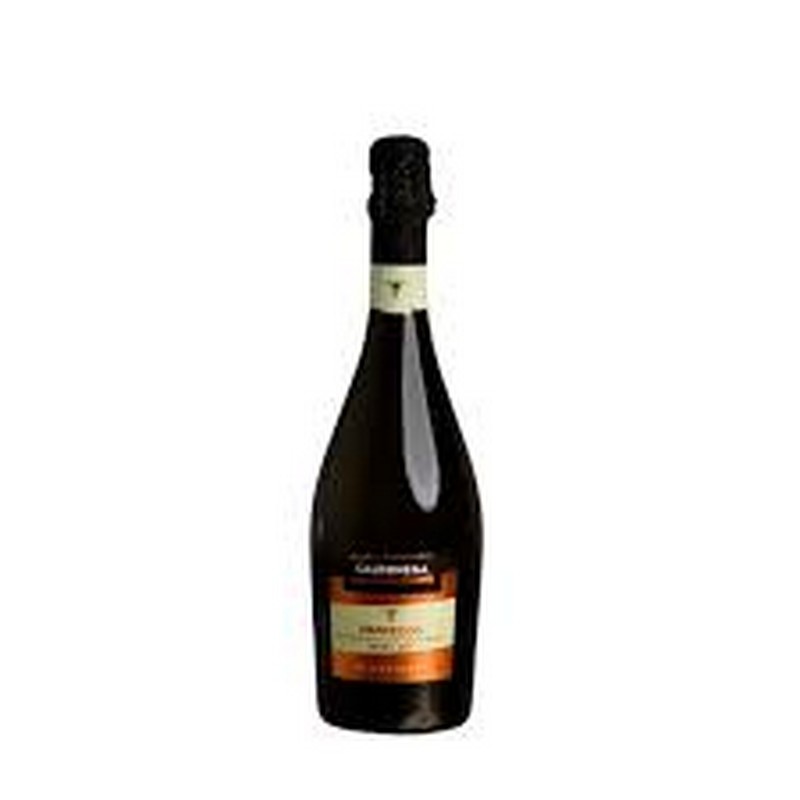
For sparkling, HOUSE PROSECCO 11% 75CL at £7.89 gives you a solid margin on a popular category. Prosecco moves faster than Champagne in most independent bars, and customers perceive it as premium without the Champagne price point.
Menu engineering is the strategic placement and description of items to influence purchasing behaviour. It works because it's based on how people actually decide, not how we think they should.
A practical example: you have three spirits that serve similar customers but different margins. Spirit A costs you £12 and you sell it for £4.50 per measure. Spirit B costs you £8 and you sell it for £4.50. Spirit C costs you £6 and you sell it for £4.50. Without menu engineering, you sell them equally. With it, you can shift volume toward C and B whilst keeping A available for customers who specifically ask.
How? Placement and description. List Spirit C first, with a description that makes it sound appealing: "Smooth, versatile, award-winning." List Spirit A lower, with a shorter description. Train your staff to recommend C or B as the default unless the customer specifies otherwise. Within a month, you'll see a measurable shift in your mix without losing sales, you're just moving them toward better margin.
Another example: cocktails versus straight spirits. A cocktail that costs you £2 in ingredients and sells for £8 has better margin than a £4.50 spirit measure. But customers don't always think "cocktail." They think "drink." If your menu emphasises cocktails with evocative names and descriptions, and your spirits are listed plainly, you'll naturally shift toward cocktails. That's menu engineering at work.
The mistake independent operators make is treating menu engineering as dishonest. It's not. You're not hiding anything. You're presenting your best options in a way that helps customers find what they want faster and helps you move stock efficiently. That benefits everyone.
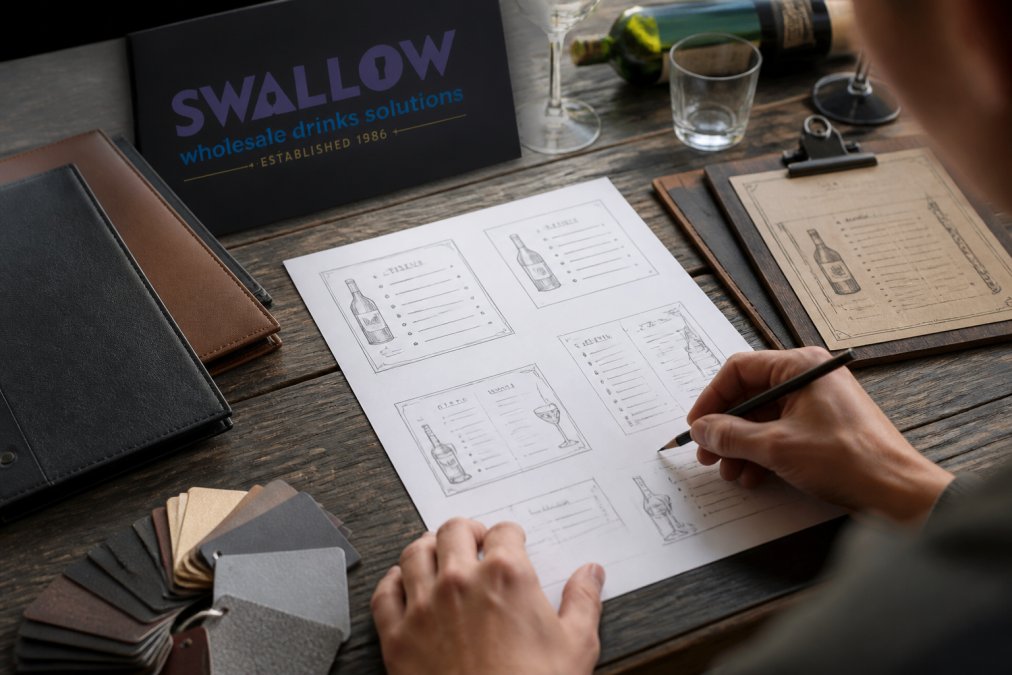
Menu design is where psychology becomes visible. Layout, colour, typography, and language all influence purchasing behaviour.
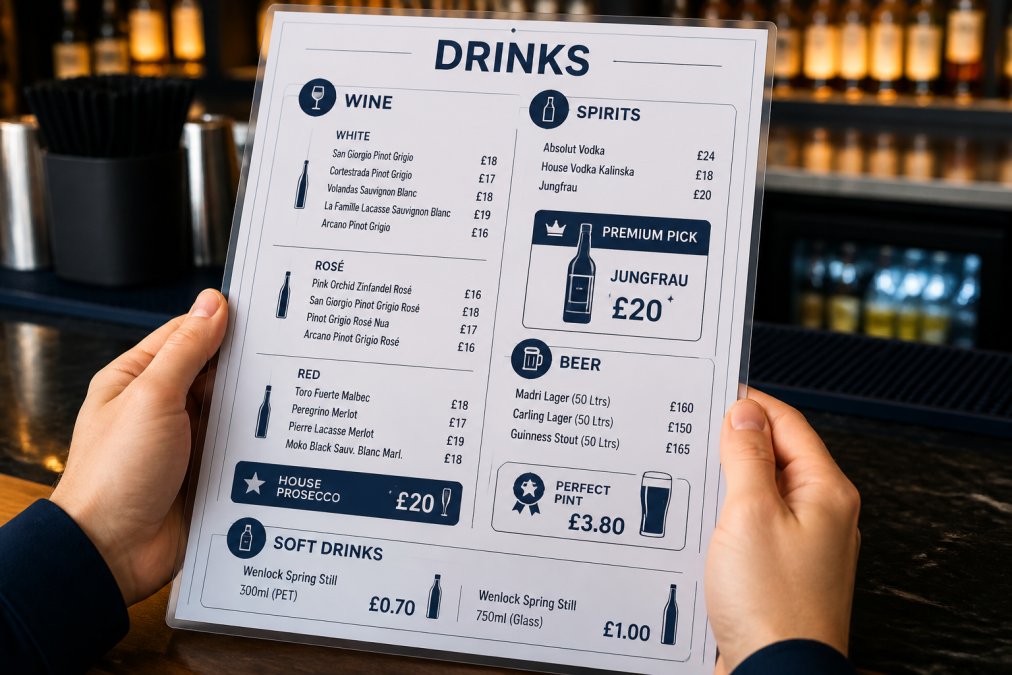
Start with the golden triangle. Your customers' eyes naturally move to three points on a menu: top-left, centre, and bottom-right. Place your highest-margin or most profitable items in these zones. This isn't guesswork, it's based on eye-tracking studies of how people scan printed materials. Your second-tier items go in obvious secondary positions. Everything else fills the gaps.
Colour psychology matters more than most operators realise. Warm colours (reds, oranges, golds) stimulate appetite and encourage spending. Cool colours (blues, greens) are calming but don't drive purchasing. If your menu uses a dark background with gold accents, your eyes are drawn to the gold sections. If those sections contain your premium drinks, you've just increased their visibility without changing a word.
Typography affects readability and perceived quality. Serif fonts feel traditional and premium. Sans-serif fonts feel modern and clean. All-caps text is harder to read but draws attention. Small text makes items feel less important. Your house wine should be in a font size that matches your premium selections, equal visual weight means equal perceived value.
Descriptive language is where many bars leave money on the table. "Vodka" doesn't sell. "Premium Russian vodka, smooth finish, perfect for martinis" does. The description should trigger a sensory experience. Use words like "crisp," "smooth," "bold," "silky," "bright." Avoid generic terms like "nice" or "good." Specificity sells.
Price anchoring is a powerful tool. If your most expensive drink is £15, everything else feels cheaper. If your most expensive drink is £8, the entire menu feels budget. This doesn't mean you need to add expensive items you don't sell, but your menu should have a price ceiling that makes everything below it feel reasonable.
Spacing matters. A crowded menu feels chaotic and makes decisions harder. A menu with breathing room feels premium and helps customers focus. Limit your selections. Most bars try to list too many options, which creates decision fatigue. Customers actually order faster and spend more when there are fewer choices, typically 15-20 drinks per category rather than 40.
The biggest mistake is treating the menu as static. You print it, laminate it, and assume it's done for the next two years. Markets move. Customer preferences shift. New stock arrives. Your menu becomes outdated within weeks.
A second mistake is listing everything without hierarchy. When every item gets equal visual weight, nothing stands out. Your margin leaders get lost alongside your slow movers. Customers feel overwhelmed and take longer to decide.
A third mistake is poor descriptions. "Red wine" tells the customer nothing. "Full-bodied red with dark fruit and spice notes" gives them something to hold onto. Staff can recommend faster. Customers feel more confident ordering.
Many operators also fail to track what's actually happening. You change your menu, but you don't measure whether sales improved, whether margin improved, or whether customer satisfaction shifted. Without data, you're guessing. You can't refine what you don't measure.
Another common error is ignoring your specific customer base. Menu psychology principles are universal, but their application is local. A wine bar in a student area needs a different menu strategy than a gastropub in a business district. Your menu should reflect who actually walks through your door, not who you wish would.
Finally, operators often underestimate the power of staff training. Even the best-designed menu fails if your staff don't understand it or can't articulate why they're recommending something. Your team needs to know your margins, your story, and your strategy. When they do, they become your most effective marketing tool.
The investment in menu psychology is primarily time, not money. You're not buying software or hiring consultants, you're thinking strategically about what you already have and how you present it.
For an independent bar, the payoff typically shows within 4-8 weeks. A 5% improvement in average transaction value is realistic if you implement the principles correctly. On a bar doing £3,000 per week in drinks revenue, that's £150 additional margin per week, or £7,800 per year. The time investment to achieve that is perhaps 20-30 hours of work upfront, plus ongoing refinement.
The question isn't whether menu psychology works. It does. The question is whether you have the bandwidth to implement it properly. If you're already stretched managing stock, staff, and service, adding a menu redesign project might feel like too much. But consider outsourcing the thinking: work with your supplier to understand your margin profile and get recommendations on how to restructure.
Swallow Drinks has worked with independent operators across the region to help them think through their menu strategy. We understand your cost structure, we know what stock moves, and we can advise on how to position your offerings for better margin. We also offer access to our trade ordering platform at swallow.uk.com, which makes it easier to manage your stock and adjust your orders based on what's actually selling.
The honest truth: menu psychology isn't a magic fix. It won't save a bar with poor service or a bad location. But for a bar with decent fundamentals, decent location, decent service, decent stock, menu psychology can unlock 5-15% additional margin without raising prices or compromising customer experience. That's worth the investment.
Menu psychology works because it's based on how people actually make decisions, not how they should. For independent bar operators, the ROI is real and measurable, but only if you implement it thoughtfully and track what happens. Start with your wine list, apply the golden triangle principle, and train your staff to recommend strategically. Work with a supplier like Swallow Drinks who understands the on-trade sector and can help you source stock that balances quality with margin. The time you invest in getting this right will compound into real additional revenue.
Yes, when applied correctly. Menu psychology influences purchasing behaviour through visual hierarchy, pricing anchors, and descriptive language. Independent bars that implement strategic placement, colour psychology, and decoy pricing report measurable increases in higher-margin item sales. The key is testing what works for your specific customer base rather than applying generic tactics.
The golden triangle positioning (top right corner, centre, top left) captures eye-scanning patterns and drives higher-value selections. Decoy pricing, placing a premium option near your target item, anchors guest perception of value. Descriptive copy that emphasises craft, origin, or taste reduces decision fatigue. Grouping similar drinks by style rather than price also reduces ordering friction and increases cross-selling opportunities.
Start with 12-18 wines organised by style (white, red, sparkling, rosé) rather than region. Use price anchoring: include one premium option per category to make mid-range selections feel like better value. Feature 3-4 house wines as entry points, Swallow Drinks offers options like House Prosecco at £7.89 per bottle that work well for this. Rotate featured wines monthly to reduce decision fatigue and test profitability across your stock.
Avoid cramming too many options into one page, this increases decision fatigue and reduces conversion. Don't use identical descriptions for every item; vary your language to highlight unique attributes. Never place your highest-margin drinks in the middle of the list where eye-scanning patterns miss them. Avoid inconsistent pricing presentation; use the same format throughout. Finally, don't ignore your physical menu layout; poor contrast, small fonts, or faded colours reduce the effectiveness of even well-designed psychology tactics.
Members of:


AWRS Registration Number: XJAW00000100730