Aug 13, 2026
Last Updated: August 13, 2026
Your bar's profitability depends on three metrics: revenue, cost of goods sold (COGS), and operational expenses. Most bar owners focus on revenue but neglect costs, where margins slip away.
Gross profit is what remains after subtracting the cost of drinks from total sales. Net profit is what's left after all expenses, wages, rent, utilities, and insurance. The difference between thriving bars and struggling ones comes down to understanding and controlling these numbers.
At Swallow Drinks, we've worked with independent bars across the region for over 40 years. The pattern is consistent: venues that track margins weekly outperform those checking quarterly. Small leaks compound quickly. A 2% variance in pour costs might seem insignificant until you realise it's costing thousands annually.
The goal is running a sustainable operation where pricing reflects costs, quality, and market position. When you understand your numbers, you make confident decisions about menu engineering, supplier relationships, and staff incentives.
Pour cost is the percentage of drink sales going directly to drinks cost. It's calculated as: (Cost of Drinks Sold ÷ Drink Revenue) × 100. If you spend £500 on spirits weekly and generate £2,000 in spirit sales, your pour cost is 25%.
The industry benchmark sits between 20-28%, depending on venue type. Upmarket cocktail bars typically run 25-30% because premium ingredients justify higher costs. High-volume nightclubs operate at 18-22% through standardised, efficient drinks. Gastropubs typically land around 24-26%.
To calculate actual pour cost, use: (Opening Stock + Purchases - Closing Stock) ÷ Drink Revenue × 100 = Pour Cost
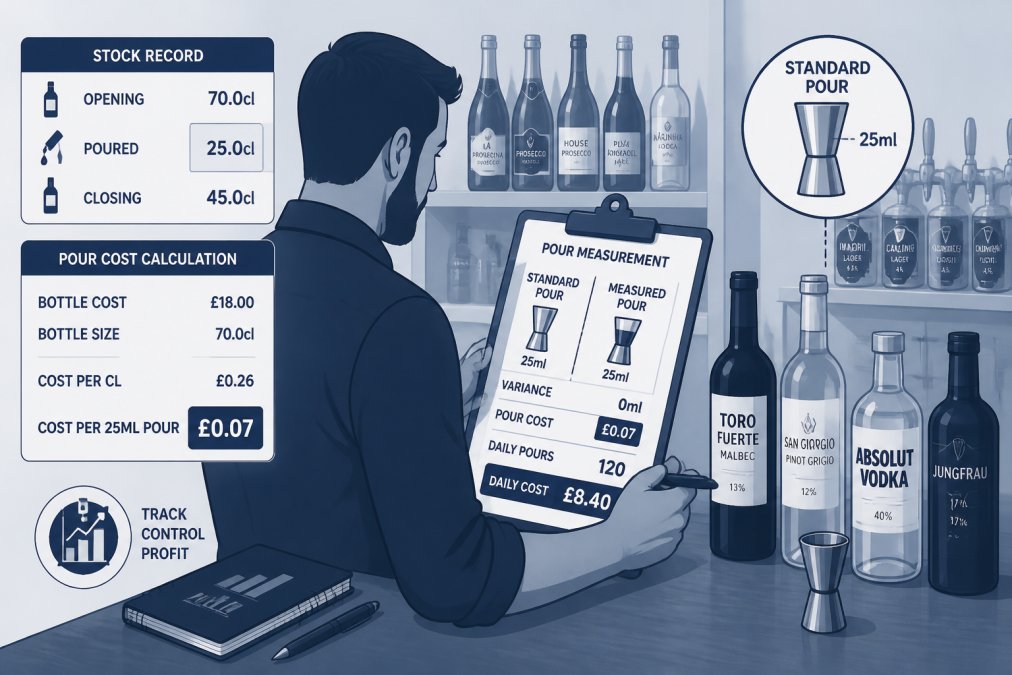
Most venues underestimate pour cost because they don't account for spillage, over-pours, and complimentary drinks. A standardised recipe system eliminates guesswork. If your vodka tonic should contain 50ml of vodka, every bartender should measure it consistently.
Menu engineering means understanding which drinks generate the most profit and positioning them strategically.
Categorise drinks into four groups based on profitability and popularity:
Stars are high-profit, high-volume drinks, your cash generators. Feature them prominently and train staff to recommend them. A well-crafted house cocktail using mid-range spirits delivers 65-70% gross profit while feeling premium.
Cash Cows are high-profit but lower volume. Keep them on the menu but don't promote aggressively.
Dogs are low-profit, low-volume drinks. Remove them and replace with better performers.
Question Marks are low-profit but high-volume. These entry-level drinks drive traffic but damage margins. Consider price increases or recipe modifications to improve profitability.
Strategic pricing means understanding price elasticity. A £1 increase on a house vodka tonic might reduce volume by 5-10%, but margin gains typically outweigh volume loss. Premium spirits command higher prices because customers perceive greater value.
Dynamic pricing based on demand is increasingly common. Happy hour pricing, weekend premiums, and seasonal adjustments match price to perceived value and demand patterns.
| Drink Category | Typical Pour Cost | Suggested Markup | Retail Price Example |
|---|---|---|---|
| House spirits | 18-22% | 4.5-5x | £4.50-5.50 |
| Premium spirits | 20-25% | 4-4.5x | £6.50-7.50 |
| House wine | 22-28% | 3.5-4x | £5.50-6.50 |
| Cocktails | 20-28% | 3.5-4.5x | £8.00-12.00 |
Adjust your menu quarterly based on actual sales data. Remove underperformers, test new items, and double down on winners. This iterative approach keeps your menu profitable and relevant.
Bar waste comes from four sources: spillage, over-pouring, spoilage, and theft. Each is controllable with proper systems.
Spillage during service is inevitable but minimisable. Wet floors, rushed service, and poor technique increase breakage. Invest in non-slip mats and ensure adequate lighting.
Over-pouring happens when bartenders free-pour without measures. A bartender consistently pouring 55ml instead of 50ml costs 10% extra on every spirit-based drink. Implement measured pours using jiggers or bottle pourers. It slows service initially but recovers within two weeks.
Spoilage affects perishable items: opened wines, syrups, juices, and cordials. Implement FIFO (first in, first out) stock rotation and date everything. Discard opened bottles after 3-5 days depending on product.
Theft is often opportunistic rather than malicious. Implement POS controls requiring manager approval for voids and discounts. Conduct random stock audits. Create a culture where accountability is normal.
Review stock monthly and identify items with zero sales in 30 days. Either remove them or create promotional opportunities to move them.
Effective stock control starts with accurate stock counts. Implement weekly counts focused on high-value items: premium spirits, craft beers, and wines. These represent 60-70% of stock value but only 20-30% of SKU count.
Use a spreadsheet or stock management system to track opening stock, purchases, sales, and closing stock. Variance above 3-5% indicates problems: poor measuring, spillage, or theft.
Dead stock is stock unsold for 30+ days. It represents cash trapped in bottles. Identify dead stock monthly and take action: create a promotion, bundle it, or offer to staff at cost. If nothing works within 60 days, remove it.
When sourcing through Swallow Drinks, work with your account manager to understand which items move quickly in your market. With over 40 years serving independent venues, Swallow Drinks has visibility into what sells and what sits. This insight helps you avoid dead stock before purchasing.
A supplier focused on your success becomes a strategic partner, not just an order-taker.
Your staff are your most powerful profit lever. A trained bartender can increase average transaction value by 15-25% without alienating customers. The key is recommending genuinely better products, not just more expensive ones.
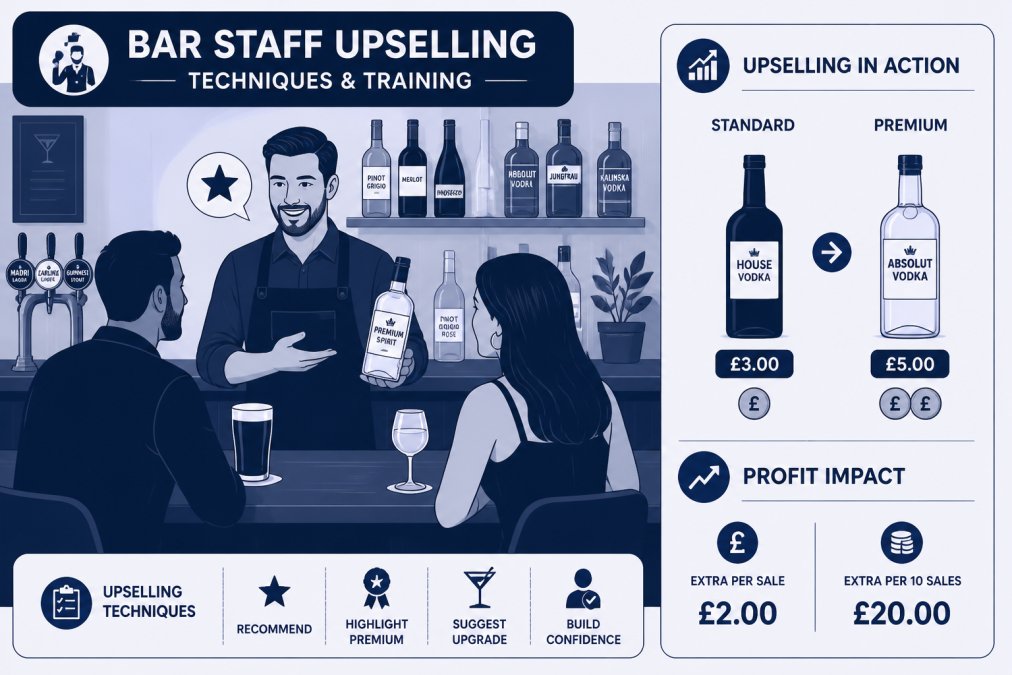
Train staff on product knowledge. Most bartenders can't articulate why premium spirits justify higher costs. When staff understand flavour profiles, production methods, and use cases, they sell with confidence.
Use suggestive selling. Instead of "What would you like?", ask "Would you prefer our house vodka or a premium option?" This frames upselling as a choice between options, not a hard sell.
Create tiered recommendations. Offer three options: house, premium, and ultra-premium. Most customers choose the middle option, making the premium option seem reasonable.
Incentivise upselling. Consider small commissions or bonuses for staff achieving target upsell rates. If your average transaction is £12 and you want £13.50, offer staff 20p per transaction hitting that threshold.
Focus on experience, not price. Train staff to sell the story: "This is a single-malt whisky from a small Scottish distillery" rather than "This costs £3 more."
Implement monthly training covering product knowledge and upselling techniques. Rotate between product categories so staff build expertise across your range.
Your supplier relationship directly impacts margins through pricing, payment terms, and product availability. Many venues treat suppliers transactionally, missing opportunities.
Strong supplier relationships unlock benefits. First, better pricing through volume commitments or loyalty arrangements. Consistent weekly orders earn better rates than one-off purchases. Second, priority access to limited stock. Reliable, communicative customers get prioritised during allocation. Third, product consultation. A supplier understanding your venue recommends items fitting your market, reducing dead stock and improving margins.
When working with Swallow Drinks, communicate your business clearly. Share sales data, menu strategy, and growth plans. This context helps your account manager make recommendations that work for you.
Negotiate payment terms thoughtfully. Cash-on-delivery is simplest but ties up working capital. 7-14 day terms improve cash flow. Some suppliers offer early-payment discounts, paying in 7 days instead of 14 might earn 2-3%, compounding significantly annually.
Request pricing transparency. Understand the difference between your cost and the supplier's cost. Ask about volume discounts at different order levels. Know what you're paying and why.
Many venues benefit from registering on their supplier's trade platform. Swallow Drinks operates a trade ordering system at https://webtrade.swallow.uk.com/, allowing registered venues to access pricing, place orders, and track deliveries online. This transparency and convenience often leads to better pricing and efficient ordering.
Schedule quarterly reviews to discuss performance, pricing, and upcoming needs.
Improving your bar's profit margins isn't about dramatic changes, it's about systematic improvements across multiple areas. Controlling pour costs, engineering your menu strategically, reducing waste, and managing stock all compound into meaningful margin expansion. When your team is trained to upsell and your supplier relationship is strong, gains accelerate.
Consistently outperforming venues don't do one thing exceptionally well. They do many things competently and measure them regularly. Start with weekly pour cost tracking and standardised recipes. Add menu engineering within 4-6 weeks. Layer in staff training over the following month. Each addition builds on the previous one, creating a culture where profitability is managed deliberately.
If you're sourcing through Swallow Drinks, you're working with a partner understanding independent hospitality. With over 40 years in business, we've seen what works. Our product range supports tiered menu strategies. Our account managers help you build a stock profile matching your margins and market. Get started by exploring our trade ordering platform at https://webtrade.swallow.uk.com/ and connecting with our team to discuss your specific needs.
Most bars aim for a gross profit margin of 60-75% on drinks, though this varies by venue type and location. Your prime cost (staff wages plus COGS) should typically not exceed 60-65% of revenue. The key is tracking your bar pour cost percentage regularly, if it climbs above 20-25%, you're losing profitability. Use your POS reporting to monitor this closely and adjust pricing or portion sizes if needed.
Bar pour cost calculation is straightforward: divide the cost of alcohol sold by your total drink sales revenue, then multiply by 100. For example, if you spent £500 on spirits during a week and sold £2,500 in drinks, your pour cost is 20%. Track this weekly to spot trends. Many bars find their actual pour cost drifts higher than expected due to waste and spillage, so regular measurement reveals where to improve your bar profit margins.
The most effective approach combines standardised recipes, regular stock rotation using FIFO (first in, first out), and staff accountability. Train your team to measure portions consistently, even 5ml overpours add up across hundreds of drinks. Implement spillage tracking and conduct monthly stocktakes to identify variance. Dead stock ties up cash, so rotate slower-moving items into promotions. Many independent bars find that simply tracking waste weekly reduces it by 15-20%.
Well-trained staff directly improve your bottom line through upselling, reduced spillage, and accurate pouring. Train bartenders to suggest premium spirits, craft beers, and high-margin cocktails, these often carry 40-50% margins compared to 20-30% on standard drinks. Standardised recipe training reduces pour variance, cutting waste. Staff who understand your profit and loss statement are more careful with stock. Regular training also reduces staff turnover, saving on recruitment and onboarding costs.
Members of:


AWRS Registration Number: XJAW00000100730