Oct 09, 2026
Last Updated: October 8, 2026
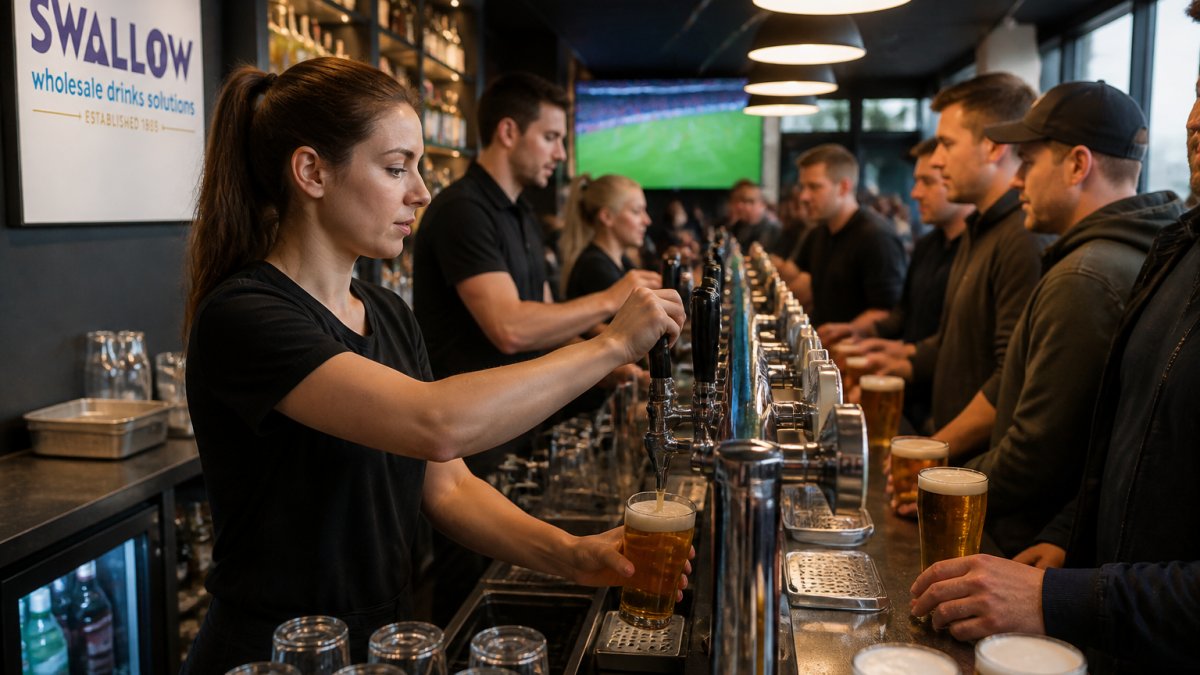
Improving bar service speed during peak match hours is the single most reliable way to lift takings on a match day.
A slow bar costs you twice: the sale now, and the customer who goes elsewhere next week. Speed is not luck, it is planning, layout, staffing and stock control working together.
Below is a match-day routine you can copy, from forecasting the rush to measuring how fast you actually serve.
A queue is a silent tax on your busiest hours: guests who see a long line often order one drink instead of three, and some leave without ordering at all.
A crowded bar also blocks the view, slows your staff and pushes your best customers toward the door. Fixing service speed protects the takings you have already earned.
Match-day demand planning means predicting how many guests will arrive, when, and what they will drink, before the doors open. Get this right and every other decision gets easier.
Start with your own records: look back at the same fixture last season and note the covers, busiest hour and top-selling drinks, plus any booking data you hold.
Then plan in blocks, not averages:
Your till is a forecasting tool. Pull the last six match days, rank them by total sales, find the busiest hour for each and look at what sold.
Group the results into three lists: top ten drinks, slow movers and anything that ran out. That third list shows where your par levels failed.
Plan your rota and your stock around the top ten. This one habit removes most of the guesswork.
A match-day bar preparation checklist is a printed list of jobs to finish before the first guest arrives, turning a chaotic morning into a repeatable routine.
Work through it in order, and tick each line off:
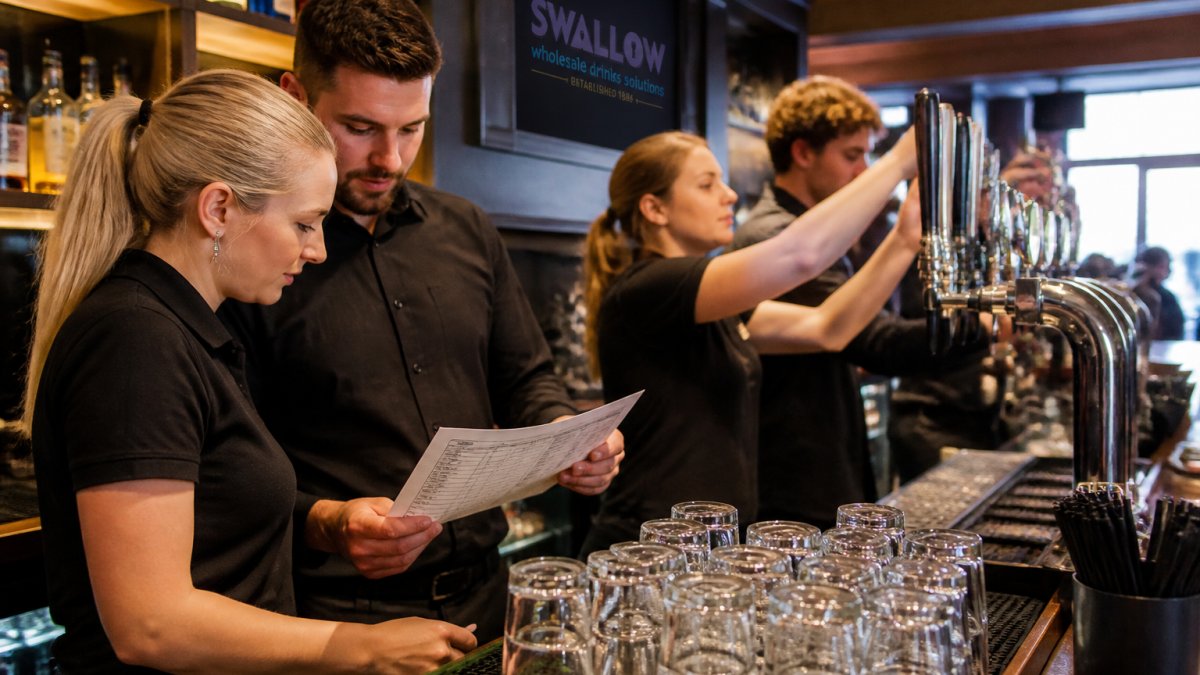
Pub staffing for busy periods works best with staggered shifts mapped to the phases of the match rather than to clock hours. A football match is four distinct trading windows, each with a different shape, and your rota should mirror them.
The four windows, and what each one needs:
Staggered shifts mean staff start and finish at different times, so coverage follows demand rather than the clock. A rota that starts and finishes everyone together will always be overstaffed at kick-off and understaffed at half-time.
A structure that holds up across a full match day:
Put your top performers on the busiest station, not the quietest one, a quick server on the main bar sets the pace for everyone else.
A rota only works if everyone knows their station, their window and their backup. A five-minute briefing before the doors open is the cheapest speed improvement available. Cover:
Write it on the run sheet and pin it behind the bar, staff who know the plan move faster under pressure.
After the final whistle, spend five minutes reviewing the rota against what actually happened. Which window was understaffed? Which station was the bottleneck? Did the half-time surge hit earlier or later than expected?
Note the answers against the fixture and carry them into the next match. Over a season, this turns your rota from a guess into a forecast, most pubs see the pattern after two or three matches.
To reduce queues in a pub on a match day, fix the layout, the flow and the way orders are taken, and design around the fact that guests are not standing still.
Start with the bar itself. Move the most popular drinks, keg lager, stout and soft drinks, to the busiest end, closest to where the crowd gathers. Keep glassware within arm's reach of the taps, and ice wells and garnish trays on the server's side.
Then sort the flow. The goal is to keep guests moving forward and staff moving less:
The queue is not the only congestion point on a match day. The real bottlenecks are usually:
A simple fix most pubs miss: put your busiest server on the screen-side of the bar and your second server on the entrance side, so arriving and watching guests are served from different points.
You cannot manage a queue you are not watching. Pick three simple measures and check them every match:
| What to measure | How to track it | Target |
|---|---|---|
| Queue wait time | Spot checks at peak | Under 2 minutes |
| Drinks served per hour | EPOS transaction volume | Rising each match |
| Order accuracy | Till voids and remakes | Falling each match |
Review the numbers after every match and adjust the layout, rota and par sheet. Small, steady changes beat one big overhaul, a queue that clears in 90 seconds instead of three minutes is worth several extra rounds across a full match.
If you want to take the guesswork out of match-day stock and flow planning, Swallow Drinks has supplied the on-trade for over 40 years. Trade customers can register at our trade ordering portal to see live stock, set par levels and arrange six-day-a-week delivery.
Bar stock planning for busy events comes down to par levels, the minimum amount of each product you keep on site before you reorder.
Set your par level from your busiest match, not your average one.
Build your stock plan around the drinks that actually sell:
Keep a written par sheet and check it every match morning. A gas bottle that runs dry at half-time stops every draught line on the bar.
Swallow Drinks delivers six days a week, so a midweek top-up keeps your par levels honest. Trade customers can order through our trade ordering portal and see live stock.
Measuring bar service speed means timing how long a guest waits from joining the queue to getting their drink.
Set a simple target and track it every match, a common approach is a serve time of under two minutes at peak.
A quick way to track it:
| What to measure | How to track it | Target |
|---|---|---|
| Queue wait time | Spot checks at peak | Under 2 minutes |
| Drinks served per hour | EPOS transaction volume | Rising each match |
| Order accuracy | Till voids and remakes | Falling each match |
| Stock-outs | Par sheet checks | Zero at peak |
Review the numbers after every match and adjust the rota and par sheet. Small, steady changes beat one big overhaul.
Every match day throws up a surprise, whether a bigger crowd or a gas line failing at the worst moment. A written routine keeps service fast when the pressure hits.
Swallow Drinks has supplied independent pubs and bars for over 40 years, with a vast portfolio of premium drinks and reliable six-day-a-week delivery.
Choose Swallow Drinks and build a match-day routine that protects your takings all season.
Speed comes from preparation, not rushing. Pre-batch popular cocktails, pre-chill glassware, and pre-pour soft drinks so staff only assemble and hand over. Set up a dedicated till for card and contactless payments so cash transactions do not hold up the line. On a match day, most customers order the same five or six drinks, so keep those within arm's reach of the main service point. When you plan your bar service speed around the fixture list rather than reacting to it, queues shorten without anyone working harder.
There is no single number, but a practical starting point is one member of staff per 40 to 50 expected customers per hour, adjusted for your menu complexity. A venue serving mostly keg lager, cans and bag-in-box soft drinks moves faster than one mixing cocktails. Use historical sales from previous fixtures to estimate your peak hour, then add one floating member of staff to restock and clear glasses. Review the rota after every big match and adjust up or down based on actual service times.
Focus on what sells fastest. Keg lager such as Madri at £164.50 or Carling at £175.91 per 50-litre keg covers most draught demand, and Guinness stout at £184.01 per 50 litres handles the stout crowd. For soft drinks, bag-in-box Pepsi at £98.89 and Pepsi Max at £86.95 per 12 litres keep post-mix flowing without bottle handling. Cans of Coca-Cola at £16.37 and Diet Coke at £14.47 per case of 330ml are useful for speed when the post-mix is under pressure. Swallow Drinks can help you set par levels around your actual fixture calendar.
Separate the order point from the collection point where space allows. An integrated EPOS with contactless payment cuts transaction time to a few seconds, and mobile ordering lets customers start a tab without reaching the bar. Pre-authorised tabs for regulars reduce repeat card handling. Keep a float topped up and a spare card terminal charged. These small changes to order processing add up across a two-hour rush and directly improve your bar service speed without extra staff.
Members of:


AWRS Registration Number: XJAW00000100730