Aug 01, 2026
Last Updated: August 1, 2026
Understanding how to choose a drink distributor is critical for any hospitality business. At Swallow Drinks, we've spent over 40 years helping independent pubs, bars, restaurants, and hotels across Birmingham and the West Midlands navigate this challenge. The right supplier becomes a strategic asset to your operation. Getting this decision wrong costs money, damages your reputation with customers, and creates operational chaos when stock runs out at peak service times.
This guide covers the practical framework for evaluating potential suppliers, from assessing your actual needs through to negotiating terms that protect your business.
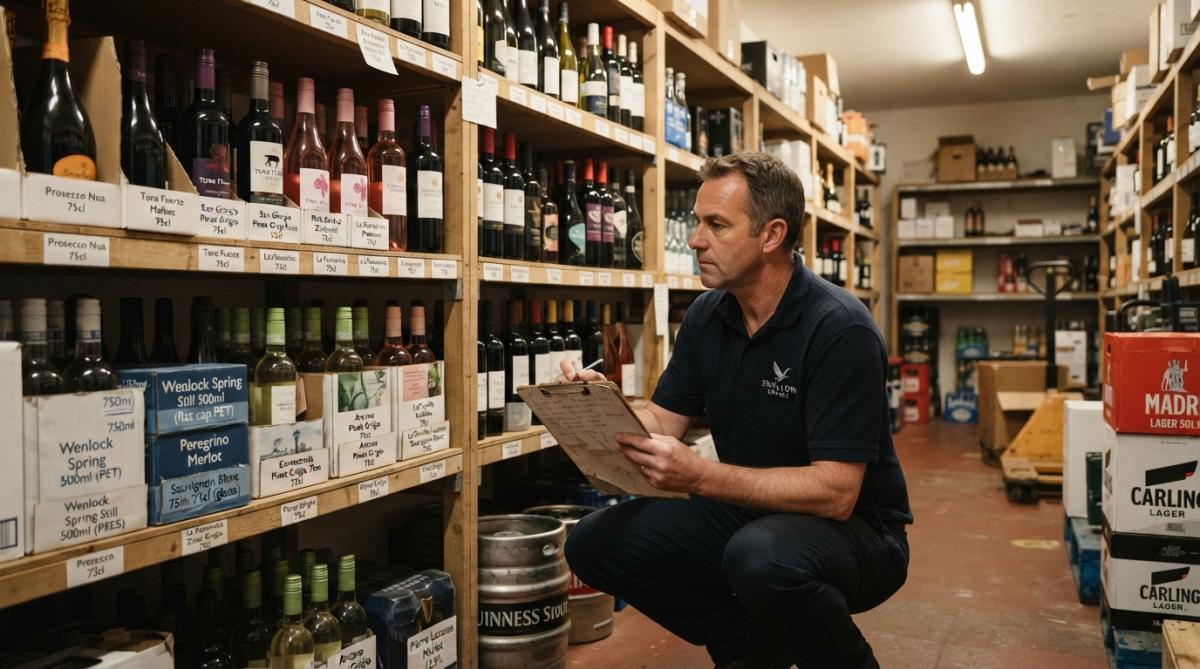
Before contacting a single supplier, clarify what you're actually trying to stock. Document your current portfolio: which wines, spirits, beers, and soft drinks drive your revenue? Which ones sit on shelves? Then identify gaps customers ask for. Your positioning, whether premium wine destination, craft beer specialist, or neighbourhood local, determines which supplier makes sense.
Consider your volume patterns too. Do you need consistent stock year-round or spike during summer? High-volume venues requiring six-day-a-week delivery have different supplier needs than smaller establishments ordering twice weekly. Be specific about minimum order quantities that work for your cash flow; many independent bars struggle because a distributor's minimum order ties up thousands in untouched stock.
The wholesale drinks market in the UK has fundamentally different player types, shaping your supply chain reliability, pricing, and service quality.
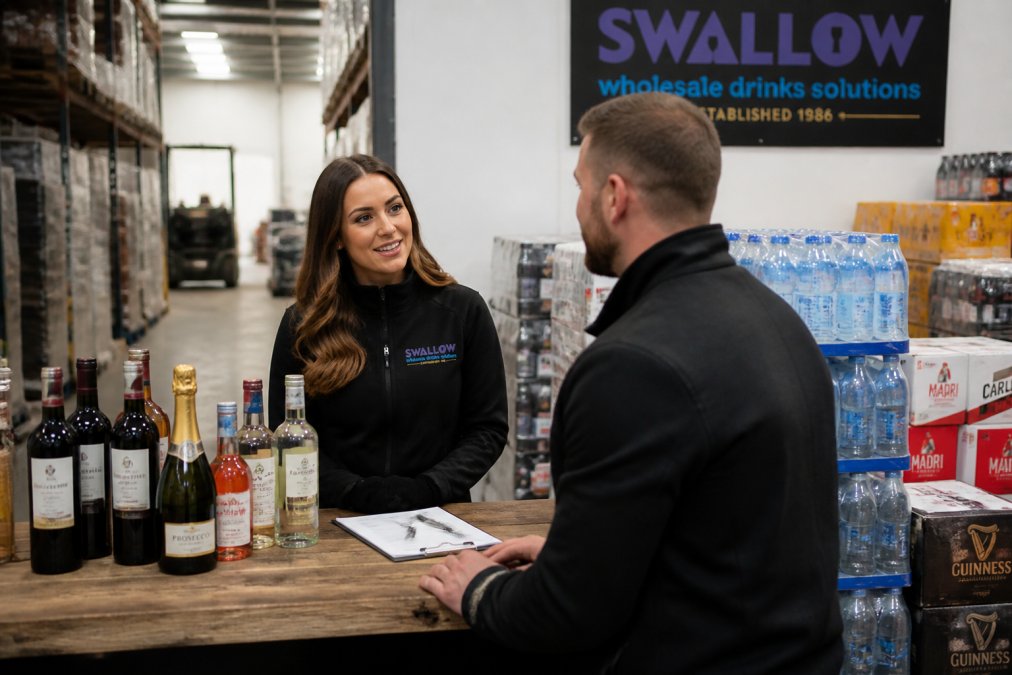
Independent wholesalers like Swallow Drinks operate differently from national chains. An independent supplier serves a defined geographic area, in our case, Birmingham and the surrounding West Midlands. Your account matters. You're not a transaction in a database managed by a distant call centre. Your bar manager can speak directly to someone who knows your venue, understands your menu challenges, and has flexibility to source niche labels or adjust delivery schedules.
National wholesalers offer enormous scale and potentially lower unit costs on commodity items. But that scale comes with trade-offs. Your account is one of thousands. When you call with an urgent Friday afternoon request, you're competing with dozens of other venues for attention. Service becomes transactional rather than consultative.
For independent hospitality venues, the independent supplier model can deliver significant value because responsiveness and personalisation matter more than shaving a few pence off bulk spirit pricing.
A distributor's portfolio size only matters if it includes the brands and categories you actually need. Evaluate whether the distributor's portfolio aligns with your positioning. A gastropub seeking curated wine selections and niche craft beers needs a supplier who actively sources from independent producers and has relationships with smaller breweries. A high-volume nightclub needs someone who guarantees consistent stock of mainstream spirits and soft drinks, six days a week, with zero stockouts during peak trading.
Ask prospective suppliers: how many of your top 30 selling lines do they currently stock? If they stock 25 of 30, that's workable. If they stock 15, you're looking at constant reordering from multiple suppliers, which defeats consolidation.
A distributor can promise anything, but what matters is whether they actually deliver.
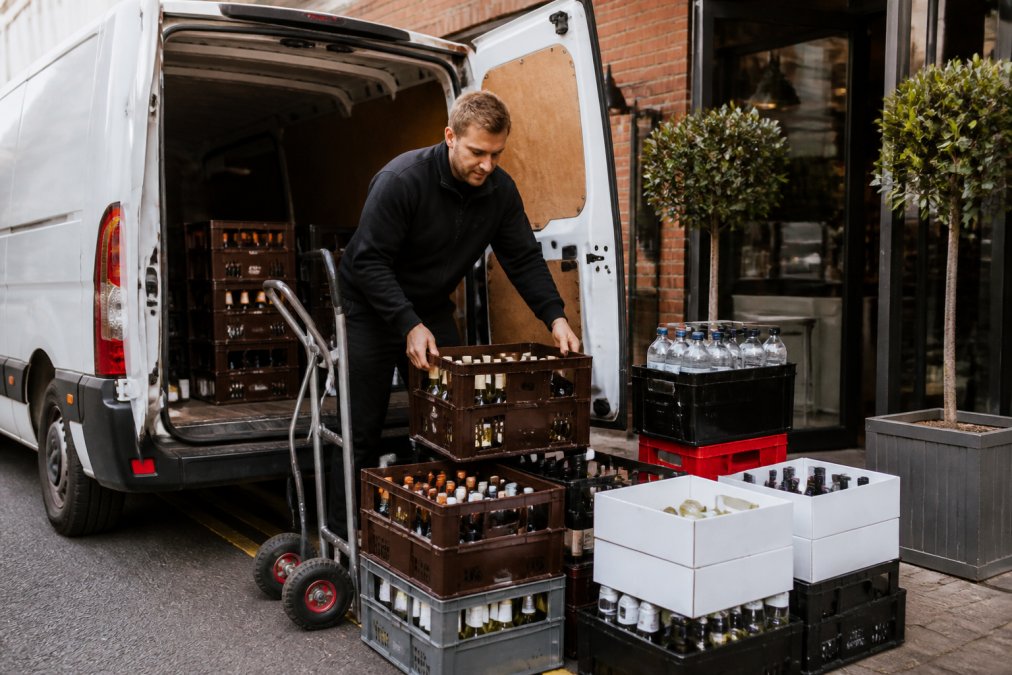
Most independent venues in the West Midlands require either six-day-a-week delivery or at minimum twice-weekly service. Six-day-a-week delivery means you're never more than 24 hours away from replenishing stock. You can operate with tighter stock levels, reducing working capital tied up in your cellar. You also reduce the risk of Saturday night stockouts, when your bestselling lager runs dry and customers switch to competitors.
Twice-weekly delivery requires more accurate demand forecasting and larger safety stock buffers. If you miscalculate and run short mid-week, you're waiting until the next scheduled delivery. This model works for smaller venues with predictable demand but creates real risk for venues with volatile service patterns.
Beyond frequency, understand lead times for special orders. If a customer requests a wine or spirit you don't stock, how quickly can your distributor source it? One week is reasonable. Three weeks suggests they're not actively seeking niche suppliers.
Wine, beer, and certain spirits are temperature-sensitive. Warm storage during transport degrades quality. Poor stock rotation means older product gets sold before newer stock, impacting flavour consistency and customer perception.
Ask prospective distributors about their cold chain infrastructure. Do their delivery vehicles have temperature control? How do they manage stock rotation at their warehouse, is it genuinely FIFO (first in, first out)? For venues serving premium wines, this matters enormously. A wine stored at 18°C for three weeks then delivered in an unrefrigerated van on a hot summer day loses quality your customers will taste.
Operating a drinks business means compliance with specific UK legislation. Your distributor should be actively managing their side of these obligations.
Any drinks distributor operating in the UK must hold the appropriate wholesale licenses. For alcohol, this means holding a wholesaler's license under the Licensing Act 2003. Verify this before committing to a supplier. Working with an unlicensed distributor exposes you to serious regulatory risk.
Distributors must comply with alcohol duty regulations and manage duty accounting correctly. Ask them directly: "Are you fully compliant with HMRC alcohol duty requirements?" A legitimate distributor answers immediately and confidently.
For soft drinks and non-alcoholic products, food safety compliance under the Food Safety Act 1990 applies. Distributors should operate under documented food safety procedures and, ideally, hold relevant certifications like BRC (British Retail Consortium) certification.
Your distributor shares responsibility for preventing alcohol sales to minors. They should have documented age verification procedures for any staff handling orders or deliveries. A distributor that takes age verification seriously demonstrates they understand their regulatory environment and take compliance seriously across the board.
Price matters, but transparent pricing matters more. A distributor quoting rock-bottom prices on headline items while hiding fees elsewhere isn't cheaper, they're just obscuring the real cost.
Most distributors set minimum order quantities (MOQs) to make deliveries economically viable. A reasonable MOQ for a small bar ordering twice weekly might be around £50. A higher MOQ might work for a larger venue but could create cash flow pressure for smaller operations. Pricing depends on quantity, dates, and delivery, and you can find current prices or request a quote on Swallow Drinks's website.
Understand the MOQ and ask whether it applies to all products or just certain categories. Some distributors set lower MOQs for their core range and higher minimums for slower-moving items.
For venues concerned about cash flow, ask about payment terms. Net 30 (payment due 30 days after delivery) is standard in the industry. Some distributors offer Net 14 or require payment on delivery. Understand what you're signing up for before you commit.
Before you sign anything, request a written quote that includes unit price per product, delivery charge, any order minimums or order fees, payment terms, and contract length and termination clauses.
If a distributor is vague about fees or says "we'll discuss that after you sign up," walk away. Legitimate suppliers are transparent about the full cost structure upfront.
The distributor you choose becomes part of your team. Service quality and communication matter as much as product quality.
When you call with a problem, how quickly do they respond? If you're out of a bestselling product at 2 PM on a Friday and need it before service, can they source it and deliver it today? The distributor should have a documented escalation process and someone accountable for urgent requests.
If a delivery arrives with damaged stock or incorrect items, how quickly do they process a credit or replacement? Do you have a direct contact, or are you navigating a call centre?
For venues using digital ordering systems, ask about system uptime and support. If their ordering platform goes down during your critical ordering window, that's a serious problem.
The best distributors don't just take orders; they help you think strategically about your menu. They understand your target customer and can suggest products that fit your positioning. They can source niche local labels, craft beers from independent breweries, and premium wines that differentiate your venue.
Swallow Drinks adds genuine value here. We don't just fill orders. We work with venue operators to understand their menu strategy and actively source products that fit their positioning. If you're a gastropub wanting to feature local craft beers, we have relationships with West Midlands breweries and can source new releases. If you're building a wine program, we can advise on selections that work for your customer profile and price point.
Ask prospective suppliers: "How do you help venues develop their drinks menu?" If the answer is "we just deliver what you order," that's a transactional relationship, not a partnership.
Modern drinks distribution involves technology. Your distributor's systems affect your operational efficiency and your ability to manage stock effectively.
Most distributors now offer online ordering platforms. Evaluate how these actually work. Can you place orders 24/7, or only during business hours? Can you see real-time stock availability, or are you guessing whether items are in stock? Does the system integrate with your POS system so you can track usage and forecast demand?
Real-time stock visibility is genuinely valuable. If you can see that a wine is down to two bottles in the distributor's warehouse, you know you need to order immediately or risk stockout.
Swallow Drinks operates a trade ordering platform at swallow.uk.com that gives you visibility into our current stock and allows you to place orders efficiently. This kind of transparency reduces friction and helps you manage your stock confidently.
What happens if your distributor has a supply disruption? Ask prospective distributors: "What's your contingency plan if you can't fulfil an order?"
Legitimate distributors have documented supply continuity plans. They work with backup suppliers for critical categories and have relationships with alternative sources for niche products. For independent distributors serving a defined geographic area, this is often easier to manage because they can pivot quickly and source from alternative local suppliers if needed.
More venues are making purchasing decisions based on sustainability and ethical sourcing. Your distributor should support this positioning.
Ask whether the distributor actively sources from sustainable producers. Do they work with organic wine producers, breweries using renewable energy, or spirits companies with transparent supply chains? Can they tell you the story behind products you are stocking?
This matters because it aligns with customer expectations and differentiates your venue. A gastropub that can tell customers "our wine comes from a small organic producer in the Cotswolds" creates a story that justifies premium pricing.
Smaller independent distributors often have deeper relationships with producers and can speak to their practices more authentically. Swallow Drinks works with producers across the UK and Europe, actively seeking suppliers who share our commitment to quality and responsible sourcing.
Choosing the right drink distributor is one of the most impactful decisions you'll make for your hospitality business. The wrong choice creates operational headaches, cash flow strain, and customer dissatisfaction. The right choice becomes a genuine partnership that helps you build a drinks program your customers love.
At Swallow Drinks, we've spent 40 years building relationships with independent venues across Birmingham and the West Midlands. We understand the challenges you face, from managing cash flow with tight minimum orders to sourcing niche products that define your positioning to ensuring six-day-a-week delivery reliability. We combine industry expertise with genuine commitment to your success. If you're ready to work with a distributor who treats your venue as a partner, not a transaction, visit our trade ordering platform to explore our portfolio or contact our team to discuss your specific needs.
When choosing a drink distributor, prioritise delivery reliability, product portfolio breadth, transparent pricing, and responsive customer service. Evaluate their supply chain logistics, minimum order quantities, and ability to source niche or local brands. Confirm they comply with UK food and drink distribution laws and can provide consistent stock rotation. Ask about trial periods and contract flexibility to ensure they fit your business without long-term lock-in.
Independent UK drinks wholesale suppliers often provide personalised service, faster decision-making, and stronger local relationships. They typically understand regional preferences better and may offer more flexible minimum orders. Larger operations provide broader product portfolios and standardised processes. For independent hospitality venues, local suppliers like Swallow Drinks offer dedicated support and menu consultation that national chains may not prioritise, combined with over 40 years of industry experience.
Your distributor must comply with UK alcohol licensing laws, age verification requirements under the Licensing Act 2003, and food safety standards. They should maintain proper cold chain management, hold appropriate wholesale licences, and follow responsible sales practices. Confirm they can provide documentation of compliance and understand your venue's specific licensing obligations. A reliable distributor will proactively support your regulatory requirements.
Choose a distributor offering six-day-a-week delivery with clearly defined lead times and contingency plans. Review their logistics network and cold chain capabilities. Ask about their response times for emergency orders and technical support for draught systems. Request references from similar venues and trial their service during peak trading periods. Digital ordering systems with real-time stock visibility help prevent shortages. Swallow Drinks' established logistics network serves Birmingham and surrounding areas with proven delivery consistency.
Members of:


AWRS Registration Number: XJAW00000100730