Oct 25, 2026
Last Updated: October 24, 2026
Quick Summary
The best craft beer brands for hospitality venues match your customer base, line count, and pour rate, with two or three reliable volume drivers plus a rotating line and a no-alcohol option. Judge suppliers on range depth, delivery reliability, trade pricing transparency, and sourcing speed before signing.
Choosing the right craft beer brands is one of the highest-use decisions a pub, bar, or taproom makes each year. This guide from Swallow Drinks draws on over 40 years of supplying the on-trade to set out how we would choose craft beer brands for a hospitality venue.
We can give you a structured way to compare brands, styles, and supply arrangements, then show how the pieces fit together commercially, venue fit, range planning, keg supply, and pour economics.
A craft beer supplier for pubs should be judged on four things: range depth, delivery reliability, trade pricing transparency, and how quickly it can source a new line. Style and branding matter, but they are secondary to whether the beer lands on time and at a workable margin.
Here is the framework we would use before signing with any wholesaler:
A common mistake is choosing a supplier on headline price alone. The practical gap is in the operational detail that determines whether a supplier works for your venue week in, week out. Here are the specifics we would probe before committing:
guidance on serving and storing beer from the Chartered Institute of Environmental Health is worth reading before you finalise any cellar plan, because storage conditions affect how the beer pours and how long it keeps.
When you compare suppliers, score each one against these criteria and weight them by what matters most to your venue.
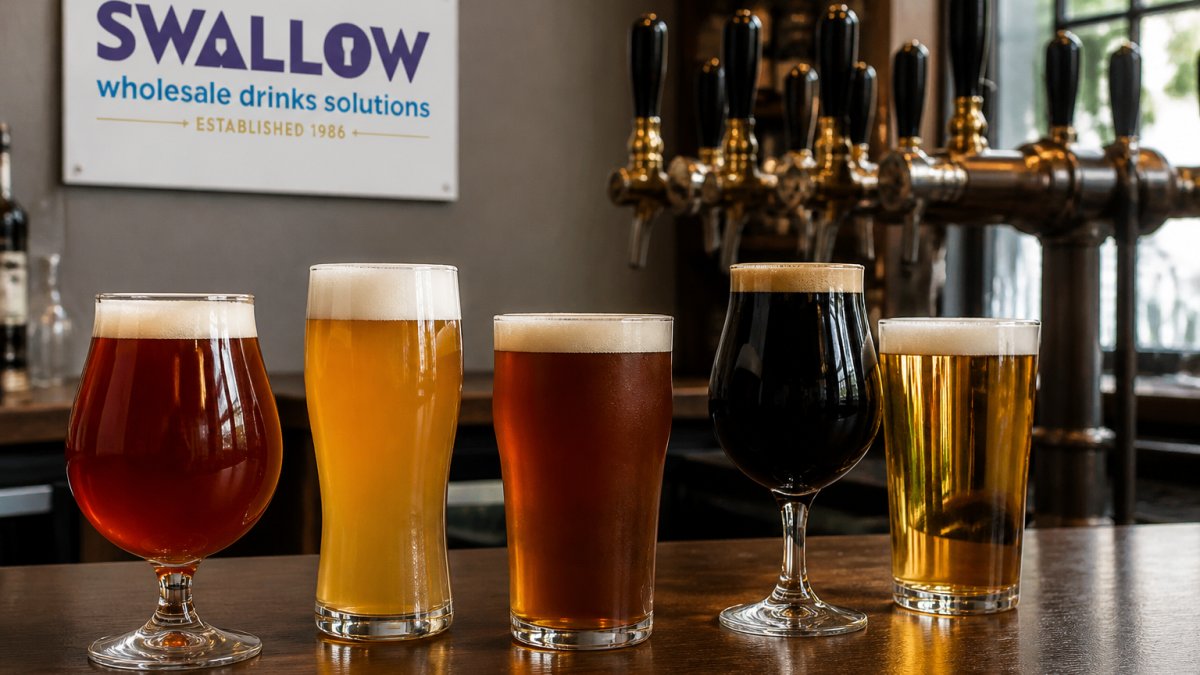
The best craft beer brands for pubs match your customer base, your lines, and your pour rate. Style is the starting point, not the finish line. Most venues need a core of two or three reliable volume drivers, one or two rotating interest lines, and a credible no-alcohol option.
Pale ales and IPAs do the heavy lifting in most craft beer ranges.
On draught, we would look at Wye Valley HPA at 4% in a 9-gallon format. It is a sessionable pale that suits lunchtime trade and evening drinkers alike.
Best for: venues with a mixed-age customer base and a food offer. Skip if: your customers are almost entirely lager drinkers and you have fewer than four lines.
Lager still outsells everything else in most venues, so treat it as the backbone rather than an afterthought. Stout and darker beers give you a point of difference and a winter trade boost.
A well-rounded range usually includes:
Wye Valley Butty Bach at 4.5% in a 9-gallon format sits comfortably as a smooth, easy-drinking ale that bridges the gap between pale and dark.
Craft beer keg brands live or die on draught quality.
Three practical checks before you commit to a keg line:
DOOMBAR (50 LTRS) 4.3% is a dependable volume line for venues with steady cask and keg trade.
WYE VALLEY BUTTY BACH 4.5% 9G →
If you want to compare draught and packaged options side by side, our bottled beer range shows what is available in smaller formats for customers who prefer bottles or for venues without cellar space.
British Beer and Pub Association industry data is a useful reference for understanding overall beer market trends when you plan your range.
The detail that determines whether a keg line actually works for your venue is what we would compare across brands:
When you compare keg brands, score each one on format fit, shelf life, cellar demand, line-cleaning support, and delivery reliability. To see how these factors play out across our range, register for trade ordering and browse the keg options with your venue's setup in mind.
Craft beer range planning comes down to matching line count to pour rate. Too few lines and you look limited; too many and you carry slow-moving stock that eats cellar space and cash.
A workable starting structure for most venues:
| Venue type | Draught lines | Core styles | Rotating lines |
|---|---|---|---|
| Small bar | 4-6 | Lager, pale ale, stout, no-alcohol | 1 |
| Gastropub | 6-8 | Lager, pale ale, IPA, stout | 2 |
| High-volume bar | 8-12 | Two lagers, pale ale, IPA, stout | 2-3 |
| Taproom | 6-10 | Rotating craft focus | 3-4 |
The rule we would apply: every line should turn over at least once a fortnight. If a line sits slower than that, it is costing you more in lost condition and tied-up cash than it earns.
Margins on draught beer depend on three numbers: what you pay per keg, how many pints you pour from it, and what you charge. Small changes in any of the three move your profit more than most operators expect.
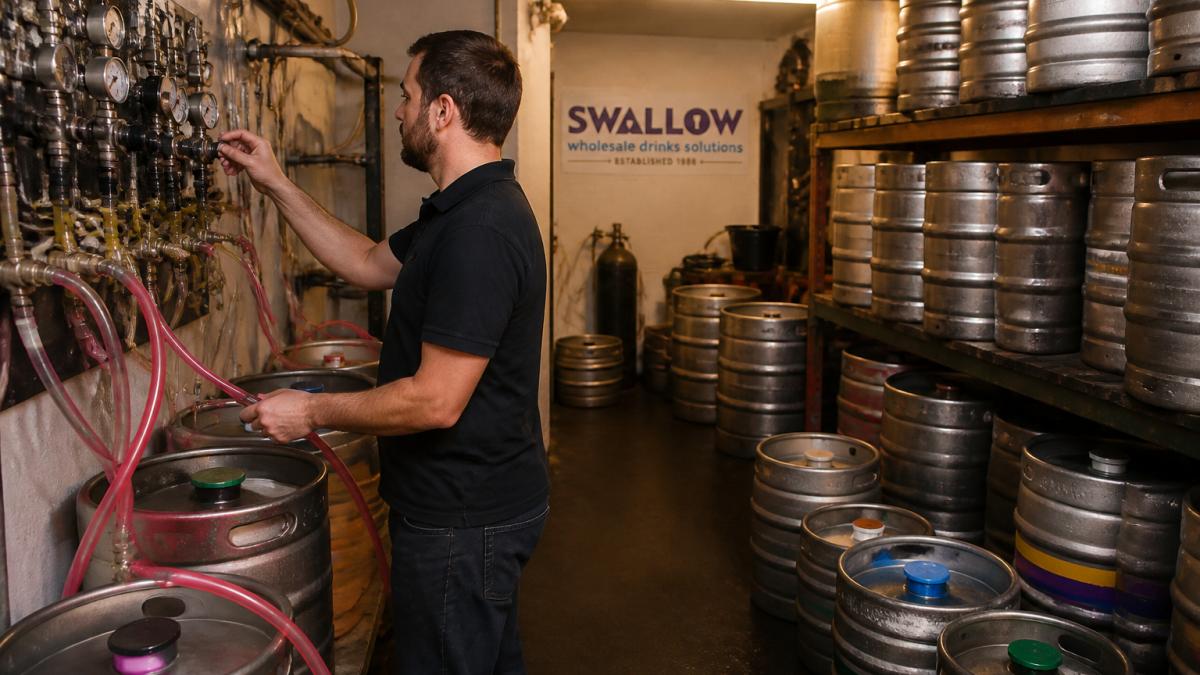
Work out your cost per pint before you set a price.
Watch out: over-ordering to hit a minimum order value is the fastest way to wreck your margin.
Cellar practicalities matter just as much. Keep lines clean, hold temperature steady, and rotate stock so older kegs go first.
Building a beer range that sells is easier when your supplier understands the trade. At Swallow Drinks, we have spent over 40 years supplying pubs, bars, and hospitality venues across the region, and we know what a workable range looks like for different venue types.
Our trade customers get access to a broad portfolio of beer, wine, spirits, and soft drinks from one order, with the consistency a busy venue needs. To see how that works in practice, register for trade ordering and browse the range at your own pace.
Most venues do well with a core of three to four styles: a sessionable pale ale, an IPA, a lager, and a stout or darker beer. That covers the majority of customer preferences without tying up too much cellar space or cash. Add one rotating or seasonal line to keep regulars interested. The right mix depends on your food offer and clientele, so review sales every few weeks and adjust rather than setting the range once and leaving it.
Start with what your customers already order, then look at what the brand offers in draught and packaged formats. Check delivery reliability, minimum order requirements, and how quickly a new line can be sourced. Ask for transparency on pricing before you commit. A supplier that understands your menu and can suggest a balanced range is worth more than one that simply takes orders, especially for independent venues without a dedicated purchasing team.
Keg beer is served under gas pressure and keeps longer once tapped, which suits venues with steady but unpredictable footfall. Cask beer is live and needs to be sold within a few days of tapping, so it works best where turnover is reliable. Bottled and canned formats give you a longer shelf life and let you offer a wider range without committing cellar space. Many venues run all three to cover different occasions.
Two to four draught craft lines is a sensible starting point for most independent venues, supplemented by a small bottled selection. More lines mean more cellar space, more cleaning, and a higher risk of slow-moving stock. A tight, well-chosen range that turns over quickly delivers better margins than a long list where half the lines sit idle. Expand only when sales data shows demand.
Delivery consistency matters more than most operators expect. Ask how many days a week they deliver and what happens if a line runs out before a weekend. Check minimum order values, whether pricing includes hidden surcharges, and whether they can source niche or local labels quickly. A supplier with decades of experience in the trade, like Swallow Drinks, can also help with range planning and menu fit rather than just fulfilment.
The real challenge is not finding beer to stock. It is finding a supplier who can keep your lines full, your margins healthy, and your cellar running smoothly week after week. Swallow Drinks is a family-run independent wholesaler with over 40 years of experience, a broad portfolio of premium brands, and a straightforward approach to trade pricing. Get started with Swallow Drinks and build a beer range your customers come back for.
Members of:


AWRS Registration Number: XJAW00000100730