Sep 17, 2026
Last Updated: September 16, 2026
The invoice rarely tells the whole story. Avoiding hidden costs in wholesale drinks starts with one uncomfortable truth: the price you agreed and the price you actually pay are two different numbers, and the gap widens with every delivery, surcharge and split case.
Good hospitality drinks procurement best practices come down to two disciplines: know exactly who you are buying from, and insist on seeing the full price before you commit.
Ask every supplier for a written cost breakdown: unit price, delivery terms, surcharge triggers and minimum order values. A supplier who cannot produce that in writing is a supplier who will surprise you later.
Bulk wine and spirits delivery looks simple until you read the terms. Charges stack in ways that only show up on the monthly statement, and the only way to control them is to audit the freight invoice line by line rather than trusting the total.
Charge type | What triggers it | How to control it |
|---|---|---|
Fuel surcharge | Rising delivery costs | Ask if it is fixed or variable, and whether it is capped |
Minimum order penalty | Order below threshold | Consolidate into fewer, larger drops |
Split-case fee | Mixed cases | Standardise your core range |
Pallet fee | Non-standard pallet or half-pallet drop | Order full pallets on core lines |
Failed delivery fee | No one available to receive | Fix a delivery window |
Out-of-hours drop | Evening or weekend delivery | Schedule weekday deliveries |
Redelivery charge | Returned load | Confirm the receiving contact before dispatch |
A single missed delivery slot can wipe out the margin on an entire order. The fix is boring but effective: agree a realistic delivery window and stick to it, and make sure the person receiving the delivery knows it is coming.
Most operators check the total and move on. The leak is in the lines. Work through the invoice against the agreed terms and flag any of the following:
Wholesale drinks pricing is built around full pallets and full cases. Step outside that and the supplier's handling cost goes up, and it goes up on your invoice. Standardising your core range onto full cases and full pallets is the single most effective way to reduce split-case and pallet fees. It also makes stock counting faster, because you are counting whole units rather than part-cases.
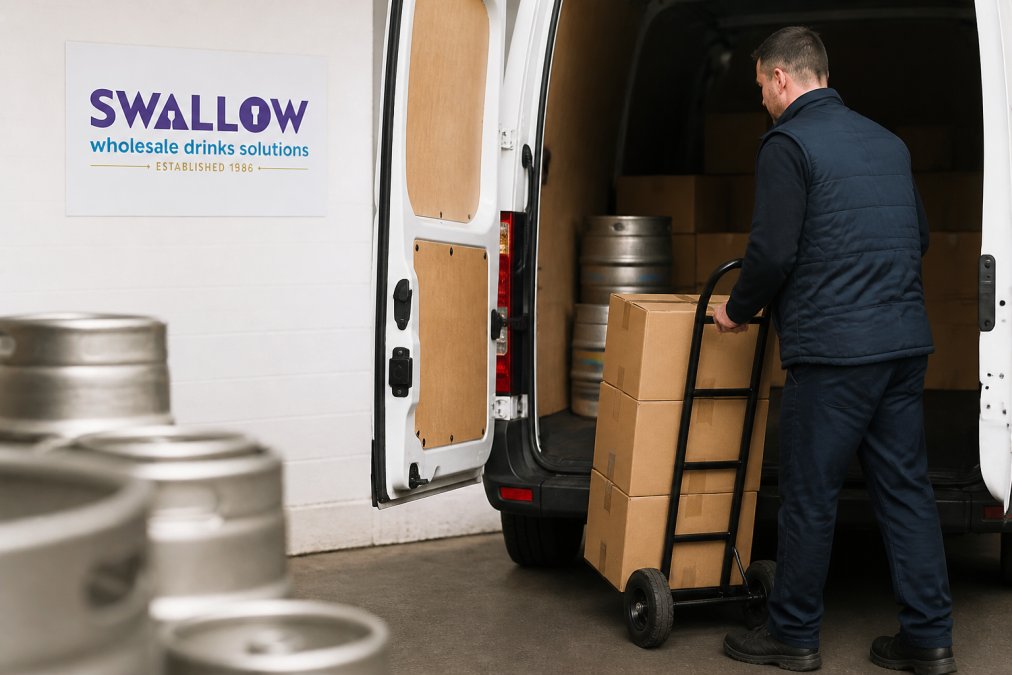
A failed delivery is not just a fee. It is a delay, a redelivery, and often a gap on the bar. Agree a delivery window that matches when someone is actually on site to receive it, and confirm the receiving contact before dispatch. If your site cannot take a weekday drop, ask about a scheduled out-of-hours slot rather than accepting a failed-delivery fee as routine.
Fewer, larger drops reduce fuel surcharges, pallet fees and minimum-order penalties at the same time. If you run multiple sites, consolidate into a single scheduled drop per site per week rather than ad-hoc top-ups. Swallow Drinks runs six-day-a-week delivery and a live trade ordering portal at Swallow Drinks trade ordering, so you can plan drops around your service rather than reacting to a gap on the bar.
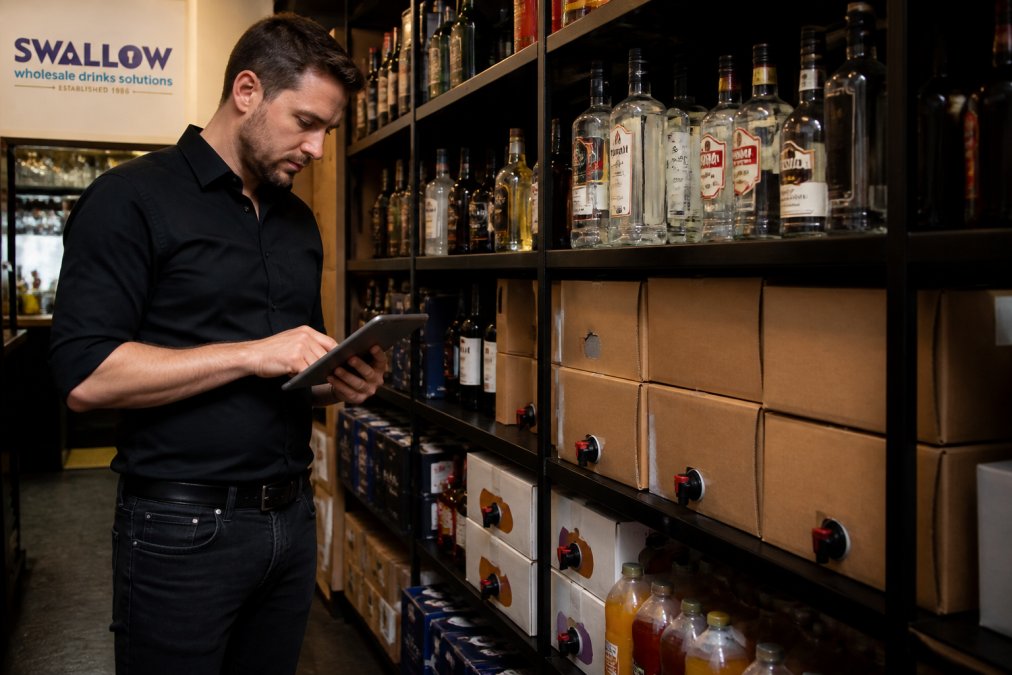
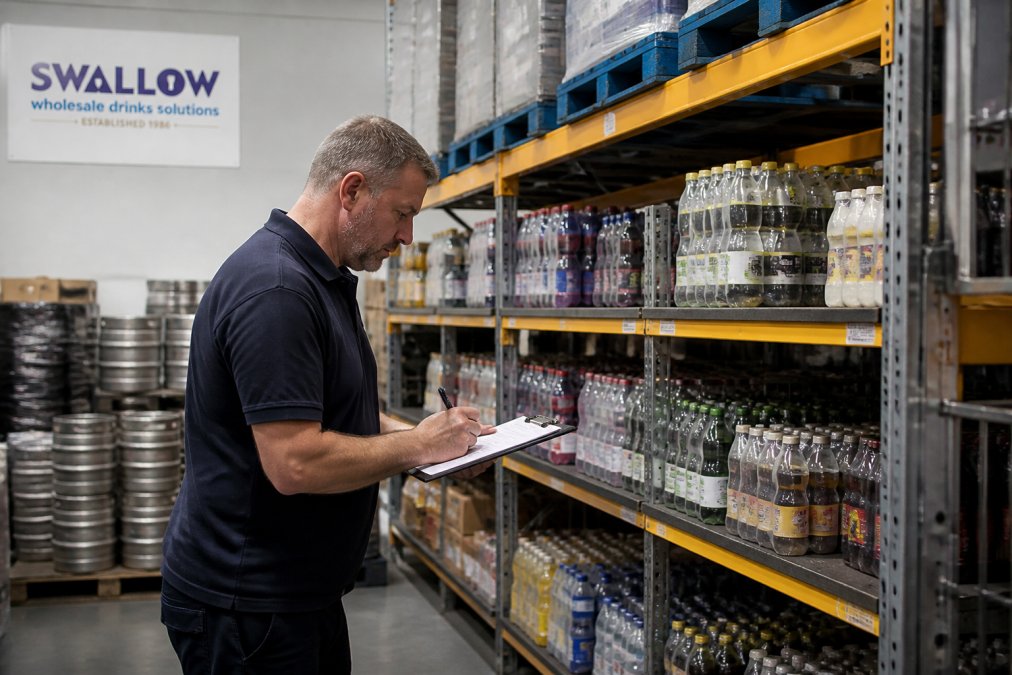
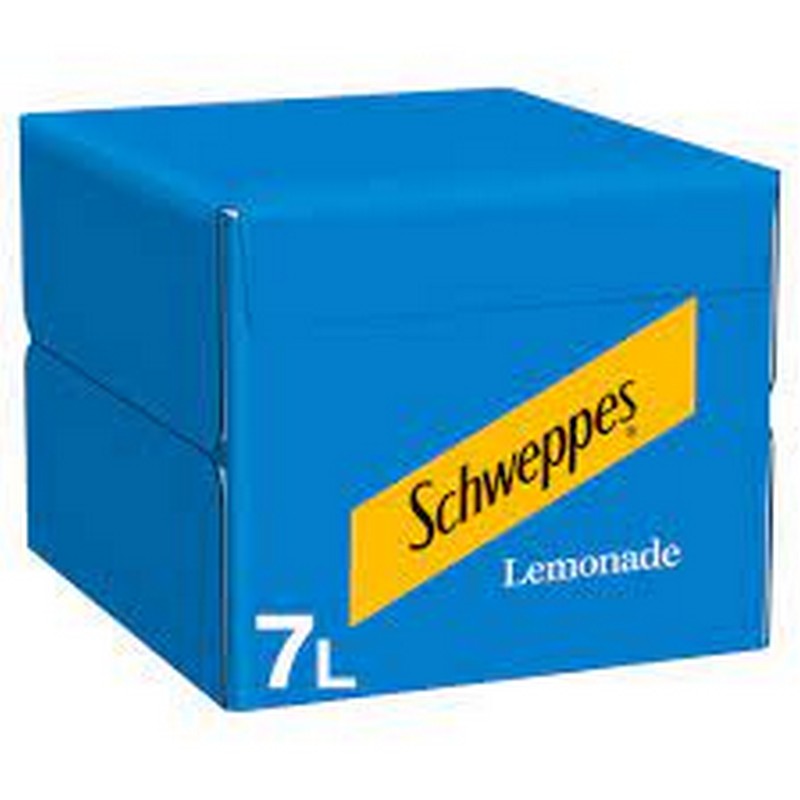
Train staff on measured pours and rotate stock so older lines move first. A weekly stock count catches shrinkage before it becomes a habit. Bag-in-box soft drinks, for example, should be checked against sales so you spot a leaking line early. Swallow Drinks stocks lines such as BIB Swallow Pepsi Max 12ltr and BIB Schweppes Lemonade 7ltr, so you can match syrup usage to till data.
Duty and compliance costs are the leaks nobody puts on a spreadsheet, because they are baked into the unit price before the invoice is even printed. Understanding how they are calculated is the only way to see whether a cheaper headline price is actually cheaper once duty is stripped out.
Alcohol Duty is charged on the strength of the product, not on the trade price. That means a stronger spirit or a higher-ABV beer carries a larger duty burden per unit than a weaker product at the same quoted trade price. When you compare two suppliers, strip the duty out of both quotes and compare the duty-exclusive price, that is the number your margin actually depends on.
The Soft Drinks Industry Levy applies to added-sugar soft drinks above set sugar thresholds. It is paid by the producer or importer, but it flows through to the wholesale price you pay. This is why checking sugar content across your soft drinks range matters: two lemonades at the same trade price can carry very different levy exposure depending on their formulation.
Deposit return scheme rules and packaging producer obligations are the newer compliance cost, and they are changing. Extended producer responsibility for packaging means the cost of collecting and recycling what you sell is increasingly built into the price you pay upstream. Operators who plan for these now avoid a scramble later, and operators who ignore them find the cost appearing as a quiet line-item increase rather than a visible charge.
VAT is not a hidden cost for a VAT-registered operator, because it is recoverable, but only if the invoice is correct. A supplier who charges VAT on a zero-rated item, or who fails to show a valid VAT number, creates a recovery problem that lands on you. Check every invoice for the supplier's VAT number and the correct rate before you file.
Add three questions to your monthly procurement audit: has any line changed strength or formulation, has any soft drink changed sugar content, and has any packaging obligation changed the price of a core line? If the answer to any is yes, re-check the duty-exclusive price before you reorder. Swallow Drinks publishes transparent trade pricing through the trade area at Swallow Drinks trade ordering, so you can see the full picture rather than a quote that shifts after the fact.
Manual data entry is the quiet overhead. When invoices are typed by hand, errors slip through, credits go unclaimed and price increases go unnoticed for months.
A procurement audit does not need to be complicated. Set a recurring monthly slot and work through the same short list every time.
Delivery surcharges, fuel and congestion fees, minimum order penalties, split-case charges and short-dated stock discounts that never materialise are the usual culprits. Deposit schemes on kegs and gas cylinders also catch operators out when returns are not credited. Add soft drinks levy handling and payment term fees and a trade price can climb well above what was quoted. Swallow Drinks publishes clear trade pricing and freezes agreed rates, so you can plan wholesale drinks spend without surprise line items.
Start by calculating the true cost per serve for every line, including delivery, duty and waste. Then review your stock list quarterly and cut slow-moving SKUs that tie up cash. Track stock handling losses in the cellar and train staff on measures and glassware. Swallow Drinks supports wholesale drinks margin management, so you can add higher-margin lines without holding excess stock.
Check the minimum order value, delivery frequency, surcharge triggers and notice period before you sign. Confirm whether prices are fixed for a set term or can move with duty changes. Look for a clear returns policy on kegs, gas and damaged stock. Swallow Drinks offers flexible trade terms with no lock-in beyond agreed notice, and you can register at webtrade.swallow.uk.com to see live pricing before committing.
A surcharge of a few pounds per drop can add hundreds to your monthly bill if you order small and often. Consolidating into fewer, larger deliveries usually removes the trigger entirely. Swallow Drinks runs six-day-a-week delivery with no hidden surcharge on standard drops, which keeps bulk wine and spirits delivery costs predictable for venues that order to a weekly rhythm.
Members of:


AWRS Registration Number: XJAW00000100730