Jul 23, 2026
Last Updated: July 23, 2026
When building a premium drinks selection for your bar, the difference between mediocre and exceptional comes down to knowing where and how to buy premium spirits strategically. At Swallow Drinks, we've spent over 40 years helping independent bar owners across the UK stock their shelves with the right brands at the right price point. This guide walks you through sourcing premium spirits, managing your stock, and turning those bottles into genuine profit.
The on-premise drinks market in the UK has shifted dramatically. Customers now actively seek craft spirits, aged expressions, and brands with genuine stories. That shift creates opportunity and complexity. You need to understand which spirits to stock, find reliable suppliers, and train your team to sell these premium options effectively.
Premium spirits deliver better margins, attract higher-spending customers, and create genuine loyalty through quality. When you stock top-shelf alcohol, you fundamentally change how your team engages with customers, shifting from "What spirit would you like?" to "Which premium gin speaks to you?" That shift from commodity to experience is where premium spirits earn their place in your business model.
Premium spirits typically command 40-50% higher price points than well alcohol, with proportionally lower cost of goods. A customer ordering a cocktail made with Bombay Sapphire Gin (available from Swallow Drinks at £21.70 per 70cl bottle) generates significantly more revenue per drink than one made with standard well gin. Over a month, that difference compounds across dozens of cocktails.
Customers who drink premium spirits tend to order more rounds, spend longer at the bar, and return more frequently. They're also more likely to recommend your bar to friends.
Understanding the premium spirits market means knowing which categories matter most and which expressions deliver genuine value.
Whiskey remains the cornerstone of any premium bar programme. A solid selection includes one accessible single malt (Glenmorangie or Glenfiddich), one premium expression (Islay), one bourbon, and one rye.
Gin requires at least two styles: a classic London Dry (Gordon's Gin at £17.34 or Bombay Sapphire at £21.70, both stocked by Swallow Drinks) for traditional flavour, and a contemporary botanical expression for adventurous drinkers.
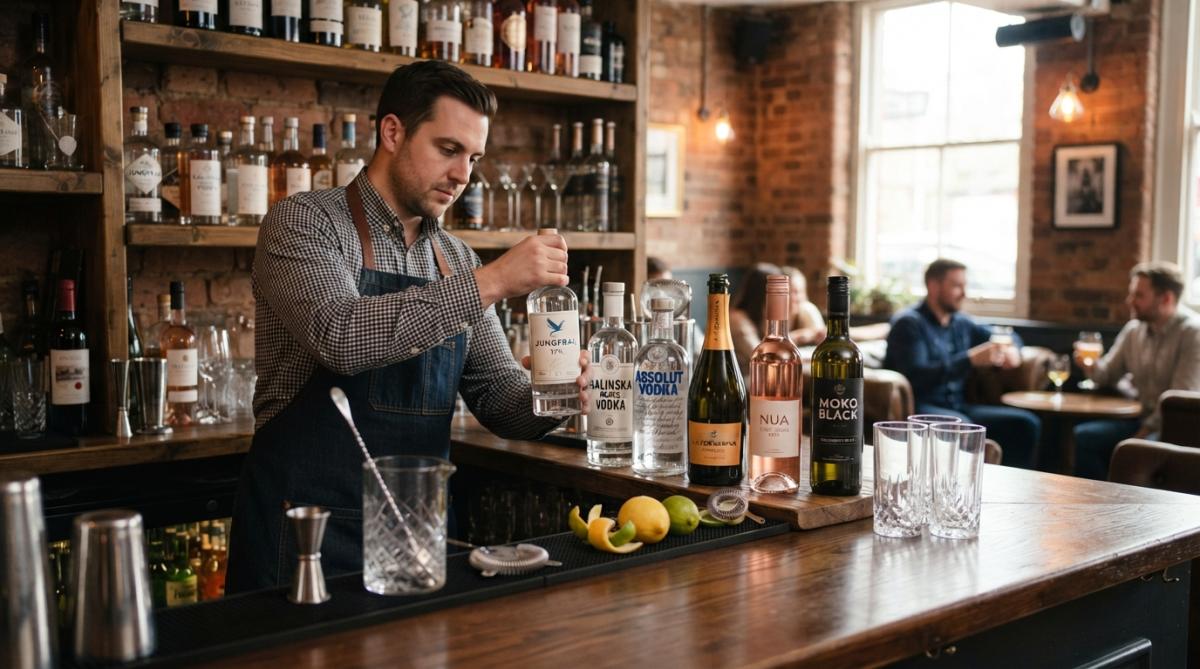
Vodka remains essential despite being unfashionable in cocktail circles. Premium vodka serves customers who want clean, spirit-forward cocktails. Absolut Vodka (£16.09 from Swallow Drinks) sits in the premium-accessible range, while House Vodka Kalinska (£12.41) offers value without compromising quality.
Rum deserves serious attention. Stock at least one aged expression (3-5 years minimum) and one premium sipping rum. Rum's versatility in cocktails makes it essential stock.
Tequila and Mezcal have moved from novelty to essential. Stock at least one 100% agave tequila. Mezcal attracts customers seeking something different and has loyal followings that justify shelf space.
Brandy and Cognac appeal to older demographics and customers seeking after-dinner drinks. A single premium brandy covers most occasions.
Liqueurs fill specific roles: coffee liqueurs for espresso martinis, herbal liqueurs for digestifs, cream liqueurs for dessert cocktails. Stock strategically based on your menu.
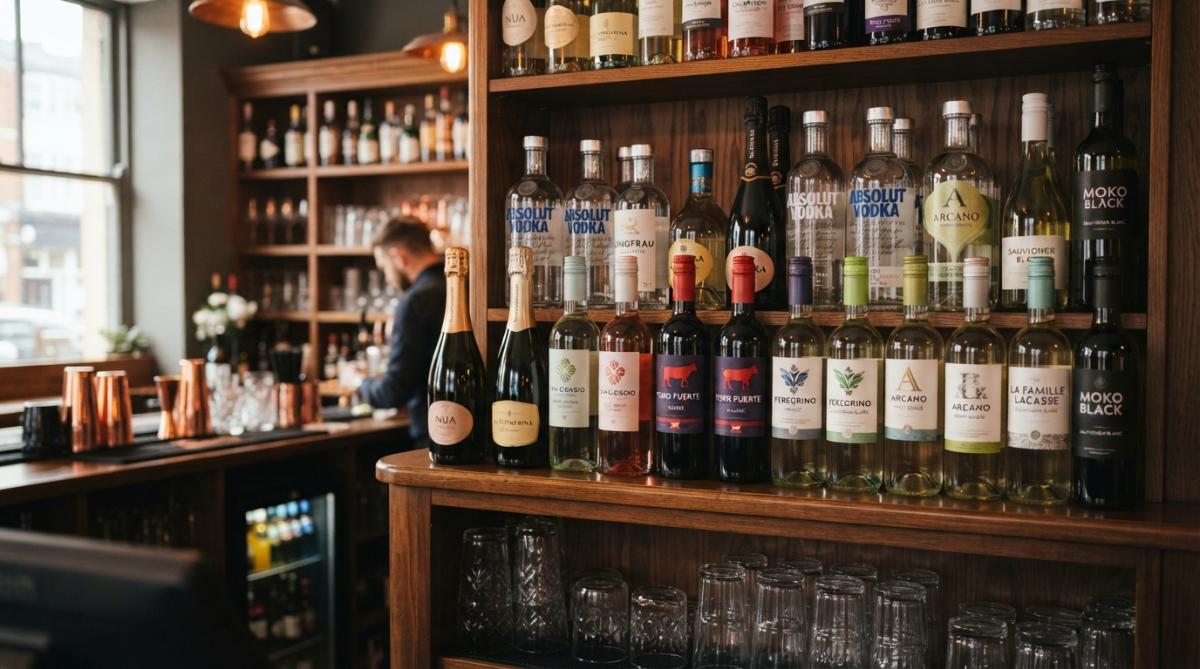
Your choice of supplier affects not just your prices, but your ability to source specific bottles, your consistency of delivery, your access to product knowledge, and your flexibility when adjusting stock quickly.
The best suppliers understand the on-trade sector. They know bars operate on tight margins and unpredictable demand. They understand that small independent bars need flexibility that chains don't.
When evaluating a supplier, look for these qualities:
Reliability and delivery consistency. Can they guarantee delivery within your required timeframe? Will they handle rush orders before busy weekends? Swallow Drinks, as a family-run independent wholesaler with over 40 years in the business, operates with genuine accountability. When you're a customer, you matter.
Transparent pricing. Hidden fees destroy margins. You need to know exactly what you're paying with no surprises on invoices.
Product knowledge and curation support. The best suppliers help you think through what to stock. They understand your menu, customer base, and budget constraints. Swallow Drinks has the expertise to help you build a selection that actually sells.
Access to niche and craft brands. Can they source bottles beyond the mainstream? The ability to occasionally fulfil specific requests builds customer loyalty.
Flexibility on minimum orders. Small bars can't tie up cash in massive bulk purchases. Look for suppliers who work with realistic minimums for independent venues.
Support for trade ordering and account management. Modern suppliers offer online ordering platforms that simplify purchasing. Swallow Drinks provides access to their trade ordering system at swallow.uk.com, which gives you visibility into spending and stock levels.
You cannot buy and sell premium spirits without understanding the regulatory framework governing on-premise alcohol sales in the UK. The Licensing Act 2003 sets the foundation, and non-compliance risks loss of licence, substantial fines, or forced closure.
Every bar must hold a Premises Licence issued by the local authority, specifying the types of alcohol you can sell, the hours you can sell them, and operating conditions. Premium spirits fall under the "spirits" category, requiring no additional licensing beyond your base Premises Licence.
Age verification is non-negotiable. Every team member must check ID for anyone appearing under 25 years old. The Challenge 25 scheme is the industry standard. Failure to verify age can result in prosecution of both your business and individual staff members.
Responsible service practices are a legal requirement. You cannot knowingly sell alcohol to someone who is intoxicated. You cannot sell to anyone under 18. Your staff training must cover these points explicitly.
Duty of care and safeguarding require that you maintain records of alcohol stock and sales. This helps with tax compliance and protects you from accusations of diversion into the illicit market.
Local authority compliance varies by region. Check your specific Premises Licence to understand any additional conditions your local authority has imposed.
The key principle is this: the more premium your spirits, the greater the reputational and financial risk if you're found non-compliant. Take compliance seriously from day one.
You've bought premium spirits at good prices from a reliable supplier. Now you need to manage that stock so it generates profit rather than sitting on the shelf or disappearing to theft.
Premium spirits tie up capital. A bottle of quality single-malt whisky costs £30-60. A bottle of premium rum might cost £25-40. Managing that stock efficiently is the difference between a profitable bar and one that's perpetually cash-constrained.
Par levels are your foundation. For each spirit, determine the minimum quantity you need in stock to meet customer demand without running out. Review par levels quarterly based on actual sales data.
Stock rotation prevents waste. Use FIFO (first in, first out) discipline: sell older stock before newer stock. This is especially important for opened bottles sitting behind the bar.
Theft prevention is a genuine operational concern. Premium spirits are attractive to both staff and customers. Implement physical security: locked storage for valuable bottles, restricted access, regular stock audits. Many bars conduct monthly stock takes to catch discrepancies.
Pricing strategy for premium spirits requires sophistication. A premium gin cocktail might cost £3-4 in ingredients but sell for £10-12. That's healthy margin, but only if you're actually selling it.
Demand forecasting helps you avoid both stockouts and overstock. Track which spirits are selling well and which are slow movers. Be willing to discontinue spirits that aren't moving, even if they're premium.
Supplier relationships matter for cost optimisation. Once you've established a relationship with Swallow Drinks, you can negotiate better pricing on volume items and request flexibility on slower-moving premium expressions.
Management Task | Frequency | Expected Outcome |
|---|---|---|
Par level review | Quarterly | Optimal stock levels matching demand |
Physical stock count | Monthly | Identify theft, waste, or ordering errors |
Sales analysis by spirit | Monthly | Data-driven decisions on what to stock |
Pricing review | Quarterly | Competitive pricing maximising margin |
Supplier performance review | Quarterly | Identify delivery or quality issues |
Not all premium spirits work equally well in cocktails. A premium sipping rum might be wasted in a mojito. A contemporary botanical gin might be perfect for a modern cocktail but wrong for a classic martini. Curation is matching spirits to purpose.
The distinction between top-shelf and well spirits is fundamental to bar economics. Well spirits are your volume play, affordable, consistent, reliable. Top-shelf spirits are premium expressions that command higher prices and attract customers seeking quality.
Top-shelf candidates are spirits where customers can genuinely taste the difference. Premium gin has distinct botanical profiles that matter in a martini. Aged rum is noticeably different from white rum in a daiquiri. Single-malt whisky has complexity that blended whisky doesn't.
Well spirits are those where the base spirit supports other ingredients. In a long drink like a gin and tonic with significant mixer, ice, and citrus, the difference between premium and mid-range gin is subtle.
The current mixology trend in the UK emphasises craft cocktails with premium base spirits. Customers increasingly expect bars to stock spirits with genuine stories, craft distilleries, and unusual expressions. This plays directly to independent bars' advantage. You can stock local craft gins, small-batch rums, or unusual mezcals that big chains won't bother with.
Premiumisation, the trend of customers trading up to higher-quality spirits, is real and accelerating. Even customers who can't afford premium every time are willing to pay for premium on special occasions.
Consider building your selection around these cocktail categories:
Premium spirits don't sell themselves. Your team has to understand them, believe in them, and know how to recommend them. Effective training covers product knowledge, upselling technique, and genuine passion. Your team needs to understand the difference between a London Dry gin and a contemporary botanical gin and explain why a premium spirit is worth the extra cost authentically, not pushily.
Create tasting opportunities for your team. When a bartender has actually tasted the difference between two gins, they can speak authentically about it. That authenticity drives customers to upgrade.
Document your premium spirits with tasting notes and cocktail recommendations. Create a simple one-page guide for each spirit: what it tastes like, which cocktails showcase it best, and the story behind it. Give this to your team.
Incentivise premium sales. Some bars use commission structures where staff earn a small bonus on premium spirit sales. This aligns incentives and encourages your team to actively recommend premium options.
You've curated a premium spirits selection and trained your team. Now you need to tell customers what you've got. Many independent bars assume customers will discover premium spirits organically. They won't.
Menu design is your primary marketing tool. Don't just list spirits; tell stories. Instead of "Gin £5", write "Bombay Sapphire, a contemporary botanical gin with citrus and juniper notes, perfect for a classic martini." That description sells the premium positioning.
Feature cocktails highlight your premium spirits. Create signature cocktails that showcase your best gins, rums, or whiskeys. Promote these on your menu, social media, and verbally to customers.
Social media content showcases your spirits. A photo of a beautifully made cocktail with a premium spirit creates desire. Share the stories behind your spirits, the distillery, production method, and tasting notes.
Tasting events create occasions for customers to experience premium spirits. Host a gin tasting, rum tasting, or whiskey tasting. Charge a modest fee and include three or four spirits with tasting notes and food pairings. This generates revenue, educates customers, and builds community.
Partnerships with suppliers can amplify your marketing. Swallow Drinks often has relationships with distilleries and can facilitate brand ambassador visits, promotional support, or exclusive access to limited releases.
Local press and influencers respond to stories. If you've curated an interesting premium selection or created a signature cocktail featuring a premium spirit, tell the story to local journalists and social media influencers.
Building a premium spirits programme for your bar requires strategy, discipline, and genuine commitment to quality. It's not about stocking the most expensive bottles, but the right bottles for your customers and business model. The economics are compelling: premium spirits generate better margins, attract higher-spending customers, and create loyalty.
When you're ready to build or expand your premium spirits selection, Swallow Drinks has spent over 40 years helping independent bars across the UK do exactly this. As a family-run wholesaler with genuine expertise in the on-trade sector, we understand the specific challenges small bars face. We offer transparent pricing, reliable delivery, product knowledge, and access to premium brands that actually sell. Register with our trade ordering system at webtrade.swallow.uk.com to explore our full range of premium spirits and start building the selection that defines your bar.
Premium spirits are typically aged, craft-produced distilled spirits with distinctive flavour profiles, superior craftsmanship and higher price points than well liquor. They include aged whiskeys, single-malt scotch, premium gin, craft rum and brandy. These spirits command higher margins and appeal to customers seeking quality cocktails. When you buy premium spirits for bars, you're investing in products that differentiate your establishment and justify premium pricing on your cocktail menu.
Look for independent drinks wholesalers with established relationships in your region. Swallow Drinks, for example, has over 40 years of experience supplying on-trade businesses across Birmingham and surrounding areas with a vast portfolio of premium brands. Register with trade ordering platforms like webtrade.swallow.uk.com to access transparent pricing and reliable delivery. Ask suppliers about their stock consistency, delivery schedules and whether they understand your bar's specific menu requirements.
You must hold a Premises Licence issued by your local licensing authority under the Licensing Act 2003. This governs the sale of alcohol on your premises. You'll also need a Personal Licence holder responsible for alcohol sales. Premium spirits fall under the same regulations as standard alcohol—there are no separate licensing tiers based on spirit quality. However, compliance with trading hours, age verification and responsible service standards is mandatory regardless of whether you stock well liquor or premium spirits.
Premium spirits typically generate 40-60% higher margins than well liquor, especially in craft cocktails. Customers ordering premium cocktails spend more per drink, increasing average transaction value. Quality spirits also enhance your bar's reputation, encouraging repeat visits and word-of-mouth marketing. Effective bar stock management ensures you minimise waste whilst maximising turnover on high-margin products. Training staff to upsell premium options and educate customers on flavour profiles further boosts profitability without increasing footfall.
Members of:


AWRS Registration Number: XJAW00000100730