
Jul 17, 2026
Last Updated: July 17, 2026
Wholesale drinks distributors are specialist suppliers who provide beverages in bulk quantities at reduced per-unit costs. At Swallow Drinks, we've spent 40 years building relationships with bars, restaurants, and independent venues across the UK. A wholesale drinks distributor handles procurement, logistics, and stock management, allowing venue operators to focus on service rather than sourcing.
The fundamental difference between wholesale and retail suppliers lies in volume and pricing. Wholesale operations require minimum order quantities (MOQ), typically measured in cases or pallets, but deliver significantly lower per-bottle costs. This model works because distributors consolidate demand across multiple venues, negotiate directly with manufacturers, and pass savings downstream. For hospitality businesses, partnering with the right distributor reduces operating costs whilst ensuring consistent stock availability.
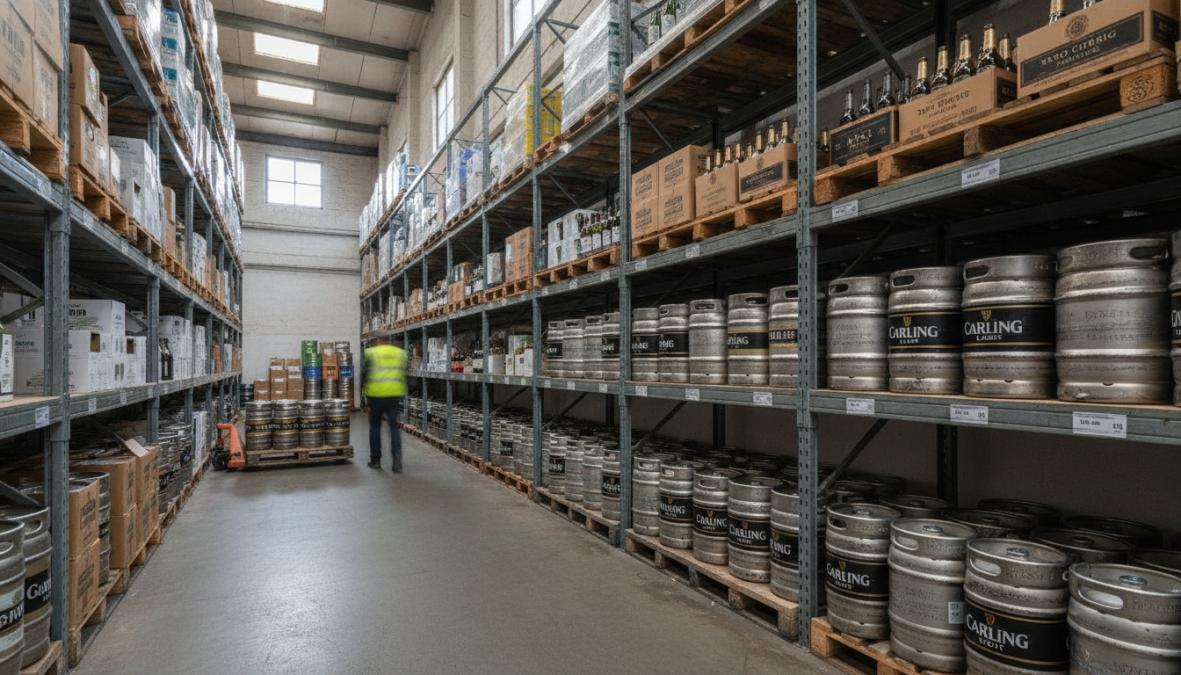
Wholesale drinks distributors stock an extensive range spanning spirits, wines, beers, ciders, soft drinks, mixers, and speciality beverages. At Swallow Drinks, our range includes premium keg lagers like Madri Lager 50 litre kegs and Carling Lager 50 litre kegs, alongside stouts such as Guinness and craft ciders like Thatchers Gold.
Selection depth varies significantly between distributors. Larger national operations stock 2,000+ SKUs (stock keeping units), whilst independent wholesalers may focus on 400-800 carefully curated lines. Smaller selections often mean better relationships with individual brand teams and more competitive pricing on products you actually sell.
When evaluating distributors, consider whether they stock your venue's signature products. A cocktail bar needs premium spirits and bitters. A gastropub requires craft beers and natural wines. A nightclub prioritises volume spirits and energy drinks. Misalignment creates friction and forces sourcing from multiple suppliers, losing consolidation benefits.
The UK wholesale alcohol supplier landscape divides into national wholesalers with extensive logistics networks and regional independents like Swallow Drinks who serve specific geographic areas with deeper local knowledge.
Understanding licensing requirements matters when selecting a supplier. The Licensing Act 2003 governs who can supply alcohol to on-trade premises. All wholesale alcohol suppliers must hold appropriate licences and ensure customers hold valid premises licences. This protects both supplier and venue from legal exposure.
Wholesale alcohol suppliers typically operate on tiered pricing models. Volume commitments determine unit costs: ordering a single case costs more per bottle than ordering a pallet. Most suppliers offer discounts at 12-case, 24-case, and pallet thresholds. Understanding these breakpoints helps venues optimise ordering to maximise savings without over-stocking.
The relationship works best when built on transparency. Swallow Drinks publishes clear pricing for products like Guinness Stout 50 litre kegs at £184.01 and Thatchers Gold 50 litre cider kegs at £138.98, allowing venues to forecast costs accurately.
Soft drinks represent a growing category for wholesale distributors across the UK. Hospitality venues increasingly stock premium mixers, energy drinks, and speciality beverages to support cocktail menus and health-conscious consumers. Bulk ordering soft drinks requires different thinking than spirits or beers because consumption patterns vary dramatically by venue type and season.
Soft drinks wholesale pricing typically reflects lower margins than alcoholic beverages, so cost management becomes critical. Ordering in bulk unlocks meaningful savings, but storage space and shelf life create real constraints. Many venues find that ordering weekly or fortnightly balances cost savings against stock freshness.
Supply chain transparency matters especially for soft drinks because ingredients and sourcing increasingly influence purchasing decisions. Venues marketing themselves as sustainable want to know where drinks originate, whether they contain artificial additives, and what packaging they arrive in. Distributors who articulate sourcing standards build stronger partnerships with values-aligned venues.
On-trade drinks suppliers specialise exclusively in serving bars, pubs, restaurants, and hospitality venues. This specialisation shapes everything from product selection to delivery logistics to payment terms. On-trade suppliers understand the unique pressures of hospitality: Friday night rushes, seasonal demand swings, and the need for reliable delivery windows.
The on-trade sector in the UK represents roughly 40% of total drinks consumption by volume, yet operates on fundamentally different economics than retail. On-trade venues require service levels that retail customers don't expect, including flexible delivery scheduling, account management support, and sometimes credit terms aligned with weekly trading patterns.
Effective on-trade drinks suppliers maintain local distribution networks. National logistics work for predictable, high-volume orders, but hospitality needs responsiveness. A venue discovering mid-week they're running low on a popular drink needs same-day or next-day delivery. Swallow Drinks operates across Birmingham and surrounding areas precisely because local presence enables this responsiveness.
Payment terms and invoicing practices significantly impact venue cash flow. Many on-trade suppliers offer weekly invoicing aligned with trading rhythms, rather than monthly billing. Some provide short-term credit facilities for established accounts.
Hospitality drinks wholesale pricing varies based on product category, order volume, and supplier model. Keg beers and ciders typically offer the most aggressive pricing because they're high-volume, predictable products with long shelf life. Spirits and wines carry higher margins but still offer meaningful discounts for bulk orders.
Minimum order quantities (MOQ) represent a critical consideration. Most suppliers require orders in cases (typically 12 or 24 bottles) or, for kegs, by the unit. Understanding these thresholds before placing your first order prevents frustration.
Delivery logistics determine whether a wholesale arrangement works operationally. Some hospitality drinks wholesalers offer next-day delivery across their service area; others require 3-5 day lead times. Delivery charges may be absorbed into pricing for large orders or charged separately. Geographic location matters enormously; venues in Birmingham benefit from local distributor networks, whilst those in rural areas may face longer lead times.
For venues managing stock efficiently, understanding the relationship between order frequency and cost becomes essential. Ordering weekly in smaller quantities may cost more per unit than monthly pallet orders, but reduces storage requirements and stock spoilage. Swallow Drinks works with venues to find the ordering rhythm that balances cost savings against operational reality.
| Factor | Impact on Venue | What to Evaluate |
|---|---|---|
| MOQ | Affects order size and frequency | Can you order single cases or do minimums force larger commitments? |
| Delivery Lead Time | Influences stock planning | Next-day delivery vs. 3-5 days changes how much safety stock you need |
| Delivery Charges | Affects per-unit cost | Are charges waived for orders above a certain value? |
| Payment Terms | Impacts cash flow | Weekly invoicing vs. monthly vs. cash-on-delivery |
| Geographic Coverage | Determines availability | Does the distributor serve your location reliably? |
Supply chain transparency has become increasingly important in hospitality drinks sourcing. Venues and consumers want to understand where drinks originate, how they're produced, and what environmental or social impact they carry. Wholesale drinks distributors who articulate this information build stronger relationships with venues committed to responsible sourcing.
UK legislation, particularly the Modern Slavery Act 2015, requires businesses to maintain transparency around labour practices in their supply chains. Reputable distributors maintain documented supply chain practices and can provide assurance to venues.
Sustainability increasingly influences venue purchasing decisions. Distributors offering drinks in recyclable packaging, from producers using renewable energy, or with documented carbon offset programmes attract venues targeting sustainability-conscious consumers. Many hospitality operators find that sourcing from a single distributor who understands their values simplifies procurement whilst aligning with brand identity.
Selecting a wholesale drinks distributor requires evaluating multiple dimensions beyond price. The right distributor becomes a genuine business partner, understanding your venue's concept and delivering reliability when you need it most.
Start by clarifying your venue's specific needs. What products do you prioritise? How much stock space do you have? What's your typical weekly order value? How important is next-day delivery versus cost savings? Distributors who customise their approach to your specific situation outperform one-size-fits-all operations.
Evaluate the distributor's product range against your venue's concept. Does their portfolio include the brands and styles you need? Can they accommodate special orders? Do they stock both mainstream and craft options? Swallow Drinks maintains an extensive portfolio because hospitality venues require variety.
Assess the quality of account management. Will you have a dedicated contact person who understands your business? Can you reach someone quickly when you need to adjust an order? Responsive, knowledgeable account managers justify slightly higher pricing by reducing operational friction.
Check delivery reliability through references. Ask other venues about their experience with potential distributors. How often do orders arrive on time? What happens when something goes wrong? Reliability matters more than most venues initially recognise.
Understand the pricing model completely before committing. Request a written price list with clear MOQs and volume tiers. Ask about delivery charges and payment terms. Transparency around pricing demonstrates that a distributor respects your need to forecast accurately.
Consider registering with Swallow Drinks' trade ordering platform at webtrade.swallow.uk.com to access real-time pricing, stock availability, and simplified ordering.
Finally, test the distributor with a small initial order before committing to larger volumes. A single case or trial pallet reveals how they handle communication, delivery, and problem resolution.
Choosing a wholesale drinks distributor shapes your venue's profitability and operational efficiency. The right partner, one who understands on-trade dynamics, offers reliable delivery, maintains transparent pricing, and genuinely supports your business, becomes invaluable. Swallow Drinks has built 40 years of relationships with hospitality venues across Birmingham and beyond by prioritising this kind of partnership. Whether you're opening a new venue or optimising an existing operation, exploring how Swallow Drinks can support your drinks procurement starts with understanding your specific needs and finding a distributor genuinely invested in your success.
Wholesale drinks distributors in the UK range from large national suppliers serving multiple regions to independent, family-run wholesalers focusing on specific areas. Many specialise in on-trade (bars, restaurants, hotels) or off-trade (shops, supermarkets) channels. Some offer mixed portfolios covering beer, lager, cider, spirits, wine, and soft drinks. Swallow Drinks, for example, operates as an independent wholesaler with 40 years of experience, serving the on-trade sector across Birmingham and surrounding regions with a vast portfolio of premium brands.
MOQs vary significantly across suppliers and product types. Many wholesale drinks distributors set minimum orders by pallet, case, or SKU to manage logistics efficiently. Smaller businesses should clarify MOQ requirements before committing to a supplier. Some distributors offer more flexible terms for established customers. When registering with a wholesale supplier, ask about their specific MOQ thresholds for your preferred drinks categories, this directly impacts your procurement costs and stock management.
Most UK wholesale drinks distributors provide pallet delivery, case delivery, and increasingly, next-day delivery services for bulk orders. Delivery costs depend on order size, location, and supplier. Many offer Cash and Carry (C&C) options where you collect directly from their distribution centre, reducing delivery fees. Regional distributors like Swallow Drinks may offer same-area delivery benefits. Always confirm delivery timeframes and costs upfront, as these affect your working capital and stock rotation planning.
When purchasing wholesale drinks in the UK, you must comply with the Licensing Act 2003 if you're selling alcohol. You need appropriate premises licences and personal licences for staff handling alcohol sales. Wholesalers must verify your trading status and may request proof of licensing. Additionally, you must follow UK food safety regulations (Food Standards Act) for all drinks, including labelling requirements. Reputable wholesale drinks distributors will guide you through these compliance requirements and only supply to properly licensed businesses.
Members of:


AWRS Registration Number: XJAW00000100730