Oct 31, 2026
Last Updated: October 30, 2026
Quick Summary
Birmingham wine consumption in 2026 is defined by fewer drinking occasions, a shift towards lower-alcohol styles, and buyers who scrutinise every line of a wine list. People are not abandoning wine; they are buying less of it, more carefully, so operators who treat 2026 as a curation exercise hold their margin.
Birmingham wine consumption in 2026 is being reshaped by three forces: fewer drinking occasions, a shift towards lower-alcohol styles, and buyers who scrutinise every line of a wine list before committing. At Swallow Drinks, we have supplied the on-trade across the city and the wider West Midlands for over 40 years, and the pattern is consistent. People are not abandoning wine. They are buying less of it, more carefully.
That distinction matters for anyone planning a range. Volume declines do not automatically mean revenue declines, because the average bottle on a Birmingham wine list now carries more thought behind it than it did five years ago. Operators who treat 2026 as a cost-cutting exercise tend to lose listings. Those who treat it as a curation exercise tend to hold their margin.
Below, we break down the trends in Birmingham wine consumption for 2026, from low-alcohol growth to duty pressure, and show how to build a range that reflects how the city actually drinks now.
Low-alcohol wine is no longer a novelty line tucked at the back of the list. Across the UK trade, alcohol-free and lower-strength serves have moved into the main body of menus, and Birmingham venues are following that shift because customers ask for them by name rather than settling for a soft drink.
Three patterns stand out:
If you are building lighter serves, our J2O and Britvic range gives you the mixers to pair with them without a second supplier.
Wine list trends for restaurants in Birmingham point in one direction: shorter, sharper, and more opinionated. The long, multi-page list is losing ground to a tight selection where every bottle has a reason to be there.
What we see working across the trade:
A balanced list needs both sides covered. Our Coca-Cola and Schweppes range sits alongside the wine selection so bar managers can order the full drinks offer in one place.
Wine range planning for hospitality works best as a repeatable process rather than a seasonal guess. Use this framework each time you review the list.
| Step | Action | What to decide |
|---|---|---|
| 1 | Review sales by the glass | Which three lines earn their space? |
| 2 | Map the menu | Which dishes need a pairing option? |
| 3 | Set the price ladder | Entry, mid, and premium tiers |
| 4 | Check the soft drinks gap | Non-alcoholic cover for every tier |
| 5 | Confirm delivery rhythm | Can you restock mid-week? |
| 6 | Trial for four weeks | Keep, cut, or promote |
The step most operators skip is step four. A wine range without a matching soft drinks plan leaves the designated driver and the non-drinking guest with nothing to order. Bag-in-box options such as our BIB cola 10 litre let you cover that gap without overcommitting on stock.
Alcohol duty and inflation have made wine pricing a moving target, and the practical effect on a Birmingham venue is felt at the till rather than in the headline rate.
Add general inflation on glassware, staffing and energy, and the margin on a mid-range bottle can compress quickly. Reviewing your price ladder regularly, and checking the duty position of every line before you reprint a list, helps protect that margin.
Thatchers Ched/Valley 20LTR BIB 6% →
For current duty rates and thresholds, check the official guidance from HM Revenue & Customs on alcohol duty rather than relying on last year's figures. The rates change, and a list built on stale numbers is a margin leak.
What most national guides miss is the local translation. In practice, Birmingham operators tend to respond in three ways:
If you are building lighter serves to manage duty exposure, our J2O and Britvic range gives you the mixers to pair with them without a second supplier. And because delivery reliability decides supplier loyalty more than a penny off a bottle, our six-day-a-week delivery means a mid-week top-up is realistic. Register for our trade ordering portal at Swallow Drinks trade ordering to see the range and place orders directly.
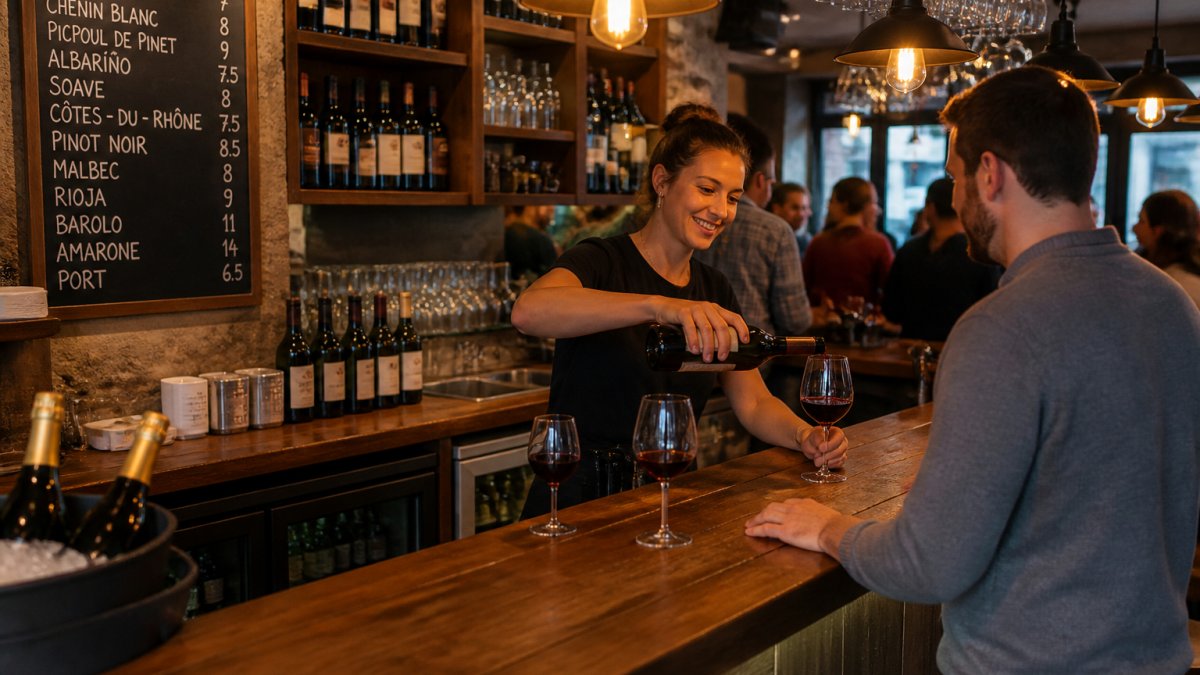
Where people drink has fragmented, and the buying behaviour follows. Neighbourhood wine bars with short lists are pulling trade that once went to city-centre chains, while gastropubs are competing on pairing menus rather than volume deals. The practical result for operators is that customers want a supplier who can source a specific label quickly and keep the core lines coming, because a short list only works if every line is reliably in stock.
What most national trend pieces miss is that Birmingham is not one market. A common pattern across the city is that different consumer groups buy and drink wine in different ways:
Serving style has shifted too. Spritz and wine-based long drinks are now standard orders, which means tonic water sits on the same order sheet as the wine. Our Schweppes tonic water six-pack covers that demand without a separate trip.
The local lesson is that range planning should follow occasion, not just price. A venue that maps its menu to how its own customers actually drink, by the glass, by the bottle, or not at all, will hold margin better than one that copies a national trend list wholesale. If you are building that range, our Coca-Cola and Schweppes range sits alongside the wine selection so bar managers can order the full drinks offer in one place. Register for our trade ordering portal at Swallow Drinks trade ordering to see the range and place orders directly.
We have supplied Birmingham's on-trade for over 40 years as a family-run independent wholesaler, and we would rather help you build a range that sells than simply take an order. That means looking at your menu, your glass sales and your soft drinks gap before we talk about lines.
Three things make that easier:
Register for our trade ordering portal at Swallow Drinks trade ordering to see the range and place orders directly.
Yes, the direction of travel is downward. Wine consumption is widely reported to be easing, as some drinkers pace themselves and cut back. That does not mean wine is disappearing from Birmingham bars, but it does mean volume per visit is thinner. Operators who plan for fewer, better glasses sold per head, rather than assuming the old throughput, will read their own sales data more accurately.
They are, and the low-alcohol wine trends UK buyers are responding to are less about novelty and more about range. Customers want a credible alcohol-free or lower-strength option that tastes like wine rather than a sweet substitute, so venues need at least one serious bottle on the list. Stocking a single token option and hoping it covers the demand is the common mistake. Swallow Drinks carries a dedicated low and non-alcoholic range worth reviewing before you set your 2026 list.
Start by cutting the dead weight. Wine list trends for restaurants in 2026 favour shorter, better-edited lists where every bottle earns its place, with clear by-the-glass options and a low-alcohol choice that is not an afterthought. Then match the list to how your customers actually order: more sharing plates, more mid-week visits, fewer big-ticket bottles. Wine range planning for hospitality works best when it follows your menu and your footfall pattern rather than a supplier's catalogue order.
Consider your menu first, then your margin, then your storage. A wine that fights your food is a wine that sits on the shelf, and a wine with a thin margin on a slow line ties up cash you need elsewhere. Factor in delivery reliability too, because a gap on a Saturday night costs more than a slightly higher case price. Swallow Drinks has supplied the on-trade for over 40 years and can help you build a range around your menu rather than a generic list.
The challenge for 2026 is not finding wine to sell. It is choosing the right lines for how your customers now drink, and keeping them in stock without tying up cash. Swallow Drinks can help with a portfolio covering wine, beer, spirits and soft drinks, six-day-a-week delivery, and menu consultation from a team that has served the region's on-trade for over 40 years. Get started with Swallow Drinks and build a wine range that matches the way Birmingham drinks in 2026.
Members of:


AWRS Registration Number: XJAW00000100730