Sep 26, 2026
Last Updated: September 25, 2026
Choosing between local vs national drink distributors shapes everything about how your venue operates. The decision affects stock reliability, pricing transparency, service responsiveness, and your ability to source niche drinks. At Swallow Drinks, we've spent over 40 years working with independent venues across the region, and we've seen firsthand how this choice determines whether a bar thrives or constantly battles stock shortages.
Local vs national drink distributors differ fundamentally in how they operate. National distributors prioritize volume and standardised processes across hundreds of venues. Local distributors, by contrast, build relationships with individual accounts and adapt their service to your specific needs.
The core distinction isn't just size, it's flexibility. A national distributor manages thousands of accounts through centralised ordering systems and fixed delivery schedules. A local supplier like Swallow Drinks manages fewer accounts but offers direct contact, personalised menu consultation, and the ability to source specialist drinks that national networks won't touch.
Aspect | Local Distributors | National Distributors |
|---|---|---|
Delivery frequency | Often 6 days per week | Fixed weekly schedules |
Stock sourcing | Niche and local brands available | Mainstream brands only |
Pricing transparency | Direct negotiation | Published price lists |
Service responsiveness | Direct contact with account manager | Call centre support |
Menu consultation | Included as standard | Rarely offered |
Minimum orders | Flexible | Often rigid |
Stock reliability comes down to operational mechanics: consistently delivering what you need, when you need it, without Saturday morning shortages.
Local distributors achieve reliability through dedicated logistics and direct accountability. Swallow Drinks serves venues across the region with fewer accounts per driver, typically 40-60 stops per route versus 150-200 for national networks, enabling more reliable stock rotation and fewer missed deliveries.
Managing 50 accounts instead of 500 means knowing exactly which venues need restocking and when. Local distributors anticipate demand by venue type and use market knowledge to predict seasonal shifts and regional preferences that national systems miss.
National distributors excel at mainstream stock availability but lack flexibility when you need something different or when your demand pattern doesn't match their standard cycle. Their systems prioritise volume and standardisation over individual venue responsiveness.
Technology integration shapes reliability too. Local distributors typically use simpler, more flexible ordering systems, often web-based platforms like Swallow's trade ordering platform, that allow direct communication between your venue and the distributor. You can adjust orders up to a certain point before delivery, flag urgent needs, and get real-time confirmation. National distributors use enterprise resource planning (ERP) systems designed for scale; they're powerful but rigid. Orders often lock 48-72 hours before delivery, leaving no room for adjustment.
Local distributors rotate stock more frequently due to fewer accounts and shorter routes, reducing expired or damaged stock. National distributors' longer supply chains introduce more handling points and damage risk.
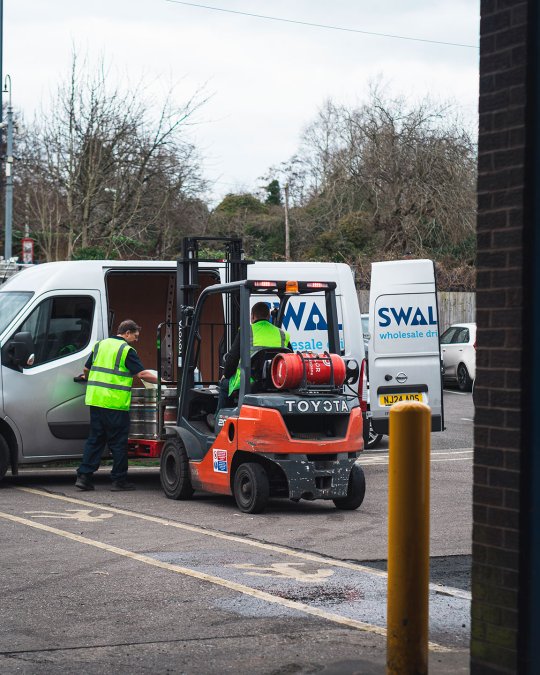
Direct communication separates reliable stock management from shortages. Local distributors adjust orders based on actual sales patterns and protect you from both stockouts and dead stock, something national distributors can't scale.
Local distributors work efficiently for venues within their region but lose advantage if you expand beyond their footprint. National distributors handle multi-site venues more easily but sacrifice the responsiveness that makes local distribution reliable.
Local distributors stock niche products that national networks won't touch. Craft breweries and independent spirit brands can trial products and build demand without the bureaucratic overhead of national systems.
Map your stock velocity: which drinks move fastest, which sit on the shelf, and how many days your stock lasts. This baseline determines your required delivery frequency.
Assess your sourcing needs. If you source niche and local drinks, national distributors will frustrate you. Local suppliers like Swallow Drinks actively source specialist stock within days rather than weeks.
Evaluate service expectations. If Saturday-night emergencies are common, a local distributor with direct contact is essential. Predictable venues may work with national distributors.
Compare pricing transparency. Request detailed price lists and ask about delivery surcharges, minimum orders, and promotional costs. Local distributors negotiate directly; national distributors add conditional fees after commitment.
In the UK, the three-tier system, producer, distributor, retailer, governs alcohol distribution. Distributor pricing reflects compliance, logistics, and margin architecture within this framework.
With Swallow Drinks, pricing is transparent: fewer accounts mean direct negotiation with no hidden surcharges. Prices include delivery within the service area and standard payment terms.
National distributors use tiered pricing based on volume thresholds, incentivising over-ordering. They impose delivery surcharges for emergencies that local distributors absorb as part of service.
Both local and national distributors comply with UK alcohol licensing law and HMRC duty tracking. National distributors spread compliance costs across thousands of accounts; local distributors offset costs through operational efficiency.
A gastropub might find that while national distributors offer competitive per-unit pricing on mainstream brands, delivery surcharges, minimum orders, and promotional fees often eliminate any potential savings. Local distributors offering flexible terms often deliver better total economics.
National distributors unlock better pricing tiers with higher volume commitments. Local distributors adjust pricing as you grow but are limited by geographic footprint.
Request a detailed cost breakdown from any potential supplier. Ask for: per-unit pricing on your top 20 products, delivery charges by order size, minimum order requirements, payment terms, and any promotional or support fees. Compare these across three months of typical ordering to see total cost, not headline price.
Effective stock management depends on alignment between your venue and your supplier. The best distributors, local or national, work with you to optimise stock levels.
Start with a structured ordering process. Decide on a fixed order day and time. This consistency helps your distributor plan deliveries and ensures you don't accidentally miss a delivery slot. Most venues order mid-week to ensure stock arrives before the weekend rush.
Track what sells and what doesn't.
On-trade venues, pubs, bars, restaurants, hotels, operate on thin margins. The difference between a profitable month and a struggling one often hinges on operational efficiency and the ability to respond quickly to market changes.
The decision between local vs national drink distributors ultimately depends on what your venue needs to succeed.
Choose a local distributor if:
Choose a national distributor if:
Local drinks distributors offer faster delivery cycles, often six days a week, reducing the risk of running out of stock on busy nights. They understand the specific needs of independent venues in your area, provide personalised menu consultation, and build long-term relationships rather than treating you as a transaction number. With over 40 years of industry experience, local suppliers like Swallow Drinks combine reliability with genuine partnership.
Look for suppliers with flexible minimum orders that don't tie up excessive cash, transparent pricing with no hidden surcharges, and proven six-day delivery consistency. Check whether they offer menu guidance and can source niche or craft labels quickly. Ask about their experience with venues your size and request references. A reliable supplier should be willing to discuss your specific needs rather than pushing standardised packages.
National distributors may offer lower per-unit costs on high-volume orders, but independent wholesalers often provide better value for smaller venues through flexible terms, no hidden fees, and personalised pricing. Many national operations impose minimum orders that force independent bars to overstock, tying up capital. The real cost includes stock waste, storage space, and cash flow pressure—factors that can outweigh any per-bottle discount.
Personalised service means your supplier understands your menu, your customer preferences, and your sales patterns. They can recommend stock levels, suggest new products that suit your venue, and respond quickly to urgent requests or equipment issues. This reduces overstocking, minimises waste, and helps you stay competitive. A supplier with 40 years of industry expertise can turn stock management from a headache into a strategic advantage.
The choice between local and national drink distributors shapes your operational efficiency, profitability, and ability to build a differentiated drinks menu. For independent venues across the region, a local partner with deep market knowledge and genuine accountability delivers the reliability and service that chains cannot match. Swallow Drinks has spent four decades proving that approach works. Get in touch with us today to discuss how we can support your venue's growth.
Members of:


AWRS Registration Number: XJAW00000100730