Nov 23, 2026
Last Updated: November 21, 2026
Quick Summary
Matching your beer format to your shop is essential: cask ale suits a tasting room with steady footfall, while keg beer offers longer shelf life for high-volume or takeaway-led shops. Start with a focused range, such as one cask of your lead bitter, one 50-litre smooth ale keg, one 30-litre stout keg and one 30-litre lighter keg.
Choosing the best keg and cask beer for a new bottle shop starts with deciding which format suits your customers, space and margins. Swallow Drinks has supplied Birmingham's on-trade for over 40 years. Cask beer is live, unfiltered ale that finishes conditioning in the container and is served through a hand pull or gravity tap. Keg beer is filtered or pasteurised, carbonated, and pushed through a gas-driven dispense system. These differences shape everything from product shelf life to how you sell it to your customers.
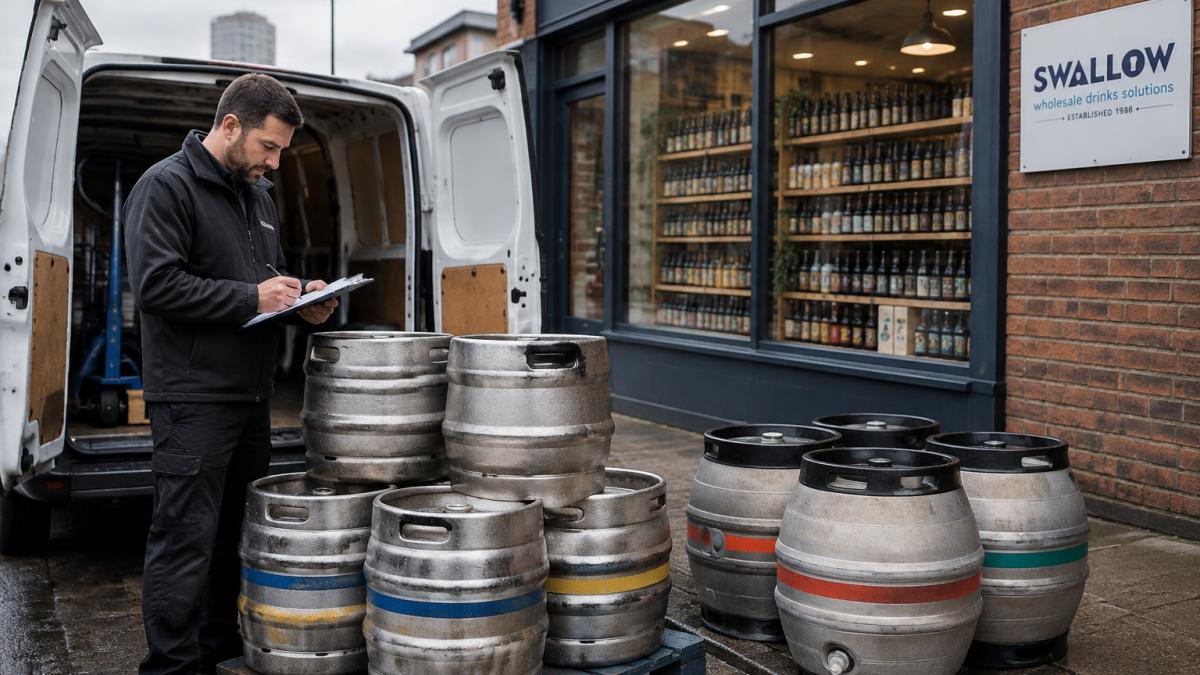
Cask ale is racked with live yeast and continues to ferment gently in the container. That secondary conditioning builds natural carbonation and the soft, rounded texture expected by enthusiasts. Once tapped, a cask must be sold within days, making it ideal for shops with steady footfall and a dedicated tasting room.
Keg beer arrives carbonated and is dispensed using external gas pressure, usually a CO2 and nitrogen blend. It remains stable for longer once tapped, pours consistently, and suits high-volume or takeaway-led bottle shops. This format requires a proper dispense setup and a reliable gas supply.
Filtration and pasteurisation provide keg beer with its stability. Filtering removes yeast and sediment, while pasteurisation uses heat to neutralise remaining microbes. Both processes extend shelf life, though they can alter the profile of the beer compared to cask ale. Unfiltered, unpasteurised cask ale offers a livelier character but demands a faster turnover rate.
Carbonation follows a similar logic. Cask beer is naturally carbonated by its own secondary fermentation. Keg beer relies on forced carbonation, where CO2 is injected under pressure before packaging. Natural carbonation provides finer, softer bubbles, whereas forced carbonation creates a brighter, more consistent fizz.
If you plan to sell takeaway beer alongside draught options, keg and bottle formats generally carry lower risks. Cask ale is best suited for shops with a tasting room and regular customers who appreciate the product served fresh.
A balanced opening keg range covers four categories: a session bitter, a smooth ale, a stout and a lighter option. Swallow Drinks provides a comprehensive trade range to cover these needs.
Fullers London Pride 24 x 330ml and Greene King IPA 3.6% 8 x 500ml provide bottled versions of familiar cask ales, offering customers a convenient takeaway alternative to draught.
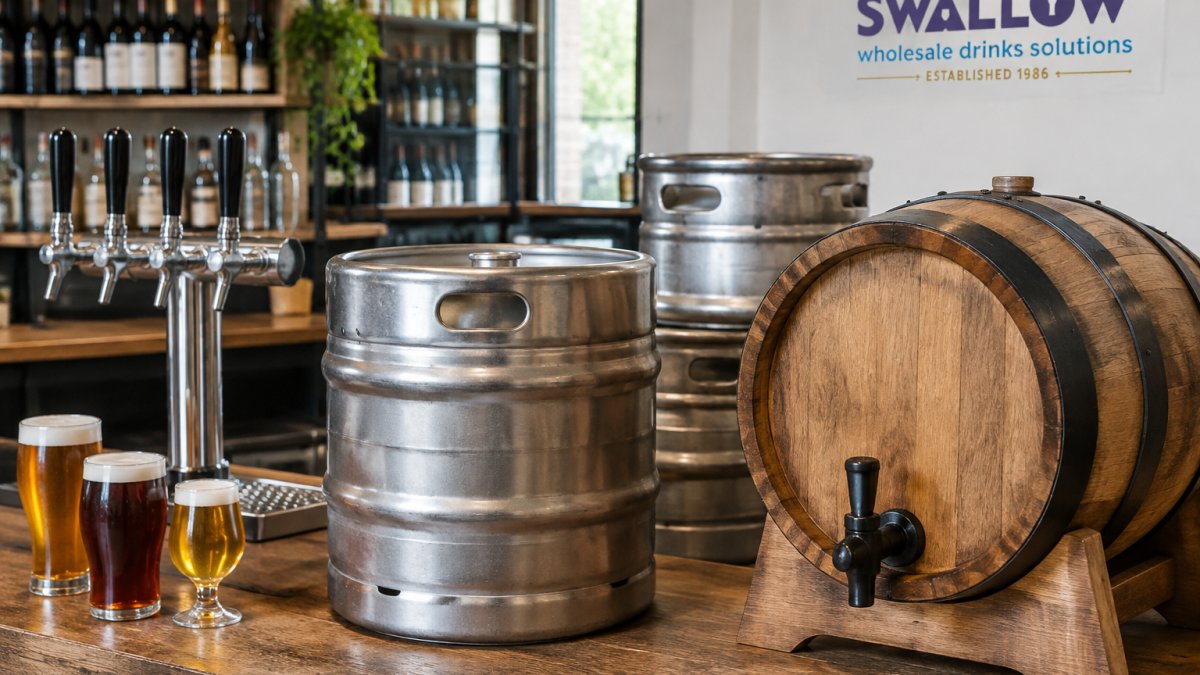
Cask and keg beer come in standard trade formats. A standard cask holds roughly 41 litres, or about 72 pints. A standard keg holds 50 litres, or about 88 pints, while 30-litre kegs suit lower-volume lines like stout at about 53 pints. Prices below reflect our current trade pricing in GBP.
| Product | ABV | Trade Price |
|---|---|---|
| Wye Valley Butty Bach | 4.5% | £111.50 |
| Wye Valley HPA | 4.0% | £108.50 |
| Timothy Taylor Landlord | 4.3% | £171.17 |
| Doom Bar | 4.3% | £152.94 |
| Worthington Bitter | 3.4% | £154.99 |
| John Smiths Smooth | 3.4% | £156.12 |
| Boddingtons Bitter | 3.4% | £150.94 |
| Banks Mild Smooth Pour | 3.5% | £137.67 |
| Guinness Stout | 4.1% | £98.32 |
| Camden Stout | 4.0% | £119.89 |
Trade Price
Selecting smaller formats can reduce your initial risk on a new line. Plan your cellar and gas supply around the formats you intend to run, ensuring the number of lines matches your available space and cooling capacity. To check current trade prices and build your order, register at webtrade.swallow.uk.com.
Selecting beer for a bottle shop in Birmingham requires matching your range to local demand. West Midlands drinkers appreciate quality bitter, and including a local brewery line provides a compelling story for your customers. Holdens Golden Glow 12 x 500ml and Hobsons Twisted Spire 3.4% 12 x 500ml are West Midlands brews that complement a local-focused opening range.
If your shop is near a commuter route or a residential suburb, prioritise session-strength bitter and smooth ale. In student or city-centre locations, adding a golden ale and a stout can attract a wider demographic of drinkers.
Start narrow and order in the smallest trade format that makes sense for each line. A sensible opening order includes one cask of your lead bitter, one 50-litre keg of a smooth ale, one 30-litre keg of stout and one 30-litre keg of a lighter style. Monitor sales over the first fortnight to inform your reordering strategy.
Seasonality also influences demand in Birmingham. Milds and stouts often see increased interest during colder months, while golden ales and pales gain popularity in spring and summer. Build your opening range around the current season and maintain one rotating guest line to keep regulars engaged.
Ensure your premises can accommodate the specific cooling and gas requirements for your chosen draught products. According to British Beer and Pub Association guidance, proper cellar management is vital for maintaining product quality. For takeaway trade, ensure you have the appropriate containers and sealing methods to maintain carbonation levels.
To compare trade pricing and build an opening order that suits your space, register at webtrade.swallow.uk.com.
Verify that any wholesaler you buy from is AWRS registered (Check if you need approval to sell alcoholic products to another business). AWRS registration confirms that the supplier handles HMRC duty correctly, which is a critical consideration for any business. According to HMRC business guidance, conducting due diligence on your suppliers is a key step in ensuring your supply chain remains compliant.
Getting your keg and cask beer range right is essential for a successful launch. Swallow Drinks supplies Birmingham and the West Midlands with a trade range built for the on-trade, backed by 40 years of experience. Learn more at https://www.swallow.uk.com.
The challenge for any new bottle shop is to pick a range that sells at a price that supports your margins. Swallow Drinks assists with this, offering a trade catalogue of keg and cask beer, competitive pricing, and account managers who understand the West Midlands market. Get started with Swallow Drinks and build an opening range that meets your customers' needs.
Cask beer is unfiltered and unpasteurised, conditioned in the container and served without external gas pressure. Keg beer is filtered or pasteurised, carbonated and dispensed using external gas pressure, offering a longer shelf life. For a new bottle shop, cask suits a tasting room or draught trade, while keg is often more manageable for takeaway and lower-volume draught.
Start with a small core range that covers familiar styles: a session bitter, a smooth ale, a stout and a mild. Add one or two local or exclusive labels to differentiate your shop. Check trade prices, minimum orders and delivery frequency before committing.
Yes. Many shops run a small keg line for takeaway growlers or a tasting room, and a single cask for draught. Match your dispense setup to the format: keg needs a gas system and cooler, while cask requires a stillage and cellar temperature control.
Ask about AWRS registration, due diligence on supply routes, allergen declarations and delivery reliability. Confirm whether prices are competitive and what minimum order quantities apply.
Members of:


AWRS Registration Number: XJAW00000100730