Sep 28, 2026
Last Updated: September 27, 2026
A dirty glasswasher is one of the fastest ways to lose custom. Cloudy glassware, lingering odours and smeared lipstick marks all tell a customer the same thing: this bar doesn't care. At Swallow Drinks, we've spent 40 years supplying the on-trade across Birmingham and the West Midlands, and we understand how quickly a neglected machine undermines an otherwise excellent operation.
A written commercial glasswasher cleaning schedule is the single most effective maintenance tool. It turns vague good intentions into a repeatable routine that survives staff turnover.
| Task | Frequency | Who |
|---|---|---|
| Remove and rinse drain filter | Daily | Closing bar staff |
| Wipe door seals | Daily | Closing bar staff |
| Check chemical levels | Daily | Opening supervisor |
| Deep clean interior and wash arms | Weekly | Duty manager |
| Descale and check water softener | Monthly | Duty manager |
| Full service and seal inspection | Quarterly | Engineer |
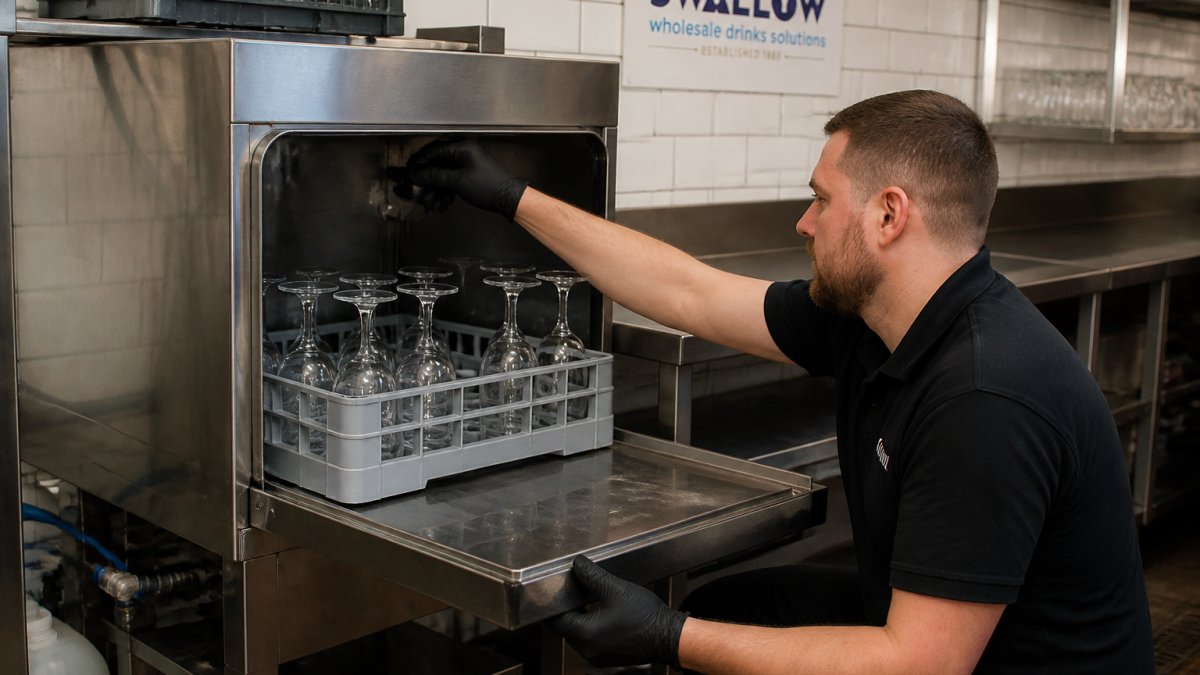
At close, remove the drain filter and rinse it under hot water. Wipe the door seals with a damp cloth. Check detergent and rinse aid levels so the first morning cycle isn't compromised.
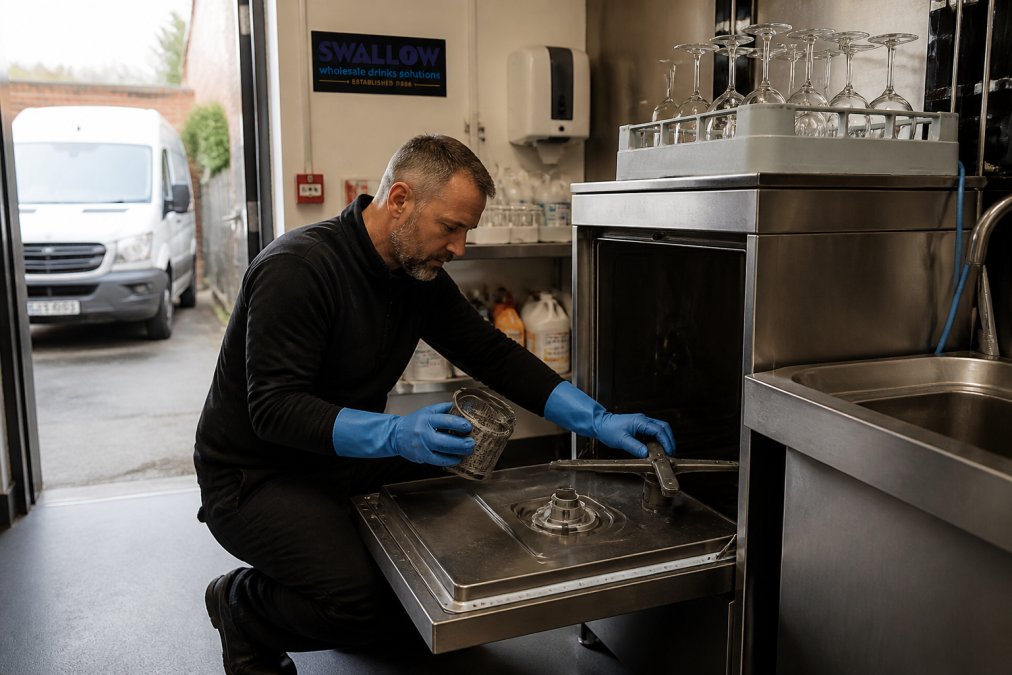
Once a week, run an empty cycle with a dedicated glasswasher cleaner. Remove the wash arms, rinse the jets, and clear any debris from the sump. This prevents the build-up that causes cloudy glassware.
Descaling removes the lime scale that builds up on heating elements, wash arms and interior surfaces. In hard water areas, this needs doing monthly; in soft water areas, quarterly may be enough.
The process is straightforward:
Water hardness is the root cause of most scale problems. Fit a water softener or filtration unit if your supply is hard, and check the salt levels weekly. A blocked or exhausted softener will undo every other maintenance task you do.
Most glasswasher faults announce themselves on the glass before they show up on a service report. If you can read the defect, you can usually fix the cause in one cycle rather than booking an engineer. This is a diagnostic method to consider, start with what the glass looks like, then work back to the machine.
| What you see | Most likely cause | First check |
|---|---|---|
| Uniform cloudy film across the whole glass | Scale build-up on elements and interior | Descale the machine; check water softener salt |
| Spots and streaks, worse on the outside | Rinse aid low, diluted or dosing pump blocked | Rinse aid level and pump tubing |
| Cloudy only on the inside | Detergent residue or a shortened rinse cycle | Detergent dose and rinse cycle time |
| Cloudy only on older glasses | The glass itself is etched | Replace the stock, no machine fix will help |
| Greasy film that smears when wiped | Wash temperature too low or detergent too weak | Wash tank temperature and detergent dose |
| White chalky deposit that scratches off | Hard water scale, often on the rinse side | Water hardness and softener function |
| Glasses still wet at the end of the cycle | Rinse aid exhausted or drying phase fault | Rinse aid and door seal |
Commercial glassware has a finite life. Detergent, heat and repeated cycles gradually etch the surface, and once etching starts no amount of descaling will bring the glass back. A common pattern is a bar that replaces its glasswasher, sees no improvement, and only then realises the stock was the problem. If your oldest glasses are cloudy and your newest are not, the machine is fine, rotate your stock and retire the etched glasses.
Cloudy glassware is a quality issue, but it can also be a hygiene signal. The Food Standards Agency's hygiene guidance for food businesses is the reference point for any bar team, and it applies to glassware as much as to plates. If you are failing inspection on glass hygiene, the cause is usually a combination of the faults above plus a maintenance schedule that has slipped.
Chemical dosage is where most bars quietly lose money and glass quality. Too little detergent leaves residue; too much leaves streaks and wastes stock. The difference between the two is usually a few millilitres per cycle, which is why dosing deserves its own routine rather than a glance at the bottle.
Detergent and rinse aid doses are set against water hardness, not against the size of the machine. As a working rule:
SWALLOW PURPLE B/LINE CLEANER 5LTR →
Dosing pumps drift. Tubing perishes, peristaltic rollers flatten, and a pump that was delivering 2 ml per cycle in January may be delivering 1.4 ml by summer. A monthly calibration takes ten minutes:
Rinse aid is the ingredient that stops water spotting during the drying phase. It lowers the surface tension of the rinse water so it sheets off the glass rather than forming droplets. If rinse aid runs out, glasses come out wet, spotted and slow to dry, which slows your turnaround on a busy night. Keep it topped up and never dilute it.
Under the Control of Substances Hazardous to Health Regulations 2002 (COSHH), you must assess the risk from glasswasher chemicals, keep safety data sheets accessible, and make sure staff know what to do if chemical contacts skin or eyes. In practice that means:
Blocked wash arms and jets are the most common cause of poor wash results. Food debris, glass chips and scale all find their way into the nozzles over time.
No maintenance schedule survives without trained staff. New starters should be shown how to load racks correctly, check chemical levels, and report faults the same day.
Seasonal servicing keeps a glasswasher running efficiently through peak trading. Before busy periods, book an engineer to check door seals, heating elements and the chemical pump.
Descale a commercial glasswasher every four to six weeks in soft water areas, or every two to three weeks where water hardness is high. If you notice cloudy glassware or reduced rinse performance, descale sooner. Many bar managers in Birmingham add descaling to their monthly deep clean schedule. Regular descaling protects the heating element, keeps wash arms clear and extends equipment life. Always follow the manufacturer's instructions for the descaling product you use.
Watch for cloudy glassware, water spots, a weak rinse cycle, unusual noises, leaks around door seals, or glasses that still feel greasy after washing. A rising operational temperature that never reaches the set point can also signal a fault. Check nozzle blockage and drain filters first, as these are common causes. If problems persist, call a qualified engineer. Ignoring early signs often leads to costly breakdowns during busy service.
Prevent water spots by maintaining correct rinse aid dosage, checking water hardness and using a water softener or reverse osmosis system if needed. Ensure the rinse cycle reaches the right temperature and that wash arms are free from nozzle blockage. Rack glasses so they do not nest, and let them air dry. For bars in hard water areas, descaling regularly and monitoring detergent dosage makes a noticeable difference to glass clarity.
Daily glasswasher maintenance removes food and drink residue that can harbour bacteria, ensuring glassware hygiene meets UK food safety requirements. Cleaning drain filters, checking detergent and rinse aid levels, and wiping door seals each day prevents build-up that affects wash cycle performance. It also helps you spot wear early, reducing downtime. A clean machine supports consistent sanitization, protects customers and keeps your bar compliant with environmental health inspections.
Running a bar means juggling stock, staff and service, and glasswasher maintenance is easy to push down the list. That's exactly when cloudy glassware and costly breakdowns start. Swallow Drinks has supported the on-trade for 40 years, and our trade ordering portal makes it simple to keep cleaning chemicals, beer line cleaner and bar supplies in stock without tying up cash. Register today at https://webtrade.swallow.uk.com/ and get the supplies you need, when you need them.
Members of:


AWRS Registration Number: XJAW00000100730