Jul 03, 2026
Last Updated: July 3, 2026
FIFA 2026 introduces mandatory water breaks at specific intervals during matches, fundamentally changing how stadium suppliers and bar operators must stock inventory. When the referee stops play at the 22nd minute and again in the second half, thousands of spectators simultaneously reach for beverages, creating immediate bottlenecks.
The critical insight most guides miss: hydration breaks compress normally distributed demand into three-minute windows. A typical match might see steady concession sales across 90 minutes, but with mandatory breaks, you're looking at 40% of daily beverage sales happening in perhaps 15 minutes total. Staffing, inventory positioning, and supply chain coordination all need to account for this reality.
Managing bar inventory during World Cup events demands departure from standard practices. The baseline stocking approach most bars use, calculating par levels based on average hourly consumption, fails spectacularly during tournament play. You need tournament-specific par levels that anticipate demand compression into specific windows.
Start by physically counting every bottle, can, and keg in your inventory at least 48 hours before the first match. For stadium concessions and bar operations, baseline inventory should be 30-40% higher than non-tournament weeks, held specifically for hydration break windows.
Assign staff specifically to watch inventory levels during matches, not just during service. When the 22nd-minute break approaches, you need visibility into what's actually moving. If you see popular items dropping below 20% of your par level during a break, you have minutes to make decisions about rationing or shifting customer flow to alternative products.
For World Cup events, identify your top 10 beverage items by sales volume. For each item, calculate the maximum quantity sold during a single hydration break period, multiply that by the number of hydration breaks in a match day, then add 25% additional stock for contingency.
Weather and player health protocols complicate the calculation. Hotter match conditions increase hydration demands significantly, matches in warm climates see 15-25% higher water and electrolyte drink consumption than temperate venues. If your venue hosts matches in warmer regions, increase your par levels by 20% for non-alcoholic beverages.
While hydration breaks themselves don't typically see high alcohol sales, the periods immediately before and after breaks see elevated alcoholic beverage purchases. Your par levels need to reflect this pattern shift.
Beverage Category | Standard Par Level | Tournament Par Level | Adjustment Factor |
|---|---|---|---|
Water/Still Drinks | 150 units | 240 units | +60% |
Soft Drinks | 120 units | 200 units | +67% |
Sports Drinks | 80 units | 150 units | +88% |
Alcoholic Beverages | 200 units | 220 units | +10% |
Hot Beverages | 60 units | 70 units | +17% |
Predicting beverage demand accurately requires moving beyond simple historical averages. Use multiple data inputs: historical match data from previous tournaments, crowd predictions for specific matches, weather forecasts, and team-specific fan bases.
Analyse beverage sales patterns from previous major events by match type. Opening matches, knockout rounds, and final matches all show different consumption profiles. A match between two popular teams draws larger crowds and higher per-capita consumption than a less-anticipated fixture.
Crowd predictions matter enormously. A match featuring a major team draws 15-20% larger crowds than less prominent fixtures. Check advance ticket sales and fan engagement metrics to estimate crowd size. In hot venues, alcohol sales decline during hydration breaks (fans prioritise water and electrolyte drinks) but increase in the hour before and after matches.
:::pro-tip Use your point-of-sale system to track consumption by time window during matches, not just by day. A hydration break showing 40 water sales in 3 minutes tells you far more than knowing you sold 400 waters across the entire match day. :::
Selecting inventory management software for high-volume events requires prioritising real-time visibility and point-of-sale integration. Your system must show current stock levels during matches, not update them after the fact.
Point-of-sale data integration is the core requirement. Your system must pull sales data directly from checkout systems as transactions occur. This allows you to see demand patterns in real time and adjust restocking strategy during play.
Configure your system to flag items when they drop below 30% of par level during match hours. These alerts should go directly to the staff member assigned to inventory monitoring. For venues managing multiple concession locations, real-time visibility prevents scenarios where one location runs out while another has excess stock.
Preventing stockouts begins long before match day with coordinating your supply chain to ensure inventory arrives in the right quantities at the right times. Factory-sealed bottles present a specific advantage for tournament events: they're shelf-stable and don't require specialised storage.
Work with your primary wholesaler to schedule deliveries that front-load inventory before the tournament begins. Arrange deliveries to arrive 24-48 hours before matches, not days earlier. This reduces the risk of stock degradation and ensures inventory is fresh when demand peaks.
Share your tournament par levels and predicted consumption patterns with your primary wholesaler well in advance. Most quality suppliers can adjust delivery schedules and stock allocations to support high-volume events if given adequate notice. Arrange at least two scheduled deliveries during the tournament week, one before the first match and one mid-week.
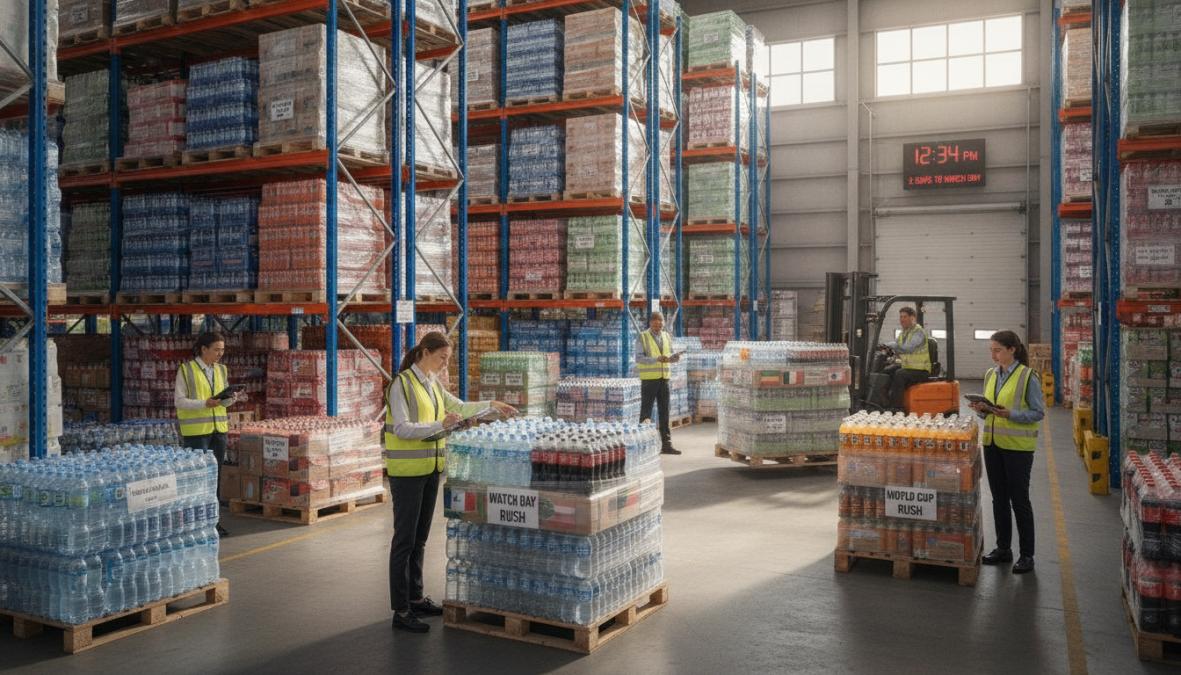
Preventing drink stockouts requires operational efficiency that keeps fans moving through concession points quickly. During hydration breaks, your concession infrastructure becomes the limiting factor.
Temporarily increase the number of active checkout lanes during hydration breaks. Schedule additional staff specifically for break periods, not just for general concession coverage. Some venues use mobile point-of-sale systems (tablets or handheld devices) to process transactions outside traditional checkout areas during breaks, dramatically increasing throughput.
Check the broadcast schedule for your matches and adjust staffing and inventory positioning accordingly. A match that's not being broadcast sees higher concession traffic during breaks than a televised match where fans stay seated.
Preventing stockouts is a customer retention strategy. When a fan wants water during a hydration break and the concession is out of stock, they remember that experience and are less likely to return or purchase other products.
The most common mistake is treating World Cup demand like regular match-day demand with higher volume. This leads to proportional inventory increases (20% more stock) when you actually need structural changes (40-60% more stock in specific categories, different delivery timing, different staffing models).
Many venues underestimate the concentration of demand during hydration breaks. A venue selling 100 beverages per hour on average might sell 600 beverages in a single 3-minute hydration break. Your inventory system needs to account for this concentration, not just increased total volume.
Insufficient supplier coordination causes stockouts even when demand forecasts are accurate. Venues that don't communicate with their wholesaler until a week before the tournament often find that suppliers have already allocated stock elsewhere.
Poor real-time visibility during matches prevents responding to stockouts as they develop. Assigning a specific staff member to monitor inventory levels during each match is a simple operational change that prevents this mistake.
Inadequate staffing during hydration breaks creates bottlenecks that feel like stockouts from the customer perspective. Even with sufficient inventory, if your concession points can only process 100 transactions per minute and 300 customers want to purchase in that window, 200 customers leave without buying.
Managing beverage inventory during the World Cup rush requires moving beyond standard bar and stadium operations practices. The mandatory hydration breaks, compressed demand windows, and high customer expectations create an operational environment that punishes unprepared venues. Swallow Drinks has supported on-trade businesses across Birmingham and surrounding areas through major events for over 40 years, helping venues develop tournament-specific inventory strategies, coordinate supply chain logistics, and implement real-time monitoring systems. When facing the World Cup rush, partner with a wholesaler that understands the operational challenges of high-volume events and can deliver the inventory volume and scheduling flexibility your venue needs.
Par levels should be calculated by multiplying your average hourly consumption by the number of hours until the next delivery, then adding a safety buffer of 20–30%. For World Cup events, increase this buffer to account for hydration breaks at the 22nd minute and peak demand spikes. Track point-of-sale data from previous tournaments to refine your multiplier and ensure you never run short of popular beverages during critical match moments.
Effective demand forecasting combines historical match attendance data, weather predictions (which affect consumption), and tournament schedules. Analyse previous events to identify peak consumption windows—particularly around mandatory hydration breaks. Factor in alcohol consumption patterns and the specific match (knockout stages drive higher attendance). Use real-time inventory tracking software to adjust forecasts during the tournament as actual demand patterns emerge, allowing you to refine future predictions and prevent stockouts.
Modern inventory management software provides real-time visibility into stock levels, triggers automatic reorder alerts when thresholds are breached, and integrates point-of-sale data to track consumption instantly. During hydration breaks and high-traffic periods, this software helps you identify bottlenecks, optimise staffing allocation, and coordinate with suppliers for emergency deliveries. Predictive analytics within the software flag potential stockouts before they occur, giving you time to adjust supply or manage customer demand effectively.
Common causes include underestimating demand during mandatory hydration breaks, failing to account for weather-driven consumption increases, poor supplier coordination, inadequate par level calculations, and insufficient staffing at point-of-sale during peak periods. Many venues also neglect to factor in tournament schedules or broadcast interruptions that create unpredictable demand surges. Stockouts are often preventable through better forecasting, real-time inventory monitoring, and proactive supplier communication before and during the event.
Members of:


AWRS Registration Number: XJAW00000100730