Jul 10, 2026
Last Updated: July 10, 2026
A bar margin represents the profit you keep after accounting for the cost of goods sold (COGS). Most venues operate with margins between 65-75%, but the best-performing establishments consistently hit 75-80%. The difference comes down to three factors: accurate pour cost calculation, disciplined stock control, and strategic pricing. A 2% variance in pour costs across 200 drinks per night equals hundreds of pounds in lost margin monthly. This guide covers the exact systems that separate high-margin bars from struggling ones.
Your pour cost percentage is the foundation of every margin decision. It's calculated as total cost of drinks sold divided by total revenue from drinks, expressed as a percentage. If your drinks cost £1,000 and you generate £4,000 in drinks revenue, your pour cost is 25%. The industry benchmark sits around 20-28%, depending on your drink mix and pricing strategy.
Begin with a physical stock count. Count every bottle, measure partial bottles in standard units, and assign a cost based on what you paid your supplier. Once you have your opening stock value, add all purchases during the period, subtract your closing stock, and you've got your COGS. Divide this by your total drinks revenue for the same period to get your liquor cost percentage.
The real insight comes when you break this down by category. Wine margins differ from spirits, which differ from beer. By calculating pour cost by category, you can identify which product lines need attention. If your wine cost percentage is 35% but your spirits are 22%, you know where to focus your pricing strategy.
Different drink types support different cost structures. Premium cocktails can sustain 18-22% pour costs because customers expect to pay more. House wines typically run 28-32% pour cost as volume drivers. Spirits-based drinks should land around 20-25%, whilst beer and soft drinks often sit at 15-20%.
Set targets for each category based on your pricing and customer expectations, then review them weekly. If a category is running above target, either raise prices slightly or swap in a more cost-effective supplier option. Swallow Drinks offers house spirits like HOUSE VODKA KALINSKA 70CL at competitive wholesale costs that help you maintain healthy margins.
Shrinkage, the difference between what you purchased and what you sold, is where margins disappear silently. It includes spillage, over-pouring, theft, and waste. In bars with poor controls, shrinkage can run 3-5% of total stock value. In well-managed venues, it's closer to 0.5-1%. That 2-4% gap represents pure profit loss.
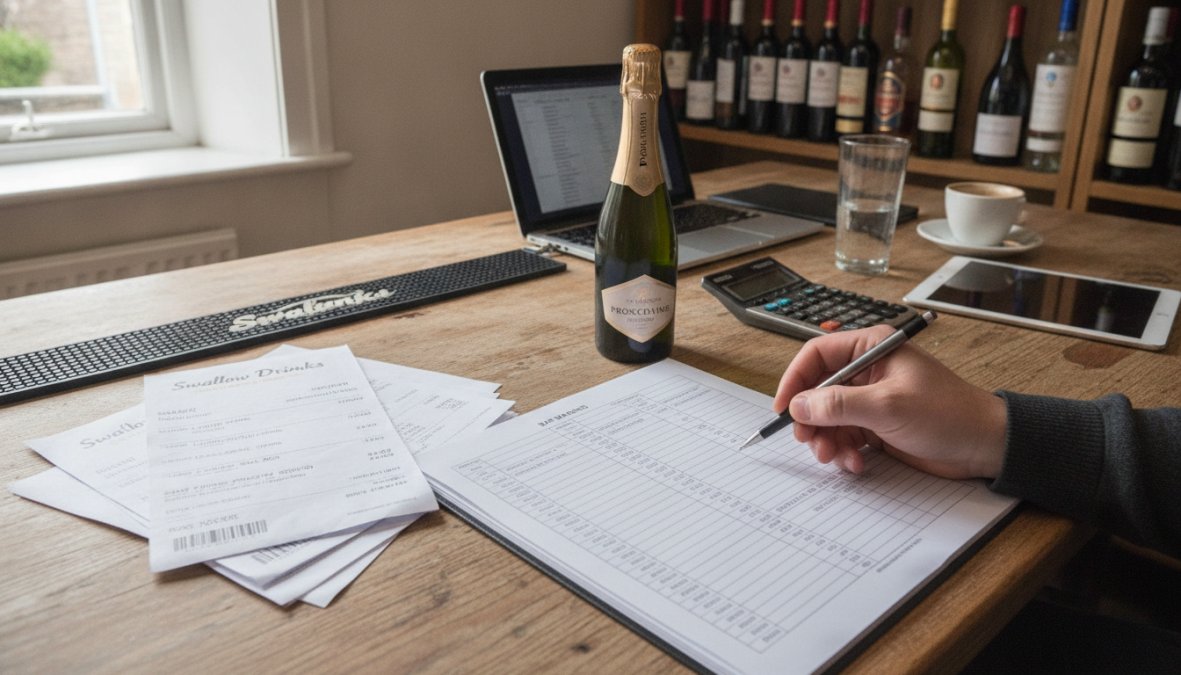
A bar audit is a physical count of all stock combined with a reconciliation against your POS records. The best practice is a weekly audit. Here's the process:
When variance appears, dig into the details. Was it a particular shift or bartender? A specific product category? Most variance traces to either data entry errors or over-pouring. Audits also catch theft early and reduce shrinkage simply through visible monitoring.
Track waste separately from shrinkage. Assign a staff member to log waste daily: what was wasted, why, and the cost. After two weeks, patterns emerge. If fruit waste is high, order smaller quantities more frequently. If remakes are common, invest in staff training.
Calculate inventory variance as: (Theoretical COGS - Actual COGS) ÷ Theoretical COGS × 100. A variance above 3% signals a problem. Below 1% is excellent. Most well-run bars target 1-2%.
Your menu is a profit-maximisation tool. The way you present options, price them, and position them directly influences what customers order and how much margin you capture.
Customers read menus in a predictable pattern: top-right corner first, then top-left, then middle. Placing your highest-margin drinks in the top-right corner increases their sales. Prices ending in .95 or .99 feel cheaper than round numbers. A cocktail at £8.95 feels more accessible than one at £9.00, even though the margin difference is negligible.
Grouping drinks by category makes the menu easier to scan. Within each category, order by price ascending. This nudges customers toward mid-range options, which typically carry better margins. A curated menu of 8-12 signature cocktails increases attachment rates and allows you to optimise each recipe for margin.
Cocktail pricing should start with your pour cost and desired margin:
Selling Price = Pour Cost ÷ Target Pour Cost Percentage
If a cocktail costs £1.50 in spirits, mixers, and garnish, and you want a 20% pour cost, the price should be £7.50. Most bars aim for 18-22% pour cost on cocktails because labour is already built into operating costs.
However, pricing isn't purely mathematical. Consider your market position. A cocktail bar in a premium location can command higher prices. A casual pub bar needs to price more competitively. Premium products deserve premium pricing; communicate quality on the menu and price accordingly.
Contribution margin is the profit remaining after subtracting COGS from revenue. A £10 cocktail with £1.80 in COGS has a contribution margin of £8.20. If you sell 200 cocktails per week, your weekly contribution margin is £1,640.
Gross profit is the same calculation expressed as a percentage: (Revenue - COGS) ÷ Revenue × 100. A £10 cocktail with £1.80 COGS has an 82% gross profit margin.
A balanced menu has both volume products (house wine at 32% pour cost) that drive traffic and high-margin products (premium spirits at 18% pour cost) that drive profit.
Dynamic pricing means adjusting prices based on demand or time of day. Happy hour pricing drives volume during slow periods. Premium product strategy involves positioning certain drinks as aspirational and pricing accordingly. A signature cocktail made with rare spirits and house-made syrups can command £14-18 pricing.
Segment your menu: entry-level drinks at accessible prices, mid-tier drinks at standard pricing, and premium drinks at premium pricing. This allows customers to self-select based on budget and occasion, maximising total revenue.
Staff training is where margin improvement becomes real. A bartender who consistently upsells premium drinks can increase average transaction value by 15-25%.
Effective upselling starts with product knowledge. Your bartenders must understand the difference between house and premium spirits, and feel confident recommending them. Instead of "Would you like to upgrade?", try "We have a beautiful single-malt Scotch that pairs really well with your order, would you like to try it?"
Upsell at the point of order, not after the customer has decided. Larger formats also drive margin. A 175ml glass of wine carries better margin than a 125ml glass. Train bartenders to suggest bottles to groups and larger pours to individuals.
Track which bartenders drive highest average transaction value. The best performers are usually more conversational and confident. Observe their techniques and share them with the rest of the team.
Manual stock tracking works, but modern POS systems and inventory management software reduce labour and catch discrepancies faster. A good system integrates your POS with your stock count, and every drink sold is recorded automatically.
The best systems include recipe costing, which automatically calculates COGS for each drink based on your supplier prices. Consider whether you need a dedicated inventory tool or whether your POS provider offers sufficient functionality. Most modern POS systems include basic inventory features. Whatever system you choose, the discipline matters most. A spreadsheet managed consistently beats expensive software managed sporadically.
Even the best systems fail if staff don't follow them. Training and accountability create the culture that sustains margin performance.
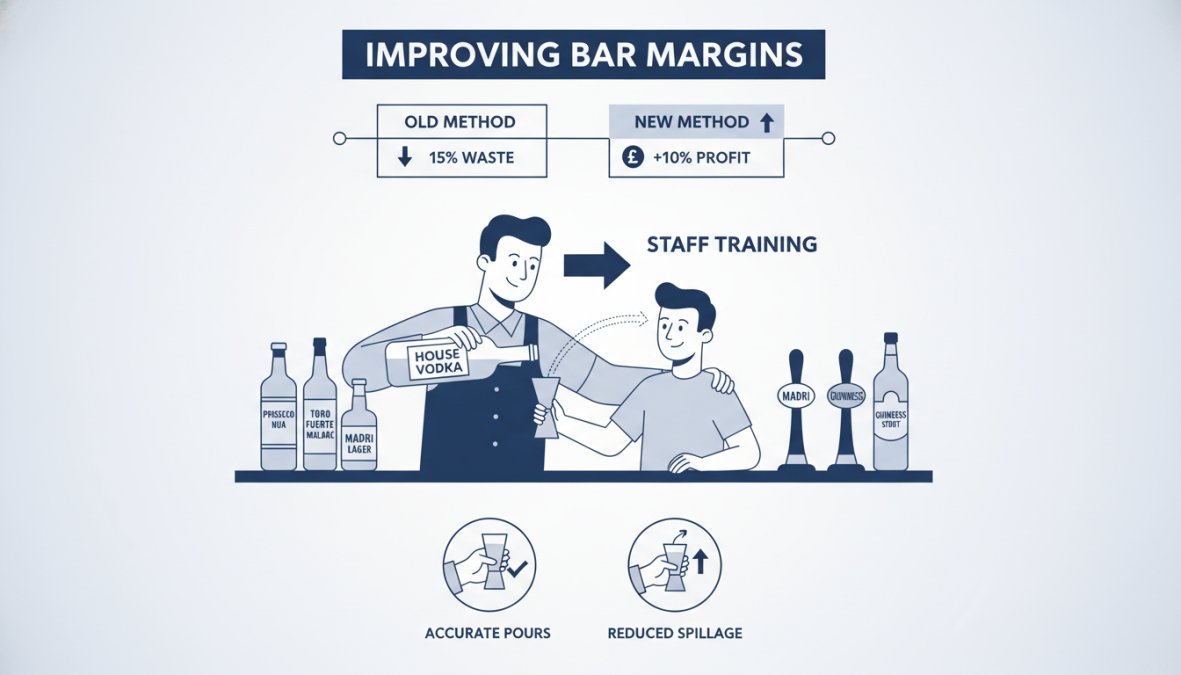
Start with onboarding. Every new bartender should understand your target pour costs, your premium products, and why margins matter. Provide regular feedback. Share weekly variance reports with your team. Celebrate low-shrinkage weeks. Investigate high-variance weeks together rather than accusingly.
Implement accountability measures without creating a surveillance culture. Assign stock counts to specific staff members. Track sales by bartender. Recognise top performers publicly. Consider incentivising margin performance with bonuses when team-wide variance stays below 2% or when average transaction value hits a target.
Protecting bar margins requires discipline across pricing, stock control, staff training, and menu engineering. Most venues leave 2-4% on the table simply because they don't measure what matters. By implementing regular audits, strategic pricing, staff accountability, and premium product positioning, you can recover that margin and boost profitability significantly.
Swallow Drinks has partnered with hundreds of on-trade venues to help them source premium products at wholesale costs that support healthy margins. Our range includes house wines like [HOUSE PINOT GRIGIO 12% 75CL](https://www.swallow.uk.com/products.php?prd=wine&sprd=still-wine&pid=house-pinot-grigio-12-75cl#productcats) and HOUSE MERLOT 12% 75CL, plus premium sparkling wines like HOUSE PROSECCO 11% 75CL. Access our full product range and competitive pricing by registering with WebTrade, our trade ordering platform designed for on-trade businesses across Birmingham and beyond.
A healthy bar margin typically ranges from 70–80% gross profit on drinks, though this varies by venue type and location. This translates to a liquor cost percentage of 20–30%. However, net profit after labour, rent, and overheads is usually 5–15%. Track your specific metrics using a POS system to understand where your margins stand and identify improvement opportunities.
The bar pour cost formula is: (Cost of Drinks Sold ÷ Drinks Revenue) × 100. For example, if your drinks cost £500 and you generated £2,000 in drinks revenue, your pour cost is 25%. Track this monthly to spot trends. Use a POS system to automate calculations and identify which drinks have the highest cost impact on your margins.
Implement regular bar audits to track inventory variance, establish clear pouring standards, and train staff on proper measuring techniques. Control spillage and over-pouring through accountability measures. Use a bar inventory management software to monitor stock levels and identify discrepancies. Consider partnering with a reliable supplier like Swallow Drinks, which has 40 years of industry expertise, to ensure consistent product quality and reduce waste from damaged stock.
Menu engineering focuses on the psychology of menu design—positioning high-margin drinks prominently, using descriptive language, and strategically pricing items. Analyse contribution margin for each drink and feature those with the best profitability. Remove low-margin items and promote premium liquor options. Swallow Drinks offers a range of house wines and spirits at competitive price points—such as House Pinot Grigio at £6.99 and House Prosecco at £7.89—ideal for building a profitable core menu.
Members of:


AWRS Registration Number: XJAW00000100730