Oct 21, 2026
Last Updated: October 20, 2026
A digital wine list app puts your full wine selection on a guest's phone or a tablet at the table, and it updates the moment your stock changes. For pubs, bars and restaurants across Birmingham and the wider region, that single change removes the most common friction point in wine service: the gap between what the printed list promises and what is actually behind the bar.
We supply the on-trade across Birmingham and the surrounding areas, and we have spent over 40 years watching venues lose sales to out-of-date lists. A guest orders a bottle, the server checks the cellar, and it went last Friday. The guest picks a second choice, hesitates, and often settles for something cheaper. A live wine list app closes that gap.
The benefits fall into four practical areas: fewer disappointed guests, faster service at peak times, better control of your wine stock, and a clearer picture of what actually sells.
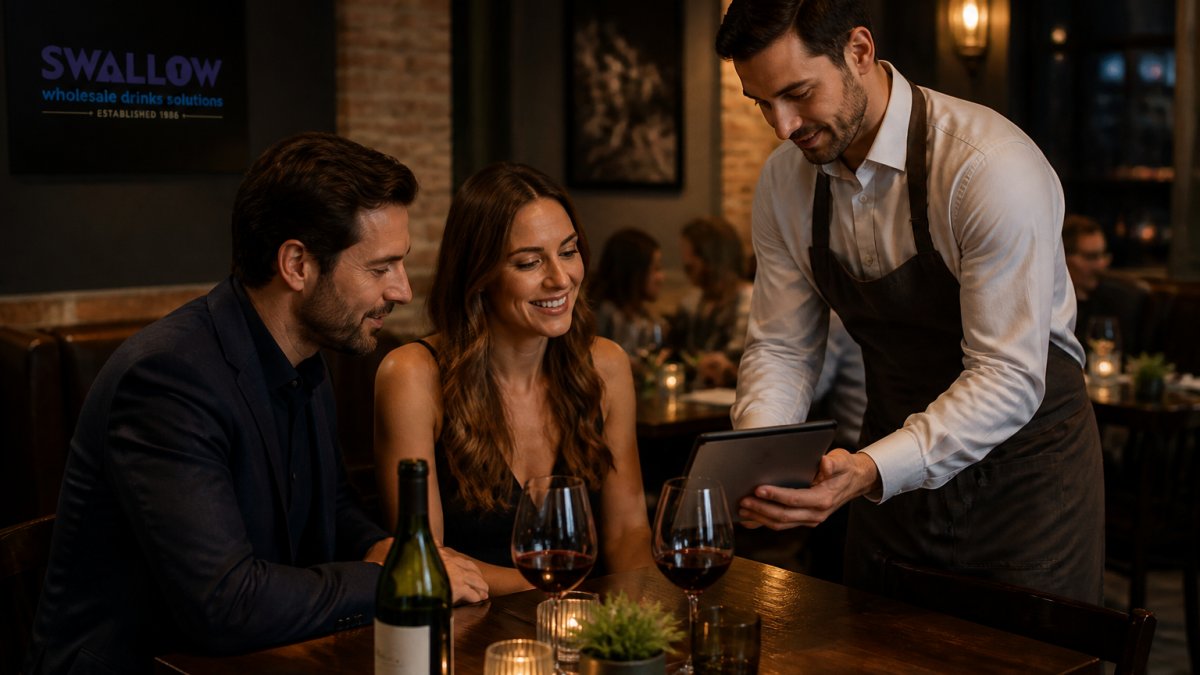
Restaurant wine list software is the back-end system that holds your list, descriptions and stock levels, then publishes them to whatever the guest sees. It replaces the spreadsheet, the printed list and the chalkboard with one record that everyone works from.
In practice, it does five jobs:
The real difference between a good system and a poor one is how much of that it does without anyone remembering to update it. A list that needs manual editing every time a bottle sells out will fall behind within a week.
A QR code wine menu is a printed square that opens your wine list on a guest's own phone. It costs nothing to reprint when the list changes, because the list lives online, not on the paper. For venues across the region, it removes the lag between a wine selling out and the list reflecting that fact.
Speed is the obvious gain. Guests scan and browse without waiting for a server, which matters most on a busy Friday night when your team is stretched. Updates are instant: a bottle goes out of stock, you mark it unavailable, and the next guest who scans sees the correct list.
But the guest experience depends on three practical details that are easy to overlook.
Connectivity and device fallbacks. Not every guest has a recent handset, and mobile signal inside a thick-walled pub or basement dining room can be unreliable. The best systems load quickly on low bandwidth and cache the list so it remains viewable after the initial scan. Keep a small number of printed lists behind the bar for guests who prefer paper, have a flat battery, or simply do not want to use their phone.
Accessibility and readability. Clear contrast, text that can be enlarged, and descriptions written in plain language help guests who are not confident with wine or with technology. Screen-reader compatibility matters too: a list built with proper headings and alt text is usable by guests with visual impairments, while an image-based PDF is not. Multilingual menus are a further consideration in tourist-heavy areas, and a digital list can offer a language toggle that a printed list cannot.
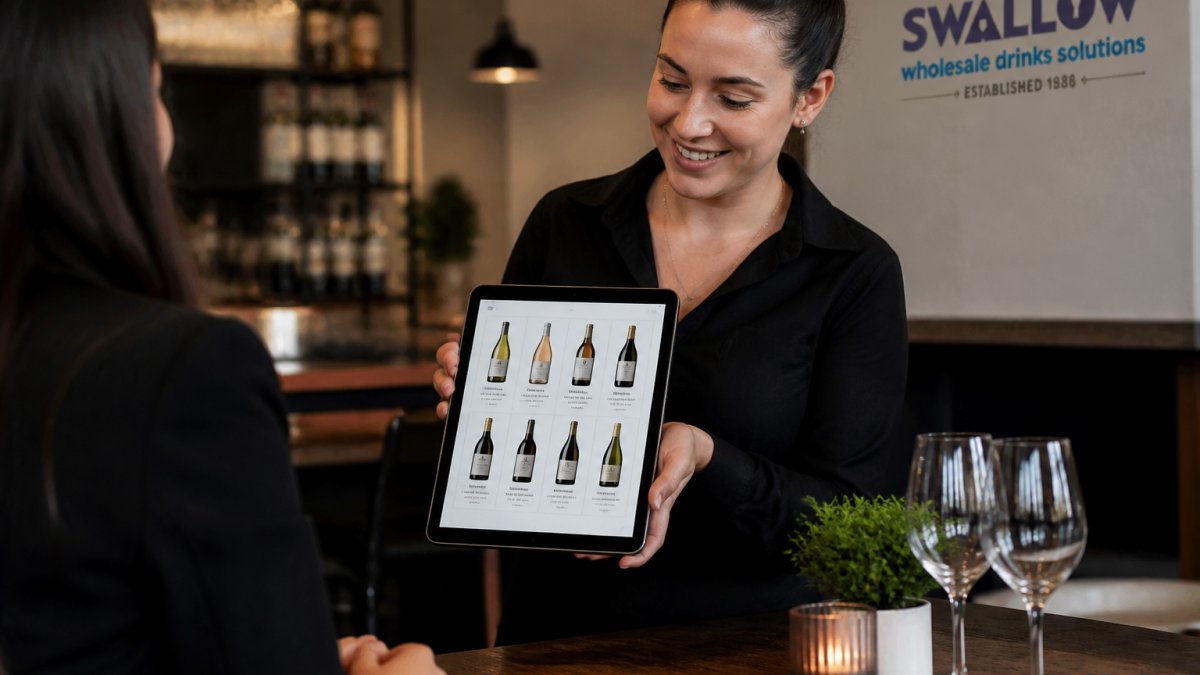
Hygiene and presentation. A laminated card on every table collects fingerprints and spills. A QR code on a clean table talker or menu holder looks smarter and is easier to wipe down. For venues that want to keep the ritual of presenting a list, a tablet handed to the guest offers the same live data with a more premium feel.
Wine list management software is where the commercial value sits. A live list tells you what you own, what you have sold and what you need to reorder, which is exactly the information a printed list can never give you.
Three controls matter most:
This is also where your supplier relationship pays off. A wholesaler who knows your list can suggest replacements before you run dry and flag when a line is being discontinued. Our trade customers can register at the Swallow trade portal to check stock and place orders, and we are always happy to talk through a list that has stopped working.
A wine and food pairing app suggests which bottle works with which dish, either through a short note on the menu or a searchable guide. Done well, it turns an uncertain guest into a confident order.
The guest experience improves in three ways. First, guests who are unsure about wine get a clear recommendation instead of guessing. Second, staff can give the same answer every time, which matters when your team changes shifts. Third, a well-judged pairing raises the average spend without any pressure selling, because the guest chose it themselves.
Pairing notes do not need to be complicated. A line such as "crisp and dry, works with fish and lighter starters" does more work than a paragraph of tasting notes. Keep the language plain, describe the wine in terms a guest would use, and put the food suggestion next to it.
For venues building a drinks offer around lower-alcohol choices, the same principle applies: describe what the drink tastes like and what it goes with, and guests will try it. Our low and non-alcoholic range gives venues a way to offer a credible alternative alongside the wine list.
The right wine list app is the one your team will actually keep updated. Everything else is secondary. Use this checklist when you compare options, but pay particular attention to how the system fits the way your venue already works.
What to check | Why it matters | What good looks like |
|---|---|---|
Stock sync | Stops guests ordering wine you have run out of | List updates when a bottle is marked unavailable |
Editing speed | Determines whether the list stays accurate | A price or stock change takes under a minute |
Phone readability | Most guests will view it on a handset | Clear type, short sections, no sideways scrolling |
Pairing notes | Helps guests choose and lifts spend | Plain-language food suggestions per wine |
Sales reporting | Shows what to keep and what to drop | Sales by label and by price band |
Accessibility | Some guests need larger text or higher contrast | Adjustable text size and strong contrast |
Support and training | Decides whether staff use it properly | A short handover session and a named contact |
Integrations with your till and booking system. A wine list that talks to your EPOS saves double entry: when a bottle is rung through, stock can adjust automatically, and when a table is booked, the list can be ready for service. Ask whether the app offers an API or a supported integration with your current till provider.
Implementation and staff training. Setup is not just uploading a spreadsheet. A good supplier will help you structure the list by style, region, and price band, write short descriptions, and set up the stock thresholds that trigger a warning. Training should cover how to mark a bottle unavailable, how to add a special, and what to do when the Wi-Fi drops.
Ongoing maintenance and menu accuracy. Someone has to own the list. That person needs the time and the authority to update vintages, prices, and availability. A common pattern is a five-minute check at the start of each shift, plus a longer review against sales data once a month.
Privacy and data handling. If the app collects guest data, email addresses for a mailing list, for example, you need to know how it is stored and used. Under UK data protection law, you must have a lawful basis for processing that data and a clear privacy notice. Ask the supplier where data is hosted and whether it is shared with third parties.
Cost and contract terms. Pricing models vary: some charge a monthly subscription, others a one-off setup fee plus support. Ask what is included, what counts as an extra, and how much notice you need to give. A system that looks cheap upfront can become expensive if every menu change is a chargeable job.
The challenge for any venue is keeping the wine list truthful, readable and profitable at the same time, and that gets harder as your range grows. A digital list solves the accuracy problem, but it still depends on a supplier who can keep the bottles coming. Swallow Drinks has supplied the on-trade for over 40 years as a family-run independent wholesaler, with a broad portfolio of premium wine, beer, spirits and soft drinks and dependable delivery across the region. Register at our trade portal and let us help you build a list worth putting on the screen.
A digital wine list app is software that lets restaurants and bars display their wine selection on a tablet, phone, or through a QR code. It replaces printed lists and can include tasting notes, food pairing suggestions, and real-time stock updates. For venues in Birmingham and the West Midlands, Swallow Drinks can advise on building a wine list that works with your menu and supply.
Yes, a well-designed wine list app can increase sales by making it easier for guests to explore and choose wines. Features like personalised recommendations, food pairing suggestions, and detailed tasting notes encourage guests to try something new. Staff also spend less time answering basic questions, so they can focus on upselling and service. Swallow Drinks can help you stock the wines that match your guests' preferences.
Look for features such as easy menu updates, integration with your POS and stock system, tasting notes, food pairing suggestions, and support for multiple languages. Also check that the app works well on phones and tablets and that staff can learn to use it quickly. Swallow Drinks offers a trade ordering portal at webtrade.swallow.uk.com to help you manage your drink stock efficiently.
Keeping a digital wine list up to date is simpler than printed lists. You can update prices, add new wines, and mark items as out of stock from a central dashboard. Many apps let you schedule updates and sync with your stock system. Swallow Drinks delivers six days a week across Birmingham and the West Midlands, so you can restock quickly and keep your list accurate.
Members of:


AWRS Registration Number: XJAW00000100730